
News
Emergency Rule: Ijaw To Meet, Decide On Options For Self-Determination – INC President

Tuesday’s declaration of a state of emergency in Rivers State by President Bola Tinubu has rekindled the quest for self-determination by the Ijaw ethnic nationality in the Niger Delta.
Prof Benjamin Okaba, president of Ijaw National Congress, INC, the Ijaw apex socio-cultural group, told Vanguard: “For Ijaw people, we are not too happy because we see this as another slap on us. But again, our position will be deliberated upon in a wider stakeholders’ meeting that will be convened later.
“In that meeting, I am sure the Ijaw people will look at how we have fared in this Nigerian project and what options are left to drive home our quest for self-determination.
“We say it is hasty because the President has so much opportunity to leverage on the calls made by Nigerians from all quarters to call his minister, Nyesom Wike, to order.
“Secondly, while Wike himself has been the antagonist, he had boldly stated that he would make governance impossible for the governor, Siminalayi Fubara, in as much as he does not dance to his tune.
“In a recent statement credited to him, he (Wike) said the two conditions he must meet are: ‘Allow him to control all the LGAs in Rivers State, and that he (Fubara) should sign an agreement that he would not contest in 2027.’
“So, the man, Wike, is desperate to capture state power and resources, as we had said earlier, and persistently. He wants to turn Rivers State into his property, and the people of Rivers State are the ones to suffer.
“The governor, who entered into a covenant with the people of Rivers to deliver on sustainable development, cannot mortgage that mandate because he wants to satisfy somebody.
“These are obvious facts flying all over the place, and I thought the President should have looked at all of these. I said it is lopsided—why will you leave Wike and sack Sim? The best thing is to remove everybody who played a role in this.
“Wike has to be sacked, and all the federal appointees from the state also have to be sacked because if you do not sack them, they will use their positions to perpetrate more crises and create more advantageous roles for themselves.
“The cry that they want to take over Rivers State is gradually playing out and is not better for democracy.
“The other issue in this state of emergency is that we have seen right from the beginning that the declaration was one of the options Wike was looking at. He felt if the judiciary cannot remove him quickly; if the House of Assembly could not take him off; then the next option is to create a chaotic situation so that an emergency can be imposed on the state.”
Tinubu prejudiced—Miakpor, retired Delta judge
Reacting, a retired president of Delta State Customary Court, Miakpor Emiaso, said: “I suppose it is an inevitable, yet, unfortunate imperative that we have found ourselves in Rivers State.
“Apart from a few underlying misgivings that I have, it was inevitable. I mean that something had to give way. The way the gladiators in Rivers State were going, we could not continue like that, ridiculing the entire government apparatus and even embarrassing the judiciary as a fallout.
“My misgivings are one; the president’s language declaring the state of emergency has some subtle political bias. If you noticed, the president never mentioned the name of the speaker in the broadcast, nor did he refer to the well-known external influence on the House of Assembly, which is the origin of this crisis.
“As it is now, the state of emergency seems to have given thumbs up for vaunting godfatherism because you could say that now that the president has gone this way, he has not mentioned the external influence, especially Wike, who is the origin of all these. This shows that he has a bias that he needs to cure.
“If the President wants to be viewed as fair, he should move Wike from where he is now; otherwise, Wike will not keep quiet. He will try to reach the administrator to influence him in one way or another.
“Again, I say that the six-month state of emergency is excessive. It is too long, especially when you drafted a retired military officer to run the state as an administrator.”
Ekiyor, Ex-IYC President Reacts
Similarly, former president of Ijaw Youth Council, IYC, Dr. Chris Ekyor, asserted: “The state of emergency came to me as a rude shock. It gives the impression that the president is answerable to his minister.
“Wike strategically orchestrated all the crises in Rivers State while the president watched. What are the contending issues of the Rivers State’s politics? The defection of 27 lawmakers, and what does the Electoral Act say about such a defection
“I’m concerned about how the judges ruled that the 27 members are legitimate members of the House after defecting and breaching the law. The real problem in Nigeria is the court delivering fair justice.
“If it had been done correctly, the current crisis in Rivers State would have been long resolved. Wike left the issues and threatened the entire Ijaw people over a mere disagreement with his candidate,who became governor of Rivers State. How does that concern the rest of the Ijaw people?
“He insulted Ijaw in Abuja at a media parley. Then he came to the heart of Ijaw land, shot at our women and children with tear gas, and further insulted us by asking, ‘How many dem dey?’
“We did not respond with violence to allow peace to reign, knowing that his goal was to cause the president to declare a state of emergency in Rivers State.
“President Tinubu rebelled against the former president, Olusegun Obasanjo, between 2003 and 2007, as the governor of Lagos State. No state of emergency was declared on him. Under President Yar’Adua, Atlas Cove was blown in 2009; no state of emergency in Lagos?
“How did the president conclude that Fubara is behind the explosions in Rivers State? Why does he not think it is those fighting him? Is there no Joint Task Force, JTF, securing the pipelines anymore? Why is the government spending heavily on pipeline security? Is there any breakdown of law and order in the state to warrant what the president did?’’
Nigeria needs devt, not power struggle — Olawepo-Hashim
Former presidential candidate, Dr. Gbenga Olawepo-Hashim, has called for a swift and peaceful resolution to the ongoing political crisis in Rivers State, warning that the people stand to gain nothing from the power tussle between the suspended Governor, Siminalayi Fubara, and the Minister of the Federal Capital Territory (FCT), Nelson Wike.
In a statement released by his media office in Abuja, Dr. Hashim expressed deep concern over the decision by President Bola Tinubu to declare a state of emergency in Rivers State on March 18, 2025. The declaration led to the suspension of Governor Fubara, his Deputy, Ngozi Odu, and all members of the Rivers State House of Assembly for six months. President Tinubu subsequently appointed Vice Admiral Ibokette Ibas (rtd) as the sole administrator to manage the state’s affairs during this period.
Dr. Hashim described the development as troubling, noting that political disagreements in Nigeria’s past were often driven by ideological differences and national interests rather than personal rivalries and ego battles.
“Political conflicts in the past were driven by ideological differences and national interest, not ego and power games. The current situation in Rivers State reflects a dangerous shift in Nigeria’s political culture that could undermine our democratic order,” Hashim stated.
He called on President Tinubu to exercise greater statesmanship and wisdom in resolving political conflicts to safeguard national stability.
“Nigeria is a multi-ethnic nation with complex fault lines and competing loyalties. Extreme measures like a state of emergency should be applied with caution and fairness to avoid further political and social instability,” he added
Dr. Hashim drew parallels between the Rivers crisis and previous instances where states of emergency were declared in Nigeria since the return to democracy in 1999. He referenced the state of emergency declared by former President Olusegun Obasanjo in Plateau State on May 18, 2004, when Governor Joshua Dariye and the State House of Assembly were suspended following violent clashes between Christian and Muslim communities that claimed over 2,000 lives. Similarly, in response to escalating insurgency and sectarian violence, former President Goodluck Jonathan declared a state of emergency in selected local government areas of Borno and Plateau States on December 31, 2011.
In a more extensive move, Jonathan imposed a state of emergency across the entire northeastern region of Borno, Yobe, and Adamawa States on May 14, 2013, due to the Boko Haram insurgency. However, Hashim noted that the Rivers crisis stands out because it marks the first time a state of emergency has been declared solely due to political infighting rather than large-scale violence or security threats.
Dr. Hashim welcomed the recent position taken by the House of Representatives regarding the supervision of the sole administrator appointed for Rivers State. The House rejected the proposal for the Federal Executive Council, FEC, to oversee the administrator’s actions, asserting that the National Assembly should have supervisory authority to ensure constitutional balance and accountability.
“The decision by the House of Representatives reinforces the principle of constitutional order and legislative oversight. The National Assembly, as the elected representatives of the Nigerian people, should rightfully oversee the actions of the administrator to uphold democratic accountability,” Hashim said.
The Rivers crisis has drawn strong reactions from political and legal stakeholders across the country.
The Nigerian Bar Association, NBA, through its President Mazi Afam Osigwe, SAN, has expressed grave concern over the constitutionality of the suspension, warning that such actions set a dangerous precedent for Nigerian democracy.
Similarly, the Peoples Democratic Party Governors’ Forum (PDPGF) condemned the suspension of democratic institutions in Rivers State, describing it as an attack on Nigeria’s federal structure and a threat to the country’s political stability.
Dr. Hashim urged all political actors involved in the Rivers crisis to put the interest of the people above personal and political considerations. He warned that prolonged instability in Rivers State could have far-reaching consequences for Nigeria’s unity and democratic future.
“Nigeria needs development and stability, not power struggles. Political leaders must rise above personal disputes and focus on governance that delivers peace, progress, and prosperity for the people,” Hashim concluded.






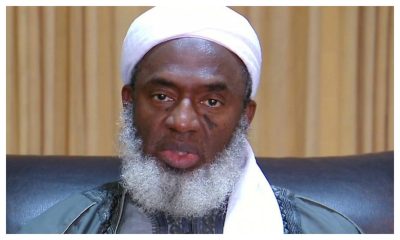
Islamic cleric Sheikh Ahmad Gumi recently defended his past interactions with armed groups, stating he “took the bull by the horns” in 2021 as a necessary step to address Nigeria’s insecurity.
In a post shared on Facebook on Thursday, Gumi said decades of neglect of disadvantaged populations had created deep socio-economic inequalities, leaving many youths vulnerable to manipulation by external forces seeking to destabilise the country.
According to him, the widening gap between the rich and the poor has turned many young people into “ready-made foot soldiers” in cycles of violence that enable the exploitation of Nigeria’s resources.
He also criticised the political class for being largely unresponsive, while noting that the intellectual community is preoccupied with survival struggles.
Reflecting on his past efforts, Gumi said he “took the bull by the horns” in 2021 by attempting to reintegrate violent elements into society rather than allowing them to be further radicalised.
He wrote: “Nigeria for decades has ignored the underprivileged section of its society. There is a significant socio-economic discrepancy, and the society is stratified. This makes our teaming youth ready-made foot soldiers for any foreign interest trying to divide us and rule. To plunder our resources while we are involved in a vicious circle of violence.
”Unfortunately, the political class is unattentive while the intelligentsia is held hostage in the struggle for existence.
“In 2021, I took the bull by the horns in an attempt to bring some of these uncouth elements back to our fold rather than letting them be exploited by the devil.
“I still believe this is the only way out of our predicament. However, it needs the political will and determination to achieve.
“May Allah bring peace back to our nation.”
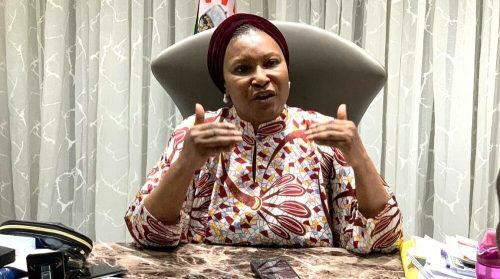
The Federal High Court in Abuja rejected an ex-parte application seeking to bar Senator Ireti Kingibe from participating in the activities of the African Democratic Congress (ADC).
Justice Peter Lifu declined the request from Wuse Ward leaders, ruling that such an order could not be granted without first hearing from the senator.
Instead, the judge ordered the ward leaders said to be loyal to the Minister of the FCT, Nyesom Wike, to put the senator on notice to appear in court to join issues with them on their grievances.
Justice Lifu in a ruling on Thursday held that discretion in such a request for prohibition from party activities and in political matters must be exercised judicially and judiciously.
The judge said justice would be met in the case of the plaintiffs only when the side of the defendant is heard on its merit, along with that of the plaintiffs.
Consequently, the judge ordered that Senator Ireti Kingibe should be served with all court processes by the plaintiffs to enable her become aware of the suit and to prepare her defense.
The judge fixed April 20, 2026, for the plaintiffs and the serving senator to appear before him for hearing of all applications in the matter.
Those who sued the senator in the suit marked FHC/ABJ/ CV/539/2026 are Okezuo Godfrey Anayo and Isaiah Ojonugwa Samuel, on behalf of themselves and ward members as plaintiffs. The senator is the sole defendant.
In their ex-parte application, Kingibe representing the FCT in the Senate was said to have been suspended on March 10, 2026 by her Wuse Ward executives following allegations of anti-party activities and disregard of your cnstitution of the ADC.
In the ex- parte application filed on their behalf by a Senior Advocate of Nigeria, SAN, Kolawole Olowookere, the aggrieved ADC members in Wuse Ward applied for an order of interim injunction restraining Kingibe from parading herself as a member of party, pending the hearing and determination of their motion on notice for interlocutory injunction.
They also asked the judge to restrain the senator from performing any function, attending meetings or performing activities reserved for ADC members or representing the party in any activities.
Besides, the Ward Executive Committee had asked that she be restrained from further interfering with the administration of the ward, ward register and other activities.
The suit was predicated on five grounds among which are that Mrs Kingibe was placed on suspension due to anti-party activities, gross misconduct and confiscation of the ward statutory records.
They argued that the suspension followed due process as enshrined in the ADC constitution and ratified by the two thirds majority of the EXCO members.
They averred that despite the communication of the suspension to Kingibe, she has continued to hold parallel meetings, issue press statements as an ADC member, and using her security details to intimidate the executive committee.
“Her actions constitute flagrant disregard to the internal mechanism of the party,” the plaintiffs stated.
Meanwhile, a lawyer, Abubakar Marshall who claimed to be representing the senator, announced that he had filed a preliminary objection against the suit. He added that it was served on M. S. Garba, who stood for the plaintiffs at Thursday’s proceedings.
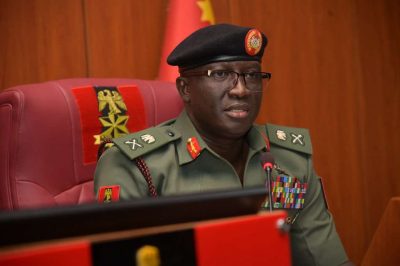
The Chief of Army Staff (COAS), Lieutenant General Waidi Shaibu, visited Jos, Plateau State, on Thursday, April 2, 2026, to lead a high-powered security assessment following recent security breaches.
The visit was aimed at strengthening public confidence and reinforcing ongoing efforts to stabilize affected communities.
Colonel Appolonia Anele, acting Director, Army Public Relations, said in a statement that the visit forms part of ongoing efforts to restore calm and entrench lasting peace across the state.
According to the statement, upon arrival, the COAS was received by the Executive Governor of Plateau State, Caleb Mutfwang, in a clear demonstration of strong civil-military cooperation and a shared commitment to addressing emerging security challenges.
The statement said the COAS received a comprehensive operational briefing from the General Officer Commanding 3 Division and Commander, Joint Task Force Operation ENDURING PEACE, Major General Folusho Oyinlola, who highlighted ongoing operations and proactive measures being implemented in synergy with other security agencies to contain threats, protect lives and property, and stabilise affected communities.
“As part of his engagements, Lieutenant General Shaibu also interacted with community leaders and residents, reassuring them of the unwavering commitment of the Nigerian Army to safeguarding all law-abiding citizens.
He urged residents to remain calm, vigilant and supportive of security agencies by complying with the curfew and cooperating fully with ongoing operations and investigations, while going about their lawful activities.
The chairman of Jos North Local Government Area, Hon. Dachung Bagos, commended the COAS for the timely visit, noting that the presence of the nation’s top military leadership would boost public confidence and reinforce trust in ongoing security efforts.

Gumi Defends Dialogue As Sole Solution To Nigeria’s Insecurity

Court Clears Senator Ireti Kingibe To Remain Active In ADC

COAS Shaibu Hits Jos To Restore Peace, Public Confidence

President Tinubu Appoints New PTDF Executive, Reappoints TCN Head

Simi Welcomes Second Child With Adekunle Gold

United Nigeria Airlines Staff Suspended After Viral Amputee Abuse Video

Pay Your Fare: AIG Cracks Down On Officers Boarding For Free

INEC Removes David Mark, Aregbesola From ADC Leadership Portal

JUST IN: FG Approves Friday 3, Monday 6, as Easter Public Holidays

When 8 million Customers Trust You, Safety Cannot Be an Afterthought
-
 News1 day ago
When 8 million Customers Trust You, Safety Cannot Be an Afterthought
-
 News1 day ago
United Nigeria Airlines Staff Suspended After Viral Amputee Abuse Video
-

 News2 days ago
El-Rufai Back In Detention After Temporary Compassionate Release
-
 News2 days ago
2027: Kwankwaso’s Exit Marks End Of NNPP – Kwankwasiyya Movement
-
 News1 day ago
JUST IN: FG Approves Friday 3, Monday 6, as Easter Public Holidays
-
 News1 day ago
Pay Your Fare: AIG Cracks Down On Officers Boarding For Free
-

 News2 days ago
Lagos CP Withdraws Taskforce From Traffic Duties
-
 News1 day ago
INEC Removes David Mark, Aregbesola From ADC Leadership Portal