
Health
Doctor Catches Cancer After Operating On Patient In First-Of-A-Kind Case


A doctor operating on a cancer patient accidentally ‘transplanted’ the disease into himself in what is believed to be a one-of-a-kind event, Daily Mail of UK reported on Friday.
A 32-year-old man from Germany had been diagnosed with a rare type of cancer and was having a tumour removed from his abdomen.
While in surgery, the doctor performing the procedure accidentally cut his hand, but the wound was disinfected and bandaged immediately.
However, five months later, the 53-year-old surgeon noticed a small lump developing where he had injured himself months earlier and sought care.
The lump turned out to be a malignant tumour and tests showed it was genetically identical to the cancer suffered by his former patient.
This led the medical team who treated him to conclude he had caught the cancer when tumour cells entered the cut on his hand.
Authors of the case report called this an usual situation because in a traditional transplant, the body mounts an immune response and rejects any foreign tissue, and they would have expected the same in the doctor’s case.
However, given the tumour’s development, and growth, it suggests the surgeon’s body had an ‘ineffective antitumor immune response.’
Published in The New England Journal of Medicine, doctors detailed the ‘accidental transplantation’ of the patient’s malignant fibrous histiocytoma—a rare type of cancer that forms in soft tissue with just 1,400 diagnoses per year.
The doctor injured the palm of his left hand when trying to place a drain in his patient while performing surgery to remove the cancer from the patient’s abdomen.
While the cancer patient’s initial surgery was successful, he died following complications after the procedure.
Five months later, a hard 1.2inch ‘tumour-like swelling’ appeared at the base of the doctor’s left middle finger and he visited a hand specialist.
An ‘extensive’ examination was conducted, including numerous laboratory and blood tests, which revealed no abnormal findings.
The tumour was removed anyway and examining the mass under a microscope revealed it was also a malignant fibrous histiocytoma.
The physician who had been treating both the cancer patient and the surgeon ‘raised the question whether the tumors were related.
Samples of both tumours were further analyzed and were determined to be ‘identical.’
They both had the same types of cells and arrangement of those cells, meaning the surgeon may have unknowingly transferred cancer cells from the patient to the cut in his hand, allowing the disease to take root and grow in his body.”
The authors wrote: “Normally, transplantation of allogeneic tissue from one person to another induces an immune response that leads to the rejection of the transplanted tissue.
“In the case of the surgeon, an intense inflammatory reaction developed in the tissue surrounding the tumour, but the tumour mass increased, suggesting an ineffective antitumour immune response.’
The authors speculate the tumour ‘escaped immunologic destruction through several mechanisms,’ including changes to molecules in its cells and a failure in the surgeon’s body to recognize and attack tumour cells effectively.
However, after the surgeon had his own tumour removed, there were no signs the cancer had spread or returned.
Doctors noted the case was interesting because transplanted tissue differs from the host tissue and is usually targeted by the host’s immune system in an attempt to destroy it.
This is why organ recipients must take immunosuppressive drugs to make sure their body does not reject the transplanted organ.
But while the surgeon developed inflammation around his original cut, his immune response did not stop the tumour from growing.
Cases like the surgeon’s are extremely rare and there are no statistics on ‘transplanted’ cancer.
Source: Daily Mail of UK

The Federal Government is leading a nationwide push to cut excessive salt intake, blaming its high consumption for rising cardiovascular disease in the country.
Mr Victor Osuagwu, Scientific Officer at the Department of Food and Drug Services of the Federal Ministry of Health and Social Welfare, spoke during an outreach programme at Oke Arin Market in Lagos on Wednesday.
The programme, in partnership with the Centre for Communication and Social Impact (CCSI), combined grassroots market activations with social media engagement to address what he described as a silent public health crisis.
“We are trying to create awareness to public on what the Federal Ministry of Health is doing on the initiative that we are taking in trying to reduce salt.
“We are also making people aware of the dangers of excessive salt intake.”
He lamented that many Nigerians did not even read the labels of the things they bought, however, he was optimistic that with education and sensitisation, changing behaviour would be gradual.
“We are trying to do it step by step, until every Nigerian is aware.”
Also, Dr Olawale Ogulana, a medical doctor, health advocate and brand ambassador for CCSI, stressed the need to cut dependence on high-sodium seasoning cubes.
He also linked it to the rising hypertension rates in the country.
He urged households to return to traditional cooking methods and natural spices such as ginger, garlic and onions.
He warned that the growing preference for quick meals was eroding healthier culinary traditions.
“As a medical doctor, I will encourage using natural spices in your meals.
“We are not saying that your meals should not be tasty, but it shouldn’t be with high levels of sodium, because that in itself will put us at risk”.
He noted that excessive salt consumption was putting millions of Nigerians at risk of hypertension, stroke and kidney damage, urging citizens to monitor their daily intake and read food labels carefully.
“Elevated salt consumption is a risk factor for hypertension or high blood pressure,” he said, noting that many people were unaware of the World Health Organisation’s recommendation of no more than five grams of salt a day, about a teaspoon.
Ms Anna White-Agbo, Media and Programme Officer at CCSI, explained that tailored communication and social media outreach were part of the campaign strategies to drive the messages to the grassroots on different health programmes and shift public behaviour on health.
She noted that the campaign had been running for over a year, “driving it majorly on social media’’.
However, she said that there were new communication products from the event to be duplicated on diverse platforms.
“In Lagos, the goal is to record health advice for at least 500 people, with a stretch target of 1,000.
“If God willing, and I have enough time, I don’t mind hitting 1,000 records” she said.

Medical doctors employed by the Lagos State Government have announced a three-day warning strike scheduled to commence at 8:00 a.m. on Monday, July 28, 2025, in protest against what they described as the “unlawful and disrespectful” deduction of their salaries by the state.
Operating under the Medical Guild, the doctors said the strike action follows failed efforts to resolve the dispute through dialogue. The industrial action is expected to conclude by 8:00 a.m. on Thursday, July 31, 2025.
At a press briefing held at the Guild’s secretariat in Lagos, the chairman, Dr Japhet Olugbogi, explained that the impasse began in April 2025 when the state government unilaterally deducted salaries from medical and dental officers without prior consultation.
He noted that although many of their members initially demanded an immediate strike, the Guild’s leadership opted to pursue a more diplomatic route through negotiation and advocacy.
“Following persistent engagement, the deductions were reversed, and a six-member conciliation committee, comprising representatives from both the Guild and the government, was set up,” Olugbogi said. “It was agreed that all parties would maintain the status quo until a resolution was reached.”
However, the Guild accused the Lagos State Treasury Office of violating the agreement by implementing another round of deductions in July, which triggered the decision to embark on the warning strike.
The Guild is demanding:
An immediate reversal of the July salary deductions
Full payment of 12-month revised CONMESS arrears owed to honorary consultants at Lagos State University Teaching Hospital, LASUTH
The union also issued a 21-day ultimatum, warning that failure to meet its demands could lead to an indefinite strike.
Dr Olugbogi expressed deep concern over the growing instability within the state’s health sector, exacerbated by economic hardship and the ongoing exodus of medical professionals from Nigeria.
“It is disheartening that the most senior medical doctor in the Lagos State system earns less than $1,100. Instead of supporting our members, the government is cutting from their already inadequate income. This cannot be allowed to continue,” he said.
He appealed to Governor Babajide Sanwo-Olu to intervene urgently to prevent a collapse of healthcare delivery across the state.
According to the Guild, more than 385 doctors participated in the emergency congress where the strike was ratified unanimously.
The Guild’s Secretary, Dr Adekunle Akinade, confirmed that the union is prepared to escalate its measures if the government does not respond swiftly to their demands.
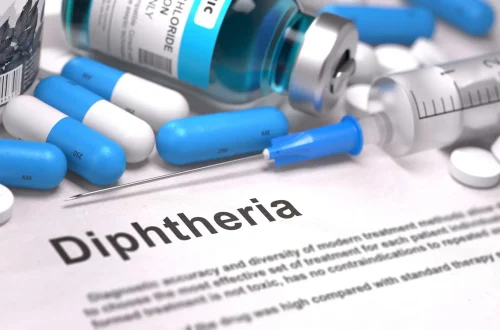
Lagos State Government has activated its Emergency Response Committee following a diphtheria outbreak in the boarding house of King’s College, Lagos, Victoria Island Annex.
The Commissioner for Health, Prof. Akin Abayomi, confirmed the outbreak and assured the public that the situation was under control.
He urged residents to avoid panic as the government intensified measures to contain the infection.
The outbreak was first detected on February 22, when a 12-year-old student presented symptoms and was admitted to the Lagos University Teaching Hospital (LUTH).
Despite receiving treatment, he succumbed to myocarditis, a severe complication of the infection, on March 6.
Health officials identified 34 close contacts, with 14 developing symptoms. Of these, 12 were admitted for treatment and are recovering.
The government has begun strengthening infection prevention measures at the school and plans a targeted vaccination campaign for students and healthcare workers.
Abayomi emphasized the importance of hygiene, early detection, and vaccination to prevent further infections.
The state has 500,000 doses of diphtheria vaccine ready for deployment in high-risk areas.
The Emergency Operations Centre will meet daily to assess and respond to the situation.
Health authorities, including WHO, NCDC, and NPHCDA, are collaborating with the Lagos State Government to curb the outbreak and protect residents.

Plateau Crisis: Tinubu Summons Gov Mutfwang, Orders Security Crackdown

Tinubu’s $6bn External Borrowing Request Gets Senate Nod

When 8 million Customers Trust You, Safety Cannot Be an Afterthought

COURT UPDATE: Nasir El-Rufai Resumes Trial After Mother’s Passing

South African Locals Clash With Nigerians Over Disputed Igbo King Coronation

LIRS EXTENDS DEADLINE FOR FILING OF INDIVIDUAL ANNUAL INCOME TAX RETURNS TO APRIL 14, 2026

Polaris Bank Strengthens Legacy of Excellence with Major Renovation of Historic Faculty Building at University of Ibadan

President Tinubu Donates Salaries To Families Of Fallen Heroes, Injured Soldiers

Political Giants Unite: Ribadu, Tambuwal, and Gov. Sani Attend El-Rufai’s Mother’s Burial

NDLEA Seizes Cocaine Hidden In Stockfish Heads Bound For India
-
 News24 hours ago
LIRS EXTENDS DEADLINE FOR FILING OF INDIVIDUAL ANNUAL INCOME TAX RETURNS TO APRIL 14, 2026
-
 News2 days ago
Polaris Bank Strengthens Legacy of Excellence with Major Renovation of Historic Faculty Building at University of Ibadan
-
 News22 hours ago
South African Locals Clash With Nigerians Over Disputed Igbo King Coronation
-
 News19 hours ago
COURT UPDATE: Nasir El-Rufai Resumes Trial After Mother’s Passing
-
 News14 hours ago
Tinubu’s $6bn External Borrowing Request Gets Senate Nod
-
 News18 hours ago
When 8 million Customers Trust You, Safety Cannot Be an Afterthought
-
 News10 hours ago
Plateau Crisis: Tinubu Summons Gov Mutfwang, Orders Security Crackdown