
News
NNPC And Fresh Perspectives On Ojulari’s Identity – Farooq A. Kperogi

Last week’s column on what I called the “relentless Yorubacentric take-over of the Nigerian National Petroleum Company (NNPC)” based on information I was given by a Yoruba supporter of Tinubu who is close to the circuits of power in the Tinubu presidency drew far more attention than I had anticipated.
Northern politicians like former Kaduna State governor Nasir El-Rufai who had defended, or at least had no problems with, Muhammadu Buhari’s never-before-seen provincialism (and who probably hated me for calling it out at the time) used my column as a crutch to get even with President Bola Ahmed Tinubu who threw him under the bus after his full-throated support for his election. Well, such opportunistic pivots are part of Nigeria’s political theater.
However, anyone who follows my public interventions knows that I have no allegiance to any set of narrow, predetermined interests and that my public commentaries are animated by my well-considered estimation of what constitutes Nigerian society’s collective good.
That’s why I have a revolving door of critics and admirers—praised by one group under one administration, scorned by the same group under another. My principles remain constant, even if public sentiment does not.
Several of the people who applaud my critiques of a southern president revile and slander me when a northerner is president, and several of the people who are bent out of shape because of my critical columns on Tinubu praised my “bravery” and “truth to power” when I wrote similar columns under Buhari.
This isn’t the reason, of course, for revisiting my column (which I rarely do) because self-interested commendations and condemnations of the expression of critical opinions are natural to the territory of public intellection.
I am returning to the issue because I felt compelled to clarify an important aspect of last week’s piece.
A trusted older friend pointed out that Bayo Ojulari, who is rumored to be Tinubu’s pick to succeed Mele Kyari as head of the NNPC, is not merely a Yoruba man but a Yoruba northerner from southern Kwara State. This distinction fundamentally alters the narrative.
Had I known this earlier, I would not have written the column as I did. I have no desire to perpetuate the regressive, ethnocentric narratives that gained prominence during Olusegun Obasanjo’s presidency where the North was invidiously dichotomized into a “core” and a “periphery.”
Northern identity, as historically defined, transcends ethnicity, religion, or geography within the former Northern Region. It is a shared geo-political and cultural construct.
A northerner is anyone from the former Northern Region irrespective of ethnicity, religion, or location within the region.
Being a northerner requires nobody’s approval and isn’t invalidated by anybody’s disapproval.
As the late Sunday Awoniyi used to say, when Frederick Lugard delineated the North and included his people into it, his ancestors were not consulted; he just found himself a northerner and embraced it because it has defined him since his birth.
(The only prominent Yagba people from Kogi State I know who say they are not Yoruba are Professor Etannibi Alemika and prominent journalist Tunde Asaju).
The North isn’t an ethnic group; it’s constructed geo-cultural and political identity that encompasses a diversity of ethnicities. It’s Nigeria’s most complex, ecumenical identity.
As I pointed out in previous columns, a real, Ahmadu Bello-type northerner would regard Yoruba people from Kwara and Kogi states, or even Igbo people in Ado, Oju, Obi and Okpoku local government areas of Benue State, as integral “regional kin” deserving of every privilege that is accruable to a northerner.
To argue that certain individuals cannot represent the North based on their ethnicity invites uncomfortable questions about the region’s cultural and political boundaries.
If Bayo Bashir Ojulari, an Ahmadu Bello University-trained engineer who identifies as a northerner by origin, cannot lead the NNPC because of his Yoruba heritage, then the resentment of Yoruba people in Kwara and Kogi seeking affiliation with the Southwest becomes understandable.
It becomes intolerably churlish to talk about “outsiders” “dividing” the North, as we like to do when fissiparous tendencies emerge within the region. Either we accept all as northerners, or we fracture the identity entirely.
This clarification is necessary because I do not want to be on record as having opposed Ojulari’s ascension to the headship of the NNPC on account of his ethnicity, especially after realizing that he is a northerner who just happens to share the same ethnicity as the president.
Ultimately, it’s up to the president to navigate this complex identitarian landmine, but as someone who researches and is writing a book on collective identity construction, it would be remiss of me not to point out that Ojulari’s northern identity is as valid as Kyari’s— or any other northerner from any part of the region.
This admission does not, in any way, take away from my broader point about the Yorubacentric—or more specifically Lagoscentric—provincialism of Tinubu’s government.
The NNPC’s official response to my column, which asserted that merit alone determines staffing decisions, is a load of unvarnished drivel. In a plural society like Nigeria, meritocracy is never the sole determinant of appointments; symbolic representation and political expediency often play decisive roles.
Moreover, the NNPC is far from a paragon of merit-driven excellence. Its inefficiency and dysfunction are legendary. A truly meritocratic organization would not consistently deliver the subpar performance for which the NNPC is infamous.
There are, of course, agencies of government in Nigeria that have distinguished themselves because of the quality of people who head or headed them.
Given the well-known, inherent weakness of institutions in Nigeria, government agencies habitually assume the character, temperaments, and expertise of their heads. For example, NAFDAC used to be vibrant, visible, and virile because of the vivaciousness and vitality of Dora Akunyili.
Through her bold leadership, counterfeit drug syndicates were exposed, and public confidence in the agency soared.
Tragically, in the years since she left the agency, it has receded into near oblivion. Few now rely on its assurances, which is a far cry from its former prominence.
The Economic and Financial Crimes Commission (EFCC) became a household name and a reference point for fighting corruption in Nigeria because of the vigor, sincerity, and incorruptibility that Nuhu Ribadu brought to his work as its head.
He famously rejected a $15 million bribe from a politician, an unprecedented act that inspired my paternal uncle to name his son Ribadu. (After letting my uncle know that Ribadu is the name of a town in Adamawa State and not a given name, we still chuckle about the oddity of a Ribadu Kperogi whenever the topic comes up!) Today, the EFCC struggles to maintain even a fraction of the credibility it once had.
The late Hamman Tukur’s fearlessness and forthrightness gave visibility and verve to the Revenue Mobilization Allocation and Fiscal Commission (RMAFC). Now no one hears about the commission anymore.
Yemi Kale’s tenure at the National Bureau of Statistics (NBS) similarly transformed what was once a lackluster agency into a cornerstone of policy and economic analysis. His analytical rigor and commitment to transparency made the NBS a respected institution in Nigeria’s socio-economic landscape.
Today, however, the NBS struggles to maintain its once-sterling reputation. It has succumbed to the fate of NAFDAC, EFCC, and RMAFC.
So, I recognize the importance of merit in the choice of leadership.
However, the NNPC isn’t amenable to the merit-driven transformational leadership we saw in NAFDAC, EFCC, RMAFC, and NBS.
It’s a conduit for patronage and the dispensation of favors to cronies. Choice of its headship is therefore necessarily political. That means people are justified to refract the choice of its leadership from the lenses of Nigerian identitarian politics.




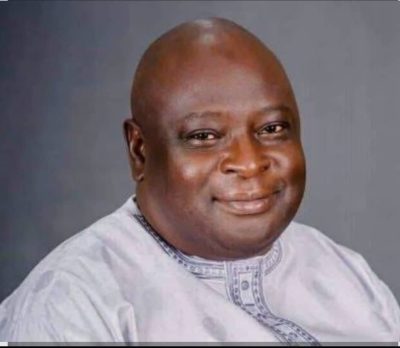
Babajide Kolade-Otitoju, the Director of News at TVC News, recently stated that Oyo State Governor Seyi Makinde would likely have defected from the People’s Democratic Party (PDP) if he was still serving his first term.
Otitoju stated this on Friday on TVC’s ‘Breakfast Show’.
He described the National Convention of the Peoples Democratic Party, PDP, in Ibadan last November as a mere waste of time.
“People must show good judgment at a critical phase. What was the point of having that convention? Two courts told you not to go ahead but you went ahead.
“I may not be a fan of former Senate President Bukola Saraki but if he says something that makes sense, I will be the first to admit it. He made sense when he said let’s go for caretaker. What’s the point of not listening to him?
“Later you will be shouting that the ruling party is behind your crisis, meanwhile you are the architect of your own misfortunes. You created this problem.
“If Makinde were in his first term, he would have fled like the dancing governor because his second term would have been in danger,” Otitoju said.
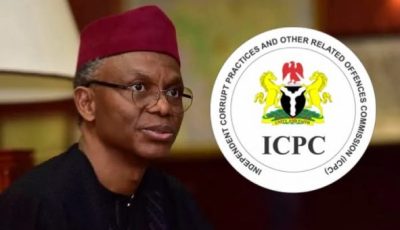
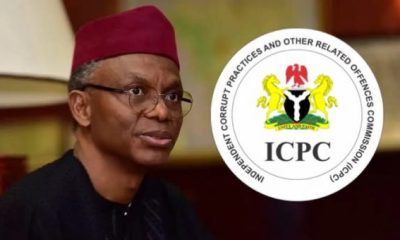
The Federal High Court in Abuja has granted the Independent Corrupt Practices and Other Related Offences Commission (ICPC) permission to access and forensically examine about 14 sets of electronic devices seized from the residence of former Kaduna State Governor, Nasir El-Rufai.
Justice Joyce Abdulmalik issued the order yesterday while ruling on an ex-parte motion filed by the ICPC and moved by its lawyer, Dr. Osuobeni Akponimisingha.
The commission said it needed to access the devices for inspection, forensic examination and extraction of data in furtherance of its ongoing investigation of the former governor.
The devices include a Sony HD-EGS storage device, an ITB Transcend storage device, a Toshiba storage device, a Samsung mobile phone, a Nokia mobile phone – N958GB, a Blackberry mobile phone device and a Google IDEOS phone.
Others are a Samsung storage device – SPO802N, a Remarkable tablet, an Apple MacBook Pro – black, a Seagate FreeAgent Desk external drive, a ZTE mobile phone, 10 pieces of flash drives and a Microcell memory card.
Justice Abdulmalik, in the ruling, granted the commission access to the gadgets “for inspection, forensic examination and forensic extraction of data, including public documents, WhatsApp conversations, text messages, pictures, call logs and related information, and to analyse same forensically or otherwise from the said electronic devices which were seized in the course of investigation for the purpose of investigation activity.”
El-Rufai is currently before the same court challenging the search of his house and seeking, among others, N1 billion in compensation.
Listed as respondents in the suit, marked FHC/ABJ/CS/345/2026, are the ICPC; the Chief Magistrate at the Magistrate’s Court of the FCT, Abuja; the Inspector-General of Police (IGP); and the Attorney-General of the Federation (AGF).
El-Rufai is challenging the propriety of the recent search of his Asokoro, Abuja residence by agents of the ICPC, during which some items were recovered.
The former governor, who is seeking a number of reliefs, wants the court to declare that the search warrant issued on February 4 by the Chief Magistrate of the Magistrate’s Court of the FCT (2nd respondent), authorising the search of his residence and seizure of items, was invalid, null and void.
He also wants a declaration that the search warrant is “null and void for lack of particularity, material drafting errors, ambiguity in execution parameters, overbreadth and absence of probable cause, thereby constituting an unlawful and unreasonable search in violation of Section 37 of the Constitution.”
El-Rufai is urging the court to declare that the alleged invasion and search of his residence at House 12, Mambilla Street, Aso Drive, Abuja, on February 19 at about 2 pm by agents of the ICPC and the IGP, who were armed with the said warrant, amounted to a gross violation of his rights to dignity of the human person, personal liberty, fair hearing and privacy under Sections 34, 35, 36 and 37 of the Constitution.
He is also asking the court to award N1,000,000,000.00 (one billion naira) “as general, exemplary and aggravated damages against the respondents jointly and severally for the violations of the applicant’s fundamental rights, including trespass, unlawful seizure and the resultant psychological trauma, humiliation, distress, infringement of privacy and reputational harm.”
He contends that the search warrant was fundamentally defective, lacking specificity in the description of items to be seized, containing material typographical errors, ambiguous execution terms, overbroad directives and no verifiable probable cause.
He argued that the lack of specificity in the warrant contravenes Sections 143–148 of the Administration of Criminal Justice Act 2015, Section 36 of the ICPC Act 2000 and constitutional protections against arbitrary intrusions.
According to him, Section 143 of the ACJA requires that an application for a search warrant be supported by information in writing and on oath, setting forth reasonable grounds for suspicion, which he said was absent in this case, as evidenced by the incomplete initiating clause.
He said Section 144 mandates particular descriptions of the place to be searched and the items sought to prevent general warrants, adding that the search was conducted without legal justification and in a manner that inflicted humiliation and distress.
El-Rufai further argued that execution of the said invalid warrant on February 19 resulted in an unlawful invasion of his premises, constituting violations of the rights to dignity (Section 34), personal liberty (Section 35), fair hearing (Section 36) and privacy (Section 37) of the Constitution.

The Inspector-General of Police, Olatunji Disu, on Thursday paid glowing tribute to his predecessor, Kayode Egbetokun, recalling their early professional relationship while serving under President Bola Tinubu during his tenure as governor of Lagos State.
During the pulling-out ceremony held in honour of Egbetokun at the Force Headquarters in Abuja, marking the retirement of the former police chief, the new Inspector-General of Police (IGP), Olatunji Disu, reflected on his unexpected rise to the position, stating that he “never dreamed” of becoming the IG.
In his remarks, Disu described Egbetokun’s career as one marked by dedication, professionalism and strong leadership, noting that a defining chapter in the former IG’s career was his service as Chief Security Officer to the Lagos State Governor at a time when Tinubu was in office.
He said it was during that period that their professional paths first intersected.
“A defining chapter in his professional life was his service in Lagos State Government House, where he served as Chief Security Officer to the Governor of Lagos State, at a time when His Excellency, Senator Bola Tinubu, now President of the Federal Republic of Nigeria, was Governor.
“It was during that period that our professional paths intersected in a most memorable way.
“While IGP Egbetokun (retd.) served as Chief Security Officer to the governor, I had the honour of serving as Aide-de-Camp to the same governor.
“Working together under demanding circumstances, we shared the responsibility of ensuring the safety and security of the Governor and the Government of Lagos State,” Disu said.
The police chief said neither of them could have imagined at the time that years later, Egbetokun would rise to become the Inspector General of Police and that he would eventually succeed him in the same office.
According to him, the development reflected how years of service and dedication sometimes align in unexpected ways.
“At that time, neither of us could have imagined that years later, destiny would place him at the helm of the Nigeria Police Force as Inspector General of Police, and that I would have the honour of succeeding him in that office.
“It is indeed one of those remarkable coincidences of history that reminds us how the threads of service sometimes weave themselves across time in unexpected ways,” he said.
Disu noted that throughout his career, Egbetokun rose steadily through the ranks, serving in various command, operational and training capacities across the country.
He highlighted Egbetokun’s leadership roles, including commanding the Rapid Response Squad in Lagos, Police Mobile Force operations, and serving as Area Commander in Osogbo and Gusau.
The IGP also commended Egbetokun’s contributions to police training and capacity development, citing his service as Commandant of the Police Training School, Ikeja, and later as Deputy Commandant of the Police College, Ikeja.
He said Egbetokun’s tenure as Inspector General was guided by a vision to build a professionally competent, service-driven, rule-of-law-compliant and people-friendly police force.
According to him, the former police chief implemented reforms to strengthen operational efficiency, enhance professionalism, improve personnel development, and deepen public trust in policing.
Disu added that Egbetokun emphasised intelligence-driven policing, strengthened training and reinforced institutional values such as discipline, accountability and service.
He further noted that Egbetokun’s leadership style, characterised by calmness, intellectual depth, and strategic foresight, helped guide the Nigeria Police Force through complex security challenges during his tenure.
In his speech, Egbetokun highlighted key reforms and institutional improvements achieved during his tenure as the Inspector-General of Police.
According to him, his administration pursued reforms to reinforce professionalism, promote merit-based advancement, and strengthen intelligence-led policing.
He noted that as part of the reforms, the Intelligence Bureau was expanded and upgraded to a full department headed by a Deputy Inspector-General of Police, while the Legal and Medical units were elevated to directorate status to improve institutional efficiency and service delivery.
Egbetokun also said the Force further developed its cybercrime centre into a sophisticated facility capable of monitoring Nigeria’s cyberspace and supporting modern investigations.
He added that investigative and operational capacity was strengthened through improvements to the National Criminal Database and enhanced professional training for operators across commands up to the divisional level.
The former police chief said operational presence was expanded through the establishment of additional Police Mobile Force squadrons, new Area Commands and Divisions, as well as the creation of the Special Intervention Squad, which he said had recorded notable successes across the country.
He also said progress was made in improving police infrastructure, including the completion of barracks redevelopment projects in Kano and Kaduna and the commissioning of modern state command headquarters in Ogun and Adamawa states.
Egbetokun, who was appointed on June 19, 2023, by President Tinubu, resigned on February 24, paving the way for the appointment of Disu.
In 2024, the IG’s continued stay in office sparked widespread controversy after Egbetokun officially reached the mandatory retirement age of 60 on September 4.
However, his stay in office was extended following the amendment to the Police Act.

Makinde Only In PDP Because He’s Not Seeking Re-election – Otitoju

Corruption Probe: Court Grants ICPC Access To Data On El-Rufai’s Seized Gadgets

Beyond My Wildest Dreams: Disu Opens Up During Handover From Egbetokun

Terror Surge: Tinubu Demands Results from Security Chiefs

2027 Shakeup: 12 Lawmakers Defect To APC, ADC

World War III Fears: Zelensky Reveals Warning To Trump

Tensions Rise As Makoko Communities Vow To Resist Relocation Order

Union Bank Of Nigeria Marks International Women’s Month 2026 With Inclusion-First “Give to Gain” Campaign

IWD: Fidelity Bank Signs MoU with Partners, Launch ‘Give Her Power’ Initiative to Empower Nigerian Women

Just In: Dangote Refinery Announces Petrol, Diesel Price Reduction
-
 News1 day ago
World War III Fears: Zelensky Reveals Warning To Trump
-
 News1 day ago
2027 Shakeup: 12 Lawmakers Defect To APC, ADC
-
 News2 days ago
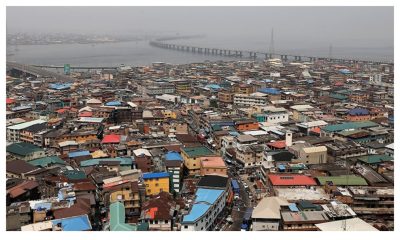
Tensions Rise As Makoko Communities Vow To Resist Relocation Order
-
 News21 hours ago
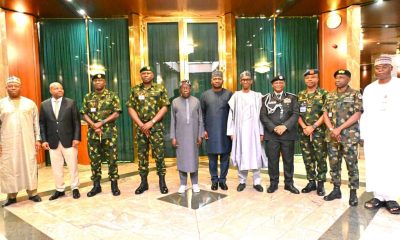
Terror Surge: Tinubu Demands Results from Security Chiefs
-
 News14 hours ago
Beyond My Wildest Dreams: Disu Opens Up During Handover From Egbetokun
-
 News10 hours ago
Corruption Probe: Court Grants ICPC Access To Data On El-Rufai’s Seized Gadgets
-
 News6 hours ago
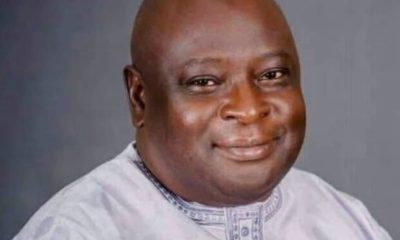
Makinde Only In PDP Because He’s Not Seeking Re-election – Otitoju