
News
Bill Seeking Ban Of Dollars, Foreign Currencies In Nigeria Scales First Reading At Senate


A bill seeking to prohibit the use of foreign currencies for transactions in Nigeria has scaled first reading.
The bill was Senate initiated to restore Nigeria’s monetary sovereignty by outlawing the use of foreign currencies for payments and transactions within the country.
The proposed legislation, aimed at ensuring all payments—including salaries and transactions—are conducted in Naira, seeks to eliminate discriminatory practices and strengthen confidence in the local currency. This includes making it mandatory for exports to be paid for in Naira.
The bill, titled “A Bill for an Act to Alter the Central Bank of Nigeria Act, 2007, No. 7, to Prohibit the Use of Foreign Currencies for Remuneration and for Other Related Matters,” is sponsored by Senator Ned Munir Nwoko, Chairman of the Senate Committee on Reparations and Repatriation.
According to Senator Nwoko, the widespread use of foreign currencies in Nigeria’s financial system undermines the value of the Naira, perpetuating economic challenges. He described the use of the Dollar, Pound Sterling, and other foreign currencies for domestic transactions as a colonial relic that continues to hinder Nigeria’s economic independence.
Highlights of the bill include:
Prohibits salaries, transactions, and payments in foreign currencies, ensuring all workers, including expatriates, are paid in Naira.
Requires crude oil and other exports to be sold exclusively in Naira, compelling international buyers to purchase the currency and driving its demand and value.
Positions the Naira as the central currency for all financial operations, reinforcing its dominance in the economy.
Seeks to abolish informal currency markets that undermine the formal economy and encourage unethical practices such as round-tripping by banks.
Directs banks to provide loans at affordable interest rates to stimulate industrialization and economic growth.
Advocates for storing Nigeria’s foreign reserves domestically to safeguard the country’s economic sovereignty and reduce exposure to external vulnerabilities.
Reclaim monetary independence by prioritizing the Naira for both domestic and international transactions.
Increase the currency’s value through higher demand driven by its exclusive use for exports.
Foster fairness in salary payments by standardizing remuneration in Naira for both local and expatriate workers.
Support the manufacturing sector with accessible credit facilities to encourage local production and reduce dependency on imports.
Foster national pride and economic self-reliance by reducing reliance on foreign currencies.
Build a diversified and resilient economy through coordinated monetary and fiscal policies.
Senator Nwoko clarified that transitioning domiciliary account balances to Naira would be a voluntary process for account holders. As the Naira strengthens, the need to hold foreign currencies would diminish, making the transition seamless.
He also assured Nigerians that access to foreign exchange for travel and other legitimate purposes would be streamlined through banking reforms, alleviating concerns about access to Basic Travel Allowance (BTA) and other forex needs.
Drawing parallels with Morocco, Senator Nwoko noted the stability of the Moroccan Dirham, which has maintained consistent value against major currencies for over 35 years. He attributed this to Morocco’s policy of exclusively using its local currency for domestic transactions.
With its vast natural resources and a dynamic population, Nigeria is well-positioned to surpass Morocco’s achievements, provided there is a paradigm shift in how Nigerians perceive and use the Naira.
The bill envisions a future where Nigerian banks expand internationally, offering innovative financial tools like cashless wallets to simplify global transactions. These measures aim to address existing challenges, such as the inability of Nigerian debit cards to facilitate international online transactions, while making domiciliary accounts increasingly unnecessary.
If passed, this legislation could mark the beginning of a transformative era, driving economic growth, cultural pride, and sustainable development anchored in the strength of Nigeria’s currency—the Naira.
News
Union Bank Looted: How former directors gambled with billions and nearly destroyed a national bank

The former directors and owners of Union Bank did not just fail, they engineered a financial disaster. They manipulated reports, hid massive losses, diverted foreign loans and treated depositors’ money like a private wallet.
Investigators uncovered billions of dollars in misconduct. These directors buried over ₦250 billion in losses, piled a $300 million foreign loan onto the bank without protection and then forced Union Bank to carry the burden. They even used the bank’s own funds to buy its shares, an outrageous betrayal of trust.
It didn’t stop there. Over $100 million was pulled out improperly, leaving the bank exposed and struggling. Loans meant for customers were secretly diverted into shady transactions. False reports were sent to lenders. The system was deliberately deceived.
This was not incompetence. It was exploitation.
By 2025, their actions had created nearly ₦400 billion in losses and over ₦147 billion in unpaid charges. The bank was on the edge.
The Central Bank of Nigeria (CBN) stepped in just in time. Without that intervention, Union Bank could have collapsed, dragging others down with it.
Now, the bank is stabilising. But let’s be clear: this recovery is happening in spite of those former directors, not because of them.
They didn’t build value. They destroyed it.
And Nigerians deserve to never forget who was responsible.

Islamic cleric Sheikh Ahmad Gumi recently defended his past interactions with armed groups, stating he “took the bull by the horns” in 2021 as a necessary step to address Nigeria’s insecurity.
In a post shared on Facebook on Thursday, Gumi said decades of neglect of disadvantaged populations had created deep socio-economic inequalities, leaving many youths vulnerable to manipulation by external forces seeking to destabilise the country.
According to him, the widening gap between the rich and the poor has turned many young people into “ready-made foot soldiers” in cycles of violence that enable the exploitation of Nigeria’s resources.
He also criticised the political class for being largely unresponsive, while noting that the intellectual community is preoccupied with survival struggles.
Reflecting on his past efforts, Gumi said he “took the bull by the horns” in 2021 by attempting to reintegrate violent elements into society rather than allowing them to be further radicalised.
He wrote: “Nigeria for decades has ignored the underprivileged section of its society. There is a significant socio-economic discrepancy, and the society is stratified. This makes our teaming youth ready-made foot soldiers for any foreign interest trying to divide us and rule. To plunder our resources while we are involved in a vicious circle of violence.
”Unfortunately, the political class is unattentive while the intelligentsia is held hostage in the struggle for existence.
“In 2021, I took the bull by the horns in an attempt to bring some of these uncouth elements back to our fold rather than letting them be exploited by the devil.
“I still believe this is the only way out of our predicament. However, it needs the political will and determination to achieve.
“May Allah bring peace back to our nation.”
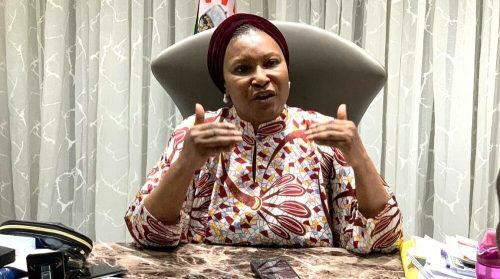
The Federal High Court in Abuja rejected an ex-parte application seeking to bar Senator Ireti Kingibe from participating in the activities of the African Democratic Congress (ADC).
Justice Peter Lifu declined the request from Wuse Ward leaders, ruling that such an order could not be granted without first hearing from the senator.
Instead, the judge ordered the ward leaders said to be loyal to the Minister of the FCT, Nyesom Wike, to put the senator on notice to appear in court to join issues with them on their grievances.
Justice Lifu in a ruling on Thursday held that discretion in such a request for prohibition from party activities and in political matters must be exercised judicially and judiciously.
The judge said justice would be met in the case of the plaintiffs only when the side of the defendant is heard on its merit, along with that of the plaintiffs.
Consequently, the judge ordered that Senator Ireti Kingibe should be served with all court processes by the plaintiffs to enable her become aware of the suit and to prepare her defense.
The judge fixed April 20, 2026, for the plaintiffs and the serving senator to appear before him for hearing of all applications in the matter.
Those who sued the senator in the suit marked FHC/ABJ/ CV/539/2026 are Okezuo Godfrey Anayo and Isaiah Ojonugwa Samuel, on behalf of themselves and ward members as plaintiffs. The senator is the sole defendant.
In their ex-parte application, Kingibe representing the FCT in the Senate was said to have been suspended on March 10, 2026 by her Wuse Ward executives following allegations of anti-party activities and disregard of your cnstitution of the ADC.
In the ex- parte application filed on their behalf by a Senior Advocate of Nigeria, SAN, Kolawole Olowookere, the aggrieved ADC members in Wuse Ward applied for an order of interim injunction restraining Kingibe from parading herself as a member of party, pending the hearing and determination of their motion on notice for interlocutory injunction.
They also asked the judge to restrain the senator from performing any function, attending meetings or performing activities reserved for ADC members or representing the party in any activities.
Besides, the Ward Executive Committee had asked that she be restrained from further interfering with the administration of the ward, ward register and other activities.
The suit was predicated on five grounds among which are that Mrs Kingibe was placed on suspension due to anti-party activities, gross misconduct and confiscation of the ward statutory records.
They argued that the suspension followed due process as enshrined in the ADC constitution and ratified by the two thirds majority of the EXCO members.
They averred that despite the communication of the suspension to Kingibe, she has continued to hold parallel meetings, issue press statements as an ADC member, and using her security details to intimidate the executive committee.
“Her actions constitute flagrant disregard to the internal mechanism of the party,” the plaintiffs stated.
Meanwhile, a lawyer, Abubakar Marshall who claimed to be representing the senator, announced that he had filed a preliminary objection against the suit. He added that it was served on M. S. Garba, who stood for the plaintiffs at Thursday’s proceedings.

Union Bank Looted: How former directors gambled with billions and nearly destroyed a national bank

Gumi Defends Dialogue As Sole Solution To Nigeria’s Insecurity

Court Clears Senator Ireti Kingibe To Remain Active In ADC

COAS Shaibu Hits Jos To Restore Peace, Public Confidence

President Tinubu Appoints New PTDF Executive, Reappoints TCN Head

Simi Welcomes Second Child With Adekunle Gold

United Nigeria Airlines Staff Suspended After Viral Amputee Abuse Video

Pay Your Fare: AIG Cracks Down On Officers Boarding For Free

INEC Removes David Mark, Aregbesola From ADC Leadership Portal

JUST IN: FG Approves Friday 3, Monday 6, as Easter Public Holidays
-
 News2 days ago
COAS Shaibu Hits Jos To Restore Peace, Public Confidence
-
 News2 days ago
President Tinubu Appoints New PTDF Executive, Reappoints TCN Head
-
 News2 days ago
Court Clears Senator Ireti Kingibe To Remain Active In ADC
-
 News2 days ago
Gumi Defends Dialogue As Sole Solution To Nigeria’s Insecurity
-
 News6 hours ago
Union Bank Looted: How former directors gambled with billions and nearly destroyed a national bank