
News
Dare Adekanmbi: Understanding Tinubu’s Tax Bills Of Reliefs For Nigerians, Businesses

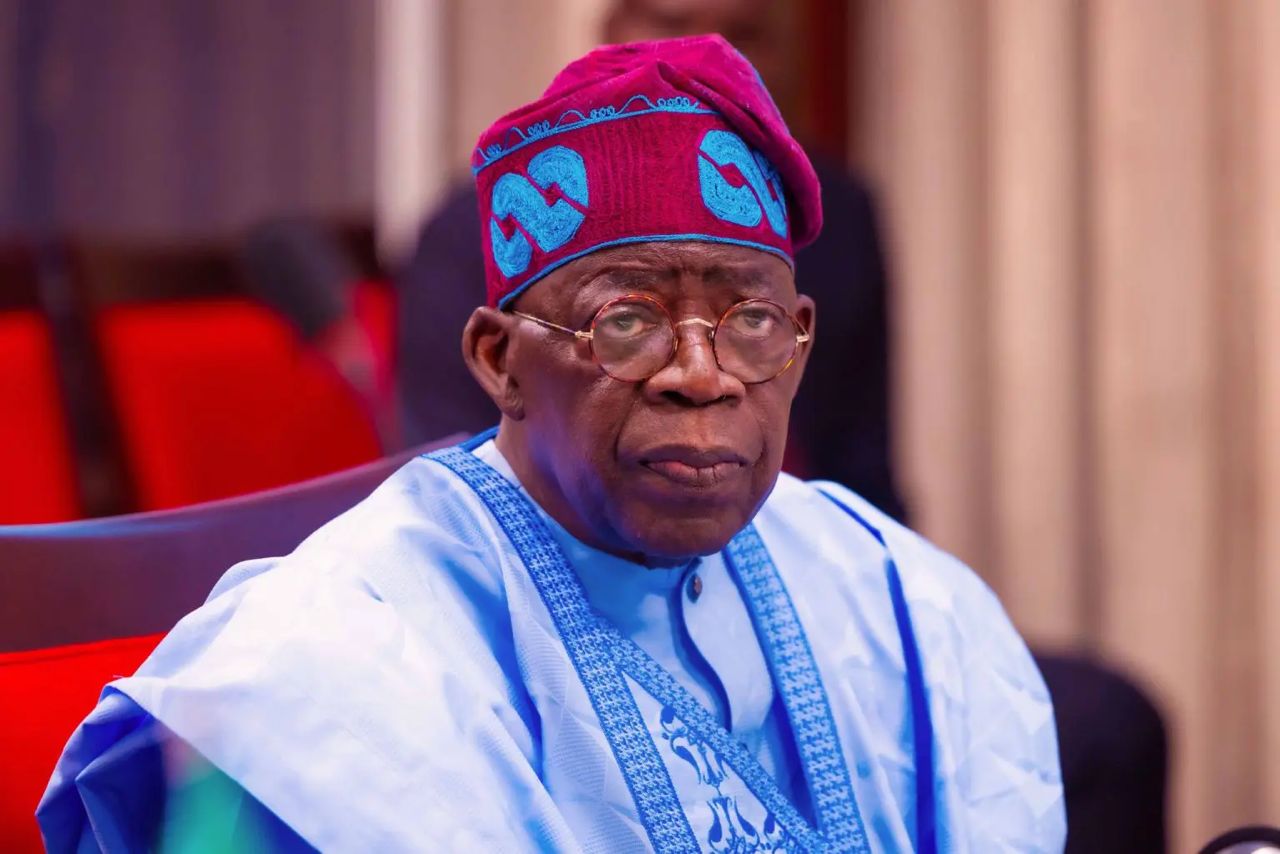
The transmission of four bills that aim to overhaul Nigeria’s tax system to the National Assembly two weeks ago by President Bola Tinubu has sparked debates in the polity about the purpose of the bills.
Some have expressed fears that the bills may encapsulate proposals calling for a raise in tax rates in a way that will further burden the citizens.
Some Nigerians have received the news with mixed feelings, while others have chosen to wait for details before commenting on the development.
There is no basis to entertain any fear about these bills. If anything, Nigerians are going to commend President Tinubu for focusing on laying a solid foundation that will ensure fiscal stability of the country. When Nigerians get to know the details of the in the documents, they will know that the president is actually working to bring reliefs to them and their businesses.
The four executive bills seek to tidy up the fiscal policy and legislation environment in the country. They are: Nigeria Tax Bill, Nigeria Tax Administration Bill, Nigeria Revenue Service (Establishment) Bill, and Joint Revenue Board (Establishment) Bill. These bills seek to translate the recommendations by the Presidential Committee on Fiscal Policy and Tax Reforms, chaired by Taiwo Oyedele, into implementable legislative framework for the benefits of Nigerians.
It is common knowledge that one factor which has continued to impede efficiency in Nigeria’s tax system and has negatively impacted revenue is multiplicity of taxes. President Tinubu, in his inauguration speech, had pledged to address the issue of multiple taxation and remove all hurdles against investment in the country. Multiplicity of taxes is one of the issues that the Nigeria Tax Bill seeks to end. This will certainly bring reliefs to corporate Nigeria. Imposition of tax by more than one agency or level of government, without a shadow of doubt, constitutes a chokehold on businesses, especially micro and small businesses as well as individuals.
How will this bill address multiplicity of taxes? In Nigeria today, laws dealing with various aspects of taxation are scattered in different legislations. Some of these laws are: Companies Income Tax Act, Personal Income Tax Act, Capital Gains Tax Act, Value-Added Tax Act, Stamp Duties Act, Petroleum Profits Act, Tertiary Education Fund Act, Petroleum Industry Act and so on. In addition to the tax-specific laws, there are plethora of tax provisions in non-tax laws such as the NLNG Act, Tertiary Education Trust Fund Act, NASENI Act, Lottery Act, Companies and Allied Matters Act, etc. The list is seemingly endless.
In enforcing these disparate tax provisions, unintended multiple taxation occurs and this is one of the things that the bill seeks to address. The Nigeria Tax Bill aims to codify of all taxing provisions into one single document to be known as the Nigeria Tax Act when passed into law. In the bill, chapters are devoted to the various tax types in a simplified format. The proposed tax law is also written in a simple language that anyone with basic literary education can read and understand. The complexity of the extant law, for instance, is such that it will be pretty difficult for a Professor of Mathematics to compute his personal income tax on his own because of all the inter-twinning provisions that will befuddle him as to what income is taxable or what deduction is allowable. All these complications and complexities have been removed in the new proposals.
In the proposed law, companies doing businesses within the country have been re-classified into two: small and large. This is done in accordance with the companies’ respective turnover thresholds.
A company will be deemed small if its turnover is N50m or less in a year. Under the extant law, any company which records a turnover of N25m or less is not required to pay Companies Income Tax (CIT).
In the new tax bill, companies with yearly turnover that is up to N50m will not pay CIT. As regards large companies, that is, those whose turnover thresholds are above N50m, there is a proposal in the bill to give some relief to them.
The objective of this succour for such companies is in line with President Tinubu’s avowed commitment to protect small businesses and eliminate inhibitions that negatively impact entrepreneurship in the country.
Perhaps the game-changer among the several pleasant provisions of this document is what the bill seeks to do with VAT. It is an eloquently testimony to the fact that President Tinubu has listened and harkened to the complaints by Nigerians, particularly the ordinary Nigerians who are bearing the substantial brunt of the initial pain of the government’s economic reformation policies.
In the proposed law, VAT will not be charged on all items that have direct existential impact on the common people. Items such as food, medicals, education, transport business and agriculture are not chargeable to VAT.
For instance, tuition fee or rent paid by proprietors or purchases made by school owners for the purpose of the business of educating Nigerians will be free from VAT. It is the same for owners of hospitals, those in agricbusiness as well as those who buy vehicles for transportation.
These are the areas where the lives of the common people will be significantly positively affected, especially in view of the temporary pain of the ongoing reforms.
In addition, certain input VAT which hitherto is not possible to claim under the current law can now be claimed. Another relief the president has put in the bill is that for VAT refunds will be made within 30 days upon completion of paper work by the such companies or entities.
Already VAT is not being charged on diesel and petrol. The president had in July this year directed the suspension of duties, tariffs and taxes on importation of food commodities as part of measures to arrest the rising cost of living.
It may interest many to know that VAT rate of 7.5% currently being charged in Nigeria is the lowest on the continent and one of the lowest in the world. Madagascar and Morocco charged 20% VAT in 2022, while it is 19.25% in Cameroon.
Many countries of the world, recognising the importance of tax revenue in providing public services, have this year reviewed their VAT upwards with one of the most striking examples being Saudi Arabia which upped its rate from 5% to 15% in July.
Further to the Nigeria Tax Bill, the table of tax rates for individuals has been restructured in a way that brings huge respite to low-income earners. It is worth mentioning that the Federal Inland Revenue Service (FIRS) does not collect taxes from individuals. It is within the jurisdiction of states’ revenue authorities to collect such income tax from individuals.
The only set of individuals who pay personal income tax to FIRS are members of the Armed Forces, members of the diplomatic corps and foreigners earning income in Nigeria. In the new bill, individuals whose annual income is N800, 000 after the deductions of pension and deductible items will not be required to pay personal income tax (PAYEE).
However, the elite who earn fat annually will pay more. This is in line with the global principle of progressive taxation which takes more tax from the high earners and a little lower tax from middle earners, while low income individuals pay very little. The pledge of Mr President is that his administration’s fiscal policy will tax prosperity and not poverty.
The second bill, the Nigeria Tax Administration Bill, basically seeks to consolidate administrative provisions for all taxes. This bill harmonises all tax administration issues such as registration, filing, payment, dispute resolution, etc for all tax-types and revenue authorities. It also clearly delineates the roles and objectives of all tax authorities in the country as well as their relevant jurisdictions. The aim of this bill is to promote the ease of tax administration, lessen tax compliance burden on the citizens and improve the ease of doing business in the country.
As for the proposed Joint Revenue Board (Establishment) Bill, this is seeking to replace the Joint Tax Board (JTB) which has been wobbly since its establishment because it was built on quicksand. The proposed replacement not only addresses the glaring shortcomings in JTB, but also retains the joint control of the body by the federal and state governments. It also seeks the creation of the office of Tax Ombudsto resolve all complaints that may arise from the operations of JRB.
Today, we cannot run away from the cryptocurrency ecosystem because it is the in-thing. But as it stands in Nigeria today, there is no law that regulates cryptocurrency operations. One key highlight of the Nigeria Tax Bill is that it seeks a legislation to regulate the digital currency market said to be worth $1trillion globally. The bill, when passed into law, will arrest the revenue the country has haemorrhaged in the sector. It will be recalled that some executives of one of the biggest cryptocurrency platforms, Binance, are in court for non-payment of taxes among other offences.
The Nigeria Revenue Service (Establishment) Bill is primarily proposing a change of name for the Federal Inland Revenue Service (FIRS) to the Nigeria Revenue Service. This bill is one which seeks to correct the error of 2007 when Nigeria’s apex tax authority, FIRS, became autonomous as an operational arm of the Federal Board of Inland Revenue (FBIR). The mandate of FIRS is to administer tax laws to assess, collect and account for revenue accruable to the federation and not the Federal Government. Especially when we consider the current sharing formula on VAT revenue, only 15% goes to the Federal Government. The remaining 85% is shared between the states and the local government areas.
Today, tax revenue from FIRS is the main reason the 36 states and the local government councils smile to the banks monthly during their Federation Account Allocation Committee (FAAC) meeting. A total of N17.8trillion accrued to the Federation Account between January and July this year. FIRS tax revenue alone contributed N11.7trillion, representing 65.8 percent of the total money disbursed to the federal, state and local government councils to meet their needs.
Giving such a critical agency an appellation which suggests it is collecting tax solely for Federal Government is improper and must be corrected. Another error in the current name is contained in the word ‘Inland’ which restricts the agency to the collection of taxes within the interior territory of the country. Nigeria has huge revenue to collect from offshore transactions and only a repeal of FIRS (Establishment) Act 2007 to pave the way for the Nigeria Revenue Service (Establishment) Act can make that happen. Those suggesting that the proposed name change will translate to other revenue agencies being subsumed or merged with NRS need to get copies of the bill to clear their doubt.
The general principle of the four tax bills is not just to modernise the tax system in the country, but also to ensure that relief is created for ordinary Nigerians and businesses. And so, for insulating the poor from VAT payment through exemptions of good and services that directly impact their lives, for making VAT neutral for businesses through enabling deduction of input tax from out VAT, President Tinubu has demonstrated fidelity to his commitment that government policies must allow the poor to breathe and not suffocate. Tinubu deserves to be applauded as a leader who listens to the yearnings of the citizens.
Dare Adekanmbi is the Special Adviser on Media to the FIRS chairman.







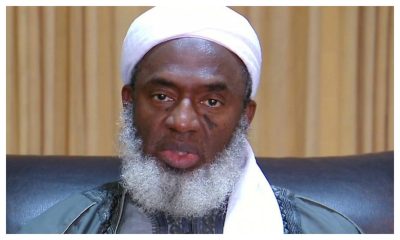
Islamic cleric Sheikh Ahmad Gumi recently defended his past interactions with armed groups, stating he “took the bull by the horns” in 2021 as a necessary step to address Nigeria’s insecurity.
In a post shared on Facebook on Thursday, Gumi said decades of neglect of disadvantaged populations had created deep socio-economic inequalities, leaving many youths vulnerable to manipulation by external forces seeking to destabilise the country.
According to him, the widening gap between the rich and the poor has turned many young people into “ready-made foot soldiers” in cycles of violence that enable the exploitation of Nigeria’s resources.
He also criticised the political class for being largely unresponsive, while noting that the intellectual community is preoccupied with survival struggles.
Reflecting on his past efforts, Gumi said he “took the bull by the horns” in 2021 by attempting to reintegrate violent elements into society rather than allowing them to be further radicalised.
He wrote: “Nigeria for decades has ignored the underprivileged section of its society. There is a significant socio-economic discrepancy, and the society is stratified. This makes our teaming youth ready-made foot soldiers for any foreign interest trying to divide us and rule. To plunder our resources while we are involved in a vicious circle of violence.
”Unfortunately, the political class is unattentive while the intelligentsia is held hostage in the struggle for existence.
“In 2021, I took the bull by the horns in an attempt to bring some of these uncouth elements back to our fold rather than letting them be exploited by the devil.
“I still believe this is the only way out of our predicament. However, it needs the political will and determination to achieve.
“May Allah bring peace back to our nation.”
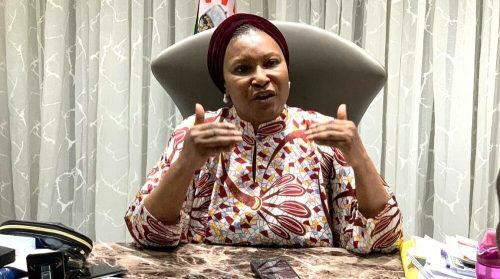
The Federal High Court in Abuja rejected an ex-parte application seeking to bar Senator Ireti Kingibe from participating in the activities of the African Democratic Congress (ADC).
Justice Peter Lifu declined the request from Wuse Ward leaders, ruling that such an order could not be granted without first hearing from the senator.
Instead, the judge ordered the ward leaders said to be loyal to the Minister of the FCT, Nyesom Wike, to put the senator on notice to appear in court to join issues with them on their grievances.
Justice Lifu in a ruling on Thursday held that discretion in such a request for prohibition from party activities and in political matters must be exercised judicially and judiciously.
The judge said justice would be met in the case of the plaintiffs only when the side of the defendant is heard on its merit, along with that of the plaintiffs.
Consequently, the judge ordered that Senator Ireti Kingibe should be served with all court processes by the plaintiffs to enable her become aware of the suit and to prepare her defense.
The judge fixed April 20, 2026, for the plaintiffs and the serving senator to appear before him for hearing of all applications in the matter.
Those who sued the senator in the suit marked FHC/ABJ/ CV/539/2026 are Okezuo Godfrey Anayo and Isaiah Ojonugwa Samuel, on behalf of themselves and ward members as plaintiffs. The senator is the sole defendant.
In their ex-parte application, Kingibe representing the FCT in the Senate was said to have been suspended on March 10, 2026 by her Wuse Ward executives following allegations of anti-party activities and disregard of your cnstitution of the ADC.
In the ex- parte application filed on their behalf by a Senior Advocate of Nigeria, SAN, Kolawole Olowookere, the aggrieved ADC members in Wuse Ward applied for an order of interim injunction restraining Kingibe from parading herself as a member of party, pending the hearing and determination of their motion on notice for interlocutory injunction.
They also asked the judge to restrain the senator from performing any function, attending meetings or performing activities reserved for ADC members or representing the party in any activities.
Besides, the Ward Executive Committee had asked that she be restrained from further interfering with the administration of the ward, ward register and other activities.
The suit was predicated on five grounds among which are that Mrs Kingibe was placed on suspension due to anti-party activities, gross misconduct and confiscation of the ward statutory records.
They argued that the suspension followed due process as enshrined in the ADC constitution and ratified by the two thirds majority of the EXCO members.
They averred that despite the communication of the suspension to Kingibe, she has continued to hold parallel meetings, issue press statements as an ADC member, and using her security details to intimidate the executive committee.
“Her actions constitute flagrant disregard to the internal mechanism of the party,” the plaintiffs stated.
Meanwhile, a lawyer, Abubakar Marshall who claimed to be representing the senator, announced that he had filed a preliminary objection against the suit. He added that it was served on M. S. Garba, who stood for the plaintiffs at Thursday’s proceedings.
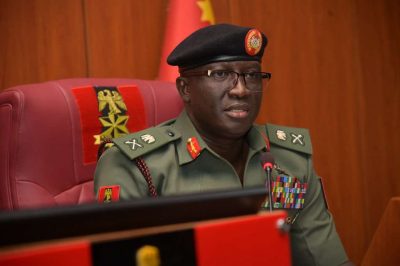
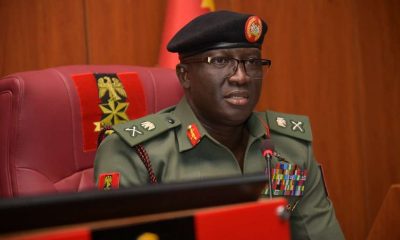
The Chief of Army Staff (COAS), Lieutenant General Waidi Shaibu, visited Jos, Plateau State, on Thursday, April 2, 2026, to lead a high-powered security assessment following recent security breaches.
The visit was aimed at strengthening public confidence and reinforcing ongoing efforts to stabilize affected communities.
Colonel Appolonia Anele, acting Director, Army Public Relations, said in a statement that the visit forms part of ongoing efforts to restore calm and entrench lasting peace across the state.
According to the statement, upon arrival, the COAS was received by the Executive Governor of Plateau State, Caleb Mutfwang, in a clear demonstration of strong civil-military cooperation and a shared commitment to addressing emerging security challenges.
The statement said the COAS received a comprehensive operational briefing from the General Officer Commanding 3 Division and Commander, Joint Task Force Operation ENDURING PEACE, Major General Folusho Oyinlola, who highlighted ongoing operations and proactive measures being implemented in synergy with other security agencies to contain threats, protect lives and property, and stabilise affected communities.
“As part of his engagements, Lieutenant General Shaibu also interacted with community leaders and residents, reassuring them of the unwavering commitment of the Nigerian Army to safeguarding all law-abiding citizens.
He urged residents to remain calm, vigilant and supportive of security agencies by complying with the curfew and cooperating fully with ongoing operations and investigations, while going about their lawful activities.
The chairman of Jos North Local Government Area, Hon. Dachung Bagos, commended the COAS for the timely visit, noting that the presence of the nation’s top military leadership would boost public confidence and reinforce trust in ongoing security efforts.

Gumi Defends Dialogue As Sole Solution To Nigeria’s Insecurity

Court Clears Senator Ireti Kingibe To Remain Active In ADC

COAS Shaibu Hits Jos To Restore Peace, Public Confidence

President Tinubu Appoints New PTDF Executive, Reappoints TCN Head

Simi Welcomes Second Child With Adekunle Gold

United Nigeria Airlines Staff Suspended After Viral Amputee Abuse Video

Pay Your Fare: AIG Cracks Down On Officers Boarding For Free

INEC Removes David Mark, Aregbesola From ADC Leadership Portal

JUST IN: FG Approves Friday 3, Monday 6, as Easter Public Holidays

When 8 million Customers Trust You, Safety Cannot Be an Afterthought
-
 News2 days ago
When 8 million Customers Trust You, Safety Cannot Be an Afterthought
-
 News1 day ago
United Nigeria Airlines Staff Suspended After Viral Amputee Abuse Video
-
 News2 days ago
2027: Kwankwaso’s Exit Marks End Of NNPP – Kwankwasiyya Movement
-
 News1 day ago
Pay Your Fare: AIG Cracks Down On Officers Boarding For Free
-

 News2 days ago
Lagos CP Withdraws Taskforce From Traffic Duties
-
 News1 day ago
JUST IN: FG Approves Friday 3, Monday 6, as Easter Public Holidays
-
 News1 day ago
INEC Removes David Mark, Aregbesola From ADC Leadership Portal
-
 News19 hours ago
COAS Shaibu Hits Jos To Restore Peace, Public Confidence