
News
FG Unveils Plans To Bring Back 12,400 Japa Doctors


President Bola Tinubu, on Monday, approved the National Policy on Health Workforce Migration to address the continued exodus of Nigerian doctors abroad.
The policy, announced by the Coordinating Minister of Health and Social Welfare, Prof Muhammad Pate, on his X handle on Tuesday, aims to woo an estimated 12,400 Nigerian-trained doctors practising abroad
According to Pate, who also appeared on Channels TV on Tuesday evening, 67 per cent of Nigerian-trained doctors are practising in the United Kingdom alone.
“The recruitment countries, that recruit our professionals, should they not have some responsibilities to help us expand the training? Because the strain of health workers’ migration is continuous; it’s not going to stop tomorrow.
“The UK will need Nigerian doctors; 67 per cent of our doctors go to the United Kingdom and 25 per cent of the NHIS workforce is Nigerian.
“Nigerians are very vibrant, very entrepreneurial, and very capable wherever they are. If Nigerians hold back from the UK, for instance, the NHS will struggle to provide the services that many Nigerians are going there to get,” the minister said.
Pate said the policy signed by the President was more than just a response to the ongoing exodus of healthcare professionals but a comprehensive strategy to manage, harness, and reverse health workers’ migration.
While health workers believed the policy might be positive, they demanded the details and implementation plan.
Announcing the policy on Tuesday, the health minister said, ”This afternoon, HE President Bola Ahmed Tinubu, GCFR @officialABAT, in-council, approved a landmark policy set to transform healthcare human resource management in Nigeria.
“The National Policy on Health Workforce Migration addresses the critical challenges facing Nigeria’s health human resources. As the AU Champion for Human Resources for Health and Community Health Delivery Partnership, Mr President’s commitment to a resilient and robust healthcare system is powerfully reflected in this forward-looking policy.
“This policy is more than just a response to the ongoing exodus of healthcare professionals; it’s a comprehensive strategy to manage, harness, and reverse health worker migration. It envisions a thriving workforce that is well-supported, adequately rewarded, and optimally utilised to meet the healthcare needs of all Nigerians.”
Many Nigerian healthcare workers leave the country for greener pastures, leaving their colleagues to contend with additional workload and extended call hours.
The push factors, according to them, are inadequate equipment, worsening insecurity, poor working conditions, and poor salary structure.
The minister noted that central to this vision was the Nigeria Human Health Resource Programme, which sets a framework for regular reviews of working conditions, ensuring that health workers, especially in rural and underserved areas, receive the recognition and rewards they deserve.
“By fostering an environment conducive to professional growth and stability, the policy aims to retain top talent within Nigeria.
“In an increasingly digital world, integrating advanced health technologies is essential. The policy’s focus on digital health infrastructure—including electronic medical records, telehealth, and a comprehensive health workforce registry—marks a significant step towards a more efficient, data-driven health system. These innovations will streamline healthcare delivery and enhance the equitable distribution of health workers, ensuring access to quality care for all Nigerians.
“Capacity building is at the heart of this policy. It recognises the importance of continuous professional development, with strategic partnerships and opportunities for international training to equip our healthcare professionals with cutting-edge skills. This investment in human capital underscores our commitment to retaining and empowering our healthcare workforce,” he stated.
He added that the policy addressed the return and reintegration of Nigerian health professionals from the Diaspora.
The minister said by establishing streamlined registration processes and providing attractive incentives, the policy would not only encourage the return of talented professionals but also actively reintegrate them into the health system.
“This approach leverages the expertise of our Diaspora to bridge gaps within the health sector. Also, the policy champions reciprocal agreements with other nations to ensure that the exchange of health workers benefits Nigeria. These bilateral and multilateral agreements are designed to protect national interests while respecting the rights and aspirations of our healthcare professionals. We call on recipient countries to implement a 1:1 match—training one worker to replace every publicly trained Nigerian worker they receive.
“Recognising the importance of work-life balance, the policy includes provisions for routine health checks, mental well-being support, and reasonable working hours, especially for younger doctors. These measures aim to create a supportive work environment, reducing burnout and enhancing job satisfaction.
“The governance of this policy will be overseen by the National Human Resources for Health Programme within @Fmohnigeria, in collaboration with state governments. This ensures responsible implementation and alignment with broader sector-wide health objectives.
“With this decisive action, the National Policy on Health Workforce Migration is set to secure the future of Nigeria’s healthcare system. Under Mr President’s leadership, this policy will further catalyse the transformation of our health sector, ensuring access to quality healthcare for all Nigerians.
“As we embark on this journey, all stakeholders are invited to contribute to building a healthcare system that reflects our nation’s potential and promise,” Pate said.
Explaining the policy further, the Senior Adviser, Media and External Relations, Tashikalmah Hallah, said the government was negotiating with countries where Nigerian healthcare workers migrate to to help Nigeria improve health training facilities.
“We are talking to those countries that our health workers are going to, to see if they can now help Nigeria to improve provisions of some of the facilities that will enable Nigeria to train more health workers.
“The Federal Government has expanded our admission quota and improved on these medical institutions, so they are now encouraging all these countries where our health workers go, to assist us in maintaining these health institutions.”
Hallah said the implementation of the policy takes effect immediately.
“It’s a policy, it was adopted by the Federal Executive Council yesterday (Monday). So, it is immediate, and it has been approved. So, it’s a Nigerian government policy. This is a policy binding on healthcare workers.
He emphasised that the FG has established a policy allowing healthcare workers to travel abroad for training and then return to apply their new knowledge.
“Currently, there is a request by Qatar for 10 medical doctors to go there to study, especially in oncology. So, immediately after the training, they are coming back to the country,” he said.
Guarded optimism
The President of the Medical and Dental Consultants Association of Nigeria, Prof Muhammad Muhammad, said the policy looks more theoretical than real.
Muhammad also called for the details of the policy for a better understanding.
“The issue is that we need to see the detail, it’s not just the English that matters. People bring a lot of policies on the ground, very well drafted and crafted, but execution is usually a problem. It might be difficult to say we are fully in support or otherwise if we have not seen the document.
“I have planned to check on the Ministry of Health, maybe tomorrow (today), to see if we can get the document and look at it. They mentioned certain things that we have been advocating – the welfare of doctors, improvement of the work environment, and retraining, but how they are going to do it needs to be spelled out in the document.
“We were not consulted before drafting the document, so we don’t have an insight into what is in the document. If they are going to put it to work, what they have written might be beneficial to the system and to also the healthcare workers, but the problem is that there may be a lot of other things that we don’t know yet. For example, when they say they are going to stop the migration, in what way? Is it by preventing doctors from moving, or how are they going to do it?”
The MDCAN President noted that the public needs to know if the policy will improve or worsen the rights of healthcare workers.
He said the 1:1 match—training of healthcare workers to replace every publicly trained Nigerian worker might mean that, “They want any country that is hiring a healthcare worker, in addition to paying the healthcare worker, will also pay Nigeria for the cost of training that doctor. Let’s say Saudi Arabia or UK or Canada are going to employ a doctor that is trained in the public institution, they will expect that that country will pay Nigeria the same amount that was spent to train that doctor in Nigeria.”
The Secretary of the National Association of Nigeria Nurses and Midwives, Lagos State Council, Toba Odumosu, acknowledged that the policy appeared promising but emphasised the importance of gaining a clearer understanding of its details.
He also expressed support for the 1:1 training match for healthcare workers, noting that this approach is successfully implemented in other countries as well.
“For everybody that migrates to particular countries, you have a bilateral agreement for active recruitment of our health workers, then you find a way to sponsor the training of another healthcare worker in Nigeria. So the burden of training is not just on the Nigerian government, but the people who also benefit. That’s essentially what so many countries have done. In some cases, they have bilateral agreements that would mean that you actually go there for a certain number of years, and then you also find an agreement to come back to your country for a particular number of years before you are now free to migrate back. So, it’s sort of like a controlled migration system.
“But, we need the details of the policy to understand how this works because we still need to allocate more funds in the health sector, and meet the 2001 Abuja health declaration,” he noted.
As of December 3, 2023, the number of Nigerian-trained doctors licensed to practice in the UK was now 12,198, according to data from the General Medical Council in the UK.
Also, no fewer than 281 Nigerian doctors are working in other African countries, according to the data obtained from the Medical and Dental Council of Nigeria in 2023.
The MDCN data showed that 153 Nigerian doctors are practicing in Sudan; followed by South Africa with 41 doctors; Egypt 17; Ghana 17; Uganda 13; Gambia – seven.
Others are Lesotho -six; Cameroon – four; Namibia -four; Algeria -two; Ethiopia -two; Kenya -two; Liberia -two; Benin -one; Botswana -one; Equatorial Guinea -one; Niger -one; Rwanda -one; Sierra Leone -one; Seychelles -one; South Sudan -one; Tanzania -one; Togo -one; and Zambia -one.
So far, a total of 13,656 Nigerian-trained nurses and midwives are practicing in the United Kingdom.
This is according to the latest report on the number of nursing and midwifery professionals on the Nursing and Midwifery Council register as of March 31, 2024.
The report also showed that Nigeria is one of the top non-UK countries of education as of March 2024, and the number of Nigerian nurses and midwives practicing in the UK increased by 28.3 per cent in one year.
Other top non-UK countries of education as of March 2024, compared to last year are India (62,413), Philippines (49,092), Romania (7,378), and Ghana (5,536).







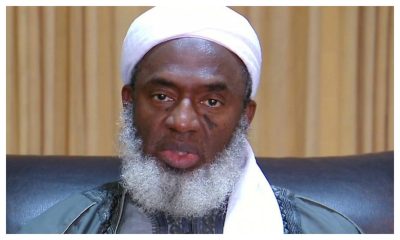
Islamic cleric Sheikh Ahmad Gumi recently defended his past interactions with armed groups, stating he “took the bull by the horns” in 2021 as a necessary step to address Nigeria’s insecurity.
In a post shared on Facebook on Thursday, Gumi said decades of neglect of disadvantaged populations had created deep socio-economic inequalities, leaving many youths vulnerable to manipulation by external forces seeking to destabilise the country.
According to him, the widening gap between the rich and the poor has turned many young people into “ready-made foot soldiers” in cycles of violence that enable the exploitation of Nigeria’s resources.
He also criticised the political class for being largely unresponsive, while noting that the intellectual community is preoccupied with survival struggles.
Reflecting on his past efforts, Gumi said he “took the bull by the horns” in 2021 by attempting to reintegrate violent elements into society rather than allowing them to be further radicalised.
He wrote: “Nigeria for decades has ignored the underprivileged section of its society. There is a significant socio-economic discrepancy, and the society is stratified. This makes our teaming youth ready-made foot soldiers for any foreign interest trying to divide us and rule. To plunder our resources while we are involved in a vicious circle of violence.
”Unfortunately, the political class is unattentive while the intelligentsia is held hostage in the struggle for existence.
“In 2021, I took the bull by the horns in an attempt to bring some of these uncouth elements back to our fold rather than letting them be exploited by the devil.
“I still believe this is the only way out of our predicament. However, it needs the political will and determination to achieve.
“May Allah bring peace back to our nation.”
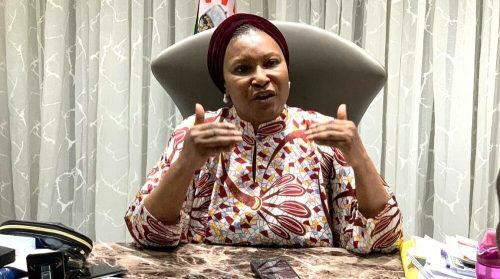
The Federal High Court in Abuja rejected an ex-parte application seeking to bar Senator Ireti Kingibe from participating in the activities of the African Democratic Congress (ADC).
Justice Peter Lifu declined the request from Wuse Ward leaders, ruling that such an order could not be granted without first hearing from the senator.
Instead, the judge ordered the ward leaders said to be loyal to the Minister of the FCT, Nyesom Wike, to put the senator on notice to appear in court to join issues with them on their grievances.
Justice Lifu in a ruling on Thursday held that discretion in such a request for prohibition from party activities and in political matters must be exercised judicially and judiciously.
The judge said justice would be met in the case of the plaintiffs only when the side of the defendant is heard on its merit, along with that of the plaintiffs.
Consequently, the judge ordered that Senator Ireti Kingibe should be served with all court processes by the plaintiffs to enable her become aware of the suit and to prepare her defense.
The judge fixed April 20, 2026, for the plaintiffs and the serving senator to appear before him for hearing of all applications in the matter.
Those who sued the senator in the suit marked FHC/ABJ/ CV/539/2026 are Okezuo Godfrey Anayo and Isaiah Ojonugwa Samuel, on behalf of themselves and ward members as plaintiffs. The senator is the sole defendant.
In their ex-parte application, Kingibe representing the FCT in the Senate was said to have been suspended on March 10, 2026 by her Wuse Ward executives following allegations of anti-party activities and disregard of your cnstitution of the ADC.
In the ex- parte application filed on their behalf by a Senior Advocate of Nigeria, SAN, Kolawole Olowookere, the aggrieved ADC members in Wuse Ward applied for an order of interim injunction restraining Kingibe from parading herself as a member of party, pending the hearing and determination of their motion on notice for interlocutory injunction.
They also asked the judge to restrain the senator from performing any function, attending meetings or performing activities reserved for ADC members or representing the party in any activities.
Besides, the Ward Executive Committee had asked that she be restrained from further interfering with the administration of the ward, ward register and other activities.
The suit was predicated on five grounds among which are that Mrs Kingibe was placed on suspension due to anti-party activities, gross misconduct and confiscation of the ward statutory records.
They argued that the suspension followed due process as enshrined in the ADC constitution and ratified by the two thirds majority of the EXCO members.
They averred that despite the communication of the suspension to Kingibe, she has continued to hold parallel meetings, issue press statements as an ADC member, and using her security details to intimidate the executive committee.
“Her actions constitute flagrant disregard to the internal mechanism of the party,” the plaintiffs stated.
Meanwhile, a lawyer, Abubakar Marshall who claimed to be representing the senator, announced that he had filed a preliminary objection against the suit. He added that it was served on M. S. Garba, who stood for the plaintiffs at Thursday’s proceedings.
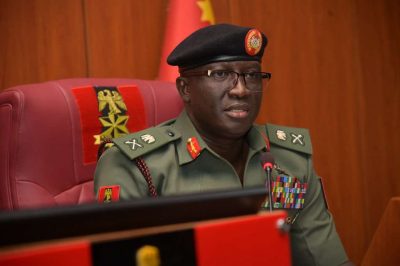
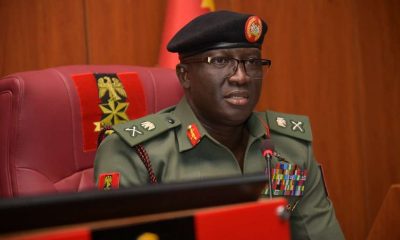
The Chief of Army Staff (COAS), Lieutenant General Waidi Shaibu, visited Jos, Plateau State, on Thursday, April 2, 2026, to lead a high-powered security assessment following recent security breaches.
The visit was aimed at strengthening public confidence and reinforcing ongoing efforts to stabilize affected communities.
Colonel Appolonia Anele, acting Director, Army Public Relations, said in a statement that the visit forms part of ongoing efforts to restore calm and entrench lasting peace across the state.
According to the statement, upon arrival, the COAS was received by the Executive Governor of Plateau State, Caleb Mutfwang, in a clear demonstration of strong civil-military cooperation and a shared commitment to addressing emerging security challenges.
The statement said the COAS received a comprehensive operational briefing from the General Officer Commanding 3 Division and Commander, Joint Task Force Operation ENDURING PEACE, Major General Folusho Oyinlola, who highlighted ongoing operations and proactive measures being implemented in synergy with other security agencies to contain threats, protect lives and property, and stabilise affected communities.
“As part of his engagements, Lieutenant General Shaibu also interacted with community leaders and residents, reassuring them of the unwavering commitment of the Nigerian Army to safeguarding all law-abiding citizens.
He urged residents to remain calm, vigilant and supportive of security agencies by complying with the curfew and cooperating fully with ongoing operations and investigations, while going about their lawful activities.
The chairman of Jos North Local Government Area, Hon. Dachung Bagos, commended the COAS for the timely visit, noting that the presence of the nation’s top military leadership would boost public confidence and reinforce trust in ongoing security efforts.

Gumi Defends Dialogue As Sole Solution To Nigeria’s Insecurity

Court Clears Senator Ireti Kingibe To Remain Active In ADC

COAS Shaibu Hits Jos To Restore Peace, Public Confidence

President Tinubu Appoints New PTDF Executive, Reappoints TCN Head

Simi Welcomes Second Child With Adekunle Gold

United Nigeria Airlines Staff Suspended After Viral Amputee Abuse Video

Pay Your Fare: AIG Cracks Down On Officers Boarding For Free

INEC Removes David Mark, Aregbesola From ADC Leadership Portal

JUST IN: FG Approves Friday 3, Monday 6, as Easter Public Holidays

When 8 million Customers Trust You, Safety Cannot Be an Afterthought
-
 News2 days ago
When 8 million Customers Trust You, Safety Cannot Be an Afterthought
-
 News1 day ago
United Nigeria Airlines Staff Suspended After Viral Amputee Abuse Video
-
 News2 days ago
2027: Kwankwaso’s Exit Marks End Of NNPP – Kwankwasiyya Movement
-
 News1 day ago
Pay Your Fare: AIG Cracks Down On Officers Boarding For Free
-
 News1 day ago
JUST IN: FG Approves Friday 3, Monday 6, as Easter Public Holidays
-

 News2 days ago
Lagos CP Withdraws Taskforce From Traffic Duties
-
 News1 day ago
INEC Removes David Mark, Aregbesola From ADC Leadership Portal
-
 News19 hours ago
COAS Shaibu Hits Jos To Restore Peace, Public Confidence