
News
Buy Me Out, Dangote Offers To Sell 650,000 Bpd Oil Refinery To NNPC
“Let them (NNPCL) buy me out and run the refinery the best way they can. They have labelled me a monopolist. That’s an incorrect and unfair allegation, but it’s OK. If they buy me out, at least, their so-called monopolist would be out of the way”.

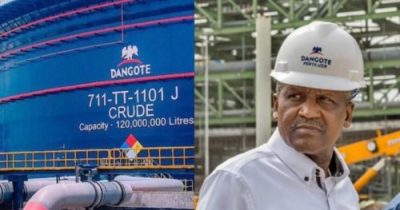
Apparently speaking out of frustration, Alhaji Aliko Dangote on Sunday indicated his willingness to give up ownership of the multibillion-dollar Dangote refinery to the Nigerian National Petroleum Company Limited (NNPCL).
Many Nigerians have at the weekend expressed concern over the new dimension the brawl between the Dangote Group and regulatory authorities in the oil and gas industry have taken over the operations of the Dangote refinery.
Aliko Dangote, had alleged that local and foreign interests, which he likened to a “mafia”, made repeated attempts to thwart his refinery’s completion.
A few days afterwards, the Nigerian Midstream and Downstream Petroleum Regulatory Authority (NMDPRA) alleged that the Dangote Refinery was producing inferior products compared to imported ones.
Farouk Ahmed, who is the Chief Executive Officer of NMDPRA, alleged that the quality of diesel produced by the refinery was 665 ppm, which he considered inferior, warning therefore that Nigeria may not rely heavily on the Dangote refinery for its fuel supply.
He also said that the refinery has not been licenced to begin operations in the country.
Ahmed made this known while speaking with journalists at the State House, Abuja, on Thursday.
He also denied allegations that the regulatory body was attempting to scuttle the operations of the private refinery due to lack of crude oil supply from international oil companies (IOCs).
In an exclusive interview he granted to PREMIUM TIMES yesterday, however, Africa’s richest man said: “Let them (NNPCL) buy me out and run the refinery the best way they can. They have labelled me a monopolist. That’s an incorrect and unfair allegation, but it’s OK. If they buy me out, at least, their so-called monopolist would be out of the way”.
The 650,000 barrel-per-day Dangote refinery, which cost about $19 billion, was commissioned last year, and it had shown promise of helping to tackle Nigeria’s huge reliance on fuel on importation of refined petroleum products, thereby saving the country about 30 per cent of the total foreign exchange spent on imports.
Speaking further in the exclusive interview, Aliko said: “We have been facing fuel crisis since the 70s. This refinery can help in resolving the problem but it does appear some people are uncomfortable that I am in the picture. So I am ready to let go, let the NNPC buy me out, run the refinery.” https://cleveradvertising.com
Credible sources told Daily Trust last night that the NMDPRA boss will face a committee of the House of Representatives today (Monday) to explain all the contentious issues around the Dangote refinery, and to prove that the federal government had nothing to hide around the success or otherwise of the refinery.
This is just as economic experts and stakeholders made a strong case for the federal government and its agencies to give full backing to domestic refineries like Dangote’s, saying this would have a multiplier effect on the economy.
When contacted by one of our reporters to comment on the allegations that Ahmed had the backing of the Presidency on the dispute with the Dangote refinery, the Special Adviser to the President on Information and Strategy, Bayo Onanuga, declined to make any comment. Instead, he sent the number of the Special Adviser to the President on Energy, Mrs Olu Verheijen.
But efforts to reach out to her were not successful as she neither answered calls to her line nor responded to a text message sent to it.
Our reporters wanted to also confirm from the government officials if President Bola Tinubu, being the Minister of Petroleum Resources, would intervene to address the lingering spat, which appears to be doing great damage to the government, as many Nigerians allege that there are attempts to sabotage the local refinery. Similarly, keen observers believe that the brawl could also do damage to Nigeria, as it sends wrong signals to potential investors.
How Dangote refinery’s trouble came to the fore
Speaking at the Afreximbank Annual Meetings in Nassau, The Bahamas, in June, Dangote said his 650,000-barrel-per-day refinery would act as Nigeria’s strategic reserve.
Following that disclosure, Devakumar Edwin, the Vice President in charge of Oil and Gas at the Dangote Industries Limited, accused IOCs in Nigeria of actively trying to undermine the Dangote Oil Refinery and Petrochemicals.
Edwin stated that the IOCs were intentionally obstructing the refinery’s efforts towards purchasing local crude by inflating premium prices above market rates, compelling the refinery to import crude from countries like the United States, thereby leading to significantly higher costs of its products.
He said: “While the Nigerian Upstream Petroleum Regulatory Commission (NUPRC) is trying its best to allocate the crude for us, the IOCs are deliberately and willfully frustrating our efforts to buy the local crude.”
The NUPRC had recently met with crude oil producers as well as refinery owners in Nigeria to ensure full adherence to Domestic Crude Oil Supply Obligations as enunciated under Section 109(2) of the Petroleum Industry Act (PIA).
IOCs failing to meet local demands
According to the PIA, international oil companies are expected to meet local demands by supplying crude oil to refineries in the country before exporting. The Act, which was signed by former President Muhammadu Buhari, had been recently reinstated by the NUPRC.
According to the commission, IOCs are mandated to sell first to local refineries before exporting to foreign countries.
The NUPRC said it would serve as a middleman between local refiners and producers when agreements on crude supply cannot be finalized, helping to arrange a sales purchase agreement based on a willing-buyer, willing-seller model.
Also, in a recent interview with CNN, Aliko Dangote, said: “The NNPC is doing its best, but some of the IOCs, they are struggling to give us crude, everybody is used to exporting and nobody wants to stop exporting.”
Regulatory agencies fire back at Dangote
The Chief Executive Officer of NUPRC, Gbenga Komolafe, in a recent interview on ARISE TV, said that it was “erroneous” to claim that IOCs were refusing to make crude oil available to domestic refiners.
He said the NUPRC had been very supportive of the Dangote refinery, intervening several times to help secure crude supply. Speaking along the same line on Thursday, NMDPRA’s Ahmed alleged that the Dangote refinery had requested the regulator to stop giving import licences to other marketers so as to be the only fuel supplier in Nigeria.
Speaking about quality, he said: “So, in terms of quality, currently the AGO quality in terms of sulphur is the lowest as far as the West African requirement of 50 ppm is concerned.
“Dangote refinery and some modular refineries, like Waltersmith refinery and Aradel refinery, are producing between 650 to 1,200ppm. So, in terms of quality, their product is much more inferior to the imported quality,” he had alleged.
Ahmed’s allegations elicit public reactions
Reacting to the statement, Dan Katsina said: “This is a strategy to frustrate Dangote refinery. This has been the game of the oil cabals that has made a whole country not have a single functioning refinery for years. They should allow him to sell the inferior one to us like that, we will buy it.”
Also reacting, Bob Eakins said: “We’re talking about promoting local production and exports to reduce demand for foreign exchange and strengthen the naira.
“You should be talking about competition for local producers instead of trying to manipulate Nigerians to focus on your propaganda that Dangote wants a monopoly. Well, it’s Nigeria that will suffer because Dangote refinery will just focus on exports.”
Johnson Ayodeji asked, “Is it Dangote that made the government-owned refineries moribund for decades? Or has Dangote stopped any other person from building a refinery? We know the enemies of our country.”
Sola Solarin said: “This statement is self-indicting. If Dangote has not been licensed, why is he being allowed to sell diesel? If Dangote can meet our local needs, why do we need to import? We can restrict import without compromising energy security.”
‘NNPC to blame for Lack of crude, not IOCs’
An economist, Kelvin Emmanuel, said the NNPCL was responsible for Dangote refinery not getting sufficient crude locally, rather than IOCs.
Emmanuel urged the National Assembly and President Tinubu to question the NNPC’s inability to provide Dangote refinery with the $1.7 billion feedstock required to finalise the acquisition of 20% of the refinery.
“I do not agree that the IOCs are to blame for the situation with the lack of feedstock. I think the blame points directly to the NUPRC and the NNPC and the fact that a lot of the Nigerian crude oil has been negotiated on crude oil swap agreements…and then domestic crude oil supply obligations to refineries that, in my opinion, are not existent. The IOCs have what they call cost oil. They have 40%”, he said.
Dangote invites regulators for products testing
Meanwhile, Dangote, in a statement on Saturday, said the refinery’s products not only comply with set standards but have also surpassed those of its contemporaries, with parts per million (ppm) measurement now at 32.
“In terms of quality, when we started, our quality was about six hundred to six fifty ppm; the ppm was one of the best in terms of quality at the time we started.
“But as of today, we are at 87 ppm. And you can take a sample on Monday. By Monday, we’ll be less than 50 ppm. By the beginning of August, we will be at 10 ppm.
“In terms of quality, nobody can produce anything better than us. I just got the result from our official 5 minutes ago, we are now down to even 32 ppm,” Dangote said.
He challenged regulators, including the NMDPRA, to come to the refinery and examine the quality of its products.
“When we were coming here, the Speaker of the House (of Representatives) said we should pick up samples from two filling stations. And when we got to our plant, we also picked up samples. The results have actually come out.
“They checked that of Total which 1,890 ppm was. The other filling station came to 2,563 ppm. Then the flashpoint metrics was 61 which is below the minimum. The minimum is 66. Also, the Total number is 26 flashpoints. Ours is 96. The records are there. We don’t believe in the test of people when they bring in ships. We do our own tests.
“I want to plead with the regulators to come at any time and before they get here, our ppm will be below 10,” Dangote stated.
…Calls off plans to invest in new steel plant
In a related development, Aliko Dangote is calling off plans to invest in a new steel plant in Nigeria after the government accused him of seeking to become a monopoly with his new refinery in the West African nation.
“Our own board has decided that we should not have the steel plant. If we do, we’ll be called all sorts of names,” Dangote said at a media briefing Saturday at the refinery in Lagos.
The billionaire had announced earlier this year that once his mega-refinery was fully operational, his next investment venture was to start construction of a 5,000 ton steel plant that would supply the product to the West African market.
“Let other Nigerians also go and do it, because we’re not the only Nigerians here, there are even some Nigerians with even more cash.
“They should bring in that money from Dubai and from other parts of the world to come and invest in our own Fatherland. The accusation of monopoly is really very disheartening. Whatever Dangote was given, other people too were given. In fact, some of them even got more than us,” Dangote added.
Experts speak
An economic analyst and Chief Executive Officer, Centre for the Promotion of Private Enterprises, Dr Muda Yusuf, in a chat with Daily Trust, said: “What the economy needs at this time is production…Domestic refining of petroleum products has incredible multiplier effects on the economy, in addition to promoting macroeconomic stability through reduction in import dependence.
“The government and its agencies, therefore, need to provide every support possible to support domestic refining of petroleum products.
“The narrative about monopoly powers is better addressed by encouraging more domestic producers than perpetuating the culture of Importation.”
A professor of Economics, Kingsley Nwokoma, however said the government should focus on completing its own refineries to deepen the local market more so as more modular refineries are already operating.
Nwokoma, who is the Director, Centre for Economic Policy Research and Analysis, University of Lagos, said: “The argument of monopoly is not well founded because the government already has plans to rehabilitate Port Harcourt Refinery, Warri and even Kaduna. So, if those three refineries are working and with the modular refineries springing up all over that people are clamouring for it to be legalized and states are having their own modular refineries, the argument of monopoly does not hold water.
“The government should avoid blame games and make efforts to rehabilitate the other local refineries that have been there, let them come on stream, then Dangote will not be an issue”, he said.





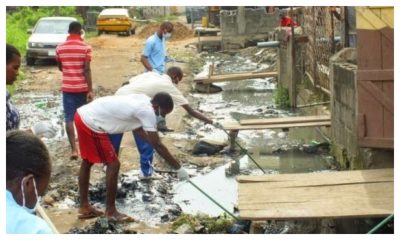
The Lagos State Government has officially announced the reintroduction of the monthly environmental sanitation exercise, set to resume on Saturday, April 25, 2026.
This marks the return of the state-wide cleaning culture nearly ten years after its suspension in 2016.
Residents are expected to clean their surroundings, clear drainage channels in front of their homes, and dispose of waste responsibly as part of efforts to improve environmental hygiene and tackle waste management challenges.
The Commissioner for Environment and Water Resources, Tokunbo Wahab, on Saturday, disclosed the development in a statement, explaining that the exercise would officially restart later in the year.
“I am pleased to inform all Lagosians that the monthly environmental sanitation exercise will resume effective Saturday, 25th April 2026, holding on the last Saturday of every month from 6:30 a.m. to 8:30 a.m.
“During this period, residents are enjoined to clean their surroundings, clear drainage channels in their frontages, and dispose of waste properly as a civic responsibility.”
Wahab urged residents to view the initiative as a shared duty toward building a healthier city, stressing that the government would ensure strict compliance.
“This exercise is a collective responsibility and a vital part of our commitment to a cleaner, healthier, and flood-resilient Lagos. And it shall be backed with the full enforcement weight of the Lagos State Government,” he said.
Explaining the significance of reintroducing the sanitation culture, the commissioner said the state was returning to a practice that once formed part of Lagosians’ lifestyle.
“Let me formally say this and say it boldly. Mr Governor and his deputy are taking a very audacious step. For those who don’t know, prior to 2016, we had a culture that emphasised cleanliness as next to godliness.
“Once every month, we took our time to clean up our surroundings and then maintain them sparkling. However, for some years, we stopped it.”
He said the absence of the exercise had contributed to mounting environmental pressures in the state.
“Now, waste, debt, and environmental challenges have become an existential challenge to us as a state. It’s taken us over a year to debate, talk, and agree that it’s time to reintroduce a monthly environmental sanitation,” Wahab said.
Appealing to residents for cooperation, he urged Lagosians to dedicate a small portion of their time each month to environmental cleanliness.
“It’s a plea that it is time for us to give up just one or two hours a month. In our marketplaces, every Thursday, we observe environmental cleanliness. But this time, we are saying as a state, let us sit back once a month and observe the cleanliness of our environment as we used to before 2016.”
JomogNews reports that the monthly sanitation exercise, previously held on the last Saturday of every month between 7 a.m. and 10 a.m., was suspended in November 2016 following a legal pronouncement restricting movement during the exercise.
The suspension later coincided with growing waste management concerns, including clogged drainage channels and indiscriminate refuse disposal across parts of the state.
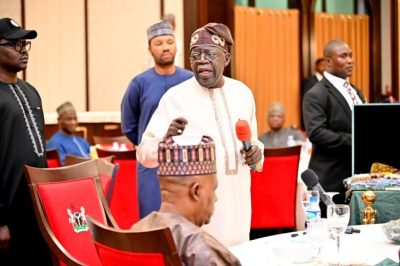
President Bola Tinubu has urged the media to extend their scrutiny to State and Local Governments, noting that his administration’s reforms have significantly increased their financial allocations.
During an interfaith breaking of fast with media executives on Friday, the President emphasized that sub-national governments now enjoy greater financial autonomy and should be held accountable for grassroots development.
Tinubu said his administration’s economic reforms, especially the removal of the petrol subsidy, have increased funds available to states.
“We have opened up the principle of federalism to the extent that local governments are now getting their money. But how they use it is in your hands, so don’t bombard me alone. Look at local governments too, and equally, the sub-national,” Tinubu said.
“Today, there is no state that is borrowing to pay the salaries of employees. Yes, we can complain that it is not enough. We can complain we are not where we should be, but we have to manage what we have to sustain today, survive tomorrow, and make progress”.
Tinubu commended the media for criticising his government, saying it challenged and provoked him to serve Nigerians better.
“Thank you for inspiring me and challenging me in critical moments of my life. If I look at various barrages of negative comments as opposed to positive aspects of the assignment, I shouldn’t be standing here. That is the truth,” the president said.
“You didn’t spare me, but you challenged me, provoked that intellectual curiosity of a leader that must perform. There is no morning that I ever leave my house without going through the newspapers. It’s an addiction. I read all of you, it might not be in full detail, but the headlines, the ones that hit me.
“Leadership is about taking responsibility to make decisions at the right time. Otherwise, it’s a failure. At the time, we had to confront the subsidy. Nigeria was on the verge of bankruptcy.
“But having asked for the job and getting it, I cannot look back other than make corrections as I move along, save the nation, bring it back from the brink. Today, I can stand proudly before you that we are back from that brink.”
Tinubu added that he will continue to do his job with “patriotic dedication” to improve Nigeria.

A prosecution witness, Captain Ezekiel Bala-Agaba, testified in a Lagos Federal High Court on Thursday, that he personally delivered $15 million in cash to former NIMASA DG, Patrick Akpobolokemi.
The witness, Bala-Agaba, a former Executive Director of Maritime Safety, Shipping Development and Marine Operations at NIMASA, made the disclosure while testifying before Justice Ayokunle Faji of the Federal High Court in Lagos.
Captain Agaba, who appeared as the 15th prosecution witness, told the court that funds meant for pipeline surveillance were withdrawn from NIMASA’s accounts, converted into dollars, and handed over to Dr Akpobolokemi.
According to him, the money was taken to a Bureau de Change, which converted it into $15 million before the cash was delivered to the NIMASA office on Burma Road, Apapa, Lagos.
He said he subsequently took the money to the office of the then Director-General.
“The money was sent to a Bureau de Change, which later brought the dollar equivalent to our office at Burma Road, Apapa, Lagos. I asked my Personal Assistant, Ekene Nwakuche, to carry the bag and follow me to the Director-General’s office,” he told the court.
The witness explained that he collected the bag from his aide before entering the office.
“When we got to the door of the Director-General’s office, I collected the bag from him and asked him to wait outside. I then personally delivered the sum of $15 million to the Director-General.”
The witness was initially a defendant in the case but later opted to testify for the prosecution.
While being led in evidence by prosecuting counsel, Suleiman Suleiman, he explained the chain of command within NIMASA and how financial approvals were processed in the agency.
According to him, the Director-General is the overall head of the agency and issues instructions to directors, who then implement policies in line with the NIMASA Act.
He told the court that he chaired the agency’s Intelligence Committee, which was responsible for certain security-related operations.
“As chairman of the committee, I oversaw its activities and reported directly to the Director-General, Dr. Patrick Akpobolokemi,” he said.
During the proceedings, the witness was also shown a document containing a letter from Access Bank to the Economic and Financial Crimes Commission (EFCC) detailing transactions in NIMASA’s accounts between 2013 and 2015.
When asked how much money he took to the former Director-General, Agaba replied: “$15 million.”
After listening to the testimony, Justice Faji adjourned the matter until April 22 and 23 for cross-examination of the witness.
The EFCC had in December 2015 arraigned Dr. Akpobolokemi and seven others before the court on a 30-count charge bordering on conspiracy, fraudulent conversion of funds and money laundering.
Those charged alongside the former NIMASA boss include, Warredi Enisuoh, Governor Juan, Ugo Frederick, Timi Alari, as well as Alkenzo Limited and Penniel Engineering Services Limited.
They pleaded not guilty to the offences.
The anti-graft agency alleged that the defendants conspired to divert funds running into over N1.15 billion under the guise of providing security intelligence in Nigeria’s maritime domain.
According to the EFCC, the NIMASA Intelligence Committee allegedly received N1,153,000,000 between December 2013 and July 2015.
Investigations further revealed that several companies contracted to execute the intelligence operations were either unregistered or lacked the capacity to perform the services, while some were allegedly linked to the defendants.
The prosecution also alleged that the defendants nominated or owned many of the companies used to execute the contracts.
One of the charges stated that the defendants conspired to commit offences punishable under the Money Laundering (Prohibition) Act, 2012.

LASG Announces Resumption Of Monthly Environmental Sanitation For April 25

Just In: Nigerian Football Legend Henry Nwosu Passes Away At 62

States, LGA Now Have More Allocations — Tinubu Urges Media To Demand Accountability

Nigerian Gospel Icon Evangelist Toun Soetan Dies At 73

I Delivered $15m Agency Cash To Ex-NIMASA DG Akpobolokemi, EFCC Witness Tells Court

CBN Bars Chronic Loan Defaulters from Accessing New Banking Services

Makinde Only In PDP Because He’s Not Seeking Re-election – Otitoju

Corruption Probe: Court Grants ICPC Access To Data On El-Rufai’s Seized Gadgets

Beyond My Wildest Dreams: Disu Opens Up During Handover From Egbetokun

Terror Surge: Tinubu Demands Results from Security Chiefs
-
 News1 day ago
LASG Announces Resumption Of Monthly Environmental Sanitation For April 25
-
 Sports1 day ago
Just In: Nigerian Football Legend Henry Nwosu Passes Away At 62
-
 News2 days ago
I Delivered $15m Agency Cash To Ex-NIMASA DG Akpobolokemi, EFCC Witness Tells Court
-
 News1 day ago
States, LGA Now Have More Allocations — Tinubu Urges Media To Demand Accountability
-
 Entertainment2 days ago
Nigerian Gospel Icon Evangelist Toun Soetan Dies At 73