
News
Minimum Wage: Labour Awaits Tinubu’s Decision On N62,000

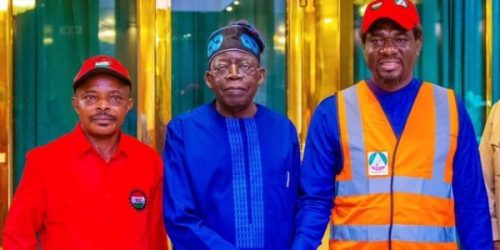
- Blasts govs for rejecting N60,000; labels their action wicked
- Pay rise may not bode well for economy – Experts
President Bola Tinubu’s position on the N62,000 just agreed on by the Federal Government and the Organised Private Sector as the new minimum wage will determine Organised Labour’s next line of action on the matter, the Nigerian Labour Congress (NLC) said yesterday.
President of NLC Joe Ajaero told The Nation that labour was awaiting the President’s response to the recommendation adopted at the Friday meeting of the Tripartite Committee on the new minimum wage in Abuja.
Labour’s first reaction to the proposal on Friday was that of rejection with Trade Union Congress (TUC) President Festus Osifo insisting that the minimum acceptable to workers was N250,000.
The NLC, in a separate statement yesterday, took a swipe at state governors for declaring that they lack the capacity to pay even the N60,000 earlier offered by the federal government.
The workers union said the stance of the governors was in bad taste and “an extreme bad news for the poor.”
The new figure of N62,000 was confirmed by Imo State Governor Hope Uzodinma and TUC President Festus Osifo at the end of Friday’s meeting.
Emerging from the meeting of the Tripartite Committee, Governor Uzodimma said the panel would send its recommendation to President Tinubu for his approval.
He said the President would in turn forward an executive bill on a final figure as minimum wage to the National Assembly.
Contacted last night, Ajaero said he expected the President to make further consultation on the committee’s recommendation before taking a final decision on the minimum wage by way of an Executive Bill to be sent to the National Assembly.
“We’ll wait for the harmonisation of such consultation,” he said.
He recalled that in the build-up to the emergence of the existing N3,0000 minimum wage, a lower figure was recommended for the approval of then president who raised it to what was eventually sent to the legislature.
Labour blasts govs over stance on minimum wage
Reacting yesterday to the Friday statement issued by the Nigeria Governors Forum (NGF) that the states lack capacity to pay N60,000 as minimum wage, the NLC said the governors acted in bad faith.
“It is unheard of for such a statement to be issued to the world in the middle of an ongoing negotiation. It is certainly in bad taste,” NLC’s Head of Information and Public Affairs, Benson Upah, said in a statement entitled ‘Save the country from a certain death.’
He said the union was alarmed by the NGF’s claim that state governments could not even afford to pay N60,000 as minimum wage as “a few states will end up borrowing to pay workers every month.”
He said the forum‘s claim was untrue “as FAAC allocations have since grown from N700 billion to N1.2 trillion, making the governments extremely rich at the expense of the people.”
Continuing, Upah said: “All that the governors need to do to be able to pay a reasonable national minimum wage (not even the N60,000) is cut the high cost of governance, minimise corruption as well as prioritise the welfare of workers.
“It is important to explain here that a national minimum wage is not synonymous with the different pay structures of different states. The national minimum wage is the lowest floor below which no employer is allowed to pay. The aim is to protect the weak and the poor.
“We are not fixated with figures but value. Those who argue that moving the national minimum wage from N30,000 to N60,000 is sufficiently good enough miss the point. In 2019 when N30,000 became the minimum, N300 exchanged for $1 (effectively making the minimum wage an equivalent of $100 or thereabouts) while the inflation rate was 11.40.
“At the moment, the exchange rate is at N1,600 to $1 while inflation hovers at 33.7 per cent (40 per cent for food). This puts the value of the minimum wage at $37.5 for a family of six.
“This is happening at a time the cost of everything has risen by more than 400 per cent as a result of the removal of fuel subsidies. This is an extreme bad news for the poor.
“Government’s policies of fuel subsidy removal, mindless devaluation of the Naira, energy tariff hike by 250 per cent and interest rate hike by 26.5 per cent will continue to hurt the economy (especially manufacturing sector) and the poor.
“Already manifest is the mass incapacity of Nigerians leading to overflowing warehouses of the productive sector of the economy. The downward trend will continue except the capacity of workers and businesses is enhanced.
“Paying a miserable national minimum wage portends grave danger to not only the workforce but the national economy as in truth, economies of most states are driven by workers’ wages.
“In the light of this, we urge the governors to do a re-think and save the country from a certain death.”
The NGF had said although its members were “in agreement that a new minimum wage is due,” all parties should consider the implications for the various interest groups.
It asked all parties to note that the new minimum wage negotiations “also involve consequential adjustments across all cadres, including pensioners.”
It said: ”The NGF cautions parties in this important discussion to look beyond just signing a document for the sake of it; any agreement to be signed should be sustainable and realistic.
“All things considered, the NGF holds that the N60,000 minimum wage proposal is not sustainable and cannot fly.
“It will simply mean that many states will spend all their FAAC allocations on just paying salaries with nothing left for development purposes.
“In fact, a few states will end up borrowing to pay workers every month.
“We do not think this will be in the collective interest of the country, including workers.
“We appeal that all parties involved, especially the labour unions, consider all the socioeconomic variables and settle for an agreement that is sustainable, durable and fair to all other segments of the society who have legitimate claim to public resources.”
The Nation had reported that it took a lot of efforts by the Tripartite Committee to have the OPS on its side on the new minimum wage.
But the states remained adamant and sources said some had accused the federal government of caving in to labour’s pressure without critically looking at the feasibility of the new figure.
Yusuf, Adebola, Ibrahim warn on implication of proposed minimum wage
Reviewing the protracted crisis over the new minimum wage yesterday, some economic experts warned that the proposal was fraught with negative effects on the economy.
A former Director General at the Lagos Chamber of Commerce and Industry (LCCI), Dr. Muda Yusuf, said the new minimum wage was nothing to cheer about.
“The N62K is not a lot of money in today’s Nigeria given the cost of living, high inflation situation, especially for workers who are living in the cities,” Yusuf, an economist told The Nation.
He said: “The N62K cannot really do much. But again, we have to situate it within the context of affordability and sustainability.
“One thing that is very challenging about the public sector workforce is that the public workforce is generally too large. There is a lot of redundancy in the public sector whether at federal, state or local government level.
“Given the wide disparity between what labour proposed and what the government is offering, there are concerns about whether the industrial or labour actions will be permanently laid to rest at this time because the recent industrial action crippled and disrupted the economy significantly, and as investors and private sector players, we don’t want to see a repeat of that.
“Also, more disturbing is that the governments in the state have been quoted as saying that they cannot even pay the N60K. So it means that the economic operators, the uncertainty around this wage issue is likely to persist, and that is, of course, not good for the economy.
“The wage negotiation is a very tricky and complicated matter. The state governments are stakeholders in this process and I’m not sure they are effectively part of this negotiation.
“So, that means that even the negotiation is not sufficiently conclusive because before we can impose a minimum wage, the state and local governments must be part of the negotiations.”
To address the issue frontally, Yusuf, who is the CEO of Centre for Private Enterprise, said the government needs to do all within its powers to refloat the economy by ensuring that everything is done within its powers to get its priority right in terms of managing food inflation, insecurity and infrastructural challenges like power and energy supply.
In a separate interview, the National President of the All Farmers Association of Nigeria, Arch Kabir Ibrahim, called for government’s support for farmers to check high cost of food.
“Our incomes depend on what we grow. If the government wants to have wholesale support for everyone in Nigeria, what we should do is to make the farm inputs more affordable so that we can optimise our farm production and make the produce more affordable,” Ibrahim said. “Government is talking about attainment of food security and a state of emergency on food. Affordability is a very important factor in driving food security.
“If people cannot afford food within the minimum wage now, that means there would be more agitations. The government must do something readily here and now.”
On his part, Peter Sunday Adebola, a capital management expert, said: “When we are talking about wages for workers, there are two sides to it. We call one nominal wage and then we call the other one real wage.
“The nominal wage is the amount in terms of money just as we are talking about now. But the real wage is actually what the value of that wage is or what that wage can actually buy. We calculate that in economics by dividing the nominal wage by the inflation rate.
“The inflation rate is 33.69% now. The nominal wage, if they increase it to N62,500 as they are proposing now, you are going to get the real wage.
“What you are going to get is that based on the current inflation that you have now, your real wage is N62,500 and you divide it by the inflation rate. That is, you divide that N62,500 by 1.3369. You are going to get what the real wage is going to be within the economy.
“So that means that you don’t deceive yourself by saying that you have an increment of maybe 100% from what it used to be. It is not 100%.
“But that said, what we have to now look at is how we can bring it down. Because how can we increase the real wage? That should bother everybody.
“Granted, they are increasing the nominal wage. But how can we increase the real wage? To increase the real wage, they have to work in such a way that the inflation rate comes down. And what they are going to do is not different from what we have been talking about since in order to grow the economy.”
Adebola observed that “the headline inflation rate is currently about 33.69 with the food inflation at over 40%, which means that if you want to really calculate what your money can buy, even if they increase your nominal wage by 100% or whatever, you have to look at what the money can now buy.
“That means that what N1,000 can buy now, if they increase this money, N1,000 will not be able to buy it again. That’s what it means if you don’t work on inflation. So what the government needs to do is to work on how to bring down food prices.”
On the way forward, he said at least let the food inflation come down from about 40% to 10%, or even lower.
“If that happens, then the increment will have an impact on the economy because if they don’t do that and it has to be simultaneous, as they are increasing the minimum wage, then they have to bring down the food prices.
“Because anytime the market women hear that they have increased the salary; this is what we call behavioral finance. What they would do is that they too will increase the prices of everything, and that one will also lead to inflation.
“But inflation is a function of supply and demand. If there is no way you want to hide the price of tomatoes. Tomatoes are plenty in the market. If you don’t want to sell your own, you can export it in your shop. So we have to make sure that we tackle the issue of food production.”
Raising some posers, Adebola said the minimum wage can hardly take care of anyone presently. “If they are giving somebody N62,000 or N62,500, whatever they put it, somebody is living in let’s say Iyana-Ipaja or he is living in Abule-Egba and he has to go to work in Victoria Island, or even in Alausa Secretariat. If you calculate the transport fare to and fro every day, the person will be spending about N2,000.
“So now, N2,000 is calculated for 25 days; that is N50,000. Will the person not pay rent or is he not going to be feeding his family? So what is left? That is why this increment is necessary. They just have to do it.
“However, while they are doing it, they also have to bring the prices of food down.”






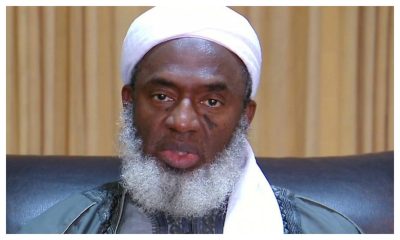
Islamic cleric Sheikh Ahmad Gumi recently defended his past interactions with armed groups, stating he “took the bull by the horns” in 2021 as a necessary step to address Nigeria’s insecurity.
In a post shared on Facebook on Thursday, Gumi said decades of neglect of disadvantaged populations had created deep socio-economic inequalities, leaving many youths vulnerable to manipulation by external forces seeking to destabilise the country.
According to him, the widening gap between the rich and the poor has turned many young people into “ready-made foot soldiers” in cycles of violence that enable the exploitation of Nigeria’s resources.
He also criticised the political class for being largely unresponsive, while noting that the intellectual community is preoccupied with survival struggles.
Reflecting on his past efforts, Gumi said he “took the bull by the horns” in 2021 by attempting to reintegrate violent elements into society rather than allowing them to be further radicalised.
He wrote: “Nigeria for decades has ignored the underprivileged section of its society. There is a significant socio-economic discrepancy, and the society is stratified. This makes our teaming youth ready-made foot soldiers for any foreign interest trying to divide us and rule. To plunder our resources while we are involved in a vicious circle of violence.
”Unfortunately, the political class is unattentive while the intelligentsia is held hostage in the struggle for existence.
“In 2021, I took the bull by the horns in an attempt to bring some of these uncouth elements back to our fold rather than letting them be exploited by the devil.
“I still believe this is the only way out of our predicament. However, it needs the political will and determination to achieve.
“May Allah bring peace back to our nation.”
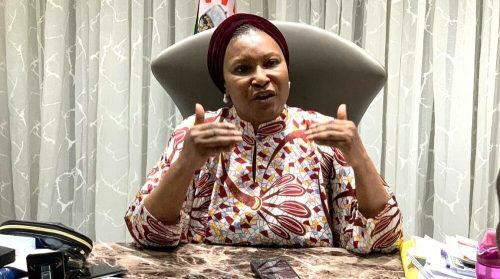
The Federal High Court in Abuja rejected an ex-parte application seeking to bar Senator Ireti Kingibe from participating in the activities of the African Democratic Congress (ADC).
Justice Peter Lifu declined the request from Wuse Ward leaders, ruling that such an order could not be granted without first hearing from the senator.
Instead, the judge ordered the ward leaders said to be loyal to the Minister of the FCT, Nyesom Wike, to put the senator on notice to appear in court to join issues with them on their grievances.
Justice Lifu in a ruling on Thursday held that discretion in such a request for prohibition from party activities and in political matters must be exercised judicially and judiciously.
The judge said justice would be met in the case of the plaintiffs only when the side of the defendant is heard on its merit, along with that of the plaintiffs.
Consequently, the judge ordered that Senator Ireti Kingibe should be served with all court processes by the plaintiffs to enable her become aware of the suit and to prepare her defense.
The judge fixed April 20, 2026, for the plaintiffs and the serving senator to appear before him for hearing of all applications in the matter.
Those who sued the senator in the suit marked FHC/ABJ/ CV/539/2026 are Okezuo Godfrey Anayo and Isaiah Ojonugwa Samuel, on behalf of themselves and ward members as plaintiffs. The senator is the sole defendant.
In their ex-parte application, Kingibe representing the FCT in the Senate was said to have been suspended on March 10, 2026 by her Wuse Ward executives following allegations of anti-party activities and disregard of your cnstitution of the ADC.
In the ex- parte application filed on their behalf by a Senior Advocate of Nigeria, SAN, Kolawole Olowookere, the aggrieved ADC members in Wuse Ward applied for an order of interim injunction restraining Kingibe from parading herself as a member of party, pending the hearing and determination of their motion on notice for interlocutory injunction.
They also asked the judge to restrain the senator from performing any function, attending meetings or performing activities reserved for ADC members or representing the party in any activities.
Besides, the Ward Executive Committee had asked that she be restrained from further interfering with the administration of the ward, ward register and other activities.
The suit was predicated on five grounds among which are that Mrs Kingibe was placed on suspension due to anti-party activities, gross misconduct and confiscation of the ward statutory records.
They argued that the suspension followed due process as enshrined in the ADC constitution and ratified by the two thirds majority of the EXCO members.
They averred that despite the communication of the suspension to Kingibe, she has continued to hold parallel meetings, issue press statements as an ADC member, and using her security details to intimidate the executive committee.
“Her actions constitute flagrant disregard to the internal mechanism of the party,” the plaintiffs stated.
Meanwhile, a lawyer, Abubakar Marshall who claimed to be representing the senator, announced that he had filed a preliminary objection against the suit. He added that it was served on M. S. Garba, who stood for the plaintiffs at Thursday’s proceedings.
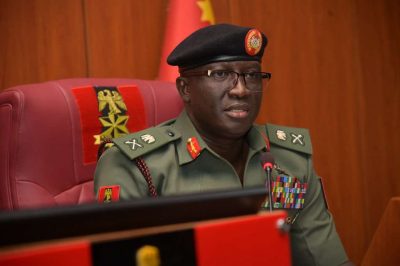
The Chief of Army Staff (COAS), Lieutenant General Waidi Shaibu, visited Jos, Plateau State, on Thursday, April 2, 2026, to lead a high-powered security assessment following recent security breaches.
The visit was aimed at strengthening public confidence and reinforcing ongoing efforts to stabilize affected communities.
Colonel Appolonia Anele, acting Director, Army Public Relations, said in a statement that the visit forms part of ongoing efforts to restore calm and entrench lasting peace across the state.
According to the statement, upon arrival, the COAS was received by the Executive Governor of Plateau State, Caleb Mutfwang, in a clear demonstration of strong civil-military cooperation and a shared commitment to addressing emerging security challenges.
The statement said the COAS received a comprehensive operational briefing from the General Officer Commanding 3 Division and Commander, Joint Task Force Operation ENDURING PEACE, Major General Folusho Oyinlola, who highlighted ongoing operations and proactive measures being implemented in synergy with other security agencies to contain threats, protect lives and property, and stabilise affected communities.
“As part of his engagements, Lieutenant General Shaibu also interacted with community leaders and residents, reassuring them of the unwavering commitment of the Nigerian Army to safeguarding all law-abiding citizens.
He urged residents to remain calm, vigilant and supportive of security agencies by complying with the curfew and cooperating fully with ongoing operations and investigations, while going about their lawful activities.
The chairman of Jos North Local Government Area, Hon. Dachung Bagos, commended the COAS for the timely visit, noting that the presence of the nation’s top military leadership would boost public confidence and reinforce trust in ongoing security efforts.

Gumi Defends Dialogue As Sole Solution To Nigeria’s Insecurity

Court Clears Senator Ireti Kingibe To Remain Active In ADC

COAS Shaibu Hits Jos To Restore Peace, Public Confidence

President Tinubu Appoints New PTDF Executive, Reappoints TCN Head

Simi Welcomes Second Child With Adekunle Gold

United Nigeria Airlines Staff Suspended After Viral Amputee Abuse Video

Pay Your Fare: AIG Cracks Down On Officers Boarding For Free

INEC Removes David Mark, Aregbesola From ADC Leadership Portal

JUST IN: FG Approves Friday 3, Monday 6, as Easter Public Holidays

When 8 million Customers Trust You, Safety Cannot Be an Afterthought
-
 News1 day ago
When 8 million Customers Trust You, Safety Cannot Be an Afterthought
-
 News1 day ago
United Nigeria Airlines Staff Suspended After Viral Amputee Abuse Video
-

 News2 days ago
El-Rufai Back In Detention After Temporary Compassionate Release
-
 News2 days ago
2027: Kwankwaso’s Exit Marks End Of NNPP – Kwankwasiyya Movement
-
 News1 day ago
JUST IN: FG Approves Friday 3, Monday 6, as Easter Public Holidays
-

 News2 days ago
Lagos CP Withdraws Taskforce From Traffic Duties
-
 News1 day ago
Pay Your Fare: AIG Cracks Down On Officers Boarding For Free
-
 News1 day ago
INEC Removes David Mark, Aregbesola From ADC Leadership Portal