
News
NDLEA Declares India-Based Nigerian Couple Wanted

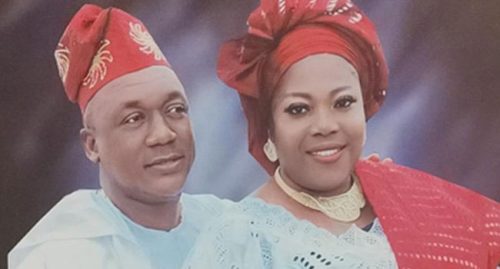
NDLEA has declared an India-based Nigerian couple wanted.
JomogNews reports that a couple, Kazeem Omogoriola Owoalade and Rashidat Ayinke Owoalade have been declared wanted for running a cocaine cartel from India by the National Drug Law Enforcement Agency (NDLEA).
This online news platform understands that disclosing this in a statement on Sunday, NDLEA spokesman, Femi Babafemi, said four members of the syndicate were arrested in Lagos, where a Sports Utility Vehicle was recovered and two houses traced to them were sealed for forfeiture to the Federal Government.
“A couple, Kazeem Omogoriola Owoalade (alias Abdul Qassim Adisa Balogun) and Rashidat Ayinke Owoalade (alias Bolarinwa Rashidat Ayinke), who runs a cocaine cartel from India has been declared wanted by the National Drug Law Enforcement Agency following the arrest of four members of the syndicate in Lagos where a Sports Utility Vehicle was recovered and two houses already traced to them sealed for forfeiture to the Federal Government,” the statement read.
“Two members of the syndicate: Imran Taofeek Olalekan and Ishola Isiaka Olalekan were arrested on April 3, 2024, following their bid to export 3.40kg cocaine on a Qatar Airlines flight going to Oman through the Murtala Muhammed International Airport, MMIA Ikeja Lagos.
“While Imran was the courier conveying the drug consignment to Oman, Ishola recruited him for the head of the cartel, which investigation has now revealed to be Alhaji Kazeem Omogoriola Owoalade whose Indian residence permit bears Abdul Qassim Adisa Balogun based in India.
“Efforts to dismantle his network in Nigeria paid off after five weeks of surveillance and follow-up operations when another member of the syndicate, Hamed Abimbola Saheed, who works directly with the baron was arrested on Tuesday 14th May at Abule Egba area of Lagos. It was indeed Saheed who lodged Imran in a hotel a day before his aborted trip to Oman and equally dropped him and Ishola at the Lagos airport the day they were arrested.”
See the full statement below:
NDLEA declares couple wanted, arrests 4 cartel members over cocaine seizures
Intercepts China, UK-bound drug consignments concealed in steel bolts, shea butter; recovers 2,025 explosives in Niger, Kano, Sokoto; arrests 70-year-old grandpa in Borno for dealing in illicit drugs
A couple, Kazeem Omogoriola Owoalade (alias Abdul Qassim Adisa Balogun) and Rashidat Ayinke Owoalade (alias Bolarinwa Rashidat Ayinke), who runs a cocaine cartel from India has been declared wanted by the National Drug Law Enforcement Agency, NDLEA following the arrest of four members of the syndicate in Lagos where a Sports Utility Vehicle was recovered and two houses already traced to them sealed for forfeiture to the Federal Government.
Two members of the syndicate: Imran Taofeek Olalekan and Ishola Isiaka Olalekan were arrested on April 3, 2024 following their bid to export 3.40kg cocaine on a Qatar Airlines flight going to Oman through the Murtala Muhammed International Airport, MMIA Ikeja Lagos.
While Imran was the courier conveying the drug consignment to Oman, Ishola recruited him for the head of the cartel, which investigation has now revealed to be Alhaji Kazeem Omogoriola Owoalade whose Indian residence permit bears Abdul Qassim Adisa Balogun based in India. Efforts to dismantle his network in Nigeria paid off after five weeks of surveillance and follow up operations when another member of the syndicate, Hamed Abimbola Saheed who works directly with the baron was arrested on Tuesday 14th May at Abule Egba area of Lagos. It was indeed Saheed who lodged Imran in a hotel a day before his aborted trip to Oman and equally dropped him and Ishola at the Lagos airport the day they were arrested.
During a search of Hamed house, NDLEA operatives recovered some phenacetine, a cutting agent for Cocaine, weighing 900 grams. He confessed that the recovered substance was what was left of the consignment Imran was taking to Oman the day he was arrested.
His arrest led to a follow up operation at the home of the Owoalade couple at 20 Eyiaro street, Ogudu Orioke, Lagos where another suspect was arrested and a new model Toyota RAV4 SUV marked FKJ-773 JJ belonging to Rashidat and additional 400 grams of Cocaine recovered in addition to already prepared suitcases to be used for illicit drug concealment, digital weighing scales and other paraphernalia.
In the same vein, NDLEA officers of the Directorate of Operations and General Investigations, DOGI, attached to a courier firm in Lagos on Wednesday 15th May intercepted two parcels, containing Cocaine and Amphetamine concealed in steel bolts and shea butter. While the cocaine weighing 587 grams, was concealed in eight steel bolt screws going to China, the Amphetamine consignment packed in vape pens and hidden in shea butter was going to the United Kingdom.
Attempt by Emeka Nwadiaro (a.k.a Mega) to export 3.6kg Loud, a strain of cannabis concealed in 36 water flasks to Dubai, UAE was also thwarted at a logistic company in Port Harcourt, Rivers state on Thursday 16th May while a swift follow up operation led to the arrest of the owner of the consignment, Emeka Nwadiaro in Onitsha, Anambra state same day.
While NDLEA operatives in Lagos intercepted a mercedes benz bus loaded with 840kg cannabis and arrested the driver, Samuel Henry, at Olojo in Ojo LGA, Lagos, another suspect, Lawal Adam was nabbed along Otukpo road, Aliade, Benue state on Friday 17th May with 75,000 pills of opioids including tramadol and exol-5. Two suspects: Olisa Etisi, 32, and Jonathan Umeh, 25, were arrested along Owerri – Onitsha road, Imo state following the discovery by NDLEA operatives of a big gas cyclinder used to conceal six blocks of Loud, a strain of cannabis weighing 3.85kg.
In Borno state, 70-year-old Adamu Mohammed was arrested at Mbulamel, Biu LGA on Thursday 16th May with 2kg cannabis and 33.55grams of diazepam, while Gaddafi Sani, 27, was arrested with 30 kilograms of cannabis along Abuja-Kaduna road, Kaduna.
In Yobe state, a consignment of 91.1kg opioids and 13kg cannabis going to Maiduguri, Borno state, was recovered from hidden compartments of a petrol tanker along Potiskum-Damaturu road by NDLEA officers who arrested the driver, Ismaila Ali.
No less than four suspects were arrested in connection with the seizure of 2,025 pieces of improvised explosive devices (IED) materials intercepted in a Toyota hummer bus marked AGL 905 XX by NDLEA officers along Agaie – Lapai road, Niger state. While the duo of Abdulrauf Shitu Adeyemi, 46, and Asmiyu Rahim, 45, conyeying the IED materials were arrested on the spot, follow up operations led to the arrest of Husaini Abdullahi, 25, at Sokoto main market, Sokoto and Nazifi Abdullahi, 37, at Naibawa Motor Park, Kano on Friday 17th May. The Chairman/Chief Executive of NDLEA, Brig Gen Mohamed Buba Marwa (Retd) has directed that all four suspects and the explosive materials be transferred to the appropriate security agency for further investigation. In another operation, Muhammad Lawal, 42, was nabbed at Central Market Motor Park, Katsina State with 1,000 Ampoules of Pentazocine injection.
A total of 105kg cannabis was on Friday 17th May recovered from a house at Obola community, Owan West LGA, Edo state and a suspect, Gloria Oris arrested when NDLEA officers raided the area. In Kwara state, two suspects: Abdulganiyu Karaman, 55, and Sunday Abel, 37, were on Saturday 18th May arrested with 83kg cannabis and tramadol at Boriya, Baruten LGA, and Offa respectively.
With the same vigour, the various commands of the Agency across the country continued with the War Against Drug Abuse, WADA, advocacy campaign in the past week. Some of them include: WADA sensitisation lecture for students and teachers of Government Girls Science secondary school, Malumfashi and Government Girls Science Secondary School, Daudawa, Katsina; Government Girls Science College, Tunga Magajiya Rijau LGA, Niger state; students and teachers of St. Theresa’s College Oke-Ado, Ibadan, Oyo state; students of Government Girls Secondary School, Tudun Wada, Kano; students of Dein secondary school, Imobi secondary school and St. Columbas Grammar School, Agbor, Delta State.
While commending the officers and men of the MMIA, Rivers, Lagos, Kano, Kaduna, Yobe, Borno, Niger, Benue, Kwara, Imo, and Edo Commands of the Agency as well as those of DOGI for their outstanding feats in the past week, Chairman/Chief Executive Officer of NDLEA, Brig. Gen. Mohamed Buba Marwa (Retd) said the efforts have further affirmed the cardinal role of NDLEA in the security architecture of the country. He equally applauded their counterparts in all the commands across the country for intensifying their WADA advocacy lectures to create a fair balance between their drug supply reduction and drug demand reduction activities.
Femi Babafemi
Director, Media & Advocacy
NDLEA Headquarters Abuja
Sunday 19th May 2024
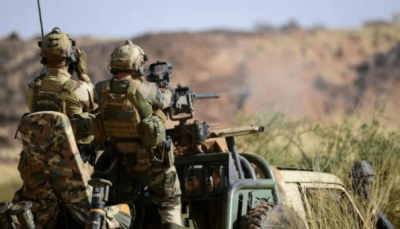
Troops of the Joint Task Force (North East) Operation Hadin Kai (OPHK) have neutralized scores of Boko Haram and ISWAP terrorists during foiled attacks across several communities in Borno State.
This was contained in a press statement signed by the Media Information Officer, Headquarters Joint Task Force North East Operation HADIN KAI, Lt. Col. Sani Uba, on Sunday.
The statement reads: “In sustained offensive operations against Boko Haram/ISWAP terrorists, troops of the Joint Task Force (North East) Operation HADIN KAI (OPHK) recorded significant successes, including the neutralisation of insurgents, arrest of suspects and disruption of logistics networks across the theatre of OPHK between 31 March and 4 April 2026.
“In a major operational breakthrough, troops of OPHK under Sector 2, deployed at Geidam, in conjunction with operatives of the Civilian Joint Task Force (CJTF), acting on credible intelligence, engaged terrorist logistics suppliers near Geidam.
“Following a fierce encounter, three terrorists were neutralised while a logistics-laden vehicle was disabled. Recovered items included food supplies, mobile phones and other materials intended for terrorist camps.
“Similarly, troops of OPHK successfully ambushed terrorists attempting to emplace Improvised Explosive Devices (IEDs) along the Konduga–Kawuri axis.
“The troops engaged the insurgents with decisive firepower, triggering an explosion that neutralised two terrorists.
“Weapons and ammunition were recovered during exploitation. In continuation of counter-IED operations, troops have discovered and safely detonated an IED planted along the Ngoshe–Pulka road, thereby preventing potential casualties and ensuring safe movement along the route.
“Troops also recorded notable successes in counter-terrorism operations in Adamawa State.
“In Mubi North Local Government Area, troops of OPHK under Sector 4, in conjunction with local hunters, conducted an offensive operation, leading to the arrest of three Boko Haram/ISWAP members.
“Preliminary investigation revealed that one of them had previously gathered intelligence on troops’ locations and activities.
“The terrorist further confessed to participating in a recent attack where they suffered heavy casualties. All the arrested persons are currently in custody for further investigation. In another development, troops of OPHK operating in Mainok market arrested three terrorist logistics suppliers and recovered livestock, mobile phones and cash, further weakening the supply chain supporting terrorist operations.
“Additionally, troops intercepted a vehicle conveying terrorist elements in Yobe State. Two of the occupants were identified with gunshot wounds linked to earlier engagements with troops.
“The BHT/ISWAP members, along with recovered communication devices, are in custody for further investigation. Further operations across the theatre led to the arrest of BHT/ISWAP informants and collaborators attempting to cross into neighbouring areas, as well as the apprehension of a foreign national at a checkpoint under suspicious circumstances.
“Meanwhile, troops of OPHK have maintained aggressive operations within the Area of Responsibility, effectively denying criminal elements freedom of action. All operations were conducted without incident, while troops’ morale and combat efficiency remain high.
“The Military High Command commends the troops for their resilience, vigilance and utmost professionalism, urging them to sustain the momentum in ongoing operations in the security and economic interest of the North East region,” Uba explained.
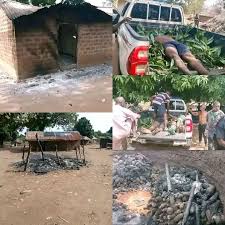
At least nine people were reportedly killed in a fresh attack by suspected armed herdsmen on the Mbalom community in Gwer East Local Government Area (LGA) of Benue State on Easter Sunday.
Some local reports suggest the death toll may be as high as 17 victims, with many residents still missing as search efforts continue in surrounding bushes.
The attackers were also said to have razed several houses, including the community market and food barns, leaving widespread destruction in the community.
It will be recalled that a similar attack occurred in Mbalom on April 24, 2018 when suspected herdsmen stormed St. Ignatius Catholic Church, killing 19 persons, including two Catholic Priests, Fathers Joseph Gor and Felix Tyolaha.
It was gathered that Saturday’s attack left several persons missing, and injured one individual who is currently receiving treatment at a hospital.
A resident, who spoke on condition of anonymity, said the attackers, numbering over 50, invaded the community in what appeared to be a coordinated operation.
“People were fast asleep when the attackers sneaked into the community around 5am and began setting houses and the market ablaze,” he said.
“As residents woke up and attempted to flee, the gunmen opened fire on them, killing innocent people without provocation. So far, nine corpses have been recovered, but we fear the number may rise as many persons are still missing and unaccounted for.
“It is a sad Easter for our people who were preparing for the celebrations before this tragedy struck.
“We cannot understand why these killings continue. A few years ago, they attacked this same community and killed two Catholic priests and worshippers in a church. We urge the government to take decisive action to stop these senseless killings,” he added.
The Security Adviser to the Gwer East Local Government Chairman, Mr. Austin Awua, who was at the scene to oversee evacuation of the victims, confirmed the incident.
While confirming the number of casualties, he said “the victims are mostly young men. Community members have also reported that several persons are still missing, although we have recovered nine bodies so far,” he said.
According to him, “residents said they noticed unusual movements between 4am and 5am, and by 5am the attackers had begun burning houses and the entire community market.
“At the moment, we cannot ascertain the reason for this unprovoked attack. The community is deserted, as residents have fled for safety.
“This area is close to where two Catholic priests and 17 worshippers were killed in 2018. However, the situation is currently calm.”
Awua added that security agencies, including the Army, Police, and Civil Defence, had been deployed to the area through the coordination of the Chairman to prevent further attacks.
“In their usual pattern, the armed herdsmen struck and fled. Security personnel are now on the ground to forestall any recurrence.
“I was directed by the Local Government Chairman to ensure the evacuation of the corpses. He will also brief the Security Adviser to the Governor, after which he will engage community leaders to determine the cause of the attack,” he stated.
Also speaking, the Chairman of Gwer East Local Government Council, Mr. Timothy Adi, who visited the affected area, confirmed the development. He assured that security had been reinforced and that search-and-rescue operations were ongoing.
Meanwhile, Governor Hyacinth Alia has condemned the attack, describing it as barbaric and unacceptable.
In a statement issued by his Chief Press Secretary, Tersoo Kula, the Governor expressed deep sympathy to the affected families and reiterated his administration’s commitment to protecting lives and property.
Part of the statement read: “Governor Hyacinth Alia, strongly condemns the heinous attack carried out by suspected armed herdsmen on the peace-loving people of Mbalom in Gwer East LGA.
“The governor describes the barbaric act as unacceptable and a direct affront to the collective peace and security of the state.. He expresses deep sympathy to families affected by the attack and assures them that the government stands firmly with them in this difficult time,” the statement read.
The Governor also noted “with grave concern what appears to be a pattern of calculated and selective attacks in parts of the state, stressing that such acts of terror, though increasingly complex, will not be allowed to persist.
“He reiterates his unwavering resolve to confront and subdue all forms of criminality threatening the safety of Benue communities.”
The governor also commended security agencies, particularly the Nigeria Police Force, for their swift response and ongoing operations.
“He notes their assurance that they are on the trail of the perpetrators and will ensure their arrest and prosecution. He urges them to intensify efforts to prevent further occurrences and bring lasting relief to affected communities,” he said.
While acknowledging the challenges posed by recurring attacks, Governor Alia assured residents that his administration would not relent in strengthening security architecture and enhancing intelligence gathering.
He called on residents to remain calm, vigilant, and law-abiding, while supporting security agencies with credible information.
The Police Public Relations Officer, DSP Udeme Edet could not be reached for comments.
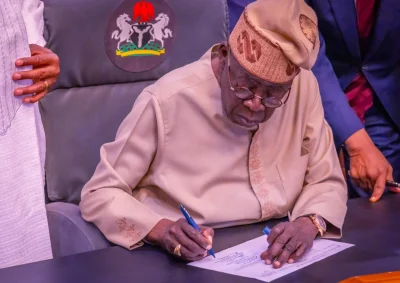
President Bola Tinubu has approved a ₦3.3 trillion payment plan to settle long-standing “legacy debts” in Nigeria’s power sector.
This move is part of the Presidential Power Sector Financial Reforms Programme and aims to stabilize the electricity value chain and improve power reliability nationwide.
The plan addresses legacy debts accumulated between February 2015 and March 2025 under the Presidential Power Sector Financial Reforms Programme.
Following a comprehensive review, the government agreed on ₦3.3 trillion as a full and final settlement, ensuring transparency and fairness.
A statement issued on Sunday by the special adviser to the president on information and strategy, Bayo Onanuga, stated that implementation of the repayment plan has already begun, with fifteen power plants already signed settlement agreements totalling ₦2.3 trillion.
The statement read, “President Bola Tinubu has approved the payment plan to finally settle the outstanding debts under the Presidential Power Sector Financial Reforms Programme.
“The debt repayment plan followed the final review of the legacy debts that have beset the power sector for more than a decade.
“The long-standing debts accumulated between February 2015 and March 2025. Following verification, ₦3.3 trillion has been agreed as a full and final settlement, ensuring a fair and transparent resolution.
“Implementation has begun, with 15 power plants signing settlement agreements totalling ₦2.3 trillion. The Federal Government has already raised ₦501 billion to fund these payments. Out of the amount, N223 billion has been disbursed, with further payments underway.
“What this means for Nigerians: With payments reaching the power value chain, generation will be more stable. With power plants supported, electricity reliability will improve.”
Commenting on the development, the Special Adviser on Energy to the President, Olu Arowolo-Verheijen, explained that the settlement would improve electricity reliability by stabilising the power value chain.
“This programme is not just about settling legacy debts. It is about restoring confidence across the power sector — ensuring gas suppliers are paid, power plants can keep running, and the system begins to work more reliably,” she said.
The adviser added that the reforms are part of broader initiatives, including better metering and service-based tariffs that link consumer payments to the quality of electricity received.
Priority will also be given to supplying electricity to businesses, industries, and small enterprises to support job creation and economic growth.
“The goal is simple: more reliable power for homes, stronger support for businesses, and a system that works better for all Nigerians,” Arowolo-Verheijen said.
President Tinubu commended all stakeholders involved in resolving the legacy issues and confirmed that the next phase of the reforms, Series II, will commence this quarter.

Scores Of Terrorists Neutralised As Military Foils Major Borno Offensive

Easter Tragedy: Herdsmen Strike Benue Again, 9 Dead

President Tinubu Authorizes ₦3.3tn For Power Sector Liquidity, Recovery

Tinubu Commiserates With Former INEC Chair Jega Following Death Of Wife

IGP Disu Summons Lagos Officers To Abuja Over Viral Harassment Video

Fire Outbreak Leaves Hundreds Of Traders Stranded At Yaba Market

11 Dead, 50 Homes Razed In Violent Nasarawa Community Clashes

Union Bank Looted: How former directors gambled with billions and nearly destroyed a national bank

Gumi Defends Dialogue As Sole Solution To Nigeria’s Insecurity

Court Clears Senator Ireti Kingibe To Remain Active In ADC
-
 News2 days ago
President Tinubu Authorizes ₦3.3tn For Power Sector Liquidity, Recovery
-
 News2 days ago
Scores Of Terrorists Neutralised As Military Foils Major Borno Offensive
-
 News2 days ago
Tinubu Commiserates With Former INEC Chair Jega Following Death Of Wife
-
News2 days ago
Easter Tragedy: Herdsmen Strike Benue Again, 9 Dead