
News
Workers, Consumers Reject Electricity Tariff Cut, Demand Total Reversal


The Trade Union Congress (TUC), electricity workers, and consumers yesterday described as ‘negligible,’ the 8.1 per cent reduction in the tariff paid by Band A customers.
They rejected the Nigerian Electricity Regulatory Commission’s reduction of the tariff payable by Band A customers from N225/kWh to N206.8/kWh and called for a reversal of the tariff announced last month, saying there should not be segregation of electricity users.
The House of Representatives and Center for the Promotion of Private Enterprise (CPPE) Chief Executive Officer Muda Yusuf, however, described the review as a step in the right direction.
NERC which is the regulator of the nation’s electricity sector, had in a statement yesterday directed the 11 electricity Distribution Companies (DisCos) in the country to reduce Band A tariff from N225/kWh to N206.8/kWh for this month.
The DisCos immediately started complying with the order which NERC explained was primarily informed by the stability of the Naira against foreign currencies.
When the commission upped the tariff paid by customers on Band A feeders last month, it cited variables like the high cost of gas, prevailing exchange rate, and other macroeconomic factors as reasons.
However, there was an uproar over the adjustments from different quarters.
Yesterday, TUC which is the umbrella body of senior workers, said pre-April tariff of N66/KWh should be restored while NERC engages with stakeholders .
The union had during the May 1 Workers Day celebration, issued NERC a one- week ultimatum to return the tariff to the old price of N66/KKWh . The ultimatum expires today.
“Our ultimatum was very clear: revert to the old N66/KKWh not to reduce. Because the Electricity Act is very clear there should be stakeholders’ engagement. That was not done.
“ NERC has to revert to the old tariff and let there be stakeholders engagement in line with the provisions of the Electricity Act. So reducing it is unacceptable to us,” said TUC’s Deputy President Tommy Okon.
Also, National Union of Electricity Employees (NUEE) Ag. General Secretary Dominic Igwebike, said: ‘’We are asking for total reversal of the tariff for band A customers.’’
‘’To us as electricity workers, there should be no discriminatory tariff for Nigerians, “ added in a text message.
Consumers under the aegis of the Association for Public Policy Analysis (APPA), argued that the new rate of N206.80/kwh ‘’does not make any difference.’’
They wondered whether or not the reduction was enough incentive for manufacturers to remain in business or reduce the costs of their goods.
“Reducing it (tariff) what is the difference? N225, you are now reducing to N206.80. Industries are dying. What we should be asking is that this amount they are putting now, will it make the industry functional? Will it make the manufacturers to be able to manufacture more and reduce the costs of their products ?,” APPA National President Princewill Okorie, asked.
Recommending solutions to the Federal Government, Okorie urged it to reverse its policy on gas.
He said: ‘’Government should come up with a new policy that will spell out domestic gas obligation for power generation. Why should gas that is produced locally be sold to generating companies(GenCos) in dollars? How should Nigeria that lacks gas for electricity generation export the same product?
‘’It is not a patriotic policy. The solution we want is that the Federal Government should reverse the policy on gas.
“If gas is made available to the generation companies to generate electricity, tariff will be reduced. Why will we have gas in quantity and be buying gas in dollars in Nigeria and no percentage is reserved for generating electricity for Nigerians.
“Rather, the gas is sold abroad by private companies while citizens are suffering by paying high tariffs. It does not help. It is not a patriotic decision at all. Let gas be made available for GenCos.”
The APPA chief also called on the Federal Government to settle the N47 billion that its Ministries, Departments and Agencies are owing the DisCos.
He said that it was unfortunate that government’s decisions in the power were, more often, based on data from the DisCos and not those generated by any of its agencies .
Okorie asked: “Where are the data ? All these decisions taken in the power sector are they based on data from consumers generated at community level? Should the ministry (Power) depend of DisCos to give them report and not verify from the consumers.
“Who is overseeing consumers’ issues in the Ministry of power? Who is advising the ministry and the President on issues regarding power? Nobody.’’
But the House of Representatives which welcomed the 8.1 tariff reduction agreed that there is more to be done.
The House had on April 30 called on NERC to reverse N225/kWh tarrif increase. It also raised a committee to hold a public hearing with stakeholders in the power sector and Organised Labour.
Spokesman for the House Akintunde Rotimi told The Nation that the public hearing would proffer lasting solutions to frequent tariff increases by NERC and DisCos.
CPPE founder Yusuf said NERC had by the review shown that it was responsive to the peoples’ concerns
He added that he believes that the tariff slash, no matter how minimal, would have a positive impact on manufacturing in particular and electricity consumers in general.
Yusuf said: “The review is a welcome development and above every other thing it proves that NERC is sensitive to the concerns that have been expressed by the citizens, electricity consumers and the national assembly. It is a good development for manufacturers and electricity consumers generally.
“As to the factor of macroeconomic environment, I hope that if the situation changes may be by this month or next, NERC would not come back and start reviewing it again because there is also a need for stability in electricity tariff.
‘’Electricity is of strategic importance to the economy and not only for its comfort for the people but for the productivity in the economy.
‘’It is not a sector where we should be expecting another volatility because we have enough volatility in other sectors and no need adding that of electricity into it.’’
Why tariff was slashed, by NERC
Improvement in the exchange rate , among other macroeconomic parameters, induced the tariff reduction, said the commission.
It explained in a statement that the slash was in tandem with the tariff methodology covering this month.
“The commission has considered changes in the macroeconomic parameters over the preceding month of April 2024 and especially the appreciation of exchange rates – consequently the Commission has approved a downward review of end-user tariffs for Band “A” customers from N225/kWh to N206.8/kWh,” the statement read.
NERC also reiterated that it was committed to providing a balanced and effective regulatory regime serving the needs of the Nigerian Electricity Supply Industry (NESI).
In their separate reactions, the DisCos which complied almost immediately by reducing the Band A tariff, said they follow ‘’directives given by the regulators knowing they are in the best interest of all parties.’’
They assured customers of continued improvement in service delivery.
Ikeja Electricity (IE) Head of Corporate Communications, Kingsley Okotie, assured customers in Bands B, C, D, and E that their tariff ‘’remains unchanged.”
Okotie added: “We are a compliant Disco; we follow directives given by the regulators knowing it is in the best interest of all parties. We assure our customers of continued improvement in our service delivery as we strive to give them a better quality of service.
‘’Please be informed of the downward tariff review of our Band A feeders from N225/kwh to N206.80/kwh effective 6th May 2024 with guaranteed availability of 20 to 24 hours supply daily.’’
The Abuja Electricity Distribution Company said: “We are pleased to share with you the revised tariff for our Band A feeders, which will decrease from N225/kWh to N206.80/kWh effective today(Monday). We assure customers on our Band A feeders of continued availability of electricity supply for 20-24 hours daily.”



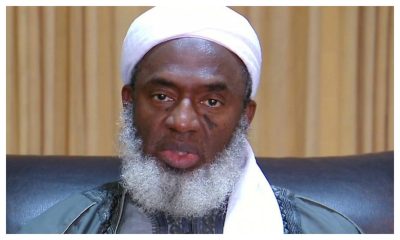
Islamic cleric Sheikh Ahmad Gumi recently defended his past interactions with armed groups, stating he “took the bull by the horns” in 2021 as a necessary step to address Nigeria’s insecurity.
In a post shared on Facebook on Thursday, Gumi said decades of neglect of disadvantaged populations had created deep socio-economic inequalities, leaving many youths vulnerable to manipulation by external forces seeking to destabilise the country.
According to him, the widening gap between the rich and the poor has turned many young people into “ready-made foot soldiers” in cycles of violence that enable the exploitation of Nigeria’s resources.
He also criticised the political class for being largely unresponsive, while noting that the intellectual community is preoccupied with survival struggles.
Reflecting on his past efforts, Gumi said he “took the bull by the horns” in 2021 by attempting to reintegrate violent elements into society rather than allowing them to be further radicalised.
He wrote: “Nigeria for decades has ignored the underprivileged section of its society. There is a significant socio-economic discrepancy, and the society is stratified. This makes our teaming youth ready-made foot soldiers for any foreign interest trying to divide us and rule. To plunder our resources while we are involved in a vicious circle of violence.
”Unfortunately, the political class is unattentive while the intelligentsia is held hostage in the struggle for existence.
“In 2021, I took the bull by the horns in an attempt to bring some of these uncouth elements back to our fold rather than letting them be exploited by the devil.
“I still believe this is the only way out of our predicament. However, it needs the political will and determination to achieve.
“May Allah bring peace back to our nation.”
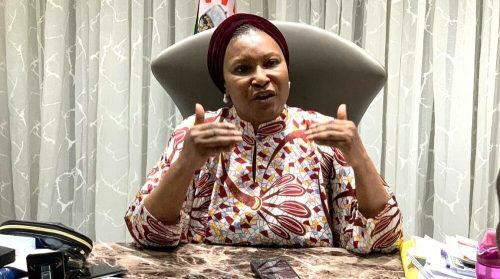
The Federal High Court in Abuja rejected an ex-parte application seeking to bar Senator Ireti Kingibe from participating in the activities of the African Democratic Congress (ADC).
Justice Peter Lifu declined the request from Wuse Ward leaders, ruling that such an order could not be granted without first hearing from the senator.
Instead, the judge ordered the ward leaders said to be loyal to the Minister of the FCT, Nyesom Wike, to put the senator on notice to appear in court to join issues with them on their grievances.
Justice Lifu in a ruling on Thursday held that discretion in such a request for prohibition from party activities and in political matters must be exercised judicially and judiciously.
The judge said justice would be met in the case of the plaintiffs only when the side of the defendant is heard on its merit, along with that of the plaintiffs.
Consequently, the judge ordered that Senator Ireti Kingibe should be served with all court processes by the plaintiffs to enable her become aware of the suit and to prepare her defense.
The judge fixed April 20, 2026, for the plaintiffs and the serving senator to appear before him for hearing of all applications in the matter.
Those who sued the senator in the suit marked FHC/ABJ/ CV/539/2026 are Okezuo Godfrey Anayo and Isaiah Ojonugwa Samuel, on behalf of themselves and ward members as plaintiffs. The senator is the sole defendant.
In their ex-parte application, Kingibe representing the FCT in the Senate was said to have been suspended on March 10, 2026 by her Wuse Ward executives following allegations of anti-party activities and disregard of your cnstitution of the ADC.
In the ex- parte application filed on their behalf by a Senior Advocate of Nigeria, SAN, Kolawole Olowookere, the aggrieved ADC members in Wuse Ward applied for an order of interim injunction restraining Kingibe from parading herself as a member of party, pending the hearing and determination of their motion on notice for interlocutory injunction.
They also asked the judge to restrain the senator from performing any function, attending meetings or performing activities reserved for ADC members or representing the party in any activities.
Besides, the Ward Executive Committee had asked that she be restrained from further interfering with the administration of the ward, ward register and other activities.
The suit was predicated on five grounds among which are that Mrs Kingibe was placed on suspension due to anti-party activities, gross misconduct and confiscation of the ward statutory records.
They argued that the suspension followed due process as enshrined in the ADC constitution and ratified by the two thirds majority of the EXCO members.
They averred that despite the communication of the suspension to Kingibe, she has continued to hold parallel meetings, issue press statements as an ADC member, and using her security details to intimidate the executive committee.
“Her actions constitute flagrant disregard to the internal mechanism of the party,” the plaintiffs stated.
Meanwhile, a lawyer, Abubakar Marshall who claimed to be representing the senator, announced that he had filed a preliminary objection against the suit. He added that it was served on M. S. Garba, who stood for the plaintiffs at Thursday’s proceedings.

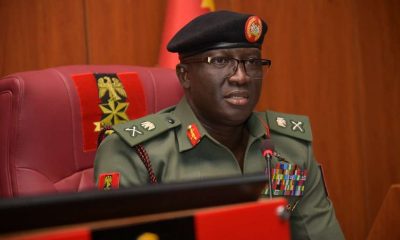
The Chief of Army Staff (COAS), Lieutenant General Waidi Shaibu, visited Jos, Plateau State, on Thursday, April 2, 2026, to lead a high-powered security assessment following recent security breaches.
The visit was aimed at strengthening public confidence and reinforcing ongoing efforts to stabilize affected communities.
Colonel Appolonia Anele, acting Director, Army Public Relations, said in a statement that the visit forms part of ongoing efforts to restore calm and entrench lasting peace across the state.
According to the statement, upon arrival, the COAS was received by the Executive Governor of Plateau State, Caleb Mutfwang, in a clear demonstration of strong civil-military cooperation and a shared commitment to addressing emerging security challenges.
The statement said the COAS received a comprehensive operational briefing from the General Officer Commanding 3 Division and Commander, Joint Task Force Operation ENDURING PEACE, Major General Folusho Oyinlola, who highlighted ongoing operations and proactive measures being implemented in synergy with other security agencies to contain threats, protect lives and property, and stabilise affected communities.
“As part of his engagements, Lieutenant General Shaibu also interacted with community leaders and residents, reassuring them of the unwavering commitment of the Nigerian Army to safeguarding all law-abiding citizens.
He urged residents to remain calm, vigilant and supportive of security agencies by complying with the curfew and cooperating fully with ongoing operations and investigations, while going about their lawful activities.
The chairman of Jos North Local Government Area, Hon. Dachung Bagos, commended the COAS for the timely visit, noting that the presence of the nation’s top military leadership would boost public confidence and reinforce trust in ongoing security efforts.

Gumi Defends Dialogue As Sole Solution To Nigeria’s Insecurity

Court Clears Senator Ireti Kingibe To Remain Active In ADC

COAS Shaibu Hits Jos To Restore Peace, Public Confidence

President Tinubu Appoints New PTDF Executive, Reappoints TCN Head

Simi Welcomes Second Child With Adekunle Gold

United Nigeria Airlines Staff Suspended After Viral Amputee Abuse Video

Pay Your Fare: AIG Cracks Down On Officers Boarding For Free

INEC Removes David Mark, Aregbesola From ADC Leadership Portal

JUST IN: FG Approves Friday 3, Monday 6, as Easter Public Holidays

When 8 million Customers Trust You, Safety Cannot Be an Afterthought
-
 News1 day ago
When 8 million Customers Trust You, Safety Cannot Be an Afterthought
-

 News2 days ago
El-Rufai Back In Detention After Temporary Compassionate Release
-
 News1 day ago
United Nigeria Airlines Staff Suspended After Viral Amputee Abuse Video
-
 News2 days ago
2027: Kwankwaso’s Exit Marks End Of NNPP – Kwankwasiyya Movement
-
 News1 day ago
JUST IN: FG Approves Friday 3, Monday 6, as Easter Public Holidays
-
 News1 day ago
Pay Your Fare: AIG Cracks Down On Officers Boarding For Free
-

 News2 days ago
Lagos CP Withdraws Taskforce From Traffic Duties
-
 News14 hours ago
COAS Shaibu Hits Jos To Restore Peace, Public Confidence