
News
IGP Kicks As Abdulsalami, Jonathan, Others Canvass State Police


Former President Goodluck Jonathan and other stakeholders Monday supported establishment of state police as a way of addressing the security challenges in the country.
But the Inspector-General of Police, Kayode Egbetokun, argued that Nigeria was not yet ripe for state police.
They spoke in Abuja during the national dialogue on state police, with the theme ‘Pathways to Peace: Reimagining Policing in Nigeria.’
The dialogue was organised by the House of Representatives in partnership with the Policy Legislative and Advocacy Centre (PLAC) and the United Nations Development Programme (UNDP).
State police is part of the proposed amendments to the 1999 Constitution by the 10th National Assembly.
A bill seeking to alter the relevant sections of the 1999 Constitution to empower states to establish their policing outfits, sponsored by Deputy Speaker Benjamin Okezie Kalu and 14 other lawmakers in the lower chamber had, on February 20, passed second reading.
Jonathan said there was no way Nigeria could have adequate security without state police.
According to him, the question of whether to have state police is not an issue of debate, noting that the issue is how to avoid misuse of state police.
He said during the 2014 national conference organised by his administration, when the issue of state police came up, all delegates unanimously supported it alongside other proposed security measures.
He said: “The issue of the need for states to have their own police is not negotiable. There is no way we can continue with this kidnapping that is going on in this country.
“Commercial kidnapping started around 2006, I don’t want to go into that history, when I was governor. But it started in the Niger Delta. Now, it is all over the country.
“The only thing that can help us if we cannot stop it completely, at least, we reduce it to the barest minimum if the states have their police. “In Bayelsa State, when we took over, the state was almost ungovernable. Abdulsalami would remember that when elections were to be conducted in December 1998, the security situation was so bad.
“When we took over, the state was in crisis. Niger Delta agitation was there. The criminal elements were also operating in the creeks and were causing issues for market women and others until Alamieyeseigha, then the governor, set up the Bayelsa Volunteers that worked with the police. We built stations around the creeks and the boys volunteered to work with the police and that brought the situation down. So, there is no way we can manage internal security if states would not have their police.”
Jonathan asked: “How do we manage the state police and it would not be abused by state political actors? If state political actors are abusing and using state police to harass and make life miserable for people who do not belong to their political parties, would the Commander-in-Chief sit down and watch or would he order the military to go and overrun the state police? Of course, that would bring crises.
“And then the key areas that we have to debate are how do we run the state police vis-a-vis the national security architecture of the country? These things need to be done carefully. There are so many countries that have this (state police). We have also experimented before, during the First Republic.”
The former president also said the Independent National Electoral Commission (INEC) operations must be rejigged.
He also suggested that the use of police in elections be made minimal.
According to him, the laws must be strong enough to eliminate tendencies of political actors misusing the state police for their political interests or intimidate political opponents.
Politicians shouldn’t influence state police operations – Abdulsalami
General Abdulsalam Abubakar in his speech cautioned that politicians should not influence operations of state police when established.
“I think, as much as we’re talking of establishing state police, we should also look into the role vis-a-vis that of our royal fathers.
“It’s absolutely necessary for the politicians as much as possible to avoid exerting influence on the ways the police are going to operate if at all we agree to have the police,” he said.
Abdulsalami also stressed the need to review the roles of traditional institutions in addressing insecurity.
He also said that political leaders must ensure honesty, transparency and accountability in governance to engender peace and security in the country.
Ooni of Ife, Emir of Zazzau back state police
The Emir of Zazzau, Ahmad Nuhu Bamalli, said state police would tackle the security challenges better than the current centralised federal policing system.
“We’re in full support of the state police. My emirate is vulnerable to security challenges. If we can have local police, it can scale down the level of insecurity. I’m optimistic that we should key into it”, he said.
He, however, warned that politicians should not use state police with impunity.
The Ooni of Ife, Oba Adeyeye Enitan Ogunwusi, also urged the National Assembly to make state police come to reality.
He said there was no better time for the country to adopt state police than now, given the current security challenges.
A former Minister of Education, Prof. Tunde Adeniran, said the benefits of state police outweigh its demerits.
He said state police would enhance security at the grassroots.
He, however, suggested that modalities be put in place to prevent abuse of state police as well as address its funding.
IGP says Nigeria not ripe for state police
The Inspector-General of Police, Kayode Egbetokun, said Nigeria was not “mature” for state police.
The IGP, represented by Ben Okolo, an Assistant Inspector-General of Police, said the leadership of the force had resolved that Nigeria was not yet ripe for state police.
He said state governors might abuse and use state police for political gains, thereby causing abuse of power and human rights.
“It’s the submission of the leadership of the Nigeria Police Force that Nigeria is yet to be mature and ready for the establishment of state-controlled police,” he said.
The IGP said the Nigeria Security and Civil Defence Corps (NSCDC) and the Federal Road Safety Corps (FRSC) should be merged to become a department in the police.
He said the recruitment of police personnel should be increased by at least 30,000 annually to meet the minimum policing standard of the United Nations.
He also pointed out the financial requirements for establishing state police, insisting that the state government might lack adequate funding.
My commitment to police reforms unwavering – Tinubu
President Bola Ahmed Tinubu, represented by Vice President Kashim Shettima, said his administration was committed to reforming the police to enhance their efficiency and operations.
He said the broad base of stakeholders present at the dialogue underscored the significance attached to the issues of security in the country.
The president said he looked forward to inputs that would guide the government in taking actions to address security challenges in the country.
He described Jonathan and the former Head of State, General Abdulsalami Abubakar (Rtd), as men of honour who shelved personal interests to entrench democracy and guarantee Nigeria’s continued existence.
Current policing system ineffective – Abbas
The Speaker of the House of Representatives, Abbas Tajudeen, said the emerging security challenges had rendered the current unitary policing system, under the Nigeria Police Force, ineffective, leading to calls for its decentralisation by way of having state police.
He said the current security architecture had been overstretched by the security challenges.
He, however, noted that the House remained neutral in the debate for and against state police.
Abbas said evolving security challenges and other institutional and structural challenges had severely affected the general effectiveness of the police.
It must not be used as tool of oppression – Akpabio
The Senate President, Godswill Akpabio, represented by his deputy, Jibrin Barau, said state police must not be used as a tool of oppression by the powerful in the society.
He said, “If we’re to set up state police departments, we must ensure they’re free from the shackles of politics, religious extremism, tribalism and ethnicity. We must empower them to serve and protect without fear or favour.
“Let us never forget that the power of the state police should never be used as a tool of oppression. Let us ensure that political powers cannot manipulate the state police to silence dissent or target their enemies.
“Let us ensure that the influential do not exert undue influence over the state police, and that justice is blind to wealth, power, politics, or status.”
‘Why state police may not work’
Other speakers at the dialogue said establishing state police would not necessarily make any difference if the government failed to address the drivers of insecurity.
A former spokesman for the Nigerian Air Force, Group Capt. Sadeeq Shehu, urged the government to tackle unemployment, hunger, ethno-religious tensions and poverty.
Archbishop John Onaiyekan said the government should first address the problems with the current federal policing system before talking about establishing state police.
A security consultant, Kabiru Adamu, said most drivers of insecurity were embedded in bad governance, adding that if the government could tackle unemployment, lack of access to education, healthcare and other social services, the insecurity would be tamed.
Let’s not rush – Arase
A former Inspector-General of Police and chairman of the Police Service Commission, Solomon Arase, said while it was good to have conversations on state police, it must not be done in a rush.
He said successive governments had failed to show the political will to implement police reforms.
Arase said a proper groundwork should be done before creating state police so that it would not be hijacked by governors whom he described as being “very powerful.”





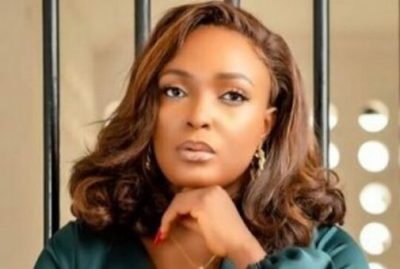
The Nigerian Medical Association (NMA), Delta State branch, has officially debunked the cancer claims made by relationship influencer Blessing Okoro, popularly known as Blessing CEO.
In a statement on Tuesday, the association revealed that the document is an altered version of an original medical report belonging to a different patient diagnosed with breast cancer.
The statement, jointly signed by NMA Delta State Chairman, Dr. Israel Adaigho, and Secretary, Dr. Usamah Hannah, was sighted by The Nation on Tuesday.
According to the NMA, the viral report was purportedly issued by Xinus Medical Diagnostics and signed by consultant pathologist Dr. O.A. Odigwe.
However, Dr. Odigwe, who is the proprietor of the diagnostic centre, clarified that his facility never issued any report to Blessing Okoro.
The association explained that Xinus Medical Diagnostics is located in Asaba, Delta State not Enugu State as claimed in the circulating document.
The centre was contacted in May 2025 by a doctor from a private hospital in Asaba to conduct a confirmatory histology test for a patient identified as Mbara Deborah, who had a suspected case of breast cancer.
The test confirmed breast cancer, and the original result was issued to the referring doctor on May 9, 2025.
The NMA stated that the document currently being paraded online by the law firm Allen Juris Law is the original report bearing the name Mbara Deborah.
The version linked to Blessing CEO appears to be a doctored copy of this same report.
The statement read in part: “Our attention has been drawn to an online histology report purportedly issued to one Blessing Okoro, aka Blessing CEO, by Xinus Medical Diagnostics allegedly located in Enugu State. The said histology report was also alleged to have been signed by Dr. O.A. Odigwe, a consultant pathologist.
“The proprietor of Xinus Medical Diagnostics, Dr. O.A. Odigwe, who is also a member of the Nigerian Medical Association, Delta State chapter, has reached us and offered the following clarification: that Xinus Medical Diagnostics is located in Asaba, Delta State and did not at any time issue any report to Blessing Okoro.
“The centre was contacted in May 2025 by a doctor from a private hospital in Asaba to do a confirmatory test on a possible case of breast cancer for a patient, Mbara Deborah. The test was done and the result issued to the referring doctor as a case of breast cancer on May 9, 2025.
“A copy of that result is the one currently being circulated online by the law firm, Allen Juris Law, with the name Mbara Deborah as the patient. That result from the law firm is the original version issued to the patient through her hospital.”
The NMA said the clarification became necessary because of the way the altered report was allegedly being used to solicit public sympathy and financial assistance.
It urged the public to be cautious and warned against actions that could tarnish the integrity of medical professionals.
The association also called on relevant security agencies to take appropriate steps to protect unsuspecting members of the public.
“The integrity of our association and its members is very paramount and should not therefore be taken for granted.
“We call on the authorities responsible for maintaining law and order to do the needful and save unsuspecting members of the public from being unduly taken advantage of,” it added.
Recall that Blessing CEO recently solicited financial help from the public for the treatment of what she claimed was stage four cancer.
Following widespread backlash and allegations that her medical report had been edited, she made a U-turn, stating in an interview: “I don’t have stage 4 cancer. That was a miscommunication.”
Justice Binta Fatima Nyako of the Federal High Court in Abuja has sentenced Hamatu Modu, a major food supplier for Boko Haram terrorists, to 40 years imprisonment for his involvement in terrorism activities.
Modu, who confessed in the open court to supplying food items and information to terrorists, was put on trial by the federal government through the Attorney General of the Federation and Minister of Justice.
He was slammed with 4- count charges and instantly pleaded guilty to them.
The Director of the Public Prosecution of the Federation, DPPF, Rotimi Oyedepo, SAN, led the prosecution.
In his judgment, Justice Nyako sentenced him to 10 years on each of the count but due to the plea of the defense counsel, the judge ordered that the 40 years imprisonment should run concurrently, giving the convict opportunity to spend only 10 years.
In another development, Isah Ali, another food supplier also in Borno, was jailed 10 years by Justice Nyako.
His jail term will, however, start three years ago when he was arrested and clamped into detention.
The convict confessed to committing the offence as charged.
Justice Nyako ordered that the convicts be made to undergo rehabilitation and radicalization at the end of their service of the jail terms.
The Federal Ministry of Interior was ordered to determine where the two men will serve their jail terms.
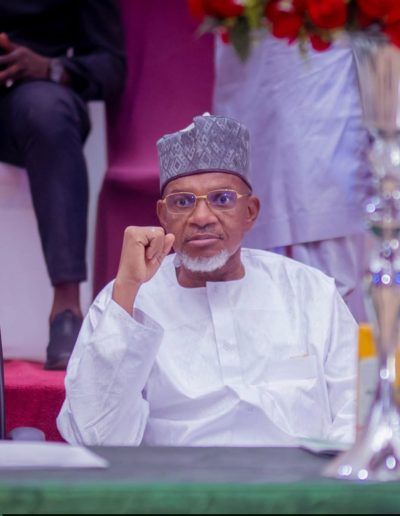
The Speaker of the Kebbi State House of Assembly, Muhammad Usman Ankwai has passed away in the late hours of Monday, 6 April 2026.
Ankwai, who represented Zuru Constituency under the All Progressives Congress (APC), was elected Speaker at the inauguration of the 10th Assembly on June 8, 2023.
Details surrounding the circumstances of his death were not immediately disclosed at the time of filing this report.
His death has, however, triggered an outpouring of condolences from fellow lawmakers, political associates, and residents across Kebbi State, many of whom have described him as a dedicated public servant who contributed to legislative development in the state.
Further announcements regarding burial arrangements are expected to be made by his family soon.

Delta NMA Declares Blessing CEO’s Cancer Report Fraudulent

Abuja Court Jails Boko Haram Food Supplier, Hamatu Modu For 40 Years

Just In: Kebbi Assembly Speaker Muhammad Ankwai Passes Away

Gbenga Daniel Slams Successor As ‘Enfant Terrible’ Who Showed Him Hell

Scores Of Terrorists Neutralised As Military Foils Major Borno Offensive

Easter Tragedy: Herdsmen Strike Benue Again, 9 Dead

President Tinubu Authorizes ₦3.3tn For Power Sector Liquidity, Recovery

Tinubu Commiserates With Former INEC Chair Jega Following Death Of Wife

IGP Disu Summons Lagos Officers To Abuja Over Viral Harassment Video

Fire Outbreak Leaves Hundreds Of Traders Stranded At Yaba Market
-
 News2 days ago
President Tinubu Authorizes ₦3.3tn For Power Sector Liquidity, Recovery
-
 News2 days ago
Easter Tragedy: Herdsmen Strike Benue Again, 9 Dead
-
 News2 days ago
Scores Of Terrorists Neutralised As Military Foils Major Borno Offensive
-
 News2 days ago
Tinubu Commiserates With Former INEC Chair Jega Following Death Of Wife
-
 News4 hours ago
Abuja Court Jails Boko Haram Food Supplier, Hamatu Modu For 40 Years
-
 News2 hours ago
Delta NMA Declares Blessing CEO’s Cancer Report Fraudulent
-
 News13 hours ago
Gbenga Daniel Slams Successor As ‘Enfant Terrible’ Who Showed Him Hell
-
 News9 hours ago
Just In: Kebbi Assembly Speaker Muhammad Ankwai Passes Away