
News
IMF: Why We Asked Nigeria To Remove Fuel Subsidy
And what’s the reason why we counsel against such generalised subsidies is very simple. It tends to be highly regressive, meaning the benefits of such you know, fuel subsidies tend to accrue to the rich and segments to reach out to people and the poor people.


The International Monetary Fund (IMF) has explained why it advised Nigeria to remove fuel subsidies, adding that the subsidy regime was robbing the poor for the rich.
The Director of the African Department of the Fund, Mr. Abebe Selassie, provided insights into the organisation’s position, at the ongoing Spring Meetings of the IMF and World Bank in Washington DC. According to him, the Fund had provided robust content and how the poor could benefit from the policy in the provision of social safety nets.
His words: “Subsidies are about resource allocation internally within Nigeria. So Nigerians, the people of Nigeria pay for these subsidies.
“And what’s the reason why we counsel against such generalised subsidies is very simple. It tends to be highly regressive, meaning the benefits of such you know, fuel subsidies tend to accrue to the rich and segments to reach out to people and the poor people.
“So it’s people that are driving these large cars, with big houses are wanting to see subsidised fuel. They’re the ones benefiting relative to the poor and vulnerable in Nigeria.
“So you know, not only people paying for the subsidies Nigeria, it’s the poorest segments of society that actually are losing out and resources could instead, of course, be used to improve conditions for poorer people instead of accruing to rich people.
“That’s why subsidy reform is important. We applaud the government for the steps government took to reduce the extent of subsidies. I think as oil prices have become volatile, the level of subsidy has also moved up and down. “But I think you know, the direction of travel, I think, to remove the subsidies and use the resources to provide social protection for the most vulnerable households.”
Mr. Selassie revealed that the IMF has provided the sum of $58 billion to African countries since the outbreak of the COVID-19 pandemic and pledged it would do more.
The IMF chief cautioned African countries against commercial loans for the purposes of refinancing because of the current rate hike in most economies.
He advised that instead, countries South of the Sahara that have debt service challenges should look inward for domestic resource mobilization, which would be easier to deal with. The Director criticised the practice of discriminatory tax exemption to some companies and not extended to others.
These special favours to some companies, he observed reduce the effectiveness of governments to optimise tax revenue..
Positive developments in Africa
“Mr. Abebe said that after four challenging years and multiple shocks, Sub-Saharan Africa’s economy appears to be on the mend.
“We expect economic growth to rise to 3.8 per cent in 2024, from 3.4 per cent last year. After peaking at almost 10 per cent in late 2022, inflation has nearly halved to around 6 per cent in the early part of the year thanks to decisive action by central banks.
“This includes slower food price increases, a positive development for a region where the cost of crises has been acute in recent years. In addition, fiscal consolidation efforts are starting to pay off, with the median public debt stabilizing at around 60 per cent of GDP, halting a 10-year upward trend.
“And with global financial conditions easing, a few countries have been able to return to international markets, ending a two-year hiatus. These are encouraging signs.”
The Missing Chief said, however, “ the region is not out of the woods yet. Far too many countries still face a funding squeeze.
What’s heart breaking about Africa- IMF MD
Also, IMF Managing Director, Mr. Kristalina Georgieva, described as “heart-breaking”, the situation in which African countries spend large amounts of their revenue on debt servicing.
Her words, “African countries spend on average, 12 percent of their revenue on on debt servicing. This is more than double from the Las decade. They were at 5 percent a decade ago.
“What is heartbreaking is that in some countries, the debt payments is up to 20 per cent of revenues.
“What does that mean? It means that what could have gone to education, health, for investments in infrastructure and jobs is being sucked away by debt servicing. The ground for public capital to come in.
“We know that part of the reason is that interest rates are quite high. So what does it translate into for authorities in Sub-Sahara Africa?
“First, we see that those who have worked on public finances, to clean clean the ground for private capital to come in are doing better.
“When you have a tax/revenue of 26 per cent like Cote d-Ivoire, you can bear the debt burden. When you 12 per cent to GDP you cannot.”
The MD said that the IMF’ major peg of interaction with member countries in the region was focusing on the mobilisation of domestic resources, improving public spending and mobilising local savings with which to achieve growth prospects.
She added that African countries must keep their eyes on inflation because that problem remains unsolved.
Ms. Georgieva noted that Africa was blessed with huge potential, with huge a youth population that was earger to work and that its leaders should allow Africa’s resources to work for Africans.


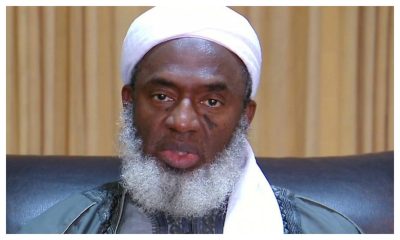
Islamic cleric Sheikh Ahmad Gumi recently defended his past interactions with armed groups, stating he “took the bull by the horns” in 2021 as a necessary step to address Nigeria’s insecurity.
In a post shared on Facebook on Thursday, Gumi said decades of neglect of disadvantaged populations had created deep socio-economic inequalities, leaving many youths vulnerable to manipulation by external forces seeking to destabilise the country.
According to him, the widening gap between the rich and the poor has turned many young people into “ready-made foot soldiers” in cycles of violence that enable the exploitation of Nigeria’s resources.
He also criticised the political class for being largely unresponsive, while noting that the intellectual community is preoccupied with survival struggles.
Reflecting on his past efforts, Gumi said he “took the bull by the horns” in 2021 by attempting to reintegrate violent elements into society rather than allowing them to be further radicalised.
He wrote: “Nigeria for decades has ignored the underprivileged section of its society. There is a significant socio-economic discrepancy, and the society is stratified. This makes our teaming youth ready-made foot soldiers for any foreign interest trying to divide us and rule. To plunder our resources while we are involved in a vicious circle of violence.
”Unfortunately, the political class is unattentive while the intelligentsia is held hostage in the struggle for existence.
“In 2021, I took the bull by the horns in an attempt to bring some of these uncouth elements back to our fold rather than letting them be exploited by the devil.
“I still believe this is the only way out of our predicament. However, it needs the political will and determination to achieve.
“May Allah bring peace back to our nation.”
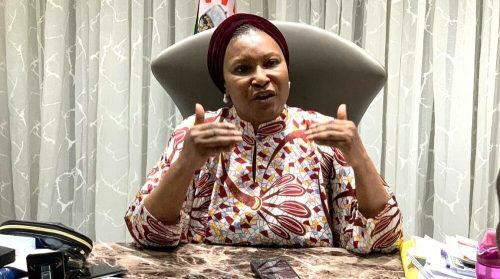
The Federal High Court in Abuja rejected an ex-parte application seeking to bar Senator Ireti Kingibe from participating in the activities of the African Democratic Congress (ADC).
Justice Peter Lifu declined the request from Wuse Ward leaders, ruling that such an order could not be granted without first hearing from the senator.
Instead, the judge ordered the ward leaders said to be loyal to the Minister of the FCT, Nyesom Wike, to put the senator on notice to appear in court to join issues with them on their grievances.
Justice Lifu in a ruling on Thursday held that discretion in such a request for prohibition from party activities and in political matters must be exercised judicially and judiciously.
The judge said justice would be met in the case of the plaintiffs only when the side of the defendant is heard on its merit, along with that of the plaintiffs.
Consequently, the judge ordered that Senator Ireti Kingibe should be served with all court processes by the plaintiffs to enable her become aware of the suit and to prepare her defense.
The judge fixed April 20, 2026, for the plaintiffs and the serving senator to appear before him for hearing of all applications in the matter.
Those who sued the senator in the suit marked FHC/ABJ/ CV/539/2026 are Okezuo Godfrey Anayo and Isaiah Ojonugwa Samuel, on behalf of themselves and ward members as plaintiffs. The senator is the sole defendant.
In their ex-parte application, Kingibe representing the FCT in the Senate was said to have been suspended on March 10, 2026 by her Wuse Ward executives following allegations of anti-party activities and disregard of your cnstitution of the ADC.
In the ex- parte application filed on their behalf by a Senior Advocate of Nigeria, SAN, Kolawole Olowookere, the aggrieved ADC members in Wuse Ward applied for an order of interim injunction restraining Kingibe from parading herself as a member of party, pending the hearing and determination of their motion on notice for interlocutory injunction.
They also asked the judge to restrain the senator from performing any function, attending meetings or performing activities reserved for ADC members or representing the party in any activities.
Besides, the Ward Executive Committee had asked that she be restrained from further interfering with the administration of the ward, ward register and other activities.
The suit was predicated on five grounds among which are that Mrs Kingibe was placed on suspension due to anti-party activities, gross misconduct and confiscation of the ward statutory records.
They argued that the suspension followed due process as enshrined in the ADC constitution and ratified by the two thirds majority of the EXCO members.
They averred that despite the communication of the suspension to Kingibe, she has continued to hold parallel meetings, issue press statements as an ADC member, and using her security details to intimidate the executive committee.
“Her actions constitute flagrant disregard to the internal mechanism of the party,” the plaintiffs stated.
Meanwhile, a lawyer, Abubakar Marshall who claimed to be representing the senator, announced that he had filed a preliminary objection against the suit. He added that it was served on M. S. Garba, who stood for the plaintiffs at Thursday’s proceedings.
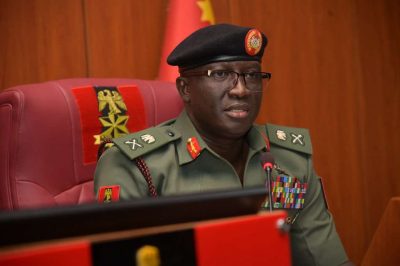
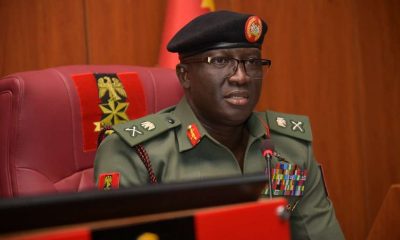
The Chief of Army Staff (COAS), Lieutenant General Waidi Shaibu, visited Jos, Plateau State, on Thursday, April 2, 2026, to lead a high-powered security assessment following recent security breaches.
The visit was aimed at strengthening public confidence and reinforcing ongoing efforts to stabilize affected communities.
Colonel Appolonia Anele, acting Director, Army Public Relations, said in a statement that the visit forms part of ongoing efforts to restore calm and entrench lasting peace across the state.
According to the statement, upon arrival, the COAS was received by the Executive Governor of Plateau State, Caleb Mutfwang, in a clear demonstration of strong civil-military cooperation and a shared commitment to addressing emerging security challenges.
The statement said the COAS received a comprehensive operational briefing from the General Officer Commanding 3 Division and Commander, Joint Task Force Operation ENDURING PEACE, Major General Folusho Oyinlola, who highlighted ongoing operations and proactive measures being implemented in synergy with other security agencies to contain threats, protect lives and property, and stabilise affected communities.
“As part of his engagements, Lieutenant General Shaibu also interacted with community leaders and residents, reassuring them of the unwavering commitment of the Nigerian Army to safeguarding all law-abiding citizens.
He urged residents to remain calm, vigilant and supportive of security agencies by complying with the curfew and cooperating fully with ongoing operations and investigations, while going about their lawful activities.
The chairman of Jos North Local Government Area, Hon. Dachung Bagos, commended the COAS for the timely visit, noting that the presence of the nation’s top military leadership would boost public confidence and reinforce trust in ongoing security efforts.

Gumi Defends Dialogue As Sole Solution To Nigeria’s Insecurity

Court Clears Senator Ireti Kingibe To Remain Active In ADC

COAS Shaibu Hits Jos To Restore Peace, Public Confidence

President Tinubu Appoints New PTDF Executive, Reappoints TCN Head

Simi Welcomes Second Child With Adekunle Gold

United Nigeria Airlines Staff Suspended After Viral Amputee Abuse Video

Pay Your Fare: AIG Cracks Down On Officers Boarding For Free

INEC Removes David Mark, Aregbesola From ADC Leadership Portal

JUST IN: FG Approves Friday 3, Monday 6, as Easter Public Holidays

When 8 million Customers Trust You, Safety Cannot Be an Afterthought
-
 News2 days ago
When 8 million Customers Trust You, Safety Cannot Be an Afterthought
-
 News1 day ago
United Nigeria Airlines Staff Suspended After Viral Amputee Abuse Video
-
 News2 days ago
2027: Kwankwaso’s Exit Marks End Of NNPP – Kwankwasiyya Movement
-
 News1 day ago
Pay Your Fare: AIG Cracks Down On Officers Boarding For Free
-

 News2 days ago
Lagos CP Withdraws Taskforce From Traffic Duties
-
 News1 day ago
JUST IN: FG Approves Friday 3, Monday 6, as Easter Public Holidays
-
 News18 hours ago
COAS Shaibu Hits Jos To Restore Peace, Public Confidence
-
 News1 day ago
INEC Removes David Mark, Aregbesola From ADC Leadership Portal