
News
President Tinubu Proposes N60m Annual Pay For Supreme Court Justices


President Tinubu has proposed N60m Annual Pay for Supreme Court Justices.
JomogNews Nigeria reports that the House of Representatives, on Wednesday, passed a bill that was sent to it by President Bola Tinubu for the upward review of salaries, allowances, and fringe benefits for judicial officers nationwide for the third reading.
Based on the provisions of the bill, judges are to get over 800 per cent pay rise, as the Chief Justice of Nigeria is to earn N64.6m annual basic salary and allowances, far higher than what obtains currently.
Other justices of the Supreme Court are to earn annual basic salaries and regular allowances of over N60m annually.
The development received the backing of various Senior Advocates of Nigeria, as they insisted that well-remunerated judicial officers would be less susceptible to corruption.
The bill seeks to amend Certain Political, Public and Judicial Office Holders (Salaries and Allowances, etc) Act, No. 6, 2002 (as amended) by deleting Section 2(b), Part II of the Schedule to the Act and any other provisions relating to judicial office holders.
When signed into law by the President, the legislation will take effect from January 1, 2024.
Various pay rise
Part I of the schedule revealed that the Chief Justice of Nigeria is entitled to N64.6m annual regular allowances and salary, which translates to N5.38m monthly.
The CJN, by the provisions of the bill, is also entitled to N13.46m annual basic salary, representing N1.12m monthly, and is to get non-regular allowances of N6.73m as leave allowance (when applicable); N142,500 Duty Tour Allowance (per night); and $2,000 estacode (per night).
The CJN is also entitled to N80.78m severance gratuity (after successful completion of tenure) and N53.85m as a motor vehicle loan (to be repaid before expiration of tenure), while the Professional Development Assistant is to be paid from the NJC pool.
Other justices of the Supreme Court, based on the provisions of the bills, are each entitled to N60.47m annual regular allowances and basic salaries which translates to N5.03mm monthly.
They are to earn N9.91m annual basic salary, representing N826,116.19 monthly.
The bill further shows that each of them is also entitled to non-regular allowances of N9.91m rent (annually); N4.96m leave allowance (when applicable); N100,000 Duty Tour Allowance (per night); and $1,300 estacode (per night).
They are to get N29.74m severance gratuity (after successful completion of tenure), N29.74m furniture allowance, and N39.65m as motor vehicle loan (to be repaid before expiration of tenure), while Professional Development Assistant is to be paid from the NJC pool.
Meanwhile, utilities and security are to be provided via tax-deferred payments.
The President of the Court of Appeal, he/she is to earn N9.91m annual basic salary or N826,116 per month.
“He/she is also entitled to N52.54m annual regular allowances or N4.48m monthly regular allowances. He/she is also entitled to non-regular allowances of N9.91m rent (annually); N4.96m leave allowance (when applicable), N100,000 Duty Tour Allowance (per night); and $1,300 estacode (per night).
“N29.74m severance gratuity (after successful completion of tenure), N29.74m furniture allowance, and N39.65m as motor vehicle loan (to be repaid before expiration of tenure), while Professional Development Assistant is to be paid from the NJC pool,” the bill proposed.
If passed into law, each of the justices of the Court of Appeal would be entitled to N44.72m annual regular allowances or N3.73m monthly regular allowances.
Each of them will earn N7.99m annual basic salary or N665,475 monthly salary.
Each of them is also entitled to non-regular allowances of N7.99m rent (annually); N3.99m leave allowance (when applicable), N85,500 Duty Tour Allowance (per night); and $1,100 estacode (per night).
Each of them is to get N23.96m severance gratuity (after successful completion of tenure); N23.96m furniture allowance and N31.94m as motor vehicle loan (to be repaid before expiration of tenure), while Professional Development Assistant is to be paid from the NJC pool.
Similarly, judges of the Federal High Court, National Industrial Court, FCT High Court, FCT Customary Court of Appeal, State High Court, State Customary Court of Appeal, Kadis FCT Sharia Court of Appeal, and Kadis State Sharia Court of Appeal are entitled to the same salaries, allowances and fringe benefits.
Each of them is entitled to N36.84m annual regular allowances which translates to N3.07m monthly.
Each of them is also entitled to N7.22m annual basic salary, representing N601,880 monthly.
They are entitled to non-regular allowances of N7.22m rent (annually); N3.61m leave allowance (when applicable); N57,000 Duty Tour Allowance (per night); $600 estacode (per night); N21.68m severance gratuity (after successful completion of tenure); N21,68m furniture allowance and N28.89m motor vehicle loan (to be repaid before expiration of tenure). The Professional Development Assistant is to be paid from the NJC pool.
The bill is set for transmission to the President for his assent.
Comparing the percentages using the salary formula approved by the Revenue Mobilisation Allocation and Fiscal Commission and figures contained in the bill, the monthly salary and allowances of the CJN surged by 860.48 per cent following the provisions in the bill.
The House of Representatives Committee on Judiciary has invited the Ministers of Finance, Budget, and National Planning as well as the Secretary, the National Judicial Council for deliberation over the poor remuneration of judicial officials across the country.
Also invited to the meeting slated for Monday, March 25, 2024, are the National President, Judicial Staff Union of Nigeria, the Chairman, Revenue Mobilisation Allocation and Fiscal Commission, the Chairman, the Nation’s Salaries, Incomes and Wages Commission, Attorney General of the Federation and Minister of Justice as well as the President, Nigeria Bar Association.
During a valedictory court session in his honour, retired Justice Musa Dattijo of the Supreme Court revealed that Justices of the apex were poorly paid.
“It may interest one to know that the Chief Registrar of the Supreme Court earns more than the Justices. While she earns N1.2m per month, justices take home N751, 000 in a month.
“The CJN, on his part takes home N400, 000 plus. The salary of a Justice, curiously, drops rather than increases when he gets the added responsibility of being a CJN.
“That the unjust and embarrassing salary difference between the justices and the Chief Registrar still abides remains intriguing to say the least,” Justice Dattijo had said.
The House committee, in its letter dated March 18, 2014 and titled “Case for upward review of judicial remuneration,” said it also received complaints about judges salaries from the Nigerian Bar Association.
The letter signed by the committee’s chairman, Oluwole Oke, read: “The committee is in receipt of a submission by the NBA advocating a review of judicial officers’ remuneration and conditions of service.
“In view of the above submission, the committee wishes to invite you to a more robust interactive session with other stakeholders to review the submission and educate the committee on the current situation and plans to deal with the unrealistic salary structure of the judiciary and your position on the matter.”
In a brief interview with The PUNCH, Oke, who represents Obokun/Oriade Federal Constituency, Osun State, said, “We have invited them over the stagnation and poor remuneration of judges and judicial officials since 2008.
“No promotion, no progression and this is very abnormal. It’s unacceptable.”
NBA commends increment
JomogNews Nigeria reports that the Nigerian Bar Association and some Senior Advocates of Nigeria have commended the executive and legislative arms of government for the proposed increment in the salaries of judges in the country.
There had been calls from different quarters to increase the remuneration of judges in the country.
In October 2023, a retired Supreme Court Justice, Dattijo Muhammad, during his valedictory ceremony lamented the poor salary structure of Justices in Nigeria.
According to him, the monthly salary of the apex court registrar stood at N1.2 million while Justices get N751,000, representing a 37.4 percent disparity.
Similarly, in September 2021 during the Appeal Court’s Legal Year, the President of the Court, Justice Monica Dongban-Mensem, appealed to the Federal Government to conduct an upward review of the salaries of judicial officers in the country.
“As President of the Court of Appeal, I receive N206,425, while other justices on the bench of the Court of Appeal go home with N166,285 every month,” she was quoted as saying.
In June 2022, a lawyer, Sebastine Hon sued the Attorney-General of the Federation and the National Judicial Council over the poor salaries of judges.
Also in 2022, former Chief Justice of Nigeria, Justice Walter Onnoghen said justices of the apex court had been suffering in silence since 2008 when their salaries and emoluments were last reviewed by the government.
Lawyers back increase
However, reacting to the move by the House of Representatives, the NBA spokesperson, Akorede Lawal the review is a reward for the efforts the association had been making.
He noted that the increment would grant the judges the financial independence and security they need.
Lawal said, “This is something that this NBA administration has fought for. The records are there to show the efforts of the NBA under the leadership of Yakubu Maikyau(SAN). We are happy that the fruits of this labour are being ripped at the moment. What’s left for us is to appreciate the judiciary for understanding the NBA’s position that a well-renumerated judicial officer is less susceptible to corruption and corrupt-minded people.
“We feel that the work the judiciary is doing is a very important one, financial independence and financial security are very important and a cornerstone of that judicial functions. We can only hope that the judiciary would continue to wax stronger and this will also encourage the judicial officers to be more upright.”
Also, Yusuff Ali (SAN) said when the increment is implemented, it would help to get the best out of our judges.
He said, “It is a very positive development. Some of us had been advocating for this. You will have to pay people the money that is commensurate with the kind of job they do. These are judges that have the power of life and death as it were and they determine commercial disputes that run to billions of naira. The kind of work they do is so arduous that you can hardly compensate them enough. Like in other places, they should be one of the best-paid government officials. The increment is a welcome development. I am sure when the payment starts, it will improve the output of the judges.”
Adegoke Rasheed ( SAN) recommended that there should be a legislation in place for the periodic review of judges’ salaries.
He said, “He brought about improvement to the welfare of the judicial officers as a governor in Lagos. It is a nice development to see he has replicated that as the president. Hungry judiciary officials cannot get the work done effectively. That’s why the remuneration of judges is of huge importance to the government.
“I want to recommend that this must be subject to review from time to time. There must be legislation for this so that what they went through before getting this is not repeated. “
Two senior advocates of Nigeria Prof Mike Ozekhome and Chief Niyi Akintola have commended the House of Representatives for passing a bill for the increment of the salary of the Chief Justice of Nigeria and other judicial officers but said it was a far cry from what they should be receiving.
They stated that the Senate and House of Representatives should review it and increase the amount.
Ozekhome said he had always believed that the salary of judges was too poor.
He said that the salary of judges has been too poor. For more than 25 years, and that he had protested against the poor salary structure of judges.
Ozekhome said “I’ve done many write-ups, many articles about judges salary, in some of my write-ups, I compare the salary of Nigerian judges with those of their counterparts abroad, and you’ll find that they are peanuts.
“The service structure of judges is too poor for comfort. And you see people talk about corruption in the judiciary. I tell them these people also work within society.
“They work within the same society, they buy from the same market, they have their wives and children, they have to pay bills, light electricity that is not there, buy diesel, buy generator, travel in cars.
“You can’t expect, a judge to be on N 500,000 a month, and then you expect the judge not to be corrupt. That amount is not enough. It’s not enough for even the local government council chairman to fuel his car, his fleet of cars, in one week.”
The senior advocate further stated It’s a good thing, and that it’s salutary, that they are raising the salary up by saying the chief justice of Nigeria will now receive 4. something million Naira per month. But even after, that is still about approximately 50 million Naira, 50 million Naira a year.
“50 million Naira a year. Although it is much better. But I’m telling you that with the inflationary trend we have now, 50 million Naira in a year will actually not do anything for the chief justice of Nigeria.
“Because some of these legislators, 360 legislators, and 109 senators, some of them take home that amount in a month, 50 million Naira in a month. Some take home 30 million. Some principal officers take home more than N100 million.
“All these things are in the public domain. So giving a judge like N30 to N50 million in a year is not something that we should roll out the drums for and begin to jubilate. But all I can say is that it is better than before.
The House of Representatives and the Senate should jack up the salary more than that. I do not see why the chief justice of Nigeria, who heads one of the three arms of government, the judiciary, should receive less than 10 to 15 million Naira per month. I do not see why at all,” he said.
In his view, Akintola said, that before now, the Body of Bencher, and the NBA, had consolidated the committee, and workout modality, and even prepared a bill in respect of judicial officers’ salaries.
He said Don’t forget that we have passed the Public Officers’ Salaries and Enrollment Act of 2008, which was instituted about a year and a half ago. But, how many states are enforcing or implementing the NBA law?
According to him, there was an Act of the National Assembly in respect of that, including that we need to be giving vehicles, accommodations, and what have you. It took Plateau State’s judiciary to get a court action before they could get their entrenchment.
“It took the judiciary to go to court against the government and the governor of that state. At that time, the governor of the state was even a lawyer.
“So, it’s the attitude of the politicians that we should deal with. I want to commend the National Assembly as well for the initiatives they have taken.
“But I’m telling you our attitude, our perception of judicial officers because there are states of the state that treat their judiciary as an arm of the Ministry of Justice.
“It’s a commendable effort, but if you go by, even that 4 million something, if you go by today’s standards of living, the inclusionary agenda, even what has been proposed, it’s nothing but.. it is a far cry from the reality,” he said.



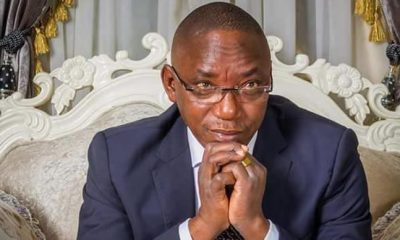



The Nigerian Medical Association (NMA), Delta State branch, has officially debunked the cancer claims made by relationship influencer Blessing Okoro, popularly known as Blessing CEO.
In a statement on Tuesday, the association revealed that the document is an altered version of an original medical report belonging to a different patient diagnosed with breast cancer.
The statement, jointly signed by NMA Delta State Chairman, Dr. Israel Adaigho, and Secretary, Dr. Usamah Hannah, was sighted by The Nation on Tuesday.
According to the NMA, the viral report was purportedly issued by Xinus Medical Diagnostics and signed by consultant pathologist Dr. O.A. Odigwe.
However, Dr. Odigwe, who is the proprietor of the diagnostic centre, clarified that his facility never issued any report to Blessing Okoro.
The association explained that Xinus Medical Diagnostics is located in Asaba, Delta State not Enugu State as claimed in the circulating document.
The centre was contacted in May 2025 by a doctor from a private hospital in Asaba to conduct a confirmatory histology test for a patient identified as Mbara Deborah, who had a suspected case of breast cancer.
The test confirmed breast cancer, and the original result was issued to the referring doctor on May 9, 2025.
The NMA stated that the document currently being paraded online by the law firm Allen Juris Law is the original report bearing the name Mbara Deborah.
The version linked to Blessing CEO appears to be a doctored copy of this same report.
The statement read in part: “Our attention has been drawn to an online histology report purportedly issued to one Blessing Okoro, aka Blessing CEO, by Xinus Medical Diagnostics allegedly located in Enugu State. The said histology report was also alleged to have been signed by Dr. O.A. Odigwe, a consultant pathologist.
“The proprietor of Xinus Medical Diagnostics, Dr. O.A. Odigwe, who is also a member of the Nigerian Medical Association, Delta State chapter, has reached us and offered the following clarification: that Xinus Medical Diagnostics is located in Asaba, Delta State and did not at any time issue any report to Blessing Okoro.
“The centre was contacted in May 2025 by a doctor from a private hospital in Asaba to do a confirmatory test on a possible case of breast cancer for a patient, Mbara Deborah. The test was done and the result issued to the referring doctor as a case of breast cancer on May 9, 2025.
“A copy of that result is the one currently being circulated online by the law firm, Allen Juris Law, with the name Mbara Deborah as the patient. That result from the law firm is the original version issued to the patient through her hospital.”
The NMA said the clarification became necessary because of the way the altered report was allegedly being used to solicit public sympathy and financial assistance.
It urged the public to be cautious and warned against actions that could tarnish the integrity of medical professionals.
The association also called on relevant security agencies to take appropriate steps to protect unsuspecting members of the public.
“The integrity of our association and its members is very paramount and should not therefore be taken for granted.
“We call on the authorities responsible for maintaining law and order to do the needful and save unsuspecting members of the public from being unduly taken advantage of,” it added.
Recall that Blessing CEO recently solicited financial help from the public for the treatment of what she claimed was stage four cancer.
Following widespread backlash and allegations that her medical report had been edited, she made a U-turn, stating in an interview: “I don’t have stage 4 cancer. That was a miscommunication.”

Justice Binta Fatima Nyako of the Federal High Court in Abuja has sentenced Hamatu Modu, a major food supplier for Boko Haram terrorists, to 40 years imprisonment for his involvement in terrorism activities.
Modu, who confessed in the open court to supplying food items and information to terrorists, was put on trial by the federal government through the Attorney General of the Federation and Minister of Justice.
He was slammed with 4- count charges and instantly pleaded guilty to them.
The Director of the Public Prosecution of the Federation, DPPF, Rotimi Oyedepo, SAN, led the prosecution.
In his judgment, Justice Nyako sentenced him to 10 years on each of the count but due to the plea of the defense counsel, the judge ordered that the 40 years imprisonment should run concurrently, giving the convict opportunity to spend only 10 years.
In another development, Isah Ali, another food supplier also in Borno, was jailed 10 years by Justice Nyako.
His jail term will, however, start three years ago when he was arrested and clamped into detention.
The convict confessed to committing the offence as charged.
Justice Nyako ordered that the convicts be made to undergo rehabilitation and radicalization at the end of their service of the jail terms.
The Federal Ministry of Interior was ordered to determine where the two men will serve their jail terms.
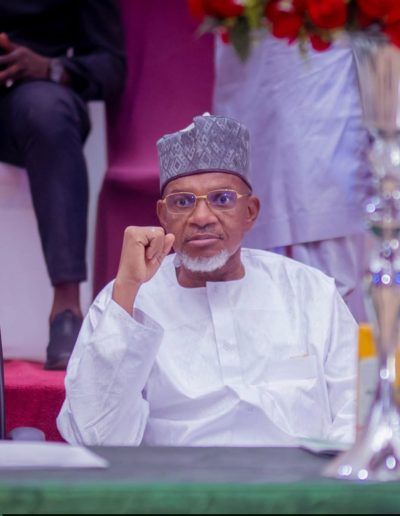
The Speaker of the Kebbi State House of Assembly, Muhammad Usman Ankwai has passed away in the late hours of Monday, 6 April 2026.
Ankwai, who represented Zuru Constituency under the All Progressives Congress (APC), was elected Speaker at the inauguration of the 10th Assembly on June 8, 2023.
Details surrounding the circumstances of his death were not immediately disclosed at the time of filing this report.
His death has, however, triggered an outpouring of condolences from fellow lawmakers, political associates, and residents across Kebbi State, many of whom have described him as a dedicated public servant who contributed to legislative development in the state.
Further announcements regarding burial arrangements are expected to be made by his family soon.

Delta NMA Declares Blessing CEO’s Cancer Report Fraudulent

Abuja Court Jails Boko Haram Food Supplier, Hamatu Modu For 40 Years

Just In: Kebbi Assembly Speaker Muhammad Ankwai Passes Away

Gbenga Daniel Slams Successor As ‘Enfant Terrible’ Who Showed Him Hell

Scores Of Terrorists Neutralised As Military Foils Major Borno Offensive

Easter Tragedy: Herdsmen Strike Benue Again, 9 Dead

President Tinubu Authorizes ₦3.3tn For Power Sector Liquidity, Recovery

Tinubu Commiserates With Former INEC Chair Jega Following Death Of Wife

IGP Disu Summons Lagos Officers To Abuja Over Viral Harassment Video

Fire Outbreak Leaves Hundreds Of Traders Stranded At Yaba Market
-
 News10 hours ago
Abuja Court Jails Boko Haram Food Supplier, Hamatu Modu For 40 Years
-
 News8 hours ago
Delta NMA Declares Blessing CEO’s Cancer Report Fraudulent
-
 News14 hours ago
Just In: Kebbi Assembly Speaker Muhammad Ankwai Passes Away
-
 News18 hours ago
Gbenga Daniel Slams Successor As ‘Enfant Terrible’ Who Showed Him Hell