
Connect with us

News

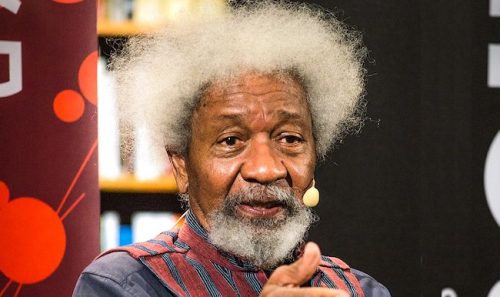
Soyinka Advocates Restructuring As Solution To Current Challenges In Nigeria

“All these things happening are for the good of the country, and the economy is going to bounce back. We foresee a situation where, in another year, this country is going to get better.

Published

on

Nobel laureate Prof. Wole Soyinka yesterday called for restructuring as a way to ensure self-sufficiency and sustainable development.

He noted that past leaders recognised the importance of restructuring but failed to implement it.

Soyinka was the guest speaker at The Punch 50th Anniversary Lecture held at the Civic Centre, Victoria Island, Lagos.

President Bola Ahmed Tinubu on Wednesday said his administration was laying a solid foundation to foster proper federalism.

Speaking during a visit to Afenifere leader Chief Reuben Fasoranti in Akure, the Ondo State capital, he said the right foundation would involve successful economic reforms to support a restructured country.

Soyinka stressed that the call for restructuring has been persistent but with no action.

He said: “Certain facts, however, implicitly admit that the word has a number of common, pragmatic implications for both governance and the governed, that indisputable commonality being as follows: the present contraption is not working – neither economically, developmentally, or even as a material expression of any functional social philosophy.

“Another is that those who come in power have indulged in pretend exercises in that direction, engaging the populace in totally phoney exercises – obviously just to ‘pacify the natives’. It is surely time that this demand be taken seriously, and addressed head-on.”

Soyinka argued that there is no shortage of reasoned and implementable propositions in past conference papers.

“It is high time we stopped the cyclic distraction of re-inventing the wheel. The spokes are in place, the rims intact. Only the will, not the wheel, is missing in action.

“The press, needless to urge, has a crucial role to play in this!

“However, be it noted that the press is only one of the enabling estates – all arms of governance, most pertinently, at the state level, have a propulsive, even commanding role to play in the effort.

“Repeatedly, backed by constitutional authorities, both publicly and privately, we have pointed out to them that there is sufficient constitutional leeway in the present protocols of association – if I may quote myself unapologetically – to ‘push the envelope as far as it can go without actually bursting’ – if the centre continues to shirk away from this now strident imperative.

“I repeat that wearisome call yet again. There can be no further evasion.

“That assertion is made both as a general principle of socio-political volition that is fundamental to any free, truly liberated people, and as an informed response to the actualities in which we struggle to exist as a sentient people, responsive to the exigencies of daily manifestation of change,” the Nobel Laureate said.

Soyinka acknowledged that restructuring may not be the magic wand to address Nigeria’s challenges.

He explained: “To anticipate accustomed banal responses, let me state quite clearly that no one has ever claimed that decentralisation – a precise word I personally prefer – will end hunger in the land or terminate religious conflicts and other forms of national malaise, no.

“We simply insist that this is central to the incomplete mission of – nation-being.

“It is essential to activities of basic existence such as food production, and access to such products.

“Palliatives remain crude, short-term, stop-gap measures only.

“As a veteran of food security working conferences from Uganda to India, from Paris to Sochi, I insist that, for a nation to be food self-sufficient, and sustainably, decentralisation is the key, not collectivisation.”

Minister of Information and National Orientation, Muhammed Idris, hailed Soyinka’s fatherly role in nation-building.

He underscored the Tinubu Administration’s eagerness to address all the issues.

He said: “The Punch has been here for 50 years, and what that tells you is that it’s a story of resilience, trust, hard work, and commitment to the Nigeria project. These are the exact virtues President Bola Tinubu upholds.

“Nigeria is going through hard times now, but it’s not new and it’s not peculiar to this country.

“All the issues we are discussing now are issues other countries are discussing. A few weeks ago, we heard that the United Kingdom had gone into an economic recession.

“President Tinubu has taken very bold steps. The first day after he assumed office, he took away fuel subsidy. Before he assumed office, the economy was a dead horse standing.

“So, whether the subsidy is removed or not, the economy is going to be challenging. He ensured that the subsidy went away for the benefit of all.

“We knew from day one that it’s not going to be an easy sail, but we are seeing the effects of the decision, and the good story is that the government is taking very pro-active decisions to ensure that we turn the corner and Nigeria’s economy bounce back again.

“All these things happening are for the good of the country, and the economy is going to bounce back. We foresee a situation where, in another year, this country is going to get better.

“Let’s talk about the good things happening in this country, it’s not bad news all the time. The National Bureau of Statistics said we are improving by about 66 per cent.

“Our fuel consumption has gone down by about a billion litres.

“These challenges will continue to exist, but the important thing is that the government will always take proactive measures to ensure that the challenges disappear.

“Very soon, we are going to have a major policy shift in the petroleum sector.

“The Nigeria Labour Congress (NLC) complained about hardship in the land, but we are happy that 24 hours later they also found it necessary to suspend that action (protests). Most of the 15-point demands NLC made are being met.”

The Punch Chairman, Mrs Angela Emuwa, said the theme “Recovering the narrative” was a call to action in shaping the future all Nigerians would be proud of.

Describing the anniversary as no mean feat, Emuwa expressed the organisation’s gratitude to all its long-standing partners and audiences for the journey so far.

She said: “It is a rallying cry for the media and responsible actors to reclaim their rightful place as the guardians of facts, truth and justice, and the voice of the people.

“This is so because, in a world inundated with information, the power to shape narratives is a formidable responsibility and one that should not be taken lightly.

“As the most widely read newspaper in the nation, PUNCH has not only been a witness to history but a key player in shaping narratives.

“Our 50-year resilience is a testament to the power of the press in influencing positive change, upholding the values of democracy, and championing the cause of the people.

“We hope that the impact of our 50-year journey will serve as a source of inspiration to all.

“We have weathered storms, stood against oppression, championed the cause of justice, and yet we remain unbowed and unbroken.”

The lecture was in memory of Chief James Olubunmi Aboderin, the founding Chairman of the newspaper, who died on February 28, 1984.

The event had in attendance media executives, captains of industry, academics, leaders of thought, and security chiefs, among others.

Among the dignitaries at the event were former Minister of Transportation, Rotimi Amaechi; Special Adviser on Information and Strategy to the President, Bayo Onanuga, and former presidential spokesman Malam Garba Shehu.

SOURCE

News

Oyo 2027: Adelabu Quits As Power Minister To Focus On Guber Race

Published

on

By

The Minister of Power, Adebayo Adelabu has formally resigned from his position in the Federal Government to pursue his governorship ambition in Oyo State.

In a resignation letter dated April 22, 2026, and addressed to the President, Adelabu stated that his resignation will take effect on April 30, 2026, to enable him to focus on his governorship ambition in Oyo State.

The letter, routed through the Office of the Secretary to the Government of the Federation, stated that he was stepping down with “a deep sense of honour and profound gratitude.”

He wrote, “I write with a deep sense of honour and profound gratitude to formally tender my resignation as the Honourable Minister of Power of the Federal Republic of Nigeria. This resignation is to take effect on 30th April 2026, in order to allow sufficient time for a smooth and orderly handover of responsibilities.”

Adelabu thanked the President for the opportunity to serve, describing his appointment as a privilege.

He said, “Your Excellency, I remain sincerely grateful for the privilege and confidence you reposed in me by appointing me to serve our great nation in this capacity.

“It has been a rare honour to contribute to national development under your leadership and to play a role in advancing reforms in the power sector—one of the most critical foundations of Nigeria’s industrial growth and economic transformation.”

The former minister said his resignation was to enable him focus fully on his governorship ambition in Oyo State, citing provisions of the amended electoral law.

He added, “My decision to step down is informed by my intention to focus fully on my gubernatorial ambition in Oyo State. This aspiration, which dates back to 2016 during my service as Deputy Governor of the Central Bank of Nigeria, ultimately led to my voluntary resignation from the Central Bank in 2018 in order to pursue the same goal.”

“In line with the provisions of the Amended Electoral Act 2026, which preclude political office holders from contesting elections, I consider it both appropriate and necessary to resign at this time.”

Adelabu’s exit marks a major political development ahead of the next electoral cycle, particularly in Oyo State, where he is expected to contest the governorship election.

Continue Reading

News

Wale Edun, Musa Dangiwa Resigned Voluntarily, Not Sacked – Presidency

Published

on

By

The Presidency has clarified that Wale Edun (former Finance Minister) and Ahmed Musa Dangiwa (former Housing Minister) voluntarily resigned from their positions and were not sacked by President Tinubu.

In a statement released this evening April 22, presidential media aide, Bayo Onanuga, said that contrary to public opinions, Wale Edun resigned on health grounds while Dangiwa also tendered his resignation and thanked the President for the opportunity given him to serve in the Federal Executive Council.

Onanuga stated that Edun, who clocked 70 on Monday and has battled recent ill health, fittingly submitted his resignation letter on his birthday, thanking the President for the opportunity to serve Nigeria.

“It has been a pleasure and privilege to serve your administration and the Renewed Hope Agenda, Under your leadership, Nigeria has emerged stronger, more resilient and more internationally respected. I wish you and the administration every success in the future” he wrote

Onanuga stated that on Tuesday, before the Office of the Secretary of the Government of the Federation announced his departure from the Cabinet, Edun paid a valedictory visit to the President at the Villa and held an hour-long discussion with the president and then left to focus on his private businesses.

The presidential aide stated that President Tinubu has expressed deep appreciation to Edun and Dangiwa for their dedicated service and significant contributions to the administration’s economic reform programme and wished them continued success in their future endeavours.

‘’In the same vein, the President has urged the new Minister of Finance, Taiwo Oyedele, to consolidate ongoing reforms and advance the administration’s fiscal and economic objectives with renewed focus, discipline, and innovation.

President Tinubu will shortly send the ministerial nominee for housing, Muttaqha Rabe Darma, also from Katsina, like Dangiwa, to the Senate for confirmation” the statement concluded

Continue Reading

News

Unity Bank, Experts Advocate Green Investment, Climate Innovation To Drive Economic Resilience

Published

on

By

Nigeria’s retail lender, Unity Bank Plc, alongside leading climate innovation experts, has called for increased investment in the green economy and the adoption of frontier technologies as critical pathways to driving economic resilience and reducing the impact of climate change on vulnerable populations across Africa.

The call was made during a thought-provoking webinar hosted by the Bank to commemorate this year’s Earth Day, themed “The True Cost of Climate Change and Who Pays?”. Climate experts and stakeholders convened to examine the human, economic, and institutional costs of climate change, while spotlighting practical solutions to address its growing impact.

In his opening remarks, Unity Bank’s Head of Strategy and Innovation, Ibukun Coker, emphasised the urgency of addressing climate risks from both a societal and business perspective.

He said: “Climate change is no longer a distant or abstract challenge. It is an existential threat with direct consequences for individuals, businesses, and economies. At Unity Bank, we recognise the role institutions must play in incorporating sustainability in project financing, supporting businesses and promoting solutions that build resilience in communities where we operate.”

The webinar featured Chinwe Udo-Davis, Founder and CEO of Instollar, and Oluwatosin Ajide, Programme Manager at the Nigeria Climate Innovation Centre, both of whom provided insights into the drivers of climate change and the pathways to mitigation and adaptation.

Speaking during the session, Udo-Davis highlighted the disproportionate burden which climate change places on underserved communities and the need for inclusive solutions.

“The true cost of climate change is not evenly distributed. Communities with the least resources are often the most affected, whether through energy poverty, environmental degradation, or limited access to sustainable alternatives. Addressing this imbalance requires intentional investment in clean energy solutions that are both accessible and scalable.”

Ajide underscored the importance of coordinated, system-wide approaches in tackling climate challenges, particularly through innovation and policy alignment.

“Climate change is fundamentally a structural problem, and its solution requires a paradigm shift: from innovation and policy to financing and implementation. Stakeholders must work collaboratively to drive solutions that are sustainable and inclusive.”

The session also explored emerging opportunities in climate technology, renewable energy, and ecosystem financing, reinforcing the role of innovation and cross-sector collaboration in building long-term resilience.

By hosting the webinar, Unity Bank continues to demonstrate its commitment to advancing sustainability-focused dialogue and supporting initiatives that promote responsible growth and environmental stewardship.

The initiative underscores the Bank’s broader strategic focus on environmental sustainability as well as its commitment to financial inclusion.

Continue Reading

Trending