
News
CBN Battling To Restore Naira To Its Real Value – Cardoso


Naira is seriously undervalued, Central Bank of Nigeria (CBN) Governor, Olayemi Cardoso said yesterday.
According to him, the apex bank is putting all that is necessary into place to reverse the trend and make naira attain its real value.
He said: “We believe that the naira is currently undervalued and coupled with coordinated measures on the fiscal side, we will expedite genuine price discovery in the near time.”
Cardoso spoke at the unveiling of the Nigerian Economic Summit Group (NESG) 2024 Macroeconomic Outlook Report in Lagos yesterday.
Analysing the fuel situation, the CBN governor explained that pump prices of Premium Motor Spirit (PMS) will stabilise or drop this year when public and private-owned refineries begin operation.
The drop, he said, will have far-reaching implications on the various sectors of the economy.
He also highlighted measures by the CBN to strengthen the Naira and crash the inflation rate from 28.92 to 21.4 per cent.
The unification of exchange rates and floating of the naira by President Bola Ahmed Tinubu at the inception of his administration are part of the bold moves to reform the economy.
However, this has led to a big devaluation in naira exchange to the dollar.
“The expected stabilisation or reduction in fuel costs is poised to have far-reaching implications across various sectors, contributing significantly to overall economic efficiency and resilience”, Cardoso said.
The report highlighted some economic outcomes of achieving a stable and appropriate pricing of the exchange rate.
While Dangote Refinery, a private initiative has begun production of diesel and aviation fuel, the Port Harcourt Refinery owned by the Federal Government is expected to begin production soon.
Cardoso acknowledged the challenges facing the economy and its resistance to solutions but assured Nigerians that the nation is now at a turning point due to the bold reforms undertaken by the Bola Tinubu administration.
He said that the CBN, Ministry of Finance and the Nigerian National Petroleum Company Limited(NNPCL) have collaborated to ensure that all FX inflows are returned to the apex bank.
The return of FX inflows to the CBN, according to him, has helped to boost reserves accretion and firm up the naira which as of yesterday exchanged for N1,370 to a dollar at the parallel market.
He said: “The expected stability in the foreign exchange market for 2024 can be attributed to the reduction in petroleum product imports and the recent implementation of a market-determined exchange rate policy by the CBN.
“This reform is designed to streamline and unify multiple exchange rates, fostering transparency and reducing arbitrage opportunities.
“The resulting consistent and stable exchange rate will not only boost investor confidence but also attract foreign investment, elevating Nigeria’s appeal to global investors.
“We are implementing a comprehensive strategy to improve liquidity in our FX markets in the short, medium, and long term and our focus is on addressing fundamental issues that have hindered the effective operation of our markets over the years.
“We are already witnessing positive outcomes, and these will undoubtedly become more apparent in the near future. The dedicated and relentless efforts being made are certain to bring about significant and positive changes for our economy.
“Recent reports from international rating agencies such as Fitch and Moody’s, and commendations from multilateral banks like the World Bank reflect this, with upgrades to Nigeria’s ratings from stable to positive. These reports acknowledge the possible reversal of the deterioration in the country’s fiscal and external position due to the authorities’ reform efforts.
“While noting the painful adjustments, they all identify a direction of travel that will unlock the much-needed growth and development for our economy in the medium to long term.”
Cardoso also assured Nigerians that the rising costs of food and volatility in the forex market would soon be addressed.
He noted the global economy is currently grappling with persistent challenges, including inflation and subdued growth prospects.
Despite Gross Domestic Product (GDP) growth outperforming expectations in 2023, it is projected to moderate in 2024 due to tightened financial conditions, sluggish trade expansion, and reduced business and consumer confidence. The International Monetary Fund (IMF) anticipates a mild slowdown in global economic growth to 2.9 per cent in 2024, down from the 3.0 per cent growth observed in 2023, with Asia driving the majority of the projected global growth in 2024, similar to the previous year.
The CBN boss said the projections for the nation’s economy paint an optimistic trajectory as the Federal Government of Nigeria anticipates real GDP growth of 3.76 per cent in 2024, slightly surpassing the estimated 3.75 per cent for 2023.
The optimism, according to him, is underpinned by the implementation of key government reforms set to shape the economic landscape.
Foremost among the factors contributing to this positive outlook is the expectation of improved crude oil prices and production, highlighting the crucial role the oil industry is expected to play in driving economic growth.
Cardoso said the positive outlook for Industry, Services, Agriculture, Mining, Electricity, Gas and Water Supply sub-sectors reflects the potential effect of market-based reforms through private investment and SMEs-led growth.
His words: “Government reforms in the mining and energy sub-sectors are expected to serve as a catalyst for growth and development. While the potential for growth exists in 2024, each sector may encounter unique challenges and opportunities.
“The outlook for decreasing inflation in 2024 will have a profound impact on businesses, providing a more predictable cost environment and potentially leading to lowered policy rates, stimulating investment, fueling growth, and creating job opportunities.”
Cardoso noted that the NESG’s Macroeconomic Outlook Report for 2024 emphasises the necessity of economic transformation under the central theme, “Economic Transformation Roadmap: Medium-Term Policy Priorities.”
“This theme underscores the requirement for a clearly outlined roadmap comprising distinct yet interconnected phases and essential policy recommendations. This resonates with me as we have just last week, launched a new five-year Strategy for the CBN for the period 2024-2028 that provides a clear roadmap for achieving our mandates,” he said.
The 2024 Macroeconomic Outlook Report was summarised by NESG’s Chief Economist Olusegun Omisakin.
The report advised that stabilising the exchange rate through a functional and transparent foreign exchange market entails enhancing market liquidity through regular auctions, reducing administrative restrictions, and ensuring efficient allocation of FX reserves.
“Adopting a managed float system, regulating speculative activities, and encouraging foreign investments would bolster market confidence.
“Besides, access to FX needs to be realigned to facilitate international trade and transactions – as such, local access needs to be to the limit of the Naira equivalent. Reinforcing monetary policies for inflation control and export diversification would promote currency stability,” the report advised.
The NESG report explained that when exchange rates are stable, everyone is better off. Price stability supports economic growth and employment. It allows people to make more reliable plans for borrowing, saving, and expanding businesses.
“Decreased volatility of the exchange rate helps to support stability in inflation, which mainly affects low-income households because they have fewer resources to protect themselves.
“In the situation of price stability, it helps to maintain social cohesion and stability. History has shown that episodes of high inflation tend to be associated with social unrest,” it added.
According to the report, increased capital inflows will fortify the nation’s external reserves, establishing a robust defence against external shocks.
“This can only happen with the stability of the exchange rate. Capital inflows, comprising foreign investment, loans and remittances, elevate the reserve levels, bolstering Nigeria’s financial stability and economic resilience,” it said.
The report advised that in addition to nominal enhancements in revenue, it is imperative for the country’s revenue-to-GDP ratio to reach a minimum threshold of 15 per cent to substantiate the processes of economic growth and stabilisation.
The report partly reads: “The country must significantly decrease its current public debt service-to-revenue ratio, aiming for a reduction to less than 22 per cent from the current high of 80.2 per cent as of 2022.
“This reduction is crucial to create fiscal space, enabling the government to reallocate funds toward economic development and stability initiatives.
“A moderate fiscal deficit can be a useful tool for financing essential investments and stimulating economic activity.
“Hence, the optimal level of fiscal deficit that supports economic growth and stability in Nigeria requires a careful balance.
“A fiscal deficit of less than three per cent as stipulated in the FRA 2007 is considered appropriate for the economy.”






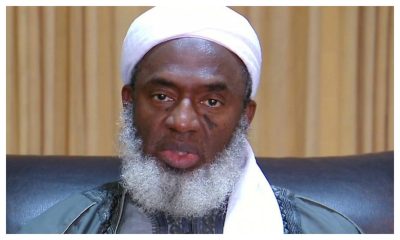
Islamic cleric Sheikh Ahmad Gumi recently defended his past interactions with armed groups, stating he “took the bull by the horns” in 2021 as a necessary step to address Nigeria’s insecurity.
In a post shared on Facebook on Thursday, Gumi said decades of neglect of disadvantaged populations had created deep socio-economic inequalities, leaving many youths vulnerable to manipulation by external forces seeking to destabilise the country.
According to him, the widening gap between the rich and the poor has turned many young people into “ready-made foot soldiers” in cycles of violence that enable the exploitation of Nigeria’s resources.
He also criticised the political class for being largely unresponsive, while noting that the intellectual community is preoccupied with survival struggles.
Reflecting on his past efforts, Gumi said he “took the bull by the horns” in 2021 by attempting to reintegrate violent elements into society rather than allowing them to be further radicalised.
He wrote: “Nigeria for decades has ignored the underprivileged section of its society. There is a significant socio-economic discrepancy, and the society is stratified. This makes our teaming youth ready-made foot soldiers for any foreign interest trying to divide us and rule. To plunder our resources while we are involved in a vicious circle of violence.
”Unfortunately, the political class is unattentive while the intelligentsia is held hostage in the struggle for existence.
“In 2021, I took the bull by the horns in an attempt to bring some of these uncouth elements back to our fold rather than letting them be exploited by the devil.
“I still believe this is the only way out of our predicament. However, it needs the political will and determination to achieve.
“May Allah bring peace back to our nation.”
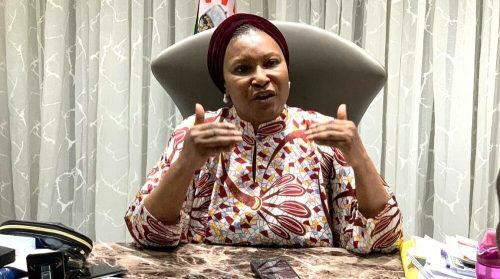
The Federal High Court in Abuja rejected an ex-parte application seeking to bar Senator Ireti Kingibe from participating in the activities of the African Democratic Congress (ADC).
Justice Peter Lifu declined the request from Wuse Ward leaders, ruling that such an order could not be granted without first hearing from the senator.
Instead, the judge ordered the ward leaders said to be loyal to the Minister of the FCT, Nyesom Wike, to put the senator on notice to appear in court to join issues with them on their grievances.
Justice Lifu in a ruling on Thursday held that discretion in such a request for prohibition from party activities and in political matters must be exercised judicially and judiciously.
The judge said justice would be met in the case of the plaintiffs only when the side of the defendant is heard on its merit, along with that of the plaintiffs.
Consequently, the judge ordered that Senator Ireti Kingibe should be served with all court processes by the plaintiffs to enable her become aware of the suit and to prepare her defense.
The judge fixed April 20, 2026, for the plaintiffs and the serving senator to appear before him for hearing of all applications in the matter.
Those who sued the senator in the suit marked FHC/ABJ/ CV/539/2026 are Okezuo Godfrey Anayo and Isaiah Ojonugwa Samuel, on behalf of themselves and ward members as plaintiffs. The senator is the sole defendant.
In their ex-parte application, Kingibe representing the FCT in the Senate was said to have been suspended on March 10, 2026 by her Wuse Ward executives following allegations of anti-party activities and disregard of your cnstitution of the ADC.
In the ex- parte application filed on their behalf by a Senior Advocate of Nigeria, SAN, Kolawole Olowookere, the aggrieved ADC members in Wuse Ward applied for an order of interim injunction restraining Kingibe from parading herself as a member of party, pending the hearing and determination of their motion on notice for interlocutory injunction.
They also asked the judge to restrain the senator from performing any function, attending meetings or performing activities reserved for ADC members or representing the party in any activities.
Besides, the Ward Executive Committee had asked that she be restrained from further interfering with the administration of the ward, ward register and other activities.
The suit was predicated on five grounds among which are that Mrs Kingibe was placed on suspension due to anti-party activities, gross misconduct and confiscation of the ward statutory records.
They argued that the suspension followed due process as enshrined in the ADC constitution and ratified by the two thirds majority of the EXCO members.
They averred that despite the communication of the suspension to Kingibe, she has continued to hold parallel meetings, issue press statements as an ADC member, and using her security details to intimidate the executive committee.
“Her actions constitute flagrant disregard to the internal mechanism of the party,” the plaintiffs stated.
Meanwhile, a lawyer, Abubakar Marshall who claimed to be representing the senator, announced that he had filed a preliminary objection against the suit. He added that it was served on M. S. Garba, who stood for the plaintiffs at Thursday’s proceedings.
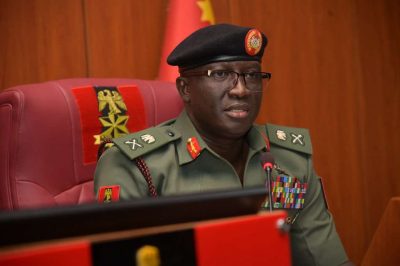
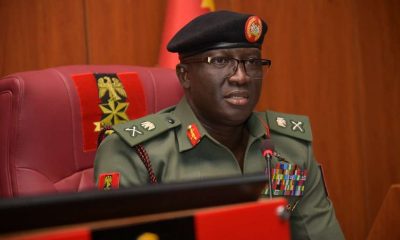
The Chief of Army Staff (COAS), Lieutenant General Waidi Shaibu, visited Jos, Plateau State, on Thursday, April 2, 2026, to lead a high-powered security assessment following recent security breaches.
The visit was aimed at strengthening public confidence and reinforcing ongoing efforts to stabilize affected communities.
Colonel Appolonia Anele, acting Director, Army Public Relations, said in a statement that the visit forms part of ongoing efforts to restore calm and entrench lasting peace across the state.
According to the statement, upon arrival, the COAS was received by the Executive Governor of Plateau State, Caleb Mutfwang, in a clear demonstration of strong civil-military cooperation and a shared commitment to addressing emerging security challenges.
The statement said the COAS received a comprehensive operational briefing from the General Officer Commanding 3 Division and Commander, Joint Task Force Operation ENDURING PEACE, Major General Folusho Oyinlola, who highlighted ongoing operations and proactive measures being implemented in synergy with other security agencies to contain threats, protect lives and property, and stabilise affected communities.
“As part of his engagements, Lieutenant General Shaibu also interacted with community leaders and residents, reassuring them of the unwavering commitment of the Nigerian Army to safeguarding all law-abiding citizens.
He urged residents to remain calm, vigilant and supportive of security agencies by complying with the curfew and cooperating fully with ongoing operations and investigations, while going about their lawful activities.
The chairman of Jos North Local Government Area, Hon. Dachung Bagos, commended the COAS for the timely visit, noting that the presence of the nation’s top military leadership would boost public confidence and reinforce trust in ongoing security efforts.

Gumi Defends Dialogue As Sole Solution To Nigeria’s Insecurity

Court Clears Senator Ireti Kingibe To Remain Active In ADC

COAS Shaibu Hits Jos To Restore Peace, Public Confidence

President Tinubu Appoints New PTDF Executive, Reappoints TCN Head

Simi Welcomes Second Child With Adekunle Gold

United Nigeria Airlines Staff Suspended After Viral Amputee Abuse Video

Pay Your Fare: AIG Cracks Down On Officers Boarding For Free

INEC Removes David Mark, Aregbesola From ADC Leadership Portal

JUST IN: FG Approves Friday 3, Monday 6, as Easter Public Holidays

When 8 million Customers Trust You, Safety Cannot Be an Afterthought
-
 News1 day ago
When 8 million Customers Trust You, Safety Cannot Be an Afterthought
-
 News1 day ago
United Nigeria Airlines Staff Suspended After Viral Amputee Abuse Video
-
 News2 days ago
El-Rufai Back In Detention After Temporary Compassionate Release
-
 News2 days ago
2027: Kwankwaso’s Exit Marks End Of NNPP – Kwankwasiyya Movement
-
 News1 day ago
JUST IN: FG Approves Friday 3, Monday 6, as Easter Public Holidays
-

 News2 days ago
Lagos CP Withdraws Taskforce From Traffic Duties
-
 News1 day ago
Pay Your Fare: AIG Cracks Down On Officers Boarding For Free
-
 News12 hours ago
COAS Shaibu Hits Jos To Restore Peace, Public Confidence