
News
How Southeast Can Overcome Insecurity, By Governors, Leaders


For peace, political and economic renaissance to happen in the Southeast, southeasterners must learn that there is power in unity, say governors and leaders of the zone.
They said that by working as a team, the insecurity, agitation and infrastructure deficit in Igboland would be overcome and development accelerated.
The governors — Charles Soludo (Anambra), Hope Uzodimma(Imo), Alex Otti (Abia), Peter Mbah (Enugu) and Francis Nwifuru (Ebonyi) — spoke yesterday at the Southeast Economic and Security Summit in Owerri, Imo State.
Director-General of the World Trade Organisation (WTO), Ngozi Okonjo Iweala; Ohanaeze Ndigbo President-General, Emmanuel Iwuanyanwu, and former Senate President, Anyim Pius Anyim, were some of the other Igbo leaders who spoke at the event.
The theme of the summit, organised by the Southeast governors and Ohanaeze Ndigbo, is: Southeast Beyond 2023, Time for a Reset.
All speakers were on the same page that individualism and divisiveness in the Southeast had impeded the development of Igboland.
Just as they listed the obstacles to positive changes in the zone, they were in unison that the solutions rested on the people.
Host governor, Uzodimma, said that Ndigbo could not afford to drift further. He called on all to be united to achieve a common goal.
His words: “We have allowed ourselves to be strangulated. We have willfully allowed ourselves to be divided. And the scripture says that a house divided against itself cannot stand.
“Some of our brothers even refused to be referred to as Igbo. That is how sorry and sad our story is.
“That is why the Igbo have become distant from the politics of the Igbo. So, what do we do? Do we allow ourselves to continue to drift? To end this, we have to tell ourselves some bitter truth.
“Unfortunately or fortunately, the challenge of insecurity is bringing us together. We are now surrounded by dangerous criminals who want to decimate us and take over Igboland. We are facing the worst form of insecurity where we are divided.”
Uzodimma’s counterpart in Anambra State, Soludo, challenged the Igbo to first believe that they have the capacity to turn things around in the Southeast even in the face of insecurity and other challenges.
Soludo said it was imperative for the Igbo to know that the Southeast is far from being the most insecure place in the world.
His words: ‘’It is very good to lament but I would rather like to see a glass as half full than half empty. The Southeast is ready for business and we must believe in our ability to turn things around and get our zone going again.
“That must be the outcome of this particular summit. We can lament about insecurity and so on; this is not the most insecure place in the world. Other places are thriving despite their own insecurity.
”We must be determined to move our place forward despite the challenges.”
He urged Southeast indigenes not to wait for all the problems to be solved by the governors before investing in the zone.
”If we, as Igbo, don’t stop seeing only gloom and doom, our land will be desolate,” he warned.
The governor advised that there was an urgent need for the Southeast to partner the rest of the country, people in the diaspora and the international community.
He said: “We need not just ourselves, we need Nigeria. Ndigbo need Nigeria and Nigeria needs Ndigbo. Ndigbo need Africa and the world and the World and Africa need Ndigbo. As an itinerant people, we cannot be an intolerant people.
“This is a new dawn in the Southeast region. We need a plan. We all have ideas. We just don’t need a two-year or one year, we need a 100-year plan. We need an agenda of homeland consciousness.
Governor Otti of Abia State said as governors, “we must be willing to engage our youths by running an open-door policy. The life and freedom of every individual must be protected and guaranteed. Leaders should work towards cutting off the supply of hard drug damaging youths in Igboland.”
Also, Nwifuru noted that the summit came at the right time because the region needs peace to develop.
Nwifuru, who was represented by his deputy, Patricia Obila, suggested that insecurity and other vices in the Southeast could be minimised if parents monitored their children.
”This security summit came at the right time. We have to sit together as one family. We have come of age. We need to talk to one another. Look at each other.
“We need peace. As a mother, what have you been able to do, have you talked to your children? Do you know where your children are? The vices we see started from homes. All we need is to believe in ourselves. “We have to come together and harness what we have,” the governor said.
His Enugu State counterpart, Mbah, called for a non-lenticular approach to ending insecurity in the zone.
“We have a commonality of everything. What we should be talking about now is how to meet regularly with security agencies on insecurity in our area. I think what we should do is set up a command and control centre.
“We should look at the non-kinetic approach to dealing with this insecurity because some of our youths are being deceived.
We have to meet our community leaders and find a solution to the insecurity in our land.”
Why Southeast is divided, says Okonjo-Iweala
WTO chief, Okonjo-Iweala, blamed the economic and security challenges in the Southeast on disunity among leaders and the people.
She advised Ndigbo to shun self-centredness, and embrace teamwork to drive the zone’s economic growth.
Okonjo-Iweala said: ”We have lost focus. We have lost sight of our biggest community assets. We are fragmented as a people. We don’t support each other instead we attack and undermine each other. We are too individualistic. An individual can be good but better when we come together with others as a body.
“I am sure you want me to mention the gaps in infrastructure. I don’t think it is our biggest challenge. Our biggest challenge in the Southeast is ourselves. We have often been our worst enemies. We have allowed ourselves to be divided.
“We have lost sight of our biggest community assets. We are fragmented as a people. We don’t support each other instead we attack and undermine each other. We are too individualistic. An individual can be good but not when we come together as a body.”
The director-general, who spoke via telecast, however, noted that there was a bright side to the challenges of the Southeast.
“If the problem is us, it means the solution also lies in our hands.
“To do this, we must exercise joint leadership and that is why it is important that you are taking this (summit) step now.
“Another big challenge is security; this partly arose from our fragmentation. Insecurity in our region is sending wrong signals about whether one can invest in the Southeast.”
She commended the governors for partnering the Federal Government in its efforts to overcome insecurity in the Southeast.
“The lesson for us is clear, you cannot have development without security and you cannot have security without development and above all we need good governance.
“To take this region forward, the security problem needs to be solved. The Federal Government obviously has an important role to play but there is much to be done at the state level and that is why I commend your leadership.”
The former Finance minister urged the governors to pay more attention to the fiscal performance of their states.
She drew their attention to a Budgit publication that ranked all 36 states in terms of performance.
“The 2022 edition of the report showed that Abia State is not doing too badly compared to others. In fact, Ebonyi runs consistently in all indicators ranking among the Top 10.
“At this stage, we need to do better on internally generated revenue, we need to prune our borrowing down and improve our capital expenditure. “Governors, state legislators and local government chairmen must continuously ask themselves: Are we using our fat allocations wisely.”
Anyim calls for rethink of the Biafra agitation
Anyim, who chaired the event, expressed joy that it came after a long time.
“We are here today (yesterday) to collectively find a solution. We are here to show we are more cohesive. We are focused on achieving security and economic plans for us,” he told the governors and other stakeholders.
Anyim, a former Peoples Democratic Party (PDP) presidential aspirant, painted a grave picture of life in the Southeast.
Calling for rethink of the Biafra agitation, and strategies to deal with insecurity in the zone, he warned that going by recent developments, the Southeast risked losing economic and political relevance in the country.
He noted that the insecurity and agitation for Biafra by some people were already taking a heavy toll on the people. Anyim lamented that criminal elements were using the agitation as cover to thrive.( (
Anyim said: ”In the last four years, every Monday has been declared by some non-state actors as a sit-at-home day. The enforcement has been brutal, leading to enormous loss of lives and property.
“It is estimated that hundreds of lives and hundreds of billions of naira have been lost to the sit-at-home order.”
“Life has become very difficult in the Southeast and almost every successful person in the South East is in self-exile. If care is not taken, very soon, none of us will come home, no matter the number of security personnel you carry.
“Social and economic activities have been dislocated, businesses have collapsed, no social activity can any longer simply take place in the zone and no new businesses are being attracted. If care is not taken, very soon every means of livelihood in the zone may dry up.”
He added that the weaponisation of politics had contributed to the insecurity in the Southeast
Anyim said: “Heavy arms and ammunition have become instruments of political campaigns, resulting in gross voter apathy. If care is not taken, very soon, the Southeast will lose national political relevance as votes from our land will no longer be of any consequence.
“Crime and criminality have become widespread in the Southeast because common criminals have taken advantage of the agitation to advance their evil enterprise.
“There is a nexus between the high level of insecurity in the Southeast and the fact that some criminal elements are unleashing mayhem under the cover of agitation for Biafra.
“We must emphasise that the circumstance that led to Biafra agitation in 1967 is not the same as what is happening today.
“Therefore, we must endeavour to point out the difference in the present agitation.
“Today, we do not have anything that in any way approximates the situation in 1967. There is absolutely no consensus on the purpose, content, method, and boundaries of today’s Biafra agitation.
“I therefore call for a rethink by all those involved in this agitation. In rethinking the Biafran agitation, we need to honestly articulate what have been the outcomes or impact of the agitation so far.”
For Senator Anyim, the situation can be turned around by providing the youth and those in authority with data on the real losses and consequences of insecurity in the Southeast.
He also called for a return to the economic systems that made the Southeast a model of economic strength and growth in the past.
Anyim pointed out that the attention of governments in the zone has shifted, with governors paying little or no attention to the development of industrial estates and corridors.
This, he explained, may be responsible for the upsurge in crime.
He also faulted the weakening of the Southeast’s social entrepreneurship and apprentice system, which was very popular in the region in the 1970s and 1980s.
Anyim called for a new approach to politics by the Igbo as the current trend was worsening insecurity.
“I observed that in the 1960s, government officials and elected representatives struggled to make ends meet. But, today, the shortest cut to affluence and fame is to have access to government appointments or to be elected as an honourable member. This has created an unhealthy competition in the politics of our time, leading to the militarisation of our political processes and consequential effects on insecurity.”
Iwuanyanwu to aggrieved politicians: Sheathe your swords
Iwuanyanwu, who also noted the political violence in Igboland, said as a father, he would take steps to ensure peace in Igboland.
He called on all aggrieved political actors in the Southeast to sheathe their swords and embrace peace.
The Ohanaeze leader said: “I am going to direct that all aggrieved parties should sheathe their swords. I don’t feel happy losing any of my children or seeing any soldier being killed or property being destroyed.
”As a leader, I accept the fact that among the Igbo I lead, they are criminals. It is my duty as a father to take steps to ensure that I bring peace to Igboland.”
He added that he would work closely with the governors and other stakeholders to make the summit an annual event.


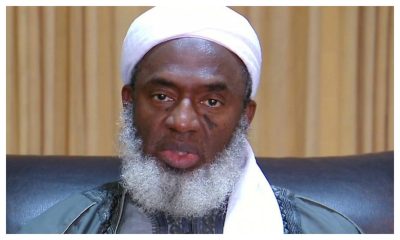
Islamic cleric Sheikh Ahmad Gumi recently defended his past interactions with armed groups, stating he “took the bull by the horns” in 2021 as a necessary step to address Nigeria’s insecurity.
In a post shared on Facebook on Thursday, Gumi said decades of neglect of disadvantaged populations had created deep socio-economic inequalities, leaving many youths vulnerable to manipulation by external forces seeking to destabilise the country.
According to him, the widening gap between the rich and the poor has turned many young people into “ready-made foot soldiers” in cycles of violence that enable the exploitation of Nigeria’s resources.
He also criticised the political class for being largely unresponsive, while noting that the intellectual community is preoccupied with survival struggles.
Reflecting on his past efforts, Gumi said he “took the bull by the horns” in 2021 by attempting to reintegrate violent elements into society rather than allowing them to be further radicalised.
He wrote: “Nigeria for decades has ignored the underprivileged section of its society. There is a significant socio-economic discrepancy, and the society is stratified. This makes our teaming youth ready-made foot soldiers for any foreign interest trying to divide us and rule. To plunder our resources while we are involved in a vicious circle of violence.
”Unfortunately, the political class is unattentive while the intelligentsia is held hostage in the struggle for existence.
“In 2021, I took the bull by the horns in an attempt to bring some of these uncouth elements back to our fold rather than letting them be exploited by the devil.
“I still believe this is the only way out of our predicament. However, it needs the political will and determination to achieve.
“May Allah bring peace back to our nation.”
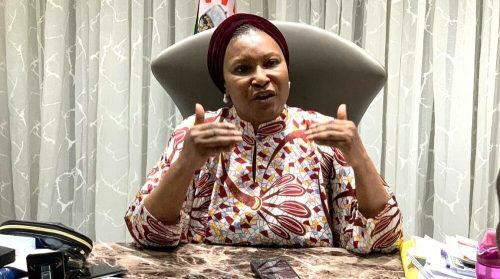
The Federal High Court in Abuja rejected an ex-parte application seeking to bar Senator Ireti Kingibe from participating in the activities of the African Democratic Congress (ADC).
Justice Peter Lifu declined the request from Wuse Ward leaders, ruling that such an order could not be granted without first hearing from the senator.
Instead, the judge ordered the ward leaders said to be loyal to the Minister of the FCT, Nyesom Wike, to put the senator on notice to appear in court to join issues with them on their grievances.
Justice Lifu in a ruling on Thursday held that discretion in such a request for prohibition from party activities and in political matters must be exercised judicially and judiciously.
The judge said justice would be met in the case of the plaintiffs only when the side of the defendant is heard on its merit, along with that of the plaintiffs.
Consequently, the judge ordered that Senator Ireti Kingibe should be served with all court processes by the plaintiffs to enable her become aware of the suit and to prepare her defense.
The judge fixed April 20, 2026, for the plaintiffs and the serving senator to appear before him for hearing of all applications in the matter.
Those who sued the senator in the suit marked FHC/ABJ/ CV/539/2026 are Okezuo Godfrey Anayo and Isaiah Ojonugwa Samuel, on behalf of themselves and ward members as plaintiffs. The senator is the sole defendant.
In their ex-parte application, Kingibe representing the FCT in the Senate was said to have been suspended on March 10, 2026 by her Wuse Ward executives following allegations of anti-party activities and disregard of your cnstitution of the ADC.
In the ex- parte application filed on their behalf by a Senior Advocate of Nigeria, SAN, Kolawole Olowookere, the aggrieved ADC members in Wuse Ward applied for an order of interim injunction restraining Kingibe from parading herself as a member of party, pending the hearing and determination of their motion on notice for interlocutory injunction.
They also asked the judge to restrain the senator from performing any function, attending meetings or performing activities reserved for ADC members or representing the party in any activities.
Besides, the Ward Executive Committee had asked that she be restrained from further interfering with the administration of the ward, ward register and other activities.
The suit was predicated on five grounds among which are that Mrs Kingibe was placed on suspension due to anti-party activities, gross misconduct and confiscation of the ward statutory records.
They argued that the suspension followed due process as enshrined in the ADC constitution and ratified by the two thirds majority of the EXCO members.
They averred that despite the communication of the suspension to Kingibe, she has continued to hold parallel meetings, issue press statements as an ADC member, and using her security details to intimidate the executive committee.
“Her actions constitute flagrant disregard to the internal mechanism of the party,” the plaintiffs stated.
Meanwhile, a lawyer, Abubakar Marshall who claimed to be representing the senator, announced that he had filed a preliminary objection against the suit. He added that it was served on M. S. Garba, who stood for the plaintiffs at Thursday’s proceedings.
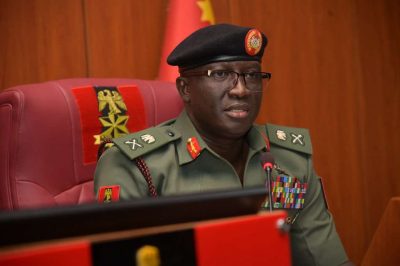
The Chief of Army Staff (COAS), Lieutenant General Waidi Shaibu, visited Jos, Plateau State, on Thursday, April 2, 2026, to lead a high-powered security assessment following recent security breaches.
The visit was aimed at strengthening public confidence and reinforcing ongoing efforts to stabilize affected communities.
Colonel Appolonia Anele, acting Director, Army Public Relations, said in a statement that the visit forms part of ongoing efforts to restore calm and entrench lasting peace across the state.
According to the statement, upon arrival, the COAS was received by the Executive Governor of Plateau State, Caleb Mutfwang, in a clear demonstration of strong civil-military cooperation and a shared commitment to addressing emerging security challenges.
The statement said the COAS received a comprehensive operational briefing from the General Officer Commanding 3 Division and Commander, Joint Task Force Operation ENDURING PEACE, Major General Folusho Oyinlola, who highlighted ongoing operations and proactive measures being implemented in synergy with other security agencies to contain threats, protect lives and property, and stabilise affected communities.
“As part of his engagements, Lieutenant General Shaibu also interacted with community leaders and residents, reassuring them of the unwavering commitment of the Nigerian Army to safeguarding all law-abiding citizens.
He urged residents to remain calm, vigilant and supportive of security agencies by complying with the curfew and cooperating fully with ongoing operations and investigations, while going about their lawful activities.
The chairman of Jos North Local Government Area, Hon. Dachung Bagos, commended the COAS for the timely visit, noting that the presence of the nation’s top military leadership would boost public confidence and reinforce trust in ongoing security efforts.

Gumi Defends Dialogue As Sole Solution To Nigeria’s Insecurity

Court Clears Senator Ireti Kingibe To Remain Active In ADC

COAS Shaibu Hits Jos To Restore Peace, Public Confidence

President Tinubu Appoints New PTDF Executive, Reappoints TCN Head

Simi Welcomes Second Child With Adekunle Gold

United Nigeria Airlines Staff Suspended After Viral Amputee Abuse Video

Pay Your Fare: AIG Cracks Down On Officers Boarding For Free

INEC Removes David Mark, Aregbesola From ADC Leadership Portal

JUST IN: FG Approves Friday 3, Monday 6, as Easter Public Holidays

When 8 million Customers Trust You, Safety Cannot Be an Afterthought
-
 News2 days ago
When 8 million Customers Trust You, Safety Cannot Be an Afterthought
-
 News2 days ago
United Nigeria Airlines Staff Suspended After Viral Amputee Abuse Video
-
 News2 days ago
JUST IN: FG Approves Friday 3, Monday 6, as Easter Public Holidays
-
 News2 days ago
Pay Your Fare: AIG Cracks Down On Officers Boarding For Free
-
 News2 days ago
INEC Removes David Mark, Aregbesola From ADC Leadership Portal
-
 News23 hours ago
COAS Shaibu Hits Jos To Restore Peace, Public Confidence
-
 News24 hours ago
President Tinubu Appoints New PTDF Executive, Reappoints TCN Head
-
 Entertainment1 day ago
Simi Welcomes Second Child With Adekunle Gold