
News
FULL TEXT: Tinubu Addresses 78th UN General Assembly


President Bola Tinubu delivered his first address at the 78th session of the United Nations General Assembly in the early hours of Wednesday (7:55 pm New York time).
His speech touched on the need for Africa to scale the limitations of foreign exploitation to reach its lofty potential while attaining the prosperity inherent in the region’s democratic ideals, the importance of the international community seeing African development as a priority for investments, and the need to tackle the effects of climate change.
See the full speech below:
STATEMENT DELIVERED BY HIS EXCELLENCY, BOLA AHMED TINUBU, GCFR PRESIDENT, FEDERAL REPUBLIC OF NIGERIA AT THE GENERAL DEBATE OF THE 78TH SESSION OF UNITED NATIONS GENERAL ASSEMBLY, 18TH SEPTEMBER 2023
Mr. President,
Heads of State and Government, Secretary-General,
Distinguished Delegates, Ladies and Gentlemen,
Mr. President,
On behalf of the people of Nigeria, I congratulate you on your well-deserved election as President of this Session of the United Nations General Assembly.
We commend your predecessor, His Excellency, Mr. Csaba Korosi for his able stewardship of the Assembly.
We also commend His Excellency, Antonio Guterres, Secretary General of the United Nations, for his work seeking to forge solutions to humanity’s common challenges.
This is my first address before the General Assembly. Permit me to say a few words on behalf of Nigeria, on behalf of Africa, regarding this year’s theme.
Many proclamations have been made, yet our troubles remain close at hand. Failures in good governance have hindered Africa. But broken promises, unfair treatment and outright exploitation from abroad have also exacted a heavy toll on our ability to progress.
Given this long history, if this year’s theme is to mean anything at all, it must mean something special and particular to Africa.
In the aftermath of the Second World War, nations gathered in an attempt to rebuild their war- torn societies. A new global system was born and this great body, the United Nations, was established as a symbol and protector of the aspirations and finest ideals of humankind.
Nations saw that it was in their own interests to help others exit the rubble and wasteland of war. Reliable and significant assistance allowed countries emaciated by war to grow into strong and productive societies.
The period was a highwater mark for trust in global institutions and the belief that humanity had learned the necessary lessons to move forward in global solidarity and harmony.
Today and for several decades, Africa has been asking for the same level of political commitment and devotion of resource that described the Marshall Plan.
We realize that underlying conditions and causes of the economic challenges facing today’s Africa are significantly different from those of post war Europe.
We are not asking for identical programs and actions. What we seek is an equally firm commitment to partnership. We seek enhanced international cooperation with African nations to achieve the 2030 agenda and Sustainable Development Goals.
There are five important points I want to highlight.
First, if this year’s theme is to have any impact at all, global institutions, other nations and their private sector actors must see African development as a priority, not just for Africa but in their interests as well.
Due to both longstanding internal and external factors, Nigeria’s and Africa’s economic structures have been skewed to impede development, industrial expansion, job creation, and the equitable distribution of wealth.
If Nigeria is to fulfil its duty to its people and the rest of Africa, we must create jobs and the belief in a better future for our people.
We must also lead by example.
To foster economic growth and investor confidence in Nigeria, I removed the costly and corrupt fuel subsidy while also discarding a noxious exchange rate system in my first days in office. Other growth and job oriented reforms are in the wings.
I am mindful of the transient hardship that reform can cause. However, it is necessary to go through this phase in order to establish a foundation for durable growth and investment to build the economy our people deserve.
We welcome partnerships with those who do not mind seeing Nigeria and Africa assume larger roles in the global community.
The question is not whether Nigeria is open for business. The question is how much of the world is truly open to doing business with Nigeria and Africa in an equal, mutually beneficial manner.
Direct investment in critical industries, opening their ports to a wider range and larger quantity of African exports and meaningful debt relief are important aspects of the cooperation we seek.
Second, we must affirm democratic governance as the best guarantor of the sovereign will and well-being of the people. Military coups are wrong, as is any tilted civilian political arrangement that perpetuates injustice.
The wave crossing parts of Africa does not demonstrate favour towards coups. It is a demand for solutions to perennial problems.
Regarding Niger, we are negotiating with the military leaders. As Chairman of ECOWAS, I seek to help re-establish democratic governance in a manner that addresses the political and economic challenges confronting that nation, including the violent extremists who seek to foment instability in our region. I extend a hand of friendship to all who genuinely support this mission.
This brings me to my third crucial point. Our entire region is locked in protracted battle against violent extremists. In the turmoil, a dark channel of inhumane commerce has formed. Along the route, everything is for sale. Men, women and children are seen as chattel.
Yet, thousands risk the Sahara’s hot sand and the Mediterranean’s cold depths in search of a better life. At the same time, mercenaries and extremists with their lethal weapons and vile ideologies invade our region from the north.
This harmful traffic undermines the peace and stability of an entire region. African nations will improve our economies so that our people do not risk their lives to sweep the floors and streets of other nations. We also shall devote ourselves to disbanding extremist groups on our turf.
Yet, to fully corral this threat, the international community must strengthen its commitment to arrest the flow of arms and violent people into West Africa.
The fourth important aspect of global trust and solidarity is to secure the continent’s mineral rich areas from pilfering and conflict. Many such areas have become catacombs of misery and exploitation. The Democratic Republic of the Congo has suffered this for decades, despite the strong UN presence there. The world economy owes the DRC much but gives her very little.
The mayhem visited on resource rich areas does not respect national boundaries. Sudan, Mali, Burkina Faso, CAR, the list grows.
The problems also knocks Nigeria’s door.
Foreign entities abetted by local criminals who aspire to be petty warlords have drafted thousands of people into servitude to illegally mine gold and other resources. Billions of dollars meant to improve the nation now fuel violent enterprises. If left unchecked, they will threaten peace and place national security at grave risk.
Given the extent of this injustice and the high stakes involved, many Africans are asking whether this phenomenon is by accident or by design.
Member nations must reply by working with us to deter their firms and nationals from this 21st century pillage of the continent’s riches.
Fifth, climate change severely impacts Nigeria and Africa. Northern Nigeria is hounded by desert encroachment on once arable land. Our south is pounded by the rising tide of coastal flooding and erosion. In the middle, the rainy season brings floods that kill and displace multitudes.
As I lament deaths at home, I also lament the grave loss of life in Morocco and Libya. The Nigerian people are with you.
African nations will fight climate change but must do so on our own terms. To achieve the needed popular consensus, this campaign must accord with overall economic efforts.
In Nigeria, we shall build political consensus by highlighting remedial actions which also promote economic good. Projects such as a Green Wall to stop desert encroachment, halting the destruction of our forests by mass production and distribution of gas burning stoves, and providing employment in local water management and irrigation projects are examples of efforts that equally advance both economic and climate change objectives.
Continental efforts regarding climate change will register important victories if established economies were more forthcoming with public and private sector investment for Africa’s preferred initiatives.
Again, this would go far in demonstrating that global solidarity is real and working.
CONCLUSION
As I close, let me emphasize that Nigeria’s objectives accord with the guiding principles of this world body: peace, security, human rights and development.
In fundamental ways, nature has been kind to Africa, giving abundant land, resources and creative and industrious people. Yet, man has too often been unkind to his fellow man and this sad tendency has brought sustained hardship to Africa’s doorstep.
To keep faith with the tenets of this world body and the theme of this year’s Assembly, the poverty of nations must end. The pillage of one nation’s resources by the overreach of firms and people of stronger nations must end. The will of the people must be respected. This beauty, generous and forgiving planet must be protected.
As for Africa, we seek to be neither appendage nor patron. We do not wish to replace old shackles with new ones.
Instead, we hope to walk the rich African soil and live under the magnificent African sky free of the wrongs of the past and clear of their associated encumbrances. We desire a prosperous, vibrant democratic living space for our people.
To the rest of the world, I say walk with us as true friends and partners. Africa is not a problem to be avoided nor is it to be pitied. Africa is nothing less than the key to the world’s future.






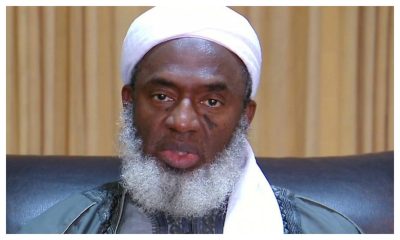
Islamic cleric Sheikh Ahmad Gumi recently defended his past interactions with armed groups, stating he “took the bull by the horns” in 2021 as a necessary step to address Nigeria’s insecurity.
In a post shared on Facebook on Thursday, Gumi said decades of neglect of disadvantaged populations had created deep socio-economic inequalities, leaving many youths vulnerable to manipulation by external forces seeking to destabilise the country.
According to him, the widening gap between the rich and the poor has turned many young people into “ready-made foot soldiers” in cycles of violence that enable the exploitation of Nigeria’s resources.
He also criticised the political class for being largely unresponsive, while noting that the intellectual community is preoccupied with survival struggles.
Reflecting on his past efforts, Gumi said he “took the bull by the horns” in 2021 by attempting to reintegrate violent elements into society rather than allowing them to be further radicalised.
He wrote: “Nigeria for decades has ignored the underprivileged section of its society. There is a significant socio-economic discrepancy, and the society is stratified. This makes our teaming youth ready-made foot soldiers for any foreign interest trying to divide us and rule. To plunder our resources while we are involved in a vicious circle of violence.
”Unfortunately, the political class is unattentive while the intelligentsia is held hostage in the struggle for existence.
“In 2021, I took the bull by the horns in an attempt to bring some of these uncouth elements back to our fold rather than letting them be exploited by the devil.
“I still believe this is the only way out of our predicament. However, it needs the political will and determination to achieve.
“May Allah bring peace back to our nation.”
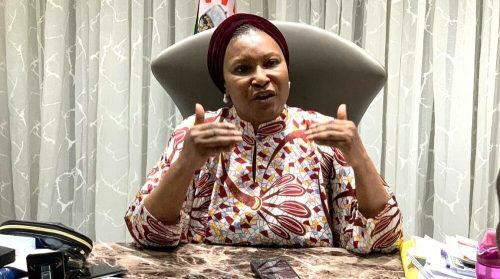
The Federal High Court in Abuja rejected an ex-parte application seeking to bar Senator Ireti Kingibe from participating in the activities of the African Democratic Congress (ADC).
Justice Peter Lifu declined the request from Wuse Ward leaders, ruling that such an order could not be granted without first hearing from the senator.
Instead, the judge ordered the ward leaders said to be loyal to the Minister of the FCT, Nyesom Wike, to put the senator on notice to appear in court to join issues with them on their grievances.
Justice Lifu in a ruling on Thursday held that discretion in such a request for prohibition from party activities and in political matters must be exercised judicially and judiciously.
The judge said justice would be met in the case of the plaintiffs only when the side of the defendant is heard on its merit, along with that of the plaintiffs.
Consequently, the judge ordered that Senator Ireti Kingibe should be served with all court processes by the plaintiffs to enable her become aware of the suit and to prepare her defense.
The judge fixed April 20, 2026, for the plaintiffs and the serving senator to appear before him for hearing of all applications in the matter.
Those who sued the senator in the suit marked FHC/ABJ/ CV/539/2026 are Okezuo Godfrey Anayo and Isaiah Ojonugwa Samuel, on behalf of themselves and ward members as plaintiffs. The senator is the sole defendant.
In their ex-parte application, Kingibe representing the FCT in the Senate was said to have been suspended on March 10, 2026 by her Wuse Ward executives following allegations of anti-party activities and disregard of your cnstitution of the ADC.
In the ex- parte application filed on their behalf by a Senior Advocate of Nigeria, SAN, Kolawole Olowookere, the aggrieved ADC members in Wuse Ward applied for an order of interim injunction restraining Kingibe from parading herself as a member of party, pending the hearing and determination of their motion on notice for interlocutory injunction.
They also asked the judge to restrain the senator from performing any function, attending meetings or performing activities reserved for ADC members or representing the party in any activities.
Besides, the Ward Executive Committee had asked that she be restrained from further interfering with the administration of the ward, ward register and other activities.
The suit was predicated on five grounds among which are that Mrs Kingibe was placed on suspension due to anti-party activities, gross misconduct and confiscation of the ward statutory records.
They argued that the suspension followed due process as enshrined in the ADC constitution and ratified by the two thirds majority of the EXCO members.
They averred that despite the communication of the suspension to Kingibe, she has continued to hold parallel meetings, issue press statements as an ADC member, and using her security details to intimidate the executive committee.
“Her actions constitute flagrant disregard to the internal mechanism of the party,” the plaintiffs stated.
Meanwhile, a lawyer, Abubakar Marshall who claimed to be representing the senator, announced that he had filed a preliminary objection against the suit. He added that it was served on M. S. Garba, who stood for the plaintiffs at Thursday’s proceedings.
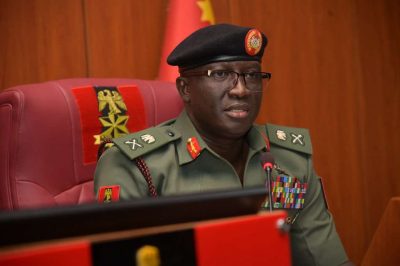
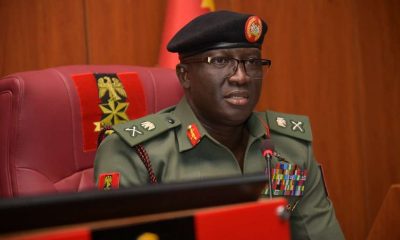
The Chief of Army Staff (COAS), Lieutenant General Waidi Shaibu, visited Jos, Plateau State, on Thursday, April 2, 2026, to lead a high-powered security assessment following recent security breaches.
The visit was aimed at strengthening public confidence and reinforcing ongoing efforts to stabilize affected communities.
Colonel Appolonia Anele, acting Director, Army Public Relations, said in a statement that the visit forms part of ongoing efforts to restore calm and entrench lasting peace across the state.
According to the statement, upon arrival, the COAS was received by the Executive Governor of Plateau State, Caleb Mutfwang, in a clear demonstration of strong civil-military cooperation and a shared commitment to addressing emerging security challenges.
The statement said the COAS received a comprehensive operational briefing from the General Officer Commanding 3 Division and Commander, Joint Task Force Operation ENDURING PEACE, Major General Folusho Oyinlola, who highlighted ongoing operations and proactive measures being implemented in synergy with other security agencies to contain threats, protect lives and property, and stabilise affected communities.
“As part of his engagements, Lieutenant General Shaibu also interacted with community leaders and residents, reassuring them of the unwavering commitment of the Nigerian Army to safeguarding all law-abiding citizens.
He urged residents to remain calm, vigilant and supportive of security agencies by complying with the curfew and cooperating fully with ongoing operations and investigations, while going about their lawful activities.
The chairman of Jos North Local Government Area, Hon. Dachung Bagos, commended the COAS for the timely visit, noting that the presence of the nation’s top military leadership would boost public confidence and reinforce trust in ongoing security efforts.

Gumi Defends Dialogue As Sole Solution To Nigeria’s Insecurity

Court Clears Senator Ireti Kingibe To Remain Active In ADC

COAS Shaibu Hits Jos To Restore Peace, Public Confidence

President Tinubu Appoints New PTDF Executive, Reappoints TCN Head

Simi Welcomes Second Child With Adekunle Gold

United Nigeria Airlines Staff Suspended After Viral Amputee Abuse Video

Pay Your Fare: AIG Cracks Down On Officers Boarding For Free

INEC Removes David Mark, Aregbesola From ADC Leadership Portal

JUST IN: FG Approves Friday 3, Monday 6, as Easter Public Holidays

When 8 million Customers Trust You, Safety Cannot Be an Afterthought
-
 News2 days ago
When 8 million Customers Trust You, Safety Cannot Be an Afterthought
-
 News1 day ago
United Nigeria Airlines Staff Suspended After Viral Amputee Abuse Video
-
 News2 days ago
2027: Kwankwaso’s Exit Marks End Of NNPP – Kwankwasiyya Movement
-
 News1 day ago
Pay Your Fare: AIG Cracks Down On Officers Boarding For Free
-

 News2 days ago
Lagos CP Withdraws Taskforce From Traffic Duties
-
 News1 day ago
JUST IN: FG Approves Friday 3, Monday 6, as Easter Public Holidays
-
 News1 day ago
INEC Removes David Mark, Aregbesola From ADC Leadership Portal
-
 News17 hours ago
COAS Shaibu Hits Jos To Restore Peace, Public Confidence