
News
Tinubu’s Outburst On 25 Per Cent FCT Votes Sparks Fresh Controversy


The candidate of the All Progressives Congress, APC, in the 2023 presidential election and now President and Commander-in-Chief of the Armed Forces of the Federal Republic of Nigeria, Bola Ahmedu Tinubu, stirred the hornet’s nest recently when he cautioned the Presidential Election Petition Tribunal, PEPT, against attempting to remove him from office on the grounds that he did not get 25 percent of the total votes cast during the presidential election in the Federal Capital Territory, FCT, Abuja.
He warned that such action could lead to chaos and anarchy in the country.
President Tinubu asked the election tribunal to dismiss the petition seeking the nullification of his election for not securing 25 percent of the lawful votes cast in the FCT, arguing that having scored 25 percent in about 30 states of the federation, his failure to obtain 25 percent in the FCT would not be strong enough to deny him of his hard-earned victory.
Tinubu contested the February 25 presidential elections on the platform of the APC and was declared the winner by the Independent National Electoral Commission, INEC, after polling 8,794,726 votes to beat his closest rivals, Alhaji Atiku Abubakar of the Peoples Democratic Party, PDP, who polled 6, 984, 520 votes to place second, and Mr. Peter Obi of the Labour Party, LP, who came third with 6,101,533 votes.
However, Atiku and Obi had approached the election tribunal seeking to upturn Tinubu’s victory on the grounds that the elections were characterised by massive rigging as evidenced in the alleged widespread voters’ intimidation and suppression, ballot box snatching and destruction, over-voting, results manipulations, thuggery, vote buying, INEC’s failure to abide by its own rules and procedures, physical assault on voters, among others.
Apart from these, Atiku and Obi also want Tinubu’s victory to be nullified because he did not score 25 percent of the total valid votes cast in the FCT, which according to them, is a constitutional requirement before anybody can be declared president of Nigeria.
Since Tinubu’s declaration as the winner of that election, political discussion has been swinging like a pendulum. Nigerians, who prior to the elections were passive politically, had suddenly become active, discussing and analysing political developments from the election tribunal.
Analysts are united in agreement that never in the history of Nigerian politics has there been the kind of political awareness and participation that were witnessed during the 2023 general elections.
They also agreed that the country’s political firmament has never been as charged and ominous as it was between the period when Tinubu was declared the winner of the presidential election and May 29, when he was actually sworn in as the president of the Federal Republic of Nigeria.
However, Atiku and Obi have pursued their case at the election petition tribunal with each presenting before the tribunal pictures, videos and documentary evidence to prove that Tinubu should not have been declared as president in the first place, not to talk of swearing him into the office.
The issue around Tinubu’s failure to get 25 percent of the votes cast in the FCT appears to be the strongest point against the president since it is a constitutional issue and does not require presenting any witness by the petitioners.
But Tinubu, through his legal counsel, Wole Olanipekun, in a final written address to the tribunal against the petition, argued that the FCT is the 37th state for electoral purposes. He stressed that any other interpretation would “lead to absurdity, chaos, anarchy and alteration of the very intention of the legislature.”
Stressing that the petition is novel but not familiar with the electoral law, Olanipekun said: “The issue in this address is very novel in the sense that it is not a petition stricto senso, familiar to our electoral jurisprudence, as the petitioners are not, this time around, complaining about election rigging, ballot box snatching, ballot box stuffing, violence, thuggery, vote buying, voters’ intimidation, disenfranchisement, interference by the military or the police, and such other electoral vices.”
The lawyer was specifically addressing a section of the Nigerian Constitution, which provides that a presidential candidate must score 25 per cent of the votes in two-thirds of Nigeria’s 36 states and the Federal Capital Territory, Abuja.
Since Tinubu was declared as the winner of the presidential election without scoring 25 percent in the FCT, several opinions have been expressed on the matter by Nigerians of all classes, including those that are not lawyers.
There are those who have kept on insisting that the constitution considers Abuja as one of the states in the country. Those on this divide are saying that the word, ‘and’ as used in the constitution, ‘36 states of the federation and the FCT,’ does not really mean that the FCT is different from the 36 states of the federation. To them, the FCT is just the same as any other state of the federation.
They, therefore, posited that Tinubu, having scored 25 percent of the votes cast in about 30 states, is eminently qualified to be declared president since the constitution said a candidate must secure 25 percent in two-third of the 36 states and the FCT, which is 24 states.
However, there are those who insist that the word, ‘and’ as used in the constitution simply means that if any candidate who scores 25 percent of the votes cast in two-third of the 36 states, fails to score 25 percent of the votes cast in the FCT, such a candidate has not met the constitutional requirement and should not be declared president.
They further argued that if the framers of the constitution had a different thing in mind, they would not have inserted the word, ‘and’ there. They also disagreed with those who said that the FCT is just like any other state in the federation because while a state has a governor, who is elected by the electorate, the FCT does not have a governor, but a minister who is an appointee of the president.
However, there are others who believe that even though the constitution provides that securing 25 percent votes cast in the FCT is a compulsory requirement before any candidate could win the presidential election, it would be left for the judges to look at what will best serve national interest and unity before they pass their judgement.
However, Tinubu’s legal team seems to have agreed with those on this side of the divide as they are also saying that the courts have always been careful about giving extreme interpretations of the Constitution that could spark chaos.
“Our courts have always adopted the purposeful approach to the interpretation of our Constitution, as exemplified in a host of decisions,” the team said.
Tinubu’s legal team is also insisting that residents of the FCT, Abuja, are not more special than Nigerians from the other 36 states and cannot be treated specially.
The team said: “In concluding our arguments on this issue, we urge the court to hold that any election where the electorates exercise their plebiscite, there is neither a ‘royal’ ballot nor ‘royal’ voter; and that residents of the FCT do not have any special voting right over residents of any other state of the federation, in a manner similar to the concepts of preferential shareholding in Company Law. We urge this court to resolve this issue against the petitioners and in favour of the respondent.”
Pushing the argument further, the President’s legal team is also arguing that 25 percent votes cast in the FCT is not required by law for a president to emerge.
“May we draw the attention of the court to the fact that there is no punctuation (comma) in the entire section 134(2)(b) of the constitution, particularly, immediately after the ‘States’ and the succeeding ‘and’ connecting the Federal Capital Territory with the States. In essence, the reading of the subsection has to be conjunctive and not disjunctive, as the Constitution clearly makes it so. Pressed further by this constitutional imperative, the Federal Capital Territory, Abuja, is taken ‘as if’ it is the 37th State, under and by virtue of section 299 of the Constitution.”
However, the comment credited to President Tinubu’s legal team that removing him as president over his failure to score 25 percent of the votes cast in the FCT might lead to the breakdown of law and order in Nigeria has sparked another round of argument.
President of the Middle Belt Forum (MBF), Dr. Pogu Bitrus, described the president as a joker for making such a statement.
According to the Middle Belt leader, nobody is above the constitution and if the constitution has been interpreted that the ‘and’ is conjunctive, and that the FCT is additional to the two-third of the states, then it is not for President Tinubu to determine.
“He cannot tell us that he is above the constitution and the laws of the nation. If the Supreme Court interprets that according to the law and the constitution, then it is above not only him, but also above every other Nigerian like him. This is because the constitution is the grundnorm; it is superior to every other law that we have in Nigeria. It is the only thing that is binding us together.
“So, if the constitution interprets it that way, it is not how I feel or how he or any other person feels because the law is not a respecter of persons. He cannot tell us that there will be anarchy in the land if the tribunal interprets the constitution. The country and the constitution are above him,” he said.
Also, a legal practitioner, Marcellus Onah did not agree that there will be anarchy in the land if the tribunal removes the president on the grounds that he did not get 25 percent of the votes cast in the FCT.
“What does he mean by anarchy in the land? Yes, a few of his supporters might want to cause trouble but that will be in Lagos only, not even in any other South West states. And I am sure the security agents will know what to do in such circumstances.
“So, he cannot threaten anybody because he is not more Nigerian than anybody. Besides, nobody is above the law. The constitution is the only document that guides how everybody operates in Nigeria, so nobody should claim to be above it.
“If the tribunal has established that he did not get 25 percent of the votes cast in the FCT, there is nothing anybody can do. That is just it and no amount of threat from him can change anything. The constitution must prevail at all times. That is the only thing that will make the outside world respect us as a nation,” he said.
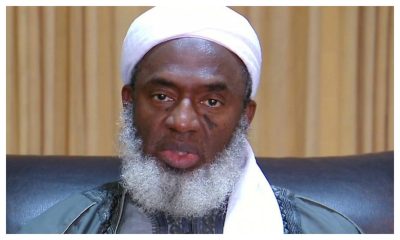
Islamic cleric Sheikh Ahmad Gumi recently defended his past interactions with armed groups, stating he “took the bull by the horns” in 2021 as a necessary step to address Nigeria’s insecurity.
In a post shared on Facebook on Thursday, Gumi said decades of neglect of disadvantaged populations had created deep socio-economic inequalities, leaving many youths vulnerable to manipulation by external forces seeking to destabilise the country.
According to him, the widening gap between the rich and the poor has turned many young people into “ready-made foot soldiers” in cycles of violence that enable the exploitation of Nigeria’s resources.
He also criticised the political class for being largely unresponsive, while noting that the intellectual community is preoccupied with survival struggles.
Reflecting on his past efforts, Gumi said he “took the bull by the horns” in 2021 by attempting to reintegrate violent elements into society rather than allowing them to be further radicalised.
He wrote: “Nigeria for decades has ignored the underprivileged section of its society. There is a significant socio-economic discrepancy, and the society is stratified. This makes our teaming youth ready-made foot soldiers for any foreign interest trying to divide us and rule. To plunder our resources while we are involved in a vicious circle of violence.
”Unfortunately, the political class is unattentive while the intelligentsia is held hostage in the struggle for existence.
“In 2021, I took the bull by the horns in an attempt to bring some of these uncouth elements back to our fold rather than letting them be exploited by the devil.
“I still believe this is the only way out of our predicament. However, it needs the political will and determination to achieve.
“May Allah bring peace back to our nation.”

The Federal High Court in Abuja rejected an ex-parte application seeking to bar Senator Ireti Kingibe from participating in the activities of the African Democratic Congress (ADC).
Justice Peter Lifu declined the request from Wuse Ward leaders, ruling that such an order could not be granted without first hearing from the senator.
Instead, the judge ordered the ward leaders said to be loyal to the Minister of the FCT, Nyesom Wike, to put the senator on notice to appear in court to join issues with them on their grievances.
Justice Lifu in a ruling on Thursday held that discretion in such a request for prohibition from party activities and in political matters must be exercised judicially and judiciously.
The judge said justice would be met in the case of the plaintiffs only when the side of the defendant is heard on its merit, along with that of the plaintiffs.
Consequently, the judge ordered that Senator Ireti Kingibe should be served with all court processes by the plaintiffs to enable her become aware of the suit and to prepare her defense.
The judge fixed April 20, 2026, for the plaintiffs and the serving senator to appear before him for hearing of all applications in the matter.
Those who sued the senator in the suit marked FHC/ABJ/ CV/539/2026 are Okezuo Godfrey Anayo and Isaiah Ojonugwa Samuel, on behalf of themselves and ward members as plaintiffs. The senator is the sole defendant.
In their ex-parte application, Kingibe representing the FCT in the Senate was said to have been suspended on March 10, 2026 by her Wuse Ward executives following allegations of anti-party activities and disregard of your cnstitution of the ADC.
In the ex- parte application filed on their behalf by a Senior Advocate of Nigeria, SAN, Kolawole Olowookere, the aggrieved ADC members in Wuse Ward applied for an order of interim injunction restraining Kingibe from parading herself as a member of party, pending the hearing and determination of their motion on notice for interlocutory injunction.
They also asked the judge to restrain the senator from performing any function, attending meetings or performing activities reserved for ADC members or representing the party in any activities.
Besides, the Ward Executive Committee had asked that she be restrained from further interfering with the administration of the ward, ward register and other activities.
The suit was predicated on five grounds among which are that Mrs Kingibe was placed on suspension due to anti-party activities, gross misconduct and confiscation of the ward statutory records.
They argued that the suspension followed due process as enshrined in the ADC constitution and ratified by the two thirds majority of the EXCO members.
They averred that despite the communication of the suspension to Kingibe, she has continued to hold parallel meetings, issue press statements as an ADC member, and using her security details to intimidate the executive committee.
“Her actions constitute flagrant disregard to the internal mechanism of the party,” the plaintiffs stated.
Meanwhile, a lawyer, Abubakar Marshall who claimed to be representing the senator, announced that he had filed a preliminary objection against the suit. He added that it was served on M. S. Garba, who stood for the plaintiffs at Thursday’s proceedings.
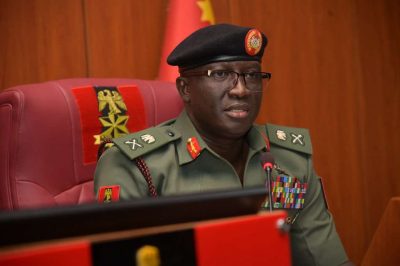
The Chief of Army Staff (COAS), Lieutenant General Waidi Shaibu, visited Jos, Plateau State, on Thursday, April 2, 2026, to lead a high-powered security assessment following recent security breaches.
The visit was aimed at strengthening public confidence and reinforcing ongoing efforts to stabilize affected communities.
Colonel Appolonia Anele, acting Director, Army Public Relations, said in a statement that the visit forms part of ongoing efforts to restore calm and entrench lasting peace across the state.
According to the statement, upon arrival, the COAS was received by the Executive Governor of Plateau State, Caleb Mutfwang, in a clear demonstration of strong civil-military cooperation and a shared commitment to addressing emerging security challenges.
The statement said the COAS received a comprehensive operational briefing from the General Officer Commanding 3 Division and Commander, Joint Task Force Operation ENDURING PEACE, Major General Folusho Oyinlola, who highlighted ongoing operations and proactive measures being implemented in synergy with other security agencies to contain threats, protect lives and property, and stabilise affected communities.
“As part of his engagements, Lieutenant General Shaibu also interacted with community leaders and residents, reassuring them of the unwavering commitment of the Nigerian Army to safeguarding all law-abiding citizens.
He urged residents to remain calm, vigilant and supportive of security agencies by complying with the curfew and cooperating fully with ongoing operations and investigations, while going about their lawful activities.
The chairman of Jos North Local Government Area, Hon. Dachung Bagos, commended the COAS for the timely visit, noting that the presence of the nation’s top military leadership would boost public confidence and reinforce trust in ongoing security efforts.

Gumi Defends Dialogue As Sole Solution To Nigeria’s Insecurity

Court Clears Senator Ireti Kingibe To Remain Active In ADC

COAS Shaibu Hits Jos To Restore Peace, Public Confidence

President Tinubu Appoints New PTDF Executive, Reappoints TCN Head

Simi Welcomes Second Child With Adekunle Gold

United Nigeria Airlines Staff Suspended After Viral Amputee Abuse Video

Pay Your Fare: AIG Cracks Down On Officers Boarding For Free

INEC Removes David Mark, Aregbesola From ADC Leadership Portal

JUST IN: FG Approves Friday 3, Monday 6, as Easter Public Holidays

When 8 million Customers Trust You, Safety Cannot Be an Afterthought
-
 News2 days ago
When 8 million Customers Trust You, Safety Cannot Be an Afterthought
-
 News1 day ago
United Nigeria Airlines Staff Suspended After Viral Amputee Abuse Video
-
 News2 days ago
JUST IN: FG Approves Friday 3, Monday 6, as Easter Public Holidays
-
 News1 day ago
Pay Your Fare: AIG Cracks Down On Officers Boarding For Free
-
 News21 hours ago
COAS Shaibu Hits Jos To Restore Peace, Public Confidence
-
 News2 days ago
INEC Removes David Mark, Aregbesola From ADC Leadership Portal
-
 News22 hours ago
President Tinubu Appoints New PTDF Executive, Reappoints TCN Head
-
 Entertainment1 day ago
Simi Welcomes Second Child With Adekunle Gold