
News
All Govt Payments Must Be Cashless From March — NFIU

The Federal Government yesterday served a notice to the three tiers of government that all payments from the public treasury beyond the threshold approved for daily cash limit by the Central Bank of Nigeria must be done electronically with effect from March 1, 2023.
In effect, the Nigerian Financial and Intelligence Unit, NFIU, which made the announcement, warned that anyone who flouts the new guideline would be charged in accordance with relevant instruments on money laundering and corruption operating in the country.
The notice generated mixed reactions from some state governments. While some saw it as necessary, others kicked against it.
However, the Director of NFIU and Chief Executive Officer, Mr Modibbo Hamman Tukur, who made the pronouncements at a briefing in Abuja, warned that with the publication of the new guidelines, cash withdrawals from public accounts had been prohibited by the requirement of the laws under reference, while the payment of estacodes and overseas allowances to civil and public servants in cash had also been outlawed.
Sanctions and penalties
The NFIU boss also warned that any public office at the federal, state and local government levels, who flout the new cash policy, would face the full weight of the law, irrespective of his/her position.
The NFIU said: “It is hereby stated clearly that any individual or corporate body who violates the provisions of these guidelines is in direct contravention of provisions of Section 2 of MLPPA, 2022, Section 13 of MLPPA, 2022, NFIU Act, 2018 and Section 26 of POCA, 2022, and their attendant principles and interpretations and will be liable to necessary prosecution and penalties from the effective said date. Cash withdrawals from public accounts would be treated as a money laundering offence.
“Also, it is hereby provided that any public officer or any citizen who comes into contact with the provisions of these Guidelines with its attendant principles shall as a matter of obligation promote the implementation and success of the guidelines.
Take-off date
“The effective date for the enforcement and/or implementation of this guideline by all public authorities, institutions and organizations in the financial sector, financial institutions and designated non-financial institutions is March 1, 2023.”
Exceptions
The NFIU, however, gave one condition under which a public officer might be allowed to withdraw more cash than is allowed under the law, saying only the Presidency could provide such a window.
According to Tukur, the waiver to withdraw more daily cash than approved by the CBN, can be granted by the Presidency, based on exigency.
He explained: “There is nothing in these guidelines to suggest or indicate there is reason to compel or warrant a public official at federal, state and local government to go to a financial institution to withdraw cash. In the unlikely event that a public official feels he may need cash withdrawal, he may apply for approval for a waiver from the Presidency which may be granted on a case-by-case basis.
“Under no circumstance, shall any category of public officers be given a standing or continuous waiver to withdraw cash from any public account in any financial institution or designated non-financial institution.
“The application of these guidelines includes all foreign missions operating in Nigeria, accounts of all development partner institutions, and the accounts of all instituted funds in form of independent funds to be operated as mutual funds such as insurance funds, cooperative funds, brokerages funds, political party funds or pressure group/union funds, once the funds are designated to exist as funds or to operate independently for management and/or investment.
“By these guidelines, the local government’s N500,000 cash withdrawal limit with regards to public accounts and instituted funds are hereby discontinued. These guidelines supersede and repeal the N500,000 cash withdrawal limit of local government funds and also, since it is for criminal purposes, supersedes the CBN’s regulation on cash withdrawal limit with regards to public accounts and instituted funds”.
Why the guidelines became imperative
The NFIU explained that the application of the new measures became necessary to enable Nigeria to comply with the Enforcement, Guidelines and Policies for the Mitigation of Money Laundering, Terrorist Financing, Proliferation of Weapons and Prevention of Predicate Crimes.
Tukur said: “In considering the provisions and enforcement requirements of the law, particularly Sections 2 and 13 of the MLPPA, 2022, Section 26 of the Proceeds of Crime (Recovery and Management) Act, (POCA) 2022, and the Central Bank of Nigeria (CBN) circular on the revised cash withdrawal limits, issued pursuant to its powers under the CBN Act, 2007, and Banks and Other Financial Institutions Act, 2020, the NFIU noticed in the process of its financial transactions analysis that civil servants are becoming more and more vulnerable to money laundering and its predicate offences due to their exposure to cash withdrawals from public accounts.
“Although this guideline is meant to enforce the provisions of Sections 2 and 13 of MLPPA, 2022, to discontinue cash withdrawal from public accounts and establish a clear audit trail, and mitigate corruption and other vices in public expenditure; it is also aimed at supporting law enforcement and the entire criminal justice system by strengthening transparency in the investigation.
“According to NFIU analysis covering the period 2015 to 2022, the Federal Government withdrew N225.72 billion cash; state governments, N701.54 billion cash; and local governments, N156.76 billion cash.
“The cash withdrawals directly contravene the provisions of the MLPPA, 2022 and the Proceeds of Crime (Recovery and Management) Act, 2022 (POCA, 2022) which provide the legal framework setting limitations on cash transactions and sanctions for infringement of the provisions.
“Section 2 of the MLPPA, 2022 restricts cash payments of a sum exceeding N5 million (or its equivalent) for individuals, and N10 million or its equivalent for a body corporate. Section 19 of the MLPPA, 2022 imposes a fine of at least N10 Million or imprisonment for a term of at least three years (or both), in the case of individuals; and a fine of N25 million in the case of a body corporate. Section 26 of POCA, 2022 makes provision for the seizure and detention of cash over the prescribed amount under the law.
“Most cash withdrawals from public accounts are in excess of N5 million and N10 million respectively which is prohibited and liable to imprisonment upon conviction.
‘’The breach of this particular provision became so rampant because there are heavy withdrawals of cash from public accounts necessitated by inflation and changes in the economy, and also due to payment for overseas travels in terms of estacode and other overseas allowances.
“By the principles of Section 2 (Cash Transaction Outside Financial Institutions Limit), and Section 13 (Use of New Products, Business Practices and New Technologies) of the MLPPA, 2022, cash withdrawals must be prohibited in order to mitigate the risk of exposure of public servants to these crimes and protect the financial system from continuous abuse.
“In the meantime, this is not only indicting chief accounting officers of Ministries Departments and Agencies (MDAs) but in the context of Nigeria’s democracy, it gives room for adversaries, political opponents and antagonists to exploit the law against their competitors, or to their individual political advantage.
“Considering the provisions of Section 13 of the MLPPA, 2022, which depicts that in the light of the vulnerability stated above and risk, there must be a redesign of products and technologies to respond to new circumstances and developments which directly apply in this particular case, for the protection of the innocent public servants against terms of imprisonment. Convictions on account of Section 2 of MLPPA, 2022 were becoming frequent in the law courts.
“Sections 3(1)(e), (n), and (l) as well as 23(2)(a) of the NFIU Act empowers the Unit to respond in line with our primary duty and issue guidelines, advise, monitor and report compliance on this to law enforcement and prosecutorial authorities. We support the CBN circular on cash withdrawal limit which is in harmony with the law, provided in Section 2 of MLPPA, 2022. This guideline will support the efforts of the CBN.
No big deal about the cashless transaction —Lagos govt
Reacting to the notice yesterday, the Lagos State government described the planned introduction of a cashless policy as a welcome development, saying the state had always been implementing the policy.
The Commissioner for Information and Strategy, Gbenga Omotoso, said: “Lagos State government has always been in support of the cashless policy.
“It’s not a new thing to us because we have always been on a cashless policy from inception. Not a big deal to us in Lagos.”
We’ll embrace any developmental policy, says Adeleke’s spokesman
When contacted, Governor Ademola Adeleke of Osun State, who spoke through his spokesperson, Mr Olawale Rasheed, said the young administration in the state is willing to embrace any policy that will enhance the growth and development of its people.
He added that the new government had plans to invest in technology innovation to ensure ease of doing business,, hence it would not shy away from embracing the policy if it aids it agenda.
His words: “Well, ours is a young administration and we are still studying the details of the policy. However, we have plans for technology innovation and, in the interest of the development of our people; we are willing to embrace any policy that will enhance the quality of life of our people. If this policy will enhance business and investment in the state, we will be part of it.”
Bayelsa govt faults policy
On his part, Bayelsa State deputy governor, Senator Lawrence Ewhrudjakpo, faulted the monetary policy of the Central Bank of Nigeria on daily cash withdrawal limits, noting with concern that the policy would not favour predominantly rural states as Bayelsa because of the absence of banking services in the rural areas.
His words: “The current monetary policy is not in favour of those of us who are more of a rural state, as Bayelsa. This policy will not do well for us for now. So, we pray the Federal Government to reverse the policy and encourage the free flow of cash in order not to further stifle our fragile economy.”

A prosecution witness, Captain Ezekiel Bala-Agaba, testified in a Lagos Federal High Court on Thursday, that he personally delivered $15 million in cash to former NIMASA DG, Patrick Akpobolokemi.
The witness, Bala-Agaba, a former Executive Director of Maritime Safety, Shipping Development and Marine Operations at NIMASA, made the disclosure while testifying before Justice Ayokunle Faji of the Federal High Court in Lagos.
Captain Agaba, who appeared as the 15th prosecution witness, told the court that funds meant for pipeline surveillance were withdrawn from NIMASA’s accounts, converted into dollars, and handed over to Dr Akpobolokemi.
According to him, the money was taken to a Bureau de Change, which converted it into $15 million before the cash was delivered to the NIMASA office on Burma Road, Apapa, Lagos.
He said he subsequently took the money to the office of the then Director-General.
“The money was sent to a Bureau de Change, which later brought the dollar equivalent to our office at Burma Road, Apapa, Lagos. I asked my Personal Assistant, Ekene Nwakuche, to carry the bag and follow me to the Director-General’s office,” he told the court.
The witness explained that he collected the bag from his aide before entering the office.
“When we got to the door of the Director-General’s office, I collected the bag from him and asked him to wait outside. I then personally delivered the sum of $15 million to the Director-General.”
The witness was initially a defendant in the case but later opted to testify for the prosecution.
While being led in evidence by prosecuting counsel, Suleiman Suleiman, he explained the chain of command within NIMASA and how financial approvals were processed in the agency.
According to him, the Director-General is the overall head of the agency and issues instructions to directors, who then implement policies in line with the NIMASA Act.
He told the court that he chaired the agency’s Intelligence Committee, which was responsible for certain security-related operations.
“As chairman of the committee, I oversaw its activities and reported directly to the Director-General, Dr. Patrick Akpobolokemi,” he said.
During the proceedings, the witness was also shown a document containing a letter from Access Bank to the Economic and Financial Crimes Commission (EFCC) detailing transactions in NIMASA’s accounts between 2013 and 2015.
When asked how much money he took to the former Director-General, Agaba replied: “$15 million.”
After listening to the testimony, Justice Faji adjourned the matter until April 22 and 23 for cross-examination of the witness.
The EFCC had in December 2015 arraigned Dr. Akpobolokemi and seven others before the court on a 30-count charge bordering on conspiracy, fraudulent conversion of funds and money laundering.
Those charged alongside the former NIMASA boss include, Warredi Enisuoh, Governor Juan, Ugo Frederick, Timi Alari, as well as Alkenzo Limited and Penniel Engineering Services Limited.
They pleaded not guilty to the offences.
The anti-graft agency alleged that the defendants conspired to divert funds running into over N1.15 billion under the guise of providing security intelligence in Nigeria’s maritime domain.
According to the EFCC, the NIMASA Intelligence Committee allegedly received N1,153,000,000 between December 2013 and July 2015.
Investigations further revealed that several companies contracted to execute the intelligence operations were either unregistered or lacked the capacity to perform the services, while some were allegedly linked to the defendants.
The prosecution also alleged that the defendants nominated or owned many of the companies used to execute the contracts.
One of the charges stated that the defendants conspired to commit offences punishable under the Money Laundering (Prohibition) Act, 2012.
The Central Bank of Nigeria (CBN) has issued a directive to all financial institutions to immediately restrict certain banking services for large-ticket borrowers with non-performing loans (NPLs).
This move is aimed at strengthening credit discipline and protecting the stability of the Nigerian financial system following a rise in the industry’s NPL ratio to approximately 7%, exceeding the regulatory 5% threshold.
This order is specifically targeted at large-ticket obligors.
The CBN issued the directive in a circular to banks on Monday.
The latest instruction comes almost a week after the CBN asked financial institutions to stress test.
It is uncertain if the two directives are connected or what may have triggered the loan-related instruction, but the apex bank said it furthers its mandate to protect Nigeria’s financial system.
“In furtherance of its mandate to promote a sound financial system, protect depositors, and enhance prudential compliance within the banking sector, the Central Bank of Nigeria (CBN) hereby directs all banks to restrict non-performing large ticket obligors, whose activities pose systemic risk to the financial system, from accessing specified banking services,” the circular reads in part.
“Any large-ticket obligor with a non-performing facility recorded in the CRMS and/or any licensed private credit bureau shall not be granted additional credit facilities. For the purpose of this restriction, credit facilities include loans and other forms of direct credit.
“In addition, such obligors shall not be granted banking facilities or contingent liabilities such as bankers’ confirmations, letters of credit, performance bonds, or advance payment guarantees.”
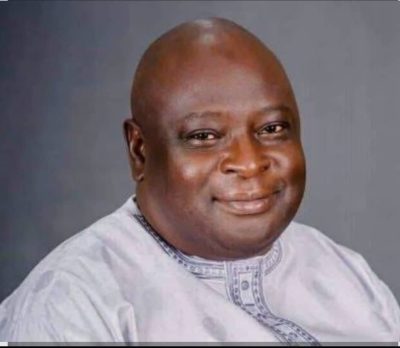
Babajide Kolade-Otitoju, the Director of News at TVC News, recently stated that Oyo State Governor Seyi Makinde would likely have defected from the People’s Democratic Party (PDP) if he was still serving his first term.
Otitoju stated this on Friday on TVC’s ‘Breakfast Show’.
He described the National Convention of the Peoples Democratic Party, PDP, in Ibadan last November as a mere waste of time.
“People must show good judgment at a critical phase. What was the point of having that convention? Two courts told you not to go ahead but you went ahead.
“I may not be a fan of former Senate President Bukola Saraki but if he says something that makes sense, I will be the first to admit it. He made sense when he said let’s go for caretaker. What’s the point of not listening to him?
“Later you will be shouting that the ruling party is behind your crisis, meanwhile you are the architect of your own misfortunes. You created this problem.
“If Makinde were in his first term, he would have fled like the dancing governor because his second term would have been in danger,” Otitoju said.

I Delivered $15m Agency Cash To Ex-NIMASA DG Akpobolokemi, EFCC Witness Tells Court

CBN Bars Chronic Loan Defaulters from Accessing New Banking Services

Makinde Only In PDP Because He’s Not Seeking Re-election – Otitoju

Corruption Probe: Court Grants ICPC Access To Data On El-Rufai’s Seized Gadgets

Beyond My Wildest Dreams: Disu Opens Up During Handover From Egbetokun

Terror Surge: Tinubu Demands Results from Security Chiefs

2027 Shakeup: 12 Lawmakers Defect To APC, ADC

World War III Fears: Zelensky Reveals Warning To Trump

Tensions Rise As Makoko Communities Vow To Resist Relocation Order

Union Bank Of Nigeria Marks International Women’s Month 2026 With Inclusion-First “Give to Gain” Campaign
-
 News2 days ago
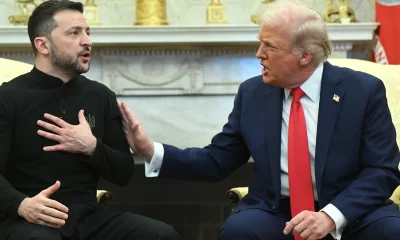
World War III Fears: Zelensky Reveals Warning To Trump
-
 News1 day ago
2027 Shakeup: 12 Lawmakers Defect To APC, ADC
-
 News1 day ago
Terror Surge: Tinubu Demands Results from Security Chiefs
-
 News2 days ago
Tensions Rise As Makoko Communities Vow To Resist Relocation Order
-
 News18 hours ago
Corruption Probe: Court Grants ICPC Access To Data On El-Rufai’s Seized Gadgets
-
 News22 hours ago
Beyond My Wildest Dreams: Disu Opens Up During Handover From Egbetokun
-
 News14 hours ago
Makinde Only In PDP Because He’s Not Seeking Re-election – Otitoju
-
 News13 hours ago
CBN Bars Chronic Loan Defaulters from Accessing New Banking Services