
Foreign News
EU Bans Cross-Border Crypto Payments Between Russia And The EU

The European Union announced new sanctions against Russia on October 6 in response to the protracted and recently intensified conflict in Ukraine.
The new measures include a total prohibition on cross-border cryptocurrency transfers between the EU and Russia. The phrase “all crypto-asset wallets, accounts, or custody services, irrespective of the amount of the wallet” is included in this prohibition.
In response to Russia’s acquisition of Ukrainian land as a result of what the EU considers a “fake” vote, more sanctions were put in place along with force mobilization and nuclear escalation threats.
The previous restrictions set a $10,000 (about $9,900) limit on cryptocurrency transfers from Russian to EU wallets.
However, the EU’s goal to “further deny the Kremlin’s military and industrial complex of crucial components and technologies” is in line with the new overall prohibition on cross-border cryptocurrency transfers between the regions.
This occurs soon after Russian government officials approved the use of cryptocurrencies for international payments. The legislation that authorized these transactions included instructions on how to obtain crypto assets and a list of their applications.
The choice was in line with the Central Bank of Russia’s decision, made on September 5 of last year, to legitimize digital assets for international payments.
In its dealings with China, Russia intends to establish a digital currency for transaction settlements, which is now in a pilot phase. Prior to 2020, the nation passed a law outlawing payments made using digital assets.
However, when the EU’s sanctions continued to be tightened, the United States imposed more barriers against Russia. Due to neo-Nazi paramilitary activity, the U.S. Treasury Department placed 22 Russian citizens and two entities with headquarters there on its own list of sanctioned parties on September 15.



Foreign News
Kemi Badenoch Pledges To Ban Doctors’ Strikes If Conservative Party Takes Power In The UK
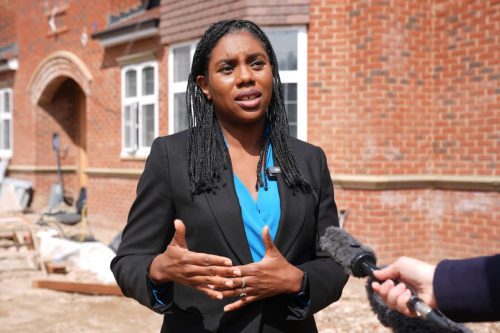
Leader of the United Kingdom’s Conservative Party, Kemi Badenoch, has vowed that doctors’ strikes will be banned under a Conservative government.
The Tory party leader today announced she would amend the law to bar the protests as she insisted the British Medical Association (BMA) is ‘out of control’.
It comes following 11 strikes in the past 18 months, which Ms Badenoch said had resulted in patients dying.
Her comments were made on GB News amid the ongoing five-day series of strikes by resident doctors in support of a pay claim.
Urging Sir Keir Starmer to take similar action, Ms Badenoch said: ‘The BMA has become militant, these strikes are going too far, and it is time for action.
‘Doctors do incredibly important work. Medicine is a vocation – not just a job. That is why in government we offered a fair deal that supported doctors, but protected taxpayers too.
‘These strikes will have a significant economic effect, but they will also mean cancelled operations, worry for families of the sick, and suffering for those who are unwell. We know that previous strike action by doctors even led to some patients losing their lives.
‘That is why Conservatives are stepping in, and setting out common sense proposals to protect patients, and the public finances. And we are making an offer in the national interest – we will work with the Government to face down the BMA to help protect patients and the NHS.’
Police, the military, and prison officers are banned from taking strike action under the 1992 Trade Union and Labour Relations (Consolidation) Act in the UK. The Conservatives would amend this to include doctors.
Foreign News
Saudi Arabia’s ‘Sleeping Prince’ Dies After 20 Years in Coma Following London Car Crash
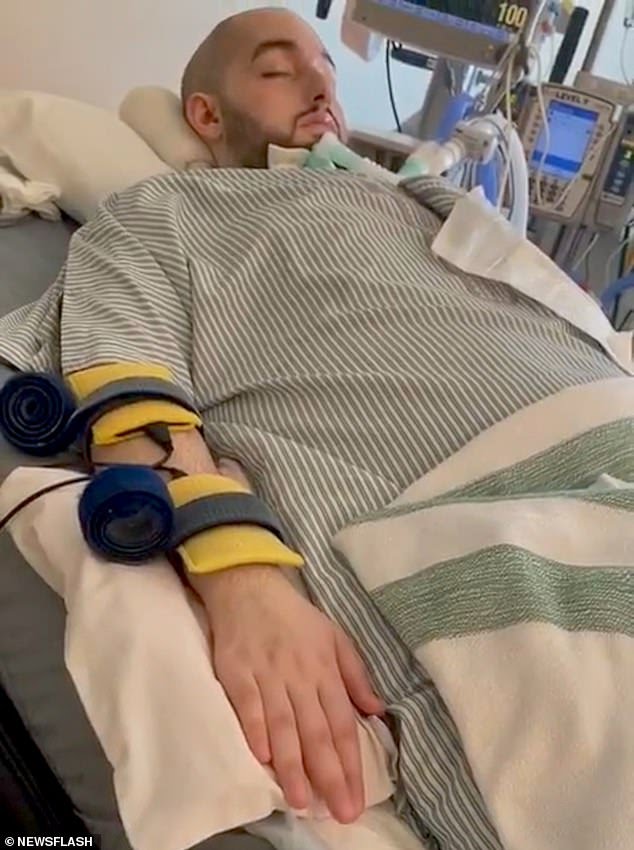
A Saudi prince who spent more than two decades in a coma after a car crash in London has died at the age of 36.
Prince Al-Waleed bin Khalid Al-Saud suffered severe brain injuries and internal bleeding in the horrific accident when he was just 15 years old in 2005.
He was dubbed the ‘Sleeping Prince’ and was kept on a ventilator in hospital but never regained full consciousness.
Prince Al-Waleed was the eldest son of Prince Khaled bin Talal Al Saud, who announced his death in a heartbreaking post on X today.
He said: ‘O reassured soul, Return to your Lord, well-pleased and pleasing [to Him], And enter among My [righteous] servants, And enter My Paradise.
‘With hearts believing in Allah will and decree, and with deep sorrow and sadness, we mourn our beloved son: Prince Al-Waleed bin Khaled bin Talal bin Abdulaziz Al Saud, may Allah have mercy on him, who passed away today.’
Prince Al-Waleed was studying at a military college in London when he was involved in the devastating car crash.
After the accident, he was hospitalised at King Abdulaziz Medical City in Saudi Arabia’s capital Riyadh where he remained in a coma.
Prince Al-Waleed’s father, who is the brother of business tycoon Prince Al-Waleed bin Talal bin Abdulaziz Al-Saud, never gave up hope his son would one day make a full recovery.
He remained involved in the prince’s care and opposed withdrawing life support.
Clips shared on social media in 2020 showed Prince Al-Waleed lifting his fingers as a woman greets him.
‘Hi, Didi hello, hello let me see, hi,’ she says as the prince wiggles his fingers in response.
She then asked if the prince could do ‘one more, one more, higher, higher’ and he could be seen lifting his whole hand off the bed momentarily.
However, despite the signs he could be recovering Prince Al-Waleed remained in a critical condition.
Funeral prayers for the prince will be held tomorrow at Imam Turki bin Abdullah Mosque in Riyadh.
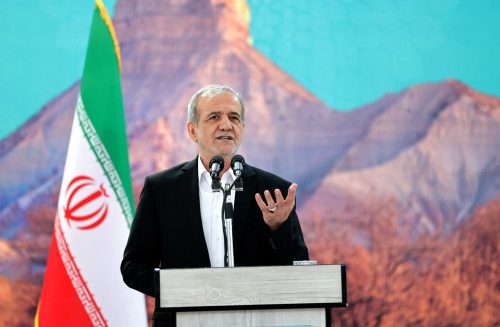
Iranian President Masoud Pezeshkian said in an interview released on Monday that Israel, which last month fought a 12-day war with Iran, had attempted to assassinate him.
“They did try, yes. They acted accordingly, but they failed,” Pezeshkian told US media figure Tucker Carlson in response to a question on whether he believed Israel had tried to kill him.
“It was not the United States that was behind the attempt on my life. It was Israel. I was in a meeting… they tried to bombard the area in which we were holding that meeting,” he said according to a translation of his remarks from Persian, in apparent reference to an alleged assassination attempt during the recent war.
On June 13, Israel launched an unprecedented bombing campaign against Iran, killing top military commanders and nuclear scientists.
The Israeli attacks took place days before Tehran and Washington were set to meet for a new round of nuclear talks which began on April 12.
More than 900 people were killed in Iran during the conflict, according to the judiciary.
The Israeli attacks drew waves of retaliatory drone and missile fire, killing 28 people in Israel, according to authorities.
The 12-day war between Iran and Israel saw it, along with the United States, launching strikes on Iranian nuclear facilities at Fordo, Isfahan and Natanz.
During the interview with Carlson, Pezeshkian said his country has “no problem” restarting nuclear talks, provided that trust can be reestablished between the two countries.
“We see no problem in re-entering the negotiations,” the Iranian president said.
“There is a condition … for restarting the talks. How are we going to trust the United States again? We re-entered the negotiations, then how can we know for sure that in the middle of the talks the Israeli regime will not be given the permission again to attack us.”
VIDEO:
AFP

Abuja Court Jails Boko Haram Food Supplier, Hamatu Modu For 40 Years

Just In: Kebbi Assembly Speaker Muhammad Ankwai Passes Away

Scores Of Terrorists Neutralised As Military Foils Major Borno Offensive

Easter Tragedy: Herdsmen Strike Benue Again, 9 Dead

President Tinubu Authorizes ₦3.3tn For Power Sector Liquidity, Recovery

Tinubu Commiserates With Former INEC Chair Jega Following Death Of Wife

IGP Disu Summons Lagos Officers To Abuja Over Viral Harassment Video

Fire Outbreak Leaves Hundreds Of Traders Stranded At Yaba Market

11 Dead, 50 Homes Razed In Violent Nasarawa Community Clashes

Union Bank Looted: How former directors gambled with billions and nearly destroyed a national bank
-
 News2 days ago
President Tinubu Authorizes ₦3.3tn For Power Sector Liquidity, Recovery
-
 News2 days ago
Easter Tragedy: Herdsmen Strike Benue Again, 9 Dead
-
 News2 days ago
Scores Of Terrorists Neutralised As Military Foils Major Borno Offensive
-
 News2 days ago
Tinubu Commiserates With Former INEC Chair Jega Following Death Of Wife
-
 News6 hours ago
Just In: Kebbi Assembly Speaker Muhammad Ankwai Passes Away
-
 News2 hours ago
Abuja Court Jails Boko Haram Food Supplier, Hamatu Modu For 40 Years