
News
Nigeria Borrowed N6.64tn, Serviced Debt With N2.93tn In 2021, Says DMO

THE Debt Management Office on Thursday said Nigeria’s total public debt stock increased to N39.56tn in 2021 from N32.92tn in 2020.
The Director-General, DMO, Patience Oniha, said this at a media briefing in Abuja.
According to her, the total debt includes new borrowings by the Federal Government and the sub-nationals.
She also said that the amount helped in financing the budget deficit, capital projects and support economic recovery.
Oniha said, “Nigeria’s total public debt as at December 31, 2021, was N39.56tn or $95.78bn. The amount represents the total external and domestic debts of the Federal Government of Nigeria, 36 state governments and the federal capital territory.
“The comparable figure for December 31, 2020, was N32.92tn or $86.39bn. The public debt stock for December 31, 2021, includes new borrowings by the FGN and the sub-nationals. For the FGN, it would be recalled that the 2021 appropriation and supplementary acts, included total new borrowings (from domestic and external sources) of N5.49tn to part-finance the deficit.
“Borrowings for this purpose and disbursements by the multilateral and bilateral creditors account for a significant portion of the increase in the debt stock. Increases were also recorded in the debt stock of the states and the FCT.”
She further said that despite the debt increase, the country is still within the total public debt stock to the Gross Domestic Product limit of 55 per cent set by the World Bank and 70 per cent set by the Economic Community of West African States.
Oniha also said that the Federal Government was “mindful of the relatively high debt-to-revenue ratio” and has established certain measures to increase revenues through the strategic revenue growth initiative and the introduction of Finance Acts since 2019.
She said, “The new borrowings were raised from diverse sources, primarily through the issuances of the Eurobonds, sovereign Sukuk, and the FGN bonds. These capital raisings were utilised to finance capital projects and support economic recovery.
“With the total public debt stock to GDP as at December 31, 2021, of 22.47 per cent, the debt-to-GDP ratio still remains within Nigeria’s self-imposed limit of 40 per cent. This ratio is prudent when compared to the 55 per cent limit advised by the World Bank and the International Monetary Fund for countries in Nigeria’s peer group, as well as, the ECOWAS convergence ratio of 70 per cent.”
However, findings showed that Nigeria spent N2.93tn on debt servicing payments in 2021, according to the data obtained from the DMO.
Between January and March 2021, Nigeria spent N612.71bn on domestic debt servicing, while it spent $1bn (N415.92bn) on external debt servicing, giving a total of N1.03tn.
From April to June 2021, the country spent N322.7bn on domestic debt servicing and $299m (N124.36bn) on external debt servicing, showing a total of N447.06bn.
From July to September 2021, Nigeria spent N808.49bn on domestic debt servicing and $520.78m (N216.6bn) on external debt servicing, giving a total of N1.03tn.
Between October and December 2021, Nigeria spent N310.5bn on domestic debt servicing, while it spent $286.35m (N119.1bn) on external debt servicing, giving a total of N429.6bn.
The official exchange rate of the Central Bank of Nigeria, which showed $1 =N415.92 as of March 17, was used for the external debt servicing.
Economists, dons warn FG of hard times, repayment challenges
Reacting to the development economists and dons have warned the Federal Government over the country’s rising debt profile, saying repayments may become challenging due to the nation’s revenue problems.
A professor of Economics and Public Policy at the University of Uyo and the Chairman of the Foundation for Economic Research and Training, Prof. Akpan Ekpo said, “The rising debt profile is not healthy for the economy even though we are still within the so-called range if we look at the debt to the GDP ratio, but GDP does not pay debt; revenue pays the debt.
“If you look at the debt revenue ratio, we are in trouble because most of our revenue depends on oil and we are not sure of that revenue, it fluctuates.
“But with this Ukraine/Russian war, the oil price has gone up so we should be able to save some of that revenue that we earn now to pay some of these debts. When you take some of these debts now, you are putting future generations in trouble. They should be transparent about the debt.”
Also, the Chief Executive Officer, Centre for the Promotion of Private Enterprise, Dr. Muda Yusuf, said the rising debt profile of the government raised serious sustainability concerns.
Yusuf, who was the former director-general, the Lagos Chamber of Commerce and Industry, said, “When we take account of borrowings from the CBN and the stock of AMCON debt, the debt profile would be in excess of N50tn.
“The government tends to argue that the condition was not a debt problem, but a revenue challenge, but the truth is that debt becomes a problem if the revenue base is not strong enough to service the debt sustainably.
“It invariably becomes a debt problem. The government’s actual revenue can hardly cover the recurrent budget which implies that the entire capital budget is being funded from borrowing. This is surely not sustainable.”
He said what is needed is the political will to cut expenditure and undertake reforms that could scale down the size of government, reduce governance costs, and ease the fiscal burden on the government.
Yusuf explained, “It is important to ensure that the debt is used strictly to fund capital projects, especially infrastructure projects, that would strengthen the productive capacity of the economy. This is the position of the Fiscal Responsibility Act.
“Additionally, emphasis should be on concessionary financing, as opposed to commercial debts which are typically very costly.
Also reacting, a professor of Economics at the Olabisi Onabanjo University, Sheriffdeen Tella, said Nigeria’s current debt profile would only put further strain on the economy.
He said, “It (new debt) has worsened the situation because we have been spending over 80 per cent of our revenue on servicing debt. So, the situation has worsened, and you know that the Minister of Finance said that to be able to meet up on subsidy on fuel, they would have to look for more money to do that. The government is always thinking of debt. I really don’t know. The minister actually deserves a medal for debt accumulation.
Tella said it was misleading to consider that the ratio of Nigeria’s debt to the Gross Domestic Product is still relatively low.
“We are not safe because even the IMF and the World Bank have warned us. They have told us that we are borrowing too much. We are not going to look at the ratio of borrowed funds to the GDP; we are going to look at the rate of money borrowed to revenue because we are going to pay back with revenue. We are not going to pay back with the GDP. So, it is the revenue that we need to look at, and now that we are spending about 80 per cent of our revenue to offset debts. The 20% is spent on what? General administration! That is why they owe salaries, pensions. At the end of the day, there is no more for development. There is no money for any other thing.”
Also speaking, the Chief Executive, Economic Associates, Dr Ayo Teriba, said the N39tn figure was not a concern but the cost the country was carrying the debt.
He said, “Nigeria is carrying its debt at probably some of the highest costs in the world; that is inefficient. The problem with the debt stock is not the size. Nigeria’s debt is small relative to other countries’ debt, world average or African average. It is not the size of the debt that matters but the quality of the debt.”
He added, “Government debts are usually classified into two categories; your debts are either investment grades or junk bonds. Nigeria carries a portfolio of 100 per cent junk bonds, which means you issue the lowest quality bonds at home and abroad and they are the most expensive.”
“Their own (other countries) debt quality is so high because they have to pay interest and they don’t have to worry about repaying the principal, because the asset will repay the principal.
“Nigeria needs to learn from other countries on how to borrow in improving the quality of its debts.”
Also speaking the Managing Director, Cowry Assets Management, Johnson Chukwu, said he was not surprised that the nation’s debt had risen to the current level.
“That is not strange because the last report in September showed that it was N38tn. So, having got to N38tn in September, it is not out of place to expect the debt to have risen to N39tn now. Of course, we know that the government has continued to borrow and the deficit has continued to grow. And then, if you consider that the government has a deficit of more than N6tn last year, compared to the budget of about N14tn, the actual exchange was fairly above N6tn. So, you will recognise the fact that the government has continued to borrow to finance the budgetary deficit. So for me, it is not strange, it is not unexpected to get the figure as high as N39tn. We all know that the debt service obligation will continue to increase as a result of increased borrowing. And of course, you know when the debt service continues to increase without a commensurate income, it crowds out critical sectors like social services, education and it will also crowd out infrastructural investment. So those are the things Nigeria should expect.”
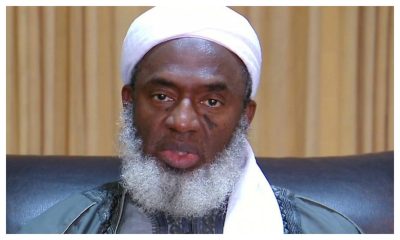
Islamic cleric Sheikh Ahmad Gumi recently defended his past interactions with armed groups, stating he “took the bull by the horns” in 2021 as a necessary step to address Nigeria’s insecurity.
In a post shared on Facebook on Thursday, Gumi said decades of neglect of disadvantaged populations had created deep socio-economic inequalities, leaving many youths vulnerable to manipulation by external forces seeking to destabilise the country.
According to him, the widening gap between the rich and the poor has turned many young people into “ready-made foot soldiers” in cycles of violence that enable the exploitation of Nigeria’s resources.
He also criticised the political class for being largely unresponsive, while noting that the intellectual community is preoccupied with survival struggles.
Reflecting on his past efforts, Gumi said he “took the bull by the horns” in 2021 by attempting to reintegrate violent elements into society rather than allowing them to be further radicalised.
He wrote: “Nigeria for decades has ignored the underprivileged section of its society. There is a significant socio-economic discrepancy, and the society is stratified. This makes our teaming youth ready-made foot soldiers for any foreign interest trying to divide us and rule. To plunder our resources while we are involved in a vicious circle of violence.
”Unfortunately, the political class is unattentive while the intelligentsia is held hostage in the struggle for existence.
“In 2021, I took the bull by the horns in an attempt to bring some of these uncouth elements back to our fold rather than letting them be exploited by the devil.
“I still believe this is the only way out of our predicament. However, it needs the political will and determination to achieve.
“May Allah bring peace back to our nation.”
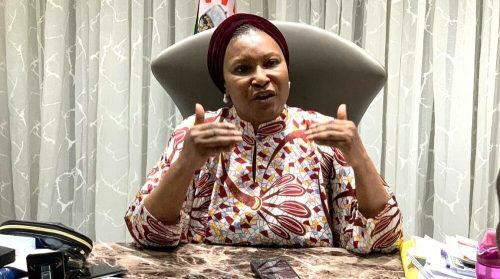
The Federal High Court in Abuja rejected an ex-parte application seeking to bar Senator Ireti Kingibe from participating in the activities of the African Democratic Congress (ADC).
Justice Peter Lifu declined the request from Wuse Ward leaders, ruling that such an order could not be granted without first hearing from the senator.
Instead, the judge ordered the ward leaders said to be loyal to the Minister of the FCT, Nyesom Wike, to put the senator on notice to appear in court to join issues with them on their grievances.
Justice Lifu in a ruling on Thursday held that discretion in such a request for prohibition from party activities and in political matters must be exercised judicially and judiciously.
The judge said justice would be met in the case of the plaintiffs only when the side of the defendant is heard on its merit, along with that of the plaintiffs.
Consequently, the judge ordered that Senator Ireti Kingibe should be served with all court processes by the plaintiffs to enable her become aware of the suit and to prepare her defense.
The judge fixed April 20, 2026, for the plaintiffs and the serving senator to appear before him for hearing of all applications in the matter.
Those who sued the senator in the suit marked FHC/ABJ/ CV/539/2026 are Okezuo Godfrey Anayo and Isaiah Ojonugwa Samuel, on behalf of themselves and ward members as plaintiffs. The senator is the sole defendant.
In their ex-parte application, Kingibe representing the FCT in the Senate was said to have been suspended on March 10, 2026 by her Wuse Ward executives following allegations of anti-party activities and disregard of your cnstitution of the ADC.
In the ex- parte application filed on their behalf by a Senior Advocate of Nigeria, SAN, Kolawole Olowookere, the aggrieved ADC members in Wuse Ward applied for an order of interim injunction restraining Kingibe from parading herself as a member of party, pending the hearing and determination of their motion on notice for interlocutory injunction.
They also asked the judge to restrain the senator from performing any function, attending meetings or performing activities reserved for ADC members or representing the party in any activities.
Besides, the Ward Executive Committee had asked that she be restrained from further interfering with the administration of the ward, ward register and other activities.
The suit was predicated on five grounds among which are that Mrs Kingibe was placed on suspension due to anti-party activities, gross misconduct and confiscation of the ward statutory records.
They argued that the suspension followed due process as enshrined in the ADC constitution and ratified by the two thirds majority of the EXCO members.
They averred that despite the communication of the suspension to Kingibe, she has continued to hold parallel meetings, issue press statements as an ADC member, and using her security details to intimidate the executive committee.
“Her actions constitute flagrant disregard to the internal mechanism of the party,” the plaintiffs stated.
Meanwhile, a lawyer, Abubakar Marshall who claimed to be representing the senator, announced that he had filed a preliminary objection against the suit. He added that it was served on M. S. Garba, who stood for the plaintiffs at Thursday’s proceedings.
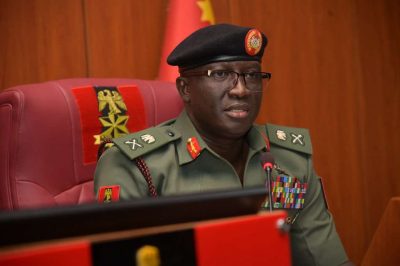
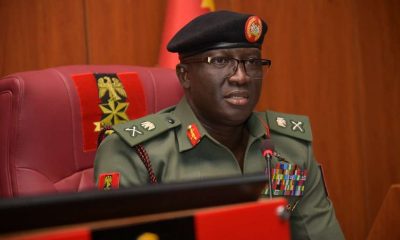
The Chief of Army Staff (COAS), Lieutenant General Waidi Shaibu, visited Jos, Plateau State, on Thursday, April 2, 2026, to lead a high-powered security assessment following recent security breaches.
The visit was aimed at strengthening public confidence and reinforcing ongoing efforts to stabilize affected communities.
Colonel Appolonia Anele, acting Director, Army Public Relations, said in a statement that the visit forms part of ongoing efforts to restore calm and entrench lasting peace across the state.
According to the statement, upon arrival, the COAS was received by the Executive Governor of Plateau State, Caleb Mutfwang, in a clear demonstration of strong civil-military cooperation and a shared commitment to addressing emerging security challenges.
The statement said the COAS received a comprehensive operational briefing from the General Officer Commanding 3 Division and Commander, Joint Task Force Operation ENDURING PEACE, Major General Folusho Oyinlola, who highlighted ongoing operations and proactive measures being implemented in synergy with other security agencies to contain threats, protect lives and property, and stabilise affected communities.
“As part of his engagements, Lieutenant General Shaibu also interacted with community leaders and residents, reassuring them of the unwavering commitment of the Nigerian Army to safeguarding all law-abiding citizens.
He urged residents to remain calm, vigilant and supportive of security agencies by complying with the curfew and cooperating fully with ongoing operations and investigations, while going about their lawful activities.
The chairman of Jos North Local Government Area, Hon. Dachung Bagos, commended the COAS for the timely visit, noting that the presence of the nation’s top military leadership would boost public confidence and reinforce trust in ongoing security efforts.

Gumi Defends Dialogue As Sole Solution To Nigeria’s Insecurity

Court Clears Senator Ireti Kingibe To Remain Active In ADC

COAS Shaibu Hits Jos To Restore Peace, Public Confidence

President Tinubu Appoints New PTDF Executive, Reappoints TCN Head

Simi Welcomes Second Child With Adekunle Gold

United Nigeria Airlines Staff Suspended After Viral Amputee Abuse Video

Pay Your Fare: AIG Cracks Down On Officers Boarding For Free

INEC Removes David Mark, Aregbesola From ADC Leadership Portal

JUST IN: FG Approves Friday 3, Monday 6, as Easter Public Holidays

When 8 million Customers Trust You, Safety Cannot Be an Afterthought
-
 News1 day ago
When 8 million Customers Trust You, Safety Cannot Be an Afterthought
-
 News2 days ago
El-Rufai Back In Detention After Temporary Compassionate Release
-
 News1 day ago
United Nigeria Airlines Staff Suspended After Viral Amputee Abuse Video
-
 News2 days ago
2027: Kwankwaso’s Exit Marks End Of NNPP – Kwankwasiyya Movement
-
 News1 day ago
JUST IN: FG Approves Friday 3, Monday 6, as Easter Public Holidays
-
 News1 day ago
Pay Your Fare: AIG Cracks Down On Officers Boarding For Free
-

 News2 days ago
Lagos CP Withdraws Taskforce From Traffic Duties
-
 News14 hours ago
COAS Shaibu Hits Jos To Restore Peace, Public Confidence