
Foreign News
EU To Ban Russian State-Backed Channels RT And Sputnik

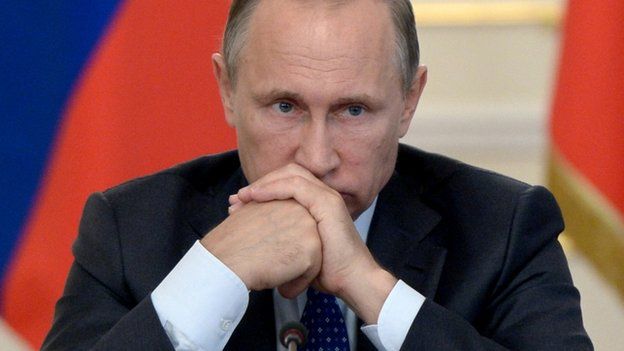
The EU has announced it will ban the Russian state-backed channels RT and Sputnik in an unprecedented move against the Kremlin media machine.
The European Commission president, Ursula von der Leyen, said: “Russia Today and Sputnik, as well as their subsidiaries, will no longer be able to spread their lies to justify Putin’s war and to sow division in our union. So we are developing tools to ban their toxic and harmful disinformation in Europe.”
The move, which was not trailed or widely discussed, came as part of a package of tougher sanctions against Vladimir Putin’s government and the regime of the Belarusian president, Alexander Lukashenko, which Von der Leyen described as “complicit in this vicious attack against Ukraine”.
European foreign policy taboos have been smashed in just a few days, after Russia invaded its neighbour, provoking fears of the biggest war in Europe since 1945.
For the first time in its history, the EU will finance the purchase and delivery of weapons to a country under attack, Von der Leyen said. EU foreign ministers are expected to approve the use of funds from the European Peace Facility to finance lethal and non-lethal aid to Ukraine at a meeting on Sunday evening. While a handful of countries may hold back, because of policies against sending weapons into a conflict zone, the plan is expected to pass.
Ministers are also set to agree to ban Russian airlines from EU skies, after more than a dozen countries took the decision unilaterally. “Our airspace will be closed to every Russian plane – and that includes the private jets of oligarchs,” Von der Leyen said.
In a historic announcement to parliament, the German chancellor, Olaf Scholz, said a fund of €100bn (£85bn) would be set up immediately to boost the strength of the country’s armed forces, as he also announced a sustained increase in defence spending over the coming years.
Scholz admitted that the urgency of the Ukraine crisis had forced Germany’s decision to invest in the military, telling the emergency session of the Bundestag: “It is clear that we must invest significantly more in the security of our country, in order to protect our freedom and democracy.”
He called it “Germany’s historical responsibility” to ensure that Vladimir Putin “does not turn the clocks back”.
Long-term defence spending was to be increased year on year by more than 2% of GDP, he said. It is currently about 1.5% with Germany having been under growing pressure from its Nato allies, in particular the US, to increase the amount for years. The existence of the special fund should be anchored in Germany’s constitution, Scholz said, in order to ensure it remained a guarantee beyond the life of the current parliament.
Germany has long been criticised by its allies for its resistance to increasing its defence spending. This position has been reinforced by a strong pacifist sentiment among the electorate linked to Germany’s Nazi past. In recent weeks, the country was also criticised for having not offered enough material support, in particular refusing to deliver lethal weapons to assist Ukraine to defend itself against Russia.
The move came after the government made the surprise announcement on Saturday that it would be sending weapons and other supplies to Ukraine, including 1,000 anti-tank weapons, 500 surface-to-air Stinger missiles and thousands of gallons of petrol. The decision marks a historical break with Germany’s postwar pledge not to export weapons to conflict zones.
A turning point came on Saturday evening with the government’s surprise announcement on weapons to Ukraine. It has also lifted certain restrictions on German-manufactured weapons being sent to conflict zones from third countries, such as Estonia and the Netherlands.
The announcement to parliament was greeted with relief and surprise, with Scholz receiving a standing ovation on Sunday morning, even as some MPs, mainly from the Left party as well as the far-right Alternative für Deutschland (AfD), voiced their disapproval.
As expected the EU is also broadening economic sanctions against Belarus, imposed in 2020 after Lukashenko launched a brutal crackdown on peaceful protesters who contested his claimed election victory, seen as fraudulent by all independent observers.
The Belarusian opposition has criticised the EU for loopholes in its sanctions regime that allowed Lukashenko to continue to benefit from export earnings. Von der Leyen insisted the new measures would “stop their exports of products from mineral fuels to tobacco, wood and timber, cement, iron and steel”.
The EU’s promise to cut some Russian banks out of Swift, however, was not expected to be finalised on Sunday.
The move against RT and Sputnik was the biggest surprise from the commission. The culture secretary, Nadine Dorries, this week wrote to Ofcom asking it to look at whether RT should be allowed to broadcast “harmful disinformation” in the UK. Some argued against a ban, warning it could lead to Moscow closing down the BBC in Russia.


Foreign News
Kemi Badenoch Pledges To Ban Doctors’ Strikes If Conservative Party Takes Power In The UK
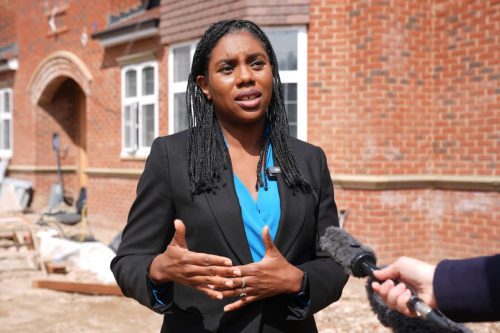
Leader of the United Kingdom’s Conservative Party, Kemi Badenoch, has vowed that doctors’ strikes will be banned under a Conservative government.
The Tory party leader today announced she would amend the law to bar the protests as she insisted the British Medical Association (BMA) is ‘out of control’.
It comes following 11 strikes in the past 18 months, which Ms Badenoch said had resulted in patients dying.
Her comments were made on GB News amid the ongoing five-day series of strikes by resident doctors in support of a pay claim.
Urging Sir Keir Starmer to take similar action, Ms Badenoch said: ‘The BMA has become militant, these strikes are going too far, and it is time for action.
‘Doctors do incredibly important work. Medicine is a vocation – not just a job. That is why in government we offered a fair deal that supported doctors, but protected taxpayers too.
‘These strikes will have a significant economic effect, but they will also mean cancelled operations, worry for families of the sick, and suffering for those who are unwell. We know that previous strike action by doctors even led to some patients losing their lives.
‘That is why Conservatives are stepping in, and setting out common sense proposals to protect patients, and the public finances. And we are making an offer in the national interest – we will work with the Government to face down the BMA to help protect patients and the NHS.’
Police, the military, and prison officers are banned from taking strike action under the 1992 Trade Union and Labour Relations (Consolidation) Act in the UK. The Conservatives would amend this to include doctors.
Foreign News
Saudi Arabia’s ‘Sleeping Prince’ Dies After 20 Years in Coma Following London Car Crash
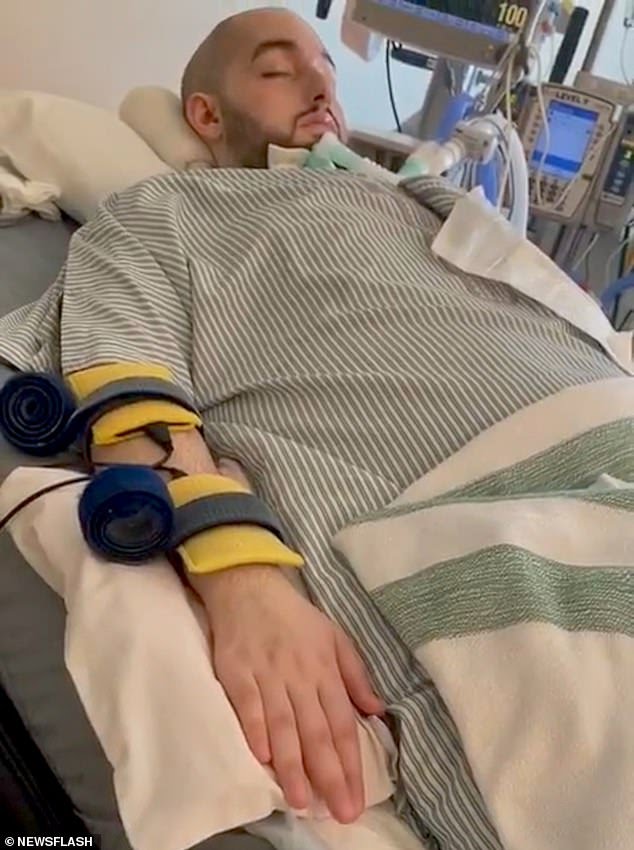
A Saudi prince who spent more than two decades in a coma after a car crash in London has died at the age of 36.
Prince Al-Waleed bin Khalid Al-Saud suffered severe brain injuries and internal bleeding in the horrific accident when he was just 15 years old in 2005.
He was dubbed the ‘Sleeping Prince’ and was kept on a ventilator in hospital but never regained full consciousness.
Prince Al-Waleed was the eldest son of Prince Khaled bin Talal Al Saud, who announced his death in a heartbreaking post on X today.
He said: ‘O reassured soul, Return to your Lord, well-pleased and pleasing [to Him], And enter among My [righteous] servants, And enter My Paradise.
‘With hearts believing in Allah will and decree, and with deep sorrow and sadness, we mourn our beloved son: Prince Al-Waleed bin Khaled bin Talal bin Abdulaziz Al Saud, may Allah have mercy on him, who passed away today.’
Prince Al-Waleed was studying at a military college in London when he was involved in the devastating car crash.
After the accident, he was hospitalised at King Abdulaziz Medical City in Saudi Arabia’s capital Riyadh where he remained in a coma.
Prince Al-Waleed’s father, who is the brother of business tycoon Prince Al-Waleed bin Talal bin Abdulaziz Al-Saud, never gave up hope his son would one day make a full recovery.
He remained involved in the prince’s care and opposed withdrawing life support.
Clips shared on social media in 2020 showed Prince Al-Waleed lifting his fingers as a woman greets him.
‘Hi, Didi hello, hello let me see, hi,’ she says as the prince wiggles his fingers in response.
She then asked if the prince could do ‘one more, one more, higher, higher’ and he could be seen lifting his whole hand off the bed momentarily.
However, despite the signs he could be recovering Prince Al-Waleed remained in a critical condition.
Funeral prayers for the prince will be held tomorrow at Imam Turki bin Abdullah Mosque in Riyadh.
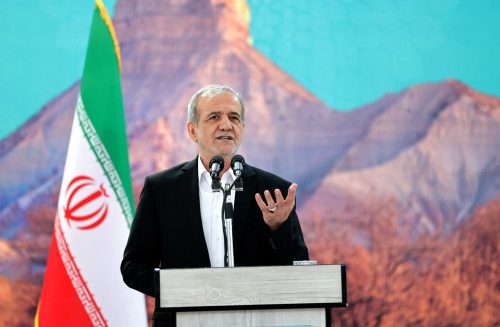
Iranian President Masoud Pezeshkian said in an interview released on Monday that Israel, which last month fought a 12-day war with Iran, had attempted to assassinate him.
“They did try, yes. They acted accordingly, but they failed,” Pezeshkian told US media figure Tucker Carlson in response to a question on whether he believed Israel had tried to kill him.
“It was not the United States that was behind the attempt on my life. It was Israel. I was in a meeting… they tried to bombard the area in which we were holding that meeting,” he said according to a translation of his remarks from Persian, in apparent reference to an alleged assassination attempt during the recent war.
On June 13, Israel launched an unprecedented bombing campaign against Iran, killing top military commanders and nuclear scientists.
The Israeli attacks took place days before Tehran and Washington were set to meet for a new round of nuclear talks which began on April 12.
More than 900 people were killed in Iran during the conflict, according to the judiciary.
The Israeli attacks drew waves of retaliatory drone and missile fire, killing 28 people in Israel, according to authorities.
The 12-day war between Iran and Israel saw it, along with the United States, launching strikes on Iranian nuclear facilities at Fordo, Isfahan and Natanz.
During the interview with Carlson, Pezeshkian said his country has “no problem” restarting nuclear talks, provided that trust can be reestablished between the two countries.
“We see no problem in re-entering the negotiations,” the Iranian president said.
“There is a condition … for restarting the talks. How are we going to trust the United States again? We re-entered the negotiations, then how can we know for sure that in the middle of the talks the Israeli regime will not be given the permission again to attack us.”
VIDEO:
AFP

Gumi Defends Dialogue As Sole Solution To Nigeria’s Insecurity

Court Clears Senator Ireti Kingibe To Remain Active In ADC

COAS Shaibu Hits Jos To Restore Peace, Public Confidence

President Tinubu Appoints New PTDF Executive, Reappoints TCN Head

Simi Welcomes Second Child With Adekunle Gold

United Nigeria Airlines Staff Suspended After Viral Amputee Abuse Video

Pay Your Fare: AIG Cracks Down On Officers Boarding For Free

INEC Removes David Mark, Aregbesola From ADC Leadership Portal

JUST IN: FG Approves Friday 3, Monday 6, as Easter Public Holidays

When 8 million Customers Trust You, Safety Cannot Be an Afterthought
-
 News2 days ago
When 8 million Customers Trust You, Safety Cannot Be an Afterthought
-
 News2 days ago
United Nigeria Airlines Staff Suspended After Viral Amputee Abuse Video
-
 News2 days ago
JUST IN: FG Approves Friday 3, Monday 6, as Easter Public Holidays
-
 News2 days ago
Pay Your Fare: AIG Cracks Down On Officers Boarding For Free
-
 News2 days ago
INEC Removes David Mark, Aregbesola From ADC Leadership Portal
-
 News24 hours ago
COAS Shaibu Hits Jos To Restore Peace, Public Confidence
-
 News1 day ago
President Tinubu Appoints New PTDF Executive, Reappoints TCN Head
-
 Entertainment1 day ago
Simi Welcomes Second Child With Adekunle Gold