
Politics
‘Constitutional Ọba’: How Ancient Yoruba Developed Their Governing Rules


The ancient Yoruba were the most urbanised Africans of precolonial times. They formed kingdoms of various sizes each with a capital city (Ilu) and a monarch (Ọba).
The capital city was regarded as the epicentre of not only the kingdom but of the entire universe, the birthplace of gods and humans alike and the core of the kingdom’s identity.
The Yoruba urbans were permanent and based on farming rather than on industrialisation. The pattern was traditional not acculturation as in Europe.
Evidence of the existence of ancient Yoruba urbans abound. 1485 – d’Aveiro on his visit to Benin City learnt about a powerful city further in the interior (Ile Ifẹ) where their monarch was crowned.
1505 – Pereira mentioned in his writings the large city of Geebuu (Ijẹbu Ode). 1698 – Bosman identified Old
Ọyọ as responsible for the invasion of Arder (Dahomey). 1729 – D’Anville added the city of Oudobo (Ondo) to his map.
Clapperton documented his visits from 1825 to Katunga (Old Ọyọ) and other Yoruba cities before they were
destroyed by wars.
The percentage of the Yoruba peoples living in large urbans in those ancient times was comparable to that in the European nations. Bascom calculated the index of urbanisation in Yorubaland in 1931 to be between that of the USA
and Canada, and the distribution of population in Yoruba urbans to be comparable to that in France.
In 1931, the population density in Lagos was 58,000/sq. mile whilst that of Ogbomọṣọ was 43,000/sq. mile.
The Yoruba were city-dwelling farmers by design and not by accident. There were two underpinning philosophies or principles; namely ‘Agboile’ meaning ‘courtyard family’ and ‘ile labọ simi oko’ meaning ‘home is the place you come
to rest after farm’.
The ‘courtyard family’ principle is unique to the Yoruba. It is wrongly referred to as the ‘extended family’, but it was a community on its own.
It comprised of people of the same lineage (Idile); that is, more than one nuclear family, two or more generations, living together in one courtyard, the ‘agbo’. At the apex of the ‘courtyard family’ was the progenitor (courtyard
father or Baalẹ).
Each ‘courtyard family’ had its own clearly defined areas of abode, and the city was a confluence and contiguity of such lineage areas. The progenitor was his family’s judicial officer.
The ’ile labọ simi oko’ principle is also uniquely Yoruba. ’Ile’, the living quarters, was separate from ‘oko’, the farm and working quarters.
The Yorubaof yore lived some distance away from their farms for rest and respite.
The Yoruba urban design was of a city surrounded with a periphery of farms. The marketplace (Ọja), the women’s working quarters, where commodity exchange and distribution took place, and where the families socialised, was located at the centre of the city.
The Ọba’s residence usually was located within that marketplace. The marketplace was organised into distinct commodity districts each with its own conventions, rules, and leadership.
In the city, the families were served by an array of specialists and artisans organised into guilds (Ẹgbẹ) with their own individual governance structure.
There were in addition regulated short-distance and long-distance trading with their middlemen. It was this complex and complicated socio-economic milieu that caused the ancient Yoruba to develop a sophisticated government
system.
The need to organise their urbans that gave rise to the ancient Yoruba ‘Constitutional Ọba’ system of government. In this system, governance was shared between the monarch (Ọba) and the Oloye (Chiefs or Section Heads, in Council).
Indeed, the Council was the link between the Ọba and the people. The Oba reigned but did not rule. His power was limited by the convention that the power to make and unmake belonged to the Council.
The Ọba’s tenure was at the pleasure of the Council. Indeed, the Ọba’s primary role was to lend traditional legitimacy and symbolism, to embody and emphasize the identity and authority of his people, and to provide continuity and stability.
There was mass participation (through the Council), separation of power and rule of law. Council membership was predetermined by clans, households, guilds, professions, religion etc. The Council was the policy making body.
Although the Ọba was the supreme legal authority, he exercised that power in practice with the agreement of the people via the Council.
The Ọba was not an autocrat. His power was not absolute. He was merely the highest in rank.
The ancient Yoruba practiced what has taken many modern countries years of wars and strife to develop. Japan, UK, Malaysia, and several other particularly British Commonwealth countries today practice variations of this ‘constitutional monarchy’.
Unlike the peaceful, traditional evolution of the Yoruba system, ‘constitutional monarchy’ in these other countries developed specifically to oppose the tyranny of monarchs.
The ancient Yoruba constitution set out the rules on how power was to be exercised, by whom and its limits.
There was a general expression of the sovereign will of the people. Governance was in practice bottom up and not the product of a political class or elites.
The Yoruba constitution was a ‘Constitutional Ọba’ because it identified the Ọba as the person exercising power. The position of the Ọba was sanctioned by culture, history, and tradition.
The Ọba was the custodian of the conventions, customs, traditions, and the rule of law. The authority and power of the Ọba however was limited by the Council.
In those ancient days, the most powerful groups in the society were the professionals and artisans. There were no professional politicians and no political elites.
The Yoruba ‘Constitutional Ọba’ system has survived colonialism and 60 years of independence.
Although the imposition of western style governments downgraded Yoruba political institutions and made them subservient to a political/elite class that saw itself as superior to our tradition, the Yoruba of today, almost to a man, know this unwritten constitution.
Today’s Yoruba know that the Ọba is the ruler and that he had Chiefs to assist him in governance.
They know further that the Yoruba nation is composed of many groups; Ijẹṣa Ẹgba, Ijẹbu, Ọyọ, Ondo and so on.
They know also that these different groups of the Yoruba Nation are autonomous, and that no group ruled over or was superior to another.
This is confederation. In other words, the ancient unwritten Yoruba constitution accommodated both democracy and confederation.
It is only ignorance and lack of understanding that would cause anyone to suggest that we jettisoned the Yoruba constitution for any other.
The Yoruba say: ‘Ile lanwo kato sọmọ lorukọ’ meaning, ‘to the house we look, before we name the child’.
Nigeria has failed with both Parliamentary and Presidential systems of government. Remote and dictatorial, they do not suit our temperament.
Western-style constitutions do not reflect the true meaning of the word ‘democracy’.
Democracy means ‘rule by the people’. It does not mean vote for leaders.
It does not mean political competition. It does not mean majority rule.
The ancient Yoruba practiced true democracy.
The Yoruba constitution was short and precise. It is fallacy that one document alone makes the constitution.
Conventions, customs, and traditions are parts of the constitution.
The laws of the land are also parts of the constitution. The ‘Constitutional Monarchy’ of 1688 is the British constitution. That is it!
Chief (Dr) Olusola Oni
MBBS, MSc, MD, LLM, GDL, FRCSEd, FWACS, FMCS, FRCSEng
(Baasegun Alabe of Ijebu-Jesa, Osun.



Prominent activist and African Democratic Congress (ADC) member Aisha Yesufu has issued a public apology to governance advocate Yemi Adamolekun following a controversy over her inclusion in the party’s Wise Men and Women Policy and Manifesto Committee.
The issue emerged on Wednesday after Adamolekun, former executive director of Enough is Enough Nigeria, expressed surprise on social media at seeing her name listed among members of the ADC committee.
Tagging Yesufu and ADC spokesperson Bolaji Abdullahi, Adamolekun questioned the party’s process in a blunt post on X.
“ADC! ADC! ADC! How many times did I call you? This is not how to build credibility o! Please show me evidence of when I joined your party! Na wa….” she wrote.
Responding the same day, Abdullahi said the committee was designed to be expert-driven rather than strictly partisan.
“It is important to point out that not everyone on the ADC Policy and Manifesto Committee is a member of the ADC. Many are not even politicians,” he said.
He added, “This is because the ADC believes that the task of developing workable public policies for the benefit of all Nigerians should not be left to politicians alone.”
Abdullahi maintained that the party had followed due process.
He said the ADC had undergone a “vetting process” and “took all necessary measures to ensure that everyone recommended to serve on this important committee was duly notified and had given their consent.”
Despite the disagreement, he expressed hope that Adamolekun would still participate, citing her “vast experience – even though she is not a member of our party.”
However, reacting on Friday, Yesufu, a member of the party’s Revalidation, Mobilisation and Registration Committee, acknowledged the error and apologised publicly.
She wrote, “This is inexcusable, and on behalf of my party, accept my apologies for this mix-up. We do not take you and your need to have a better Nigeria for granted.”
Yesufu admitted the process was flawed.
“Like you rightly pointed out, you ought to have been informed and your consent gotten before your name is published.
“This is well noted, and going forward we will continue to ensure due diligence,” she said.
She added, “Thank you for calling our attention to this. We can only get better when we get such feedback and improve accordingly.
“The work to rebuilding Nigeria is enormous, and in our eagerness to start off, we must never forget due process and diligence.”
Yesufu also extended an apology to others affected by the publication.
“For anyone that was also not contacted and consent gotten before publication, kindly accept my apologies for the mix-up,” she said.
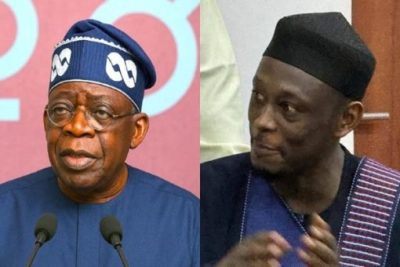
Abba Atiku Abubakar, son of former Vice President Atiku Abubakar, has attributed his support for President Bola Ahmed Tinubu’s re-election bid to what he described as the administration’s innovative and business-friendly economic policies.
He said President Tinubu’s economic initiatives are more favourable to businesses than those of previous administrations, adding that the reforms have reshaped his political alignment ahead of the 2027 general elections.
Abba made the remarks during a solidarity visit to the leadership of the City Boy Movement (CBM) in Abuja on Monday evening, where he led members of the Haske Atiku Organisation, now rebranded as the Haske Tinubu Organisation.
He recalled that he formally defected to the All Progressives Congress (APC) on January 15, collecting his membership card at Gwadabwa Ward in Yola North Local Government Area of Adamawa State, where he publicly pledged support for Tinubu’s second-term ambition.
According to him, his decision to back the president was driven by admiration for the economic policies introduced since 2023, which he believes are positioning the country for stronger private-sector growth and investment.
According to him, “This administration has introduced policies that have every Nigerian in mind. If anyone says this government is not doing well, I will tell them they are lying,” he said. “I believe that if given another term, the government will do even more because it is focused.”
He explained that his long-standing experience in business has given him a clear perspective on economic governance in Nigeria.
“Since the return of democratic rule in 1999, I have been in business, and I am still in business today. The economic policies of Mr. President are favourable—not just to businesses, but to Nigerians in general, who are already benefiting from these reforms,” he stated.
He also explained that his decision to join the APC and align with the City Boy Movement was motivated by his passion for the Tinubu-led administration and his desire to serve.
“My joining the APC and the City Boy Movement is based on my belief in this administration. I also intend to use this platform to serve the people of Adamawa at the National Assembly level. Mr. President has made youth inclusion in politics a reality,” Abubakar added.
The Director General of the City Boy Movement, Mr. Oluwatosin Shoga reaffirmed President Tinubu’s commitment to youth participation in governance and leadership.
He noted that one of CBM’s core strategic mandates is to ensure that young Nigerians are deliberately positioned for leadership roles while encouraging greater youth involvement in the political process.
Abba’s delegation was received by the Director General of CBM, Mr. Shoga, and the National Coordinator, Mr. Favour Abayomi.
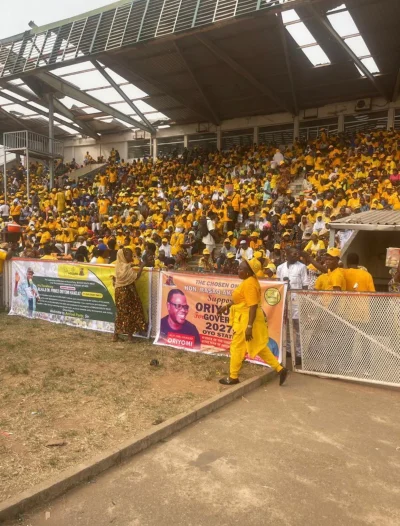
Popular Ibadan-based broadcaster and founder of Agidigbo 88.7 FM, Alhaji Oriyomi Hamzat has officially declared his intention to run for the 2027 Oyo State governorship under the Accord Party.
In a public declaration, Hamzat stated, “I am publicly declaring today that in 2027.
“I will not campaign for anyone or mobilise crowds for anyone.
“I will contest in the gubernatorial election under the Accord Party.”
The announcement signals Hamzat’s full commitment to his own political ambitions, stepping away from backing other candidates as he positions himself for the Oyo State governorship race.

Opposition Coalition Hardens Stance Against INEC Following Massive Abuja Demonstration

Akpabio Represents Tinubu At Commissioning Of Landmark Lagos Projects

Dangote Refinery Denies Fuel Price Hike, Maintains Current Rates

Sterling Bank Deepens Commitment to Women Entrepreneurs with OneWoman Financing Dialogue

#OccupyINEC: Nigeria’s Opposition Giants Join Forces In Massive Abuja Rally

Delta NMA Declares Blessing CEO’s Cancer Report Fraudulent

Abuja Court Jails Boko Haram Food Supplier, Hamatu Modu For 40 Years

Just In: Kebbi Assembly Speaker Muhammad Ankwai Passes Away

Gbenga Daniel Slams Successor As ‘Enfant Terrible’ Who Showed Him Hell

Scores Of Terrorists Neutralised As Military Foils Major Borno Offensive
-
 News1 day ago
Delta NMA Declares Blessing CEO’s Cancer Report Fraudulent
-
 News1 day ago
Abuja Court Jails Boko Haram Food Supplier, Hamatu Modu For 40 Years
-
 News2 days ago
Gbenga Daniel Slams Successor As ‘Enfant Terrible’ Who Showed Him Hell
-
 News2 days ago
Just In: Kebbi Assembly Speaker Muhammad Ankwai Passes Away
-
 News11 hours ago
Sterling Bank Deepens Commitment to Women Entrepreneurs with OneWoman Financing Dialogue
-
 News11 hours ago
#OccupyINEC: Nigeria’s Opposition Giants Join Forces In Massive Abuja Rally
-
 News10 hours ago
Dangote Refinery Denies Fuel Price Hike, Maintains Current Rates
-
 News7 hours ago
Akpabio Represents Tinubu At Commissioning Of Landmark Lagos Projects