
News
Kogi N20 Billion Bailout Scandal: Workers Fate Nailed As Funds Return To CBN


Last week Friday concerned Nigerians and followers of the controversial N20 billion Kogi workers’ bailout fund were told that the fund has been returned to the Central Bank of Nigeria.
Many have spoken to DAILY POST on the implication of returning money that would have alleviated the plight of workers in Kogi State.
Majority have tagged the government narrative a ‘cock and bull’ story spanning the period of seven months.
The mystery behind the Kogi State workers’ N20 billion has continued to shock analysts given the circumstances under which such a humongous amount of money was hidden in a Sterling bank account amid state workers’ misery, poverty and anguish.
Recall that the Economic and Financial Crimes Commission (EFCC), one of Nigeria’s anti-graft agencies blew the lid open that the sum of N20 billion workers’ bailout fund, released to the Kogi State government by the Central Bank of Nigeria (CBN) was kept in an interest yielding account number 0073772696 domiciled in a Sterling Bank.
The revelation led to denials and media theatrics and claims of the non-existence of such funds by those involved.
The EFCC in a 13-paragraph affidavit earlier deposed to by a member of the team of investigators had through relevant provisions in the Act that establishes it approached Justice Tijani Garba Ringim to freeze the account since the funds were not used for the purpose they were disbursed.
Now, after seven months of legal battle, the EFCC has secured a return of N19.33 billion Kogi State Salary bailout funds.
The development was confirmed by the Spokesperson of the Economic and Financial Crimes Commission, Mr Wilson Uwujaren in a statement.
Part of the statement said: “The EFCC had earlier withdrawn its suit seeking the forfeiture of the N20 billion bailout funds granted to Kogi State government by Sterling Bank.
“The return of the money to CBN would effectively put to rest the campaign of misinformation and unconscionable denials by Kogi State government that no funds were recovered from its bailout account.”
But speaking with DAILY POST on Tuesday, the Executive Director of a popular Kogi based non-governmental organization, Initiative for Grassroot Advancement (INGRA), Comrade Hamza Aliyu said the kind of government in place in Kogi State since 2016 cannot be trusted.
He said the state workers’ audit which was carried out between 2016 and 2017 was targeted at sacking workers who would have benefitted from the bailout funds of N50.8 billion approved by the Central Bank of Nigeria for State and Local government employees during the previous administration of Idris Wada before Yahaya Bello inherited the funds.
Aliyu maintained that three institutions cannot be wrong even as the Kogi State government has continued to deny the existence of such funds domiciled in Sterling Bank.
He said: “Kogi State cannot be trusted. The audit which was carried out in 2016 and 2017 was meant to deny workers of bailout funds which has been approved before the administration of Yahaya Bello.
“Three institutions, that’s the EFCC, Court and the Central Bank of Nigeria cannot be wrong in the circumstances. My people said, in every smoke, there is a fire.
“The amount of money Kogi State government was accused of was weighty and instead of Kogi which claimed that such did not exist to go to Court, they were busy ranting on pages of newspapers.
“The EFCC is an investigative institution, and I believe it would not have approached the Court without evidence and since April till date, Kogi hasn’t proven the anti-graft agency wrong. Kogi State government is not only guilty and liable but corrupt and irresponsible.”
Meanwhile, a letter dated November 9, by the Central Bank of Nigeria which was addressed to the Chairman of the Economic and Financial Crimes Commission, confirmed that the sum of N19,333,333,333.36 has been returned to its vault by Sterling Bank PLC as proceeds in the name of Kogi State Workers’ Salary account number, 0073772696.
The CBN’s confirmation letter was in response to EFCC’s letter of inquiry dated November 5, 2021, Ref. No. CR:3000/EFCC/LS/CMU/REC-STE/VOL.4/047 asking the anti-graft agency to furnish it with details of the funds in compliance with the October 15,.2021 order of a Federal High Court in Ikoyi, Lagos.
As anger continues to trail the return of the bailout funds, a female teacher in one of Kogi State-owned Secondary Schools in Ogaminana in the Central Senatorial district who pleaded anonymity lamented the plight of workers.
She told DAILY POST that she is on level 12 step 6 and gets between N17,600 and sometimes N16,000 as monthly salary.
According to her, no teacher was a happy person at the state and Local Governments’ level, stressing that when the controversial workers’ N20 billion bailout fund was made public in the press, they recalled how workers expected the intervention without any news at that time.
Also, a social critic, Comrade Austin Usman Okai lamented that the development has deepened Kogi workers’ woes, recalling that the funds were originally meant for payment of arrears of State and Local Government workers.
He said, former governor Idris Wada’s administration worked out the funds to the tune of N50.8 billion with State workers having 40%, while LG workers have 60%, adding that the CBN approved the amount, but delayed releasing it for political reasons.
He explained that the denial of the returned funds by agents of Yahaya Bello administration was criminal, particularly that every Kogite knew the history of that money, that it was part of the N50.8 billion bailout fund meant to offset workers’ salaries which to a large extent, the previous administration which applied for the funds had collated particulars of the workers before it abruptly left office.
Okai described Yahaya Bello as ‘Lord of the manor’, who cannot be questioned, a situation he said has brought governance in the State, “next to nothing”.
In his words: “Teachers on level 9 to 10 get N3,000 to N9000 monthly, depending on the mood of the governor in that month.
“The Nigeria Labour Congress cannot talk, nobody can question Bello.
“Even the Central Bank of Nigeria knew that they can’t prosecute Bello for now for not utilising the funds that were released to him.
“As we speak, Kogi State House of Assembly are on, doing the hatchet job and so Kogi State is in mess for now.
Speaking on the way forward, he said they were engaging the EFCC to investigate the State further as he believes the bailout scandal was the ‘tip of the iceberg.’
He further appealed to workers to be patient, given that they were on the losing side of life for now, but expressed hope that there was always another day for them to be wriggled out of the logjam they have found themselves.











A prosecution witness, Captain Ezekiel Bala-Agaba, testified in a Lagos Federal High Court on Thursday, that he personally delivered $15 million in cash to former NIMASA DG, Patrick Akpobolokemi.
The witness, Bala-Agaba, a former Executive Director of Maritime Safety, Shipping Development and Marine Operations at NIMASA, made the disclosure while testifying before Justice Ayokunle Faji of the Federal High Court in Lagos.
Captain Agaba, who appeared as the 15th prosecution witness, told the court that funds meant for pipeline surveillance were withdrawn from NIMASA’s accounts, converted into dollars, and handed over to Dr Akpobolokemi.
According to him, the money was taken to a Bureau de Change, which converted it into $15 million before the cash was delivered to the NIMASA office on Burma Road, Apapa, Lagos.
He said he subsequently took the money to the office of the then Director-General.
“The money was sent to a Bureau de Change, which later brought the dollar equivalent to our office at Burma Road, Apapa, Lagos. I asked my Personal Assistant, Ekene Nwakuche, to carry the bag and follow me to the Director-General’s office,” he told the court.
The witness explained that he collected the bag from his aide before entering the office.
“When we got to the door of the Director-General’s office, I collected the bag from him and asked him to wait outside. I then personally delivered the sum of $15 million to the Director-General.”
The witness was initially a defendant in the case but later opted to testify for the prosecution.
While being led in evidence by prosecuting counsel, Suleiman Suleiman, he explained the chain of command within NIMASA and how financial approvals were processed in the agency.
According to him, the Director-General is the overall head of the agency and issues instructions to directors, who then implement policies in line with the NIMASA Act.
He told the court that he chaired the agency’s Intelligence Committee, which was responsible for certain security-related operations.
“As chairman of the committee, I oversaw its activities and reported directly to the Director-General, Dr. Patrick Akpobolokemi,” he said.
During the proceedings, the witness was also shown a document containing a letter from Access Bank to the Economic and Financial Crimes Commission (EFCC) detailing transactions in NIMASA’s accounts between 2013 and 2015.
When asked how much money he took to the former Director-General, Agaba replied: “$15 million.”
After listening to the testimony, Justice Faji adjourned the matter until April 22 and 23 for cross-examination of the witness.
The EFCC had in December 2015 arraigned Dr. Akpobolokemi and seven others before the court on a 30-count charge bordering on conspiracy, fraudulent conversion of funds and money laundering.
Those charged alongside the former NIMASA boss include, Warredi Enisuoh, Governor Juan, Ugo Frederick, Timi Alari, as well as Alkenzo Limited and Penniel Engineering Services Limited.
They pleaded not guilty to the offences.
The anti-graft agency alleged that the defendants conspired to divert funds running into over N1.15 billion under the guise of providing security intelligence in Nigeria’s maritime domain.
According to the EFCC, the NIMASA Intelligence Committee allegedly received N1,153,000,000 between December 2013 and July 2015.
Investigations further revealed that several companies contracted to execute the intelligence operations were either unregistered or lacked the capacity to perform the services, while some were allegedly linked to the defendants.
The prosecution also alleged that the defendants nominated or owned many of the companies used to execute the contracts.
One of the charges stated that the defendants conspired to commit offences punishable under the Money Laundering (Prohibition) Act, 2012.
The Central Bank of Nigeria (CBN) has issued a directive to all financial institutions to immediately restrict certain banking services for large-ticket borrowers with non-performing loans (NPLs).
This move is aimed at strengthening credit discipline and protecting the stability of the Nigerian financial system following a rise in the industry’s NPL ratio to approximately 7%, exceeding the regulatory 5% threshold.
This order is specifically targeted at large-ticket obligors.
The CBN issued the directive in a circular to banks on Monday.
The latest instruction comes almost a week after the CBN asked financial institutions to stress test.
It is uncertain if the two directives are connected or what may have triggered the loan-related instruction, but the apex bank said it furthers its mandate to protect Nigeria’s financial system.
“In furtherance of its mandate to promote a sound financial system, protect depositors, and enhance prudential compliance within the banking sector, the Central Bank of Nigeria (CBN) hereby directs all banks to restrict non-performing large ticket obligors, whose activities pose systemic risk to the financial system, from accessing specified banking services,” the circular reads in part.
“Any large-ticket obligor with a non-performing facility recorded in the CRMS and/or any licensed private credit bureau shall not be granted additional credit facilities. For the purpose of this restriction, credit facilities include loans and other forms of direct credit.
“In addition, such obligors shall not be granted banking facilities or contingent liabilities such as bankers’ confirmations, letters of credit, performance bonds, or advance payment guarantees.”
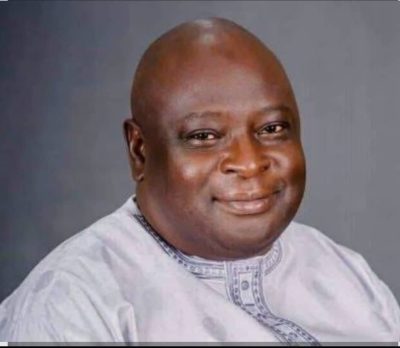
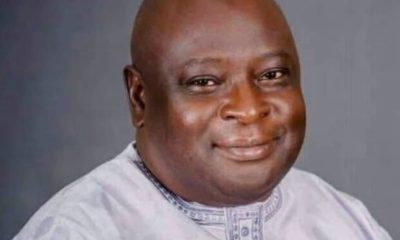
Babajide Kolade-Otitoju, the Director of News at TVC News, recently stated that Oyo State Governor Seyi Makinde would likely have defected from the People’s Democratic Party (PDP) if he was still serving his first term.
Otitoju stated this on Friday on TVC’s ‘Breakfast Show’.
He described the National Convention of the Peoples Democratic Party, PDP, in Ibadan last November as a mere waste of time.
“People must show good judgment at a critical phase. What was the point of having that convention? Two courts told you not to go ahead but you went ahead.
“I may not be a fan of former Senate President Bukola Saraki but if he says something that makes sense, I will be the first to admit it. He made sense when he said let’s go for caretaker. What’s the point of not listening to him?
“Later you will be shouting that the ruling party is behind your crisis, meanwhile you are the architect of your own misfortunes. You created this problem.
“If Makinde were in his first term, he would have fled like the dancing governor because his second term would have been in danger,” Otitoju said.

I Delivered $15m Agency Cash To Ex-NIMASA DG Akpobolokemi, EFCC Witness Tells Court

CBN Bars Chronic Loan Defaulters from Accessing New Banking Services

Makinde Only In PDP Because He’s Not Seeking Re-election – Otitoju

Corruption Probe: Court Grants ICPC Access To Data On El-Rufai’s Seized Gadgets

Beyond My Wildest Dreams: Disu Opens Up During Handover From Egbetokun

Terror Surge: Tinubu Demands Results from Security Chiefs

2027 Shakeup: 12 Lawmakers Defect To APC, ADC

World War III Fears: Zelensky Reveals Warning To Trump

Tensions Rise As Makoko Communities Vow To Resist Relocation Order

Union Bank Of Nigeria Marks International Women’s Month 2026 With Inclusion-First “Give to Gain” Campaign
-
 News2 days ago
World War III Fears: Zelensky Reveals Warning To Trump
-
 News1 day ago
2027 Shakeup: 12 Lawmakers Defect To APC, ADC
-
 News1 day ago
Terror Surge: Tinubu Demands Results from Security Chiefs
-
 News2 days ago
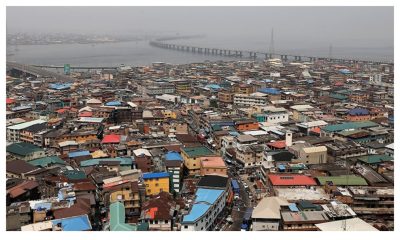
Tensions Rise As Makoko Communities Vow To Resist Relocation Order
-
 News17 hours ago
Corruption Probe: Court Grants ICPC Access To Data On El-Rufai’s Seized Gadgets
-
 News21 hours ago
Beyond My Wildest Dreams: Disu Opens Up During Handover From Egbetokun
-
 News13 hours ago
Makinde Only In PDP Because He’s Not Seeking Re-election – Otitoju
-
 News12 hours ago
CBN Bars Chronic Loan Defaulters from Accessing New Banking Services