
Politics
TINUBU AND 21 YEARS OF UNBROKEN DEMOCRACY IN NIGERIA – Tunde Rahman


Twenty years in the life of a nation may be a short period of time. But when such a span of time embodies something meaningful and impactful, it is extremely noteworthy.
And so Nigeria at present is celebrating two decades of uninterrupted democracy since the democratic restoration of 1999.
Considering where the country is coming from- a long period of coups and counter coups, 30 months civil war, three previous short-lived attempts at democratic rule, military dictatorship of the worst form occasioning all kinds of experiments and fraudulent political engineering including an annulment of a free and fair election and then a brutal dictatorship during which many were either killed or maimed- having another democratic resurgence lasting 21 years, and still counting, is indeed significant.
Operating a democracy, the best form of government mankind has evolved, has never been easy anywhere, talk less in Nigeria. For our democracy to have endured all of 20 years means Nigerians have invested heavily in its success.
We all deserve special congratulations for working to entrench democracy in the land. These investments have come at great costs, which, however, have not been borne in equal measure.
Some Nigerians sacrificed so much for it, including paying the supreme price like business mogul Bashorun MKO Abiola, the winner of the annulled June 12 election, his wife, Kudirat and journalist, Bagauda Kalto, among others. Many were incarcerated.
Thousands who suffered immense pain in diverse manners remain nameless and faceless. Some were forced on exile for a long period.
One of those who had to flee into exile to escape the death squads of the Abacha military junta over the agitation for the de-annulment of the June 12 election from where he played a leading role in continuing the struggle is Asiwaju Bola Tinubu, the All Progressives Congress National Leader.
In exile, Asiwaju became a critical rallying point for the opposition, making things uncomfortable for the Abacha junta back home until that regime collapsed.
Following the promise of the succeeding General Abdulsalam Abubakar regime to hand over power, Asiwaju Tinubu returned to the country from exile in 1998.
In no time at all, he became one of the leading lights who formed the Alliance for Democracy, one of the three main political parties of the time.
Persuaded by his close associates and friends, Asiwaju threw his hat into the ring for the governorship of Lagos. Against the remonstrations of those who wanted to impose a candidate on the AD, he and his associates insisted on open primaries buoyed by support from some temperate leaders of that party.
With open primaries, he emerged the governorship candidate of the party, contested for the 1999 governorship election and was elected.
If his contributions to the return of democratic rule again in 1999 after almost 16 years of military rule was remarkable, his role in nurturing and deepening democracy in the land from that period onward is even more worthy of chronicling.
Saying Asiwaju is a major pillar of the nation’s democracy that seized every opportunity to deepen the practice of transparent, responsive and accountable governance, federalism and the rule of law in Nigeria both in words and deeds is stating the obvious.
As governor, he put together a team of tested technocrats and experienced managers, unrivalled in Nigeria’s history, to help him actualize his vision for the state.
It is not surprising that many of them are still holding top leadership positions at different levels in the country today.
Tinubu and his team laid the foundation for a modern Lagos, fashioned out a master plan and engineered most of the innovations that spurred the unprecedented ongoing development and prosperity witnessed in Lagos today.
As he brought radical changes to both the economic and political landscapes of Lagos, enhancing the state’s fortunes in the process, he also made significant contributions to fiscal federalism and constitutionalism.
Under his watch, Lagos challenged the Federal Government on many constitutional issues. His government filed as many as 14 cases at the Supreme Court and won all.
One of such landmark cases was the one in respect of creation of additional local councils in the state, with the Supreme Court upholding the validity of the new councils but stating that they remained inchoate until the National Assembly had done its part by listing those councils in the constitution.
Nevertheless, the 20 Local Government Areas and 37 Local Council Development Areas (LCDAs) are alive and well today. They constitute the basis for accelerated rural development in Lagos State thanks to Tinubu’s vision and courage.
At the inception of this democratic dispensation in 1999, for instance, the Federal Government routinely deducted funds as a first line charge from the Federation Account for what it called “Special Funds”.
These included funding of the Joint Venture Contracts and NNPC priority projects, servicing of Federal Government’s external debt, funding of the Federal Capital Territory, Abuja, and funding of the judiciary and other federal responsibilities.
It was after the deduction of these monies that whatever was remaining was shared among the states and Local Government Councils. The robust legal challenge by Lagos State at the Supreme Court put a stop to this practice to the advantage of the states and local governments.
Again, it was the crusading legal action by Lagos State under Tinubu’s leadership that led the Supreme Court to declare that planning within the territorial jurisdiction of any state was a residual matter over which the states and not the Federal Government could exercise control.
In the words of Tinubu’s Attorney General at the time, Professor Yemi Osinbajo (SAN), “The Supreme Court by a majority of four out of seven justices in a full constitutional court held that urban and regional planning as well as physical development were residual matters within the exclusive legislative and executive competence of states and that grant of approvals, permits and licences for building and physical development in Lagos State including under bridges, loops and highways set-back are the residual responsibility of the state government”.
When former President Obasanjo withheld revenue allocations to Lagos on account of the creation of those additional councils, Asiwaju was forced to look inward, devising ingenious means of funding the new councils and running the state.
Such resourcefulness birthed the innovations that moved the state IGR from about N600 million monthly in 1999 to around N25billion and over N30billion monthly today. So significant was what Asiwaju and his team did in eight years that many continue to acknowledge his ingenuity.
In a tribute to the APC leader during his 67th birthday in March this year, President Muhammadu Buhari described Tinubu as one of the strong pillars of Nigeria’s democracy while also praising him for his selflessness in serving the country and contributing his quota towards making life better for our teeming people.
“Asiwaju’s uncompromising posture in the face of injustice and refusal to follow the path of least resistance for personal gains stand him out today as a rare breed and one of the cornerstones of Nigeria’s democracy, especially with his track record of persistence, consistency and effective leadership,” the President said.
“As the father of modern Lagos State,” Presidential Spokesman Femi Adesina quoted the President as commending “the visionary and inclusive leadership style that the Asiwaju provided for the commercial nerve centre of Nigeria for eight years, laying the foundation for a modern and technologically-driven city, and ensuring that every successive leader in the state sticks with the master plan of a greater Lagos.”
From the Alliance for Democracy (AD), Asiwaju and his associates moved to form first, the Action Congress (AC) and then the Action Congress of Nigeria (ACN) when the AD became polarised in the aftermath of the choice of that party’s presidential candidate for the 1999 poll among other contentious issues.
In the 2003 election, Asiwaju became the only AD governor who survived the virulent onslaught of the Peoples Democratic Party (PDP), which contrived to win the election at all cost in the South-west and credit Obasanjo with home-base support.
It was to Asiwaju’s credit that he led the struggle in winning back, one by one, those South-west states illegally captured by the PDP through the courts, which upheld the cause of justice.
With the ACN now in firm control of the South-west, Asiwaju’s ACN began alliance talks towards the 2011 election with the Congress for Progressives Change (CPC) led by then General Muhammadu Buhari, but that alliance fell through.
It is instructive that that merger of the South-west and North-West progressives and other like minds, once predicted by the late Chief Obafemi Awolowo, and which fell through in 2011, was eventually successfully and consummated in the build-up to the 2015 election, thus giving birth to the APC.
For the first time in Nigeria’s political history, that rainbow coalition that is APC, unseated an incumbent president and formed government at the centre.
Since then, in a bid to get the party to wax stronger, Asiwaju and his cohorts have had to battle some undemocratic forces within the party and their underhand tactics.
For instance, after the initial bright successes of the APC during which elective convention was the order of the day, some members wanted to foist dictatorship and automatic extension of tenure on the party.
Asiwaju and other democrats successfully wrestled this move to the ground. Tinubu spearheaded the struggle for the adoption by APC of direct primaries as a method of picking the party’s candidates for elections, involving the generality of the party members as opposed to some small coterie of delegates.
That agitation culminated in the election last year of a consummate labour activist and former governor, Comrade Adams Oshiomhole, as APC chairman. Oshiomhole has been changing the narrative in APC to the admiration of many and discomfiture of others.
Asiwaju did much more. Which of those other onerous contributions should one highlight? Is it the crucial role he played in persuading the Federal Government to give June 12 the honour it deserved, thus bringing the matter of the annulled election to a proper close or the leadership he provided, as Co-chair of the APC presidential campaigns, in galvanising the party’s rank and file to work assiduously for the president’s re-election in March this year, knowing full well that President Buhari is a honest and patriotic leader who, in his first term, had taken concrete steps towards laying a firm foundation for a greater Nigeria?
Tinubu’s role as a leading advocate of the legitimation of June 12 has borne ample fruit with President Buhari conferring on the hero of June 12, late MKO Abiola, a post-humous Grand Commander of the Federal Republic (GCFR) award while MKO’s running mate, Ambassador Babagana Kingibe, received the Grand Commander of the Order of Niger award.
The icing on the cake was the pronouncing of June 12 as Democracy Day by President Buhari. Now, the National Assembly has passed the bill making June 12 a public holiday and Nigeria’s Democracy Day. In the 2019 election, President Buhari posted a resounding victory, roundly defeating the PDP, and its candidate, former Vice President Atiku Abubakar, to win a second term which he began a few days ago.
In their book-“Statesmanship and Political Leadership: Analyses of Nigeria’s Fourth Republic-A Festschrift in Honour of Asiwaju Bola Ahmed Tinubu”, the authors of the book, edited by Prof. Olanrewaju Fagbohun (SAN) and Adewale Aderemi, PhD, who interrogated Asiwaju’s role in Nigeria’s democracy, said of the APC leader:
“At critical junctures since his emergence as a public figure in the early 1990s, Asiwaju Bola Tinubu has been a pivotal figure in the equation, by a dint of political doggedness as the last line of resistance to the ruling party, which historically never ruled the South-west, not only weathered incredible political turmoil but also nurtured the dominant political platform of the region from the brink of disintegration to becoming the nucleus of the new ruling party, ousting the sixteen-year incumbency of the PDP in the process.”
Any need to add more. All that Asiwaju has accomplished hasn’t come easy. As common in the trajectories of great men like Chief Obafemi Awolowo, Dr. Nnamdi Azikwe and many other leaders, Asiwaju has had his own fair share of treachery, deceit and campaigns of calumny, even by some of those he trusted.
He has, however, weathered the storms. He is carrying on and waxing stronger. One of the tasks he has taken upon himself at present is safeguarding and strengthening party supremacy within the governing party and ensuring adherence to the party’s position in respect of emergence of the National Assembly’s presiding officers.
Asiwaju has a lot more to offer. Surely, in the fullness of time and with the gift of life and continued good health, the fullness of his robust intellect, competence, and capability will be released in the service of our country.
First Published In May, 2019 by Tunde Rahman


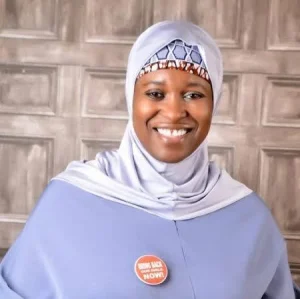
Prominent activist and African Democratic Congress (ADC) member Aisha Yesufu has issued a public apology to governance advocate Yemi Adamolekun following a controversy over her inclusion in the party’s Wise Men and Women Policy and Manifesto Committee.
The issue emerged on Wednesday after Adamolekun, former executive director of Enough is Enough Nigeria, expressed surprise on social media at seeing her name listed among members of the ADC committee.
Tagging Yesufu and ADC spokesperson Bolaji Abdullahi, Adamolekun questioned the party’s process in a blunt post on X.
“ADC! ADC! ADC! How many times did I call you? This is not how to build credibility o! Please show me evidence of when I joined your party! Na wa….” she wrote.
Responding the same day, Abdullahi said the committee was designed to be expert-driven rather than strictly partisan.
“It is important to point out that not everyone on the ADC Policy and Manifesto Committee is a member of the ADC. Many are not even politicians,” he said.
He added, “This is because the ADC believes that the task of developing workable public policies for the benefit of all Nigerians should not be left to politicians alone.”
Abdullahi maintained that the party had followed due process.
He said the ADC had undergone a “vetting process” and “took all necessary measures to ensure that everyone recommended to serve on this important committee was duly notified and had given their consent.”
Despite the disagreement, he expressed hope that Adamolekun would still participate, citing her “vast experience – even though she is not a member of our party.”
However, reacting on Friday, Yesufu, a member of the party’s Revalidation, Mobilisation and Registration Committee, acknowledged the error and apologised publicly.
She wrote, “This is inexcusable, and on behalf of my party, accept my apologies for this mix-up. We do not take you and your need to have a better Nigeria for granted.”
Yesufu admitted the process was flawed.
“Like you rightly pointed out, you ought to have been informed and your consent gotten before your name is published.
“This is well noted, and going forward we will continue to ensure due diligence,” she said.
She added, “Thank you for calling our attention to this. We can only get better when we get such feedback and improve accordingly.
“The work to rebuilding Nigeria is enormous, and in our eagerness to start off, we must never forget due process and diligence.”
Yesufu also extended an apology to others affected by the publication.
“For anyone that was also not contacted and consent gotten before publication, kindly accept my apologies for the mix-up,” she said.
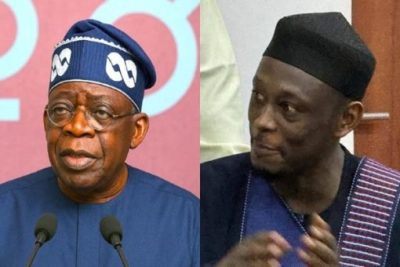
Abba Atiku Abubakar, son of former Vice President Atiku Abubakar, has attributed his support for President Bola Ahmed Tinubu’s re-election bid to what he described as the administration’s innovative and business-friendly economic policies.
He said President Tinubu’s economic initiatives are more favourable to businesses than those of previous administrations, adding that the reforms have reshaped his political alignment ahead of the 2027 general elections.
Abba made the remarks during a solidarity visit to the leadership of the City Boy Movement (CBM) in Abuja on Monday evening, where he led members of the Haske Atiku Organisation, now rebranded as the Haske Tinubu Organisation.
He recalled that he formally defected to the All Progressives Congress (APC) on January 15, collecting his membership card at Gwadabwa Ward in Yola North Local Government Area of Adamawa State, where he publicly pledged support for Tinubu’s second-term ambition.
According to him, his decision to back the president was driven by admiration for the economic policies introduced since 2023, which he believes are positioning the country for stronger private-sector growth and investment.
According to him, “This administration has introduced policies that have every Nigerian in mind. If anyone says this government is not doing well, I will tell them they are lying,” he said. “I believe that if given another term, the government will do even more because it is focused.”
He explained that his long-standing experience in business has given him a clear perspective on economic governance in Nigeria.
“Since the return of democratic rule in 1999, I have been in business, and I am still in business today. The economic policies of Mr. President are favourable—not just to businesses, but to Nigerians in general, who are already benefiting from these reforms,” he stated.
He also explained that his decision to join the APC and align with the City Boy Movement was motivated by his passion for the Tinubu-led administration and his desire to serve.
“My joining the APC and the City Boy Movement is based on my belief in this administration. I also intend to use this platform to serve the people of Adamawa at the National Assembly level. Mr. President has made youth inclusion in politics a reality,” Abubakar added.
The Director General of the City Boy Movement, Mr. Oluwatosin Shoga reaffirmed President Tinubu’s commitment to youth participation in governance and leadership.
He noted that one of CBM’s core strategic mandates is to ensure that young Nigerians are deliberately positioned for leadership roles while encouraging greater youth involvement in the political process.
Abba’s delegation was received by the Director General of CBM, Mr. Shoga, and the National Coordinator, Mr. Favour Abayomi.
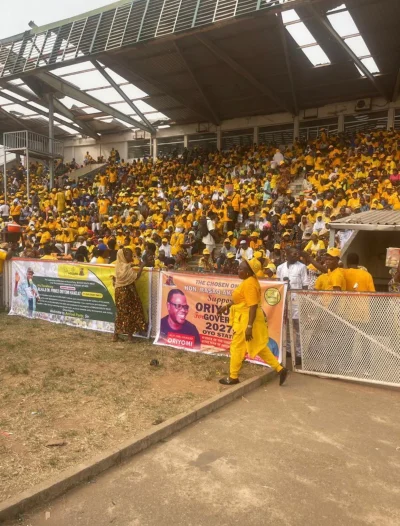
Popular Ibadan-based broadcaster and founder of Agidigbo 88.7 FM, Alhaji Oriyomi Hamzat has officially declared his intention to run for the 2027 Oyo State governorship under the Accord Party.
In a public declaration, Hamzat stated, “I am publicly declaring today that in 2027.
“I will not campaign for anyone or mobilise crowds for anyone.
“I will contest in the gubernatorial election under the Accord Party.”
The announcement signals Hamzat’s full commitment to his own political ambitions, stepping away from backing other candidates as he positions himself for the Oyo State governorship race.

Gumi Defends Dialogue As Sole Solution To Nigeria’s Insecurity

Court Clears Senator Ireti Kingibe To Remain Active In ADC

COAS Shaibu Hits Jos To Restore Peace, Public Confidence

President Tinubu Appoints New PTDF Executive, Reappoints TCN Head

Simi Welcomes Second Child With Adekunle Gold

United Nigeria Airlines Staff Suspended After Viral Amputee Abuse Video

Pay Your Fare: AIG Cracks Down On Officers Boarding For Free

INEC Removes David Mark, Aregbesola From ADC Leadership Portal

JUST IN: FG Approves Friday 3, Monday 6, as Easter Public Holidays

When 8 million Customers Trust You, Safety Cannot Be an Afterthought
-
 News2 days ago
When 8 million Customers Trust You, Safety Cannot Be an Afterthought
-
 News1 day ago
United Nigeria Airlines Staff Suspended After Viral Amputee Abuse Video
-
 News2 days ago
JUST IN: FG Approves Friday 3, Monday 6, as Easter Public Holidays
-
 News2 days ago
Pay Your Fare: AIG Cracks Down On Officers Boarding For Free
-
 News2 days ago
INEC Removes David Mark, Aregbesola From ADC Leadership Portal
-
 News22 hours ago
COAS Shaibu Hits Jos To Restore Peace, Public Confidence
-
 Entertainment1 day ago
Simi Welcomes Second Child With Adekunle Gold
-
 News23 hours ago
President Tinubu Appoints New PTDF Executive, Reappoints TCN Head