
News
What Osinbajo Said About Naira Devaluation, What It Could Mean For The Future

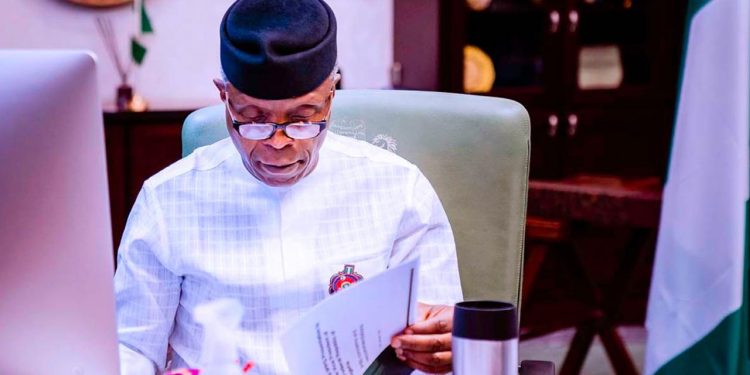
Nigeria is on auto-replay. Events of the past find a clever way of repeating themselves. Very few things that happen in this African giant are new.
Conversations around the naira and dollar are definitely not new, and we are back at a familiar junction: let’s call it the naira devaluation avenue.
On Monday, at the midterm review of President Muhammadu Buhari’s second tenure in office, the conversation about naira devaluation found a good place to grab centre stage.
For about 45 minutes, Vice-President Yemi Osinbajo explained how the country’s Economic Sustainability Plan helped Nigeria get out of recession.
At the end of his presentation, Osinbajo told a hall full of ministers, captains of industries, diplomats, and civil servants, how he expects the Central Bank of Nigeria to devalue the naira to reflect the state of the market.
The professor of law did not mince words when he said the CBN’s demand-management strategy needs a rethink.
“As for the exchange rate, I think we need to move our rates to [be] as reflective of the market as possible. This, in my own respective view, is the only way to improve supply,” Osinbajo said.
“We can’t get new dollars into the system, where the exchange rate is artificially low. And everyone knows by how much our reserves can grow. I’m convinced that the demand management strategy currently being adopted by the CBN needs a rethink, and that is just my view.”
The boldest part of Osinbajo’s call for devaluation was that he did it right before his principal, President Muhammadu Buhari. Buhari is known to be against the devaluation of the naira, even when market forces clearly necessitate the shift.
WHAT HAPPENED WHEN OSINBAJO CALLED FOR DEVALUATION IN 2016
When Buhari and Osinbajo took office in 2015, one of the first demands of the investing community was for the government to devalue the naira and maintain a single exchange rate system. President Buhari strongly opposed this position. He famously said he will not kill the naira.
Osinbajo stood with Buhari. He told diplomats that Nigeria will not be devaluing the naira, suggesting that devaluation was not the solution to the currency crisis.
“I don’t agree on devaluation and it is not that I am doctrinaire about it. In the first place, it is not a solution — we are not exporting significantly. And the way things are, devaluation will not help the local economy,” he told ambassadors from Italy and Canada, who visited him in October 2015.
Some months down the line, the vice-president who chairs major economic committees in the Buhari government, called for a “substantial revaluation for the foreign exchange policy”.
“There has been a sharp decline in foreign exchange earnings. The executive is not responsible for monetary policy but we have made the point clearly that demand management will not take us out of the woods,” he said in May 2016.
Just as Osinbajo said in 2016, he has said again in 2021 that the CBN’s “demand management” strategy needs to be reevaluated.
A month after Osinbajo’s call in 2016, the CBN removed its peg on the naira from 197 per dollar. The local currency went as high as 283 per dollar in a matter of hours.
Osinbajo said this would help boost dollar supply and encourage capital inflows. He was right. Nigeria recorded a 138.7 percent increase in inflows. But the story did not end there.
WHAT 2016 TEACHES US ABOUT 2021
If we follow the 2016 script to the letter, then the authorities would walk back on this call for devaluation starting from today. We would find many reasons why devaluation is bad for the economy. But the devaluation will eventually happen.
Look at it like this; we are back at that time in 2015 when the official rate of the dollar was N197, and the parallel market rate was N260. There was more than a 20 percent gap between the parallel market and the official side. Today we have 411 vs 570, which is also more than a 20 percent gap.
If the CBN goes with Osinbajo’s suggestion to “move our rates”, what immediately happens is that we see a devaluation at the official market, which may drive up prices of goods and services in the short term.
If the CBN employs some of the lessons from the past, it can strengthen the naira at the parallel market. The naira will dramatically recover from N570 per dollar to anywhere between 450 and 500.
There would be a unification of rates at a new midpoint. But the big question is: what happens next?
After the 2016 devaluation and some sort of unification, the parallel market began to shift again. The CBN adjusted for unification. By 2017, the parallel market had taken the naira to 520 per dollar. CBN had to devalue again to 360 to firm up rates.
The naira recovered from 520 to 360 at the parallel market. But this was not sustainable due to the nature of the Nigerian economy.
Since 2017, we have moved from a unified 360 to 570 as of Monday. If we devalue again, the naira will firm up for a bit, and if we don’t do something different with the economy, we would be back again at devaluation avenue in a few years. That is how the Nigerian auto-replay works.


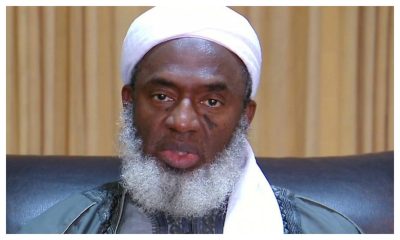
Islamic cleric Sheikh Ahmad Gumi recently defended his past interactions with armed groups, stating he “took the bull by the horns” in 2021 as a necessary step to address Nigeria’s insecurity.
In a post shared on Facebook on Thursday, Gumi said decades of neglect of disadvantaged populations had created deep socio-economic inequalities, leaving many youths vulnerable to manipulation by external forces seeking to destabilise the country.
According to him, the widening gap between the rich and the poor has turned many young people into “ready-made foot soldiers” in cycles of violence that enable the exploitation of Nigeria’s resources.
He also criticised the political class for being largely unresponsive, while noting that the intellectual community is preoccupied with survival struggles.
Reflecting on his past efforts, Gumi said he “took the bull by the horns” in 2021 by attempting to reintegrate violent elements into society rather than allowing them to be further radicalised.
He wrote: “Nigeria for decades has ignored the underprivileged section of its society. There is a significant socio-economic discrepancy, and the society is stratified. This makes our teaming youth ready-made foot soldiers for any foreign interest trying to divide us and rule. To plunder our resources while we are involved in a vicious circle of violence.
”Unfortunately, the political class is unattentive while the intelligentsia is held hostage in the struggle for existence.
“In 2021, I took the bull by the horns in an attempt to bring some of these uncouth elements back to our fold rather than letting them be exploited by the devil.
“I still believe this is the only way out of our predicament. However, it needs the political will and determination to achieve.
“May Allah bring peace back to our nation.”
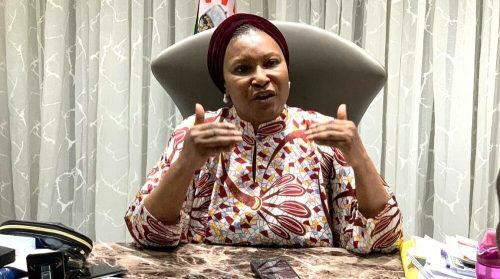
The Federal High Court in Abuja rejected an ex-parte application seeking to bar Senator Ireti Kingibe from participating in the activities of the African Democratic Congress (ADC).
Justice Peter Lifu declined the request from Wuse Ward leaders, ruling that such an order could not be granted without first hearing from the senator.
Instead, the judge ordered the ward leaders said to be loyal to the Minister of the FCT, Nyesom Wike, to put the senator on notice to appear in court to join issues with them on their grievances.
Justice Lifu in a ruling on Thursday held that discretion in such a request for prohibition from party activities and in political matters must be exercised judicially and judiciously.
The judge said justice would be met in the case of the plaintiffs only when the side of the defendant is heard on its merit, along with that of the plaintiffs.
Consequently, the judge ordered that Senator Ireti Kingibe should be served with all court processes by the plaintiffs to enable her become aware of the suit and to prepare her defense.
The judge fixed April 20, 2026, for the plaintiffs and the serving senator to appear before him for hearing of all applications in the matter.
Those who sued the senator in the suit marked FHC/ABJ/ CV/539/2026 are Okezuo Godfrey Anayo and Isaiah Ojonugwa Samuel, on behalf of themselves and ward members as plaintiffs. The senator is the sole defendant.
In their ex-parte application, Kingibe representing the FCT in the Senate was said to have been suspended on March 10, 2026 by her Wuse Ward executives following allegations of anti-party activities and disregard of your cnstitution of the ADC.
In the ex- parte application filed on their behalf by a Senior Advocate of Nigeria, SAN, Kolawole Olowookere, the aggrieved ADC members in Wuse Ward applied for an order of interim injunction restraining Kingibe from parading herself as a member of party, pending the hearing and determination of their motion on notice for interlocutory injunction.
They also asked the judge to restrain the senator from performing any function, attending meetings or performing activities reserved for ADC members or representing the party in any activities.
Besides, the Ward Executive Committee had asked that she be restrained from further interfering with the administration of the ward, ward register and other activities.
The suit was predicated on five grounds among which are that Mrs Kingibe was placed on suspension due to anti-party activities, gross misconduct and confiscation of the ward statutory records.
They argued that the suspension followed due process as enshrined in the ADC constitution and ratified by the two thirds majority of the EXCO members.
They averred that despite the communication of the suspension to Kingibe, she has continued to hold parallel meetings, issue press statements as an ADC member, and using her security details to intimidate the executive committee.
“Her actions constitute flagrant disregard to the internal mechanism of the party,” the plaintiffs stated.
Meanwhile, a lawyer, Abubakar Marshall who claimed to be representing the senator, announced that he had filed a preliminary objection against the suit. He added that it was served on M. S. Garba, who stood for the plaintiffs at Thursday’s proceedings.
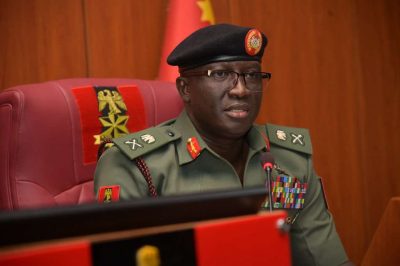
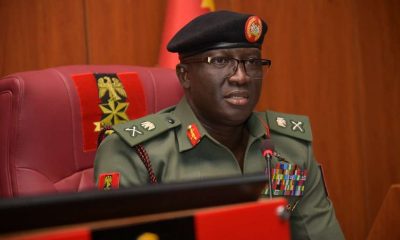
The Chief of Army Staff (COAS), Lieutenant General Waidi Shaibu, visited Jos, Plateau State, on Thursday, April 2, 2026, to lead a high-powered security assessment following recent security breaches.
The visit was aimed at strengthening public confidence and reinforcing ongoing efforts to stabilize affected communities.
Colonel Appolonia Anele, acting Director, Army Public Relations, said in a statement that the visit forms part of ongoing efforts to restore calm and entrench lasting peace across the state.
According to the statement, upon arrival, the COAS was received by the Executive Governor of Plateau State, Caleb Mutfwang, in a clear demonstration of strong civil-military cooperation and a shared commitment to addressing emerging security challenges.
The statement said the COAS received a comprehensive operational briefing from the General Officer Commanding 3 Division and Commander, Joint Task Force Operation ENDURING PEACE, Major General Folusho Oyinlola, who highlighted ongoing operations and proactive measures being implemented in synergy with other security agencies to contain threats, protect lives and property, and stabilise affected communities.
“As part of his engagements, Lieutenant General Shaibu also interacted with community leaders and residents, reassuring them of the unwavering commitment of the Nigerian Army to safeguarding all law-abiding citizens.
He urged residents to remain calm, vigilant and supportive of security agencies by complying with the curfew and cooperating fully with ongoing operations and investigations, while going about their lawful activities.
The chairman of Jos North Local Government Area, Hon. Dachung Bagos, commended the COAS for the timely visit, noting that the presence of the nation’s top military leadership would boost public confidence and reinforce trust in ongoing security efforts.

Gumi Defends Dialogue As Sole Solution To Nigeria’s Insecurity

Court Clears Senator Ireti Kingibe To Remain Active In ADC

COAS Shaibu Hits Jos To Restore Peace, Public Confidence

President Tinubu Appoints New PTDF Executive, Reappoints TCN Head

Simi Welcomes Second Child With Adekunle Gold

United Nigeria Airlines Staff Suspended After Viral Amputee Abuse Video

Pay Your Fare: AIG Cracks Down On Officers Boarding For Free

INEC Removes David Mark, Aregbesola From ADC Leadership Portal

JUST IN: FG Approves Friday 3, Monday 6, as Easter Public Holidays

When 8 million Customers Trust You, Safety Cannot Be an Afterthought
-
 News1 day ago
When 8 million Customers Trust You, Safety Cannot Be an Afterthought
-
 News2 days ago
El-Rufai Back In Detention After Temporary Compassionate Release
-
 News1 day ago
United Nigeria Airlines Staff Suspended After Viral Amputee Abuse Video
-
 News2 days ago
2027: Kwankwaso’s Exit Marks End Of NNPP – Kwankwasiyya Movement
-
 News1 day ago
JUST IN: FG Approves Friday 3, Monday 6, as Easter Public Holidays
-
 News1 day ago
Pay Your Fare: AIG Cracks Down On Officers Boarding For Free
-

 News2 days ago
Lagos CP Withdraws Taskforce From Traffic Duties
-
 News14 hours ago
COAS Shaibu Hits Jos To Restore Peace, Public Confidence