
Business
Heritage Bank MD tasks govt on policies to support private sector interventions for infrastructure growth


…Cart away duo Platinum awards
The MD/CEO of Heritage Bank Plc, Ifie Sekibo has called on governments to provide enabling policies that would support private sector interventions to achieve the vision of infrastructural development.
He made this submission at the Finance Correspondents Association of Nigeria’s (FICAN) 30th-anniversary conference and awards with the theme: “Financing Infrastructure & SMEs for inclusive growth in the post-COVID-19 economy,” held weekend in Lagos, where the bank carted away duo Platinum Awards presented to Ifie Sekibo and Heritage Bank for Outstanding Support towards FICAN and Financial Reporting, respectively.
Sekibo who was represented by Olusegun Akanji, Divisional Head, Strategy and Business Solutions, argued that the government cannot solve the country’s infrastructure challenges, noting that it is the private sector that will deliver the solution.

L-R: Titus Nwokoji, Chairman of Finance Correspondents Association of Nigeria; Olusegun Akanji, Divisional Head, Strategy and Business Solutions of Heritage Bank Plc and former Chairman of FICAN and Deputy Business Editor of Vanguard, Babajide Komolafe, during the duo Platinum Awards presented to Ifie Sekibo and Heritage Bank for Outstanding Support towards FICAN and Financial Reporting, respectively at the Finance Correspondents Association of Nigeria’s (FICAN) 30th-anniversary conference and awards with the theme: “Financing Infrastructure & SMEs for inclusive growth in the post-COVID-19 economy,” held in Lagos, weekend.
According to him, the government can only provide enabling policies that will support private sector interventions.
“We need the global private sector intervention to help us achieve a vision of infrastructural development,” he said.
He noted that until the country developed an identity management system that delivers value to the citizenry, SMEs will continue to grapple with financing challenges.
He explained that though the banking industry has financed a lot of SMEs in terms of count, that it is the sector that has the largest numbers of bad loans and frauds in terms of count.
MD of FMDQ Group, Bola Koko represented by Yomi Osinubi, Head Private Market, urged Nigeria to conceive a way its domestic capital market could fund the international capital market.
That, he said, was the only way that we could pluck the infrastructure rewards.
“If we want to pluck our infrastructure rewards, first of all we have to conceive of a way our domestic capital market can actually fund capital market.
“But the investors in debt capital market international and debt, money will come into an environment where capital is expected and there is an expectation of good management of those resources and cash flows will come back to it.
“So I think there’s the issue of maybe an underlying structure where we want to put in capital like road infrastructure tax payment.
” If you want SMEs to get the best benefits of infrastructure development in the country, the CBN Governor mentioned the largest areas of course for SMEs which is energy. The second largest is the logistics, movements of cargo around the country,” he said.
Executive Commissioner, Temidayo Obisan representing the Director General of Securities and Exchange Commission (SEC),Lamido yuguda advised that the nation connected the right duration of money which according to him would be long-term.
“The major thing to identify is that infrastructure is a long-term thing, so it Is essential we connect the right duration of money which is long term capital which is what capital market provides and which sec as a regulator should.
“We have about three surviving infrastructure focus funds in Nigeria now that are totalling almost a 100bn, itching about 90 billion at the moment and there are some that are registered programmes of 200billion,” he said.
More so, the Chairman of FICAN, Titus Chima Nwokoji, said if Nigeria’s infrastructural gap, which is estimated to be N36 trillion annually, is addressed, a lot of the country’s economic challenges will be easily tackled.
“And coming out of COVID-19 pandemic, we know that if the infrastructure is fixed and SMEs thrive, the growth that you see will be faster,” he added.


Business
IWD: Fidelity Bank Signs MoU with Partners, Launch ‘Give Her Power’ Initiative to Empower Nigerian Women
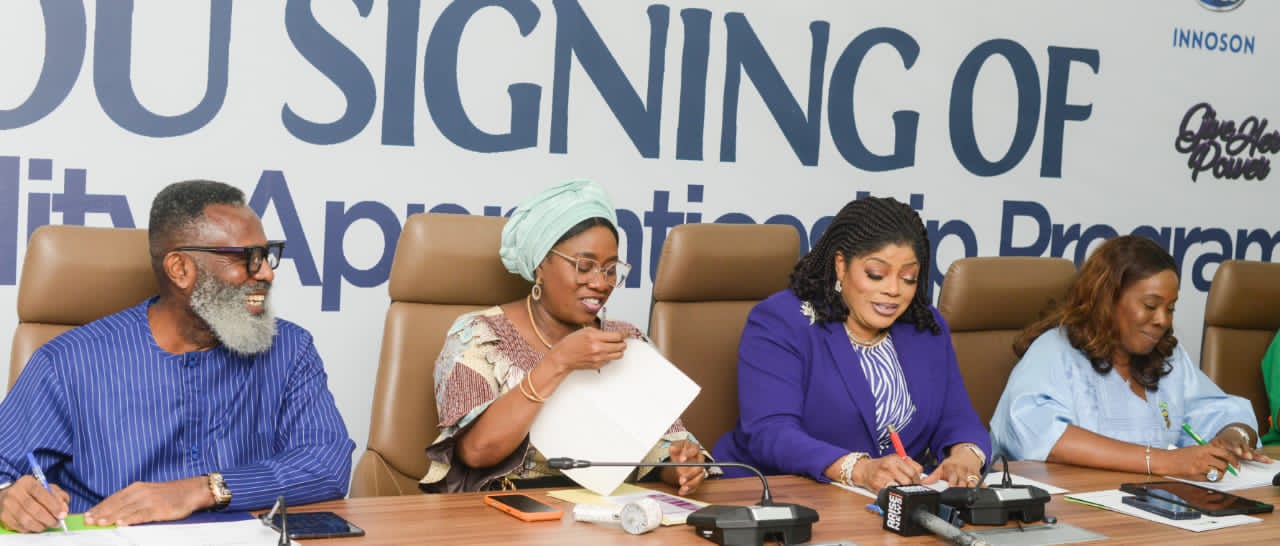
Fidelity Bank Plc has reaffirmed its commitment to advancing women’s economic empowerment with the signing of strategic Memoranda of Understanding (MoU) with partner organisations at the launch of the bank’s “Give Her Power” initiative, a programme designed to equip Nigerian women with practical skills, tools, mentorship, and financial knowledge.
The partnerships, formalised as part of activities commemorating the 2026 International Women’s Day, bring together a diverse network of stakeholders: LUSH Hair, Barbergirl Academy School of Barbering, Dee ‘n’ Ell the Shoe Architect, Inter-Bau Foundation, IVM Innoson, National Credit Guarantee Company (NCGC) and One Universe.
The collaboration is anchored on the Bank’s HerFidelity Apprenticeship Programme, a structured platform created to provide vocational training, business support, and sustainable enterprise opportunities for women across multiple sectors.
Speaking during the event, Managing Director and Chief Executive Officer, Fidelity Bank Plc, Dr. Nneka Onyeali-Ikpe, highlighted that the bank’s ‘HerFidelity’ initiative reflects Fidelity Bank’s continued commitment to creating opportunities that empower women to achieve financial independence and build sustainable businesses.

L-R: Chief Executive Officer, Innoson Kiara Academy, Endi Ezengwa; Commissioner for Women Affairs and Poverty Alleviation, Lagos State, Bolaji Cecilia Dada; Managing Director/Chief Executive Officer, Fidelity Bank Plc, Dr. Nneka Onyeali-Ikpe; and Commissioner for Commerce, Cooperatives, Trade and Investment, Lagos State, Folashade Ambrose-Medebem; during the signing of Memorandum of Understanding (MoU) at the launch of “Give Her Power” initiative as part of the 2026 International Women’s Day (IWD) activities at the Fidelity Bank Head Office in Lagos, recently.
“At Fidelity Bank, we strongly believe that empowering women is not only a social responsibility but also a powerful economic strategy. Through the ‘Give Her Power’ initiative and the HerFidelity Apprenticeship Programme, we are providing women with practical tools, vocational skills and financial knowledge that will enable them to move from effort to earnings and from hustle to sustainable enterprise.”
She explained that the programme will deliver a range of interventions throughout the month of March, including the distribution of 1,000 sewing and grinding machines to support women-led microbusinesses, as well as vocational training in automobile mechanics, interior decoration, barbing, hair making, and shoe making.
Other components of the initiative include professional headshot sessions to strengthen women’s personal and professional brands, mentorship engagements with leading female entrepreneurs, and hands-on skill acquisition training in areas such as makeup artistry, nail care, and traditional headgear tying.
Dr. Onyeali-Ikpe also noted that empowering women economically has ripple effects that extend beyond individual beneficiaries.
“When women are empowered economically, the impact extends far beyond individuals. It strengthens families, grows businesses, and uplifts entire communities. Research suggests that advancing women could add up to $12 trillion to global GDP. This reinforces the need to deliberately create platforms that support women to build sustainable businesses and strengthen their economic independence,” she added.
Applauding the bank’s initiative, the Lagos State Commissioner for Commerce, Cooperatives, Trade and Investment, Mrs. Folashade Ambrose-Medebem, commended Fidelity Bank for its leadership in promoting entrepreneurship and supporting women across the nation.
“This initiative strongly aligns with the Lagos State Government’s commitment to building an inclusive economy where women have access to skills, mentorship and financial opportunities they need to thrive”, Ambrose-Medebem stated.
Her words, “Women remain key drivers of commerce and enterprise across Lagos, from traditional markets to emerging digital sectors. This initiative by Fidelity Bank has ensured that we stayed true to the promoting and supporting women”.
Also speaking at the event, the Lagos State Commissioner for Women Affairs and Poverty Alleviation, Mrs. Bolaji Cecilia Dada, praised Fidelity Bank for championing financial inclusion and economic independence for women.
“Empowering women economically is one of the most effective ways to reduce poverty and strengthen communities. We commend Fidelity Bank for this forward-thinking initiative and for demonstrating how collaboration between the private sector and government can create meaningful opportunities for women across the state,” she said.
Representatives of the partner organisations also expressed appreciation to Fidelity Bank for the collaboration, noting that the partnership will play a significant role in expanding vocational training opportunities and strengthening entrepreneurship among women.
The Give Her Power initiative is expected to empower hundreds of women through skill development, mentorship, and startup support, while reinforcing the role of women as key contributors to Nigeria’s economic growth.
Ranked among the best banks in Nigeria, Fidelity Bank Plc is a full-fledged Commercial Deposit Money Bank serving over 10 million customers through digital banking channels, its 255 business offices in Nigeria and United Kingdom subsidiary, FidBank UK Limited.
The Bank is a recipient of multiple local and international Awards, including the 2024 Excellence in Digital Transformation & MSME Banking Award by BusinessDay Banks and Financial Institutions (BAFI) Awards; the 2024 Most Innovative Mobile Banking Application award for its Fidelity Mobile App by Global Business Outlook, and the 2024 Most Innovative Investment Banking Service Provider award by Global Brands Magazine. Additionally, the Bank was recognized as the Best Bank for SMEs in Nigeria by the Euromoney Awards for Excellence and as the Export Financing Bank of the Year by the BusinessDay Banks and Financial Institutions (BAFI) Awards.
Business
Union Bank’s Union Cares Initiative Celebrates Academic Excellence at Pacelli School for the Visually Impaired Graduation
Union Bank of Nigeria proudly participated in the graduation ceremony of the Pacelli School for the Visually and Partially Sighted on 23 July 2025, honouring the resilience and academic achievements of visually impaired students.
The event, held on the school premises, highlighted the importance of inclusivity and determination in education.
As a 108-year-old institution committed to social responsibility, Union Bank’s involvement reflects its enduring support for Persons With Disabilities (PWD) and its dedication to fostering equitable access to education.
The Bank’s Chief Brand and Marketing Officer, Olufunmilola Aluko, expressed her admiration for the graduating students:
“Union Bank proudly stands as a champion of inclusiveness and equitable representation. Through our UnionCares corporate social responsibility initiative, we are committed to supporting vulnerable and underrepresented communities.
We celebrate the incredible achievements of these students and reaffirm our dedication to empowering them to reach their full potential.”
UnionCares is Union Bank’s CSR Arm focused on creating sustainable social impact in key areas, including:
• Support for Vulnerable Groups: Empowering persons with disabilities and other marginalised communities through inclusive initiatives.
• Education and Skill Development: Facilitating access to education and practical skills that promote self-reliance and opportunity.
• Community Well-Being: Enhancing the overall quality of life of communities through health, education, and social welfare projects.
Union Bank remains honoured to collaborate with institutions dedicated to uplifting less-recognised members of society. The Bank remains dedicated to championing initiatives that inspire positive change, and foster a more inclusive, enlightened community across Nigeria.
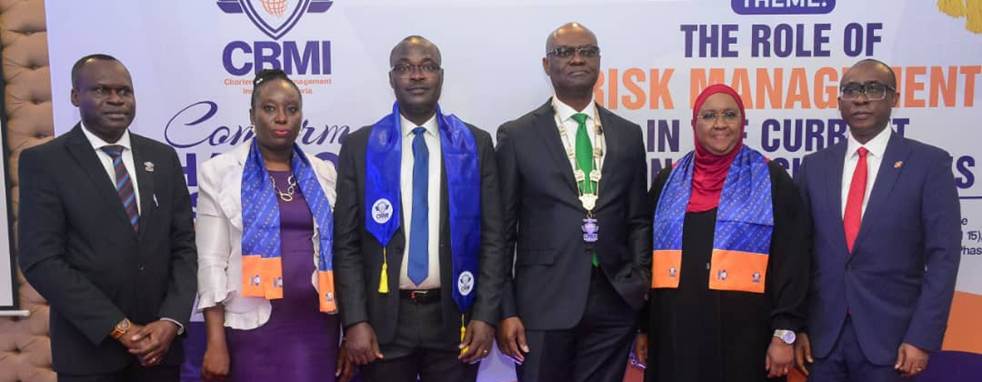
Kevin Ugwuoke, Executive Director and Chief Risk Officer of Fidelity Bank Plc, has formally assumed office as President of the Chartered Risk Management Institute of Nigeria (CRMI).
His leadership promises a reform-focused era anchored on policy advocacy, ethical standards, and digital innovation to deepen risk governance across sectors in the country.
Speaking during the presidential handover ceremony in Lagos over the weekend, Ugwuoke — who also doubles as acting President of the Federation of African Risk Management Associations (FARMA) — described his election as “a call to action.”
He pledged to reposition CRMI as a thought leader and institutional partner in shaping the future of risk management in Nigeria’s national development.
“Our mission is more than just certification; it’s about strengthening the culture of risk governance across sectors. We will collaborate with regulators, raise awareness, and provide practical tools to help organizations embed risk discipline at all levels.”
Ugwuoke outlined a five-pronged strategy to guide his administration: strengthening professional education and certification; deepening policy and regulatory engagement; accelerating digital transformation; integrating ESG and climate risk into corporate strategies; and mentoring the next generation of risk practitioners.
He explained that CRMI will align its initiatives with key policy institutions — including the Nigerian Economic Summit Group, the National Assembly, and sub-national governments — to help embed robust risk frameworks into economic development plans.
“We must integrate risk thinking into how we plan, govern, and invest. We will advocate for more inclusive regulations to empower small and medium enterprises, improve macroeconomic stability, and foster institutional resilience.”
Ugwuoke also announced plans to revise the Institute’s curriculum, introduce specialized certifications to reflect emerging risks, and implement a new National Risk Observatory to provide real-time risk data to both the public and private sectors.
“Digital innovation will be central to how CRMI operates going forward. We are automating our backend, delivering more virtual training, and employing technology to scale our impact across the country and beyond.”
In his remarks, the outgoing President of CRMI, Ezekiel Oseni, challenged the new leadership to consolidate on the achievements made under his tenure — from securing chartered status and strengthening partnerships to gaining greater international recognition — and take the Institute to the next level.
Also speaking on the occasion, Chukwuma Nweke, deputy managing director of United Bank for Africa (UBA), delivering a goodwill message on behalf of Group Managing Director, Oliver Alawuba, described Ugwuoke as a worthy successor. “As Professor Oseni hands over the baton to Kevin Ugwuoke — a well-respected leader in the risk management ecosystem — we are assured CRMI is poised for greater achievements under his watch.”
Nweke stressed that growing economic uncertainties — from inflation and exchange rate volatility to growing debt — underscore the need for a more strategic view of risk. “Risk must be recognized not as a compliance obligation or a cost center but as a key enabler of resiliency and growth. Institutions that embed risk into their strategies will absorb shocks more effectively, unlock value, and inspire investor confidence.”
As part of the day’s ceremonies, 11 distinguished practitioners were conferred with the Fellow of Chartered Risk Manager (FCRMI) award, while 21 new members were formally inducted as Chartered Risk Managers (CRM).
Furthermore, a new Governing Council was inaugurated to oversee the affairs of the Institute for the 2025–2027 term, marking a decisive step forward in institutional renewal and policy direction.
L-R: Registrar/Chief Executive, Chartered Risk Management Institute of Nigeria (CRMI), Victor Olannye; Divisional Head, Risk Management Securities and Exchange Commission (SEC), Grace Abioye; Immediate Past President, CRMI, Ezekiel Oseni; President, CRMI and Executive Director/Chief Risk Officer, Fidelity Bank Plc, Kevin Ugwuoke; Director, Enterprise Risk Management, Nigeria Deposit Insurance Corporation (NDIC), Amal Haruna; and Rep. Keynote speaker, Deputy Group Management Director, United Bank of Africa (UBA), Chukwuma Nweke; at the CRMI Conferment Handover/Sent-Forth ceremony, held in Lagos recently.

Gumi Defends Dialogue As Sole Solution To Nigeria’s Insecurity

Court Clears Senator Ireti Kingibe To Remain Active In ADC

COAS Shaibu Hits Jos To Restore Peace, Public Confidence

President Tinubu Appoints New PTDF Executive, Reappoints TCN Head

Simi Welcomes Second Child With Adekunle Gold

United Nigeria Airlines Staff Suspended After Viral Amputee Abuse Video

Pay Your Fare: AIG Cracks Down On Officers Boarding For Free

INEC Removes David Mark, Aregbesola From ADC Leadership Portal

JUST IN: FG Approves Friday 3, Monday 6, as Easter Public Holidays

When 8 million Customers Trust You, Safety Cannot Be an Afterthought
-
 News1 day ago
When 8 million Customers Trust You, Safety Cannot Be an Afterthought
-

 News2 days ago
El-Rufai Back In Detention After Temporary Compassionate Release
-
 News1 day ago
United Nigeria Airlines Staff Suspended After Viral Amputee Abuse Video
-
 News2 days ago
2027: Kwankwaso’s Exit Marks End Of NNPP – Kwankwasiyya Movement
-
 News1 day ago
JUST IN: FG Approves Friday 3, Monday 6, as Easter Public Holidays
-

 News2 days ago
Lagos CP Withdraws Taskforce From Traffic Duties
-
 News1 day ago
Pay Your Fare: AIG Cracks Down On Officers Boarding For Free
-
 News13 hours ago
COAS Shaibu Hits Jos To Restore Peace, Public Confidence