
News
Full Text: President Buhari’s Speech At 76th Session Of United Nations General Assembly


ADDRESS BY HIS EXCELLENCY, MUHAMMADU BUHARI, PRESIDENT OF THE FEDERAL REPUBLIC OF NIGERIA AT THE GENERAL DEBATE OF THE 76TH SESSION OF UNITED NATIONS GENERAL ASSEMBLY IN NEW YORK, USA FRIDAY 24TH SEPTEMBER, 2021
Protocols:
Mr. President,
Let me, on behalf of the government and people of Nigeria, congratulate you on your well-deserved election as President of the 76th Session of the United Nations General Assembly. I would like to assure you of the full support and cooperation of the Nigerian delegation throughout your tenure.
2. I would like to commend your predecessor, His Excellency, Mr. Volkan Boskir, for the many remarkable achievements recorded during his tenure, despite the challenges posed by the COVID-19 pandemic.
3. Permit me to congratulate the Secretary General, Antonio Guterres, on his re-election and commend his strong commitment to making the UN more alive to its responsibilities.
4. I also want to express my gratitude to him for re-appointing Ms. Amina Mohammed, as the Deputy Secretary General to assist him in discharging his heavy responsibilities.
Mr. President,
5. The theme of this year’s General Assembly – “Building resilience through hope – to recover from COVID-19, rebuild sustainably, respond to the needs of the planet, respect the rights of the people, and revitalise the United Nations, sums up our common desire to rescue our planet, recover our economies, and restore hope to all the peoples of the world.
6. In this regard, my delegation will continue to support the United Nations, as the indispensable forum for international cooperation and the cornerstone of the multilateral system, rooted in respect for international law, including international human rights law and predicated on a rules-based order.
Mr. President,
7. I want to thank the international community for the concerted response to COVID-19. The solidarity and drive to contain the first truly global health emergency of our time is a pointer to the many things we can achieve if we work together.
8. On our part, Nigeria has made strenuous efforts to contain the virus and halt its deadly onslaught on our people. Our efforts have been rewarded with moderate success.
9. At the outset, we recognised detection and contact tracing to be important tools in combating the virus. In this connection, from a mere four laboratories with testing and detection capacities, we ramped up the facilities to over 140 centres today.
10. Similarly, we built isolation centres and emergency hospitals wards in record time all over the country. We carry out genomic sequencing in designated laboratories across the country with a view to detecting variants in circulation.
11. In addition, over 40,000 health care workers have recently been trained on Infection, Prevention and Control measures with the support of various partners. Through the Nigerian Centre for Disease Control, we have established 16 infectious disease treatment centres located within our Teaching Hospitals and Federal Medical Centres.
12. Nigeria remains grateful for the assistance received from our partners and friends all over the world. Vaccination is the key to our safe emergence from the pandemic. We fully support the COVAX initiative from which we have benefitted. We also thank the United States of America, Turkey, India, China, European Union, and others for the vaccines provided.
13. Despite the acknowledgement however, I would like to reiterate my call for a fairer and more equitable distribution of vaccines to all countries so that, together, we can fight and contain the pandemic. The rising wave of newer and more contagious strains, makes this even more urgent. No country can afford the socio-economic implications of prolonged shutdown. It is imperative to underscore that no one is safe until everyone is safe.
Mr President,
14. Nigeria remains deeply concerned over the illicit trade, transfer, and circulation of small arms and light weapons. Their excessive accumulation and uncontrolled spread in many regions of the world are having devastating humanitarian and socio-economic consequences, especially on the continent of Africa.
15. It is on this note that my delegation calls for the world wide application of the Arms Trade Treaty to codify accountability in conventional arms trade, which is critical to the security of nations. This is in recognition of the need for a broad-based global partnership in the on-going battle against trans-border crimes, including terrorism and piracy.
Mr. President,
16. We must deal not only with the symptoms of conflict but also the immediate causes that fuel conflicts in the first place. These include poor and undemocratic governance, human rights abuses, poverty, ignorance, injustice and inequalities.
17. There are no easy solutions to these conditions. They require long term investments and more effective international cooperation. In this connection, my delegation underscores the importance of promoting peaceful, unfettered, and inclusive participation of states in global actions towards conflict prevention. This will facilitate the achievement of the 2030 Agenda for Sustainable Development and the African Union Agenda 2063.
18 In West Africa especially, our democratic gains of the past decades are now being eroded. The recent trend of unconstitutional takeover of power, sometimes in reaction to unilateral changes of constitutions by some leaders, must not be tolerated by the international community. Nigeria fully supports the efforts by ECOWAS to address this growing challenge and appreciates the support of both the African Union and the United Nations. In this regard, I would like to reiterate that as leaders of our individual Member-States we need to adhere to the constitutional provisions of our countries, particularly on term limits. This is one area that generates crisis and political tension in our sub-region.
Mr President,
19. Nigeria is fully committed to nuclear non-proliferation and has always supported the view that it should involve all States.
20. Disarmament Conventions deserve the support of all states, small, large, nuclear or non-nuclear. Nuclear weapons remain the ultimate agents of mass destruction, and their total elimination should be the final objective of all disarmament processes within the broad spectrum of goals being pursued by the United Nations.
21. In this regard, Nigeria would participate actively in the forthcoming Review Conference of the Nuclear Prohibition Treaty and also the First Meeting of States Parties to the landmark Treaty on the Prohibition of Nuclear Weapons, scheduled to take place within the first quarter of 2022.
22. Nigeria regards these upcoming events as important steps towards the realisation of a world free of nuclear weapons. We are, therefore, supportive of any diplomatic efforts in this direction. We hope that the upcoming NPT review conference would lead to a successful outcome that would facilitate the denuclearisation of the world. We would do our part to ensure such an outcome.
Mr. President,
23. Terrorism continues to dominate security discourse worldwide. In Nigeria, Boko Haram terrorists group, though fragmented by internal strife and weakened by our defence forces, is still active and preying on soft targets. Nigeria will continue to work closely with UN Counter-Terrorism bodies and entities with a view to bringing this scourge to an end.
24. Nigeria has spared no effort in addressing the challenges of terrorism posed by the activities of Boko Haram in North-East Nigeria and the Lake Chad region, as well as banditry in the North-West and North-Central Nigeria. The Nigerian Security Forces have recorded considerable success in the fight against terrorism. As a result of the renewed vigour of our military, many terrorist fighters are voluntarily surrendering to our security forces.
25. I and three other Nigerian Heads of State served actively as peace keepers and Nigeria continues to support peacekeeping efforts. We know the sacrifice involved, we also know how important peace keeping is for those in vulnerable situations. Nigeria will continue to play its part fully in supporting United Nations peacekeeping operations within Africa and beyond.
Mr. President,
26. The impact of climate change is already with us in Nigeria, manifesting in various ways: conflicts trigger; food insecurity, drying up of lakes; loss of livelihood, and youth migration, among others. The trend is the same in many other countries that are threatened by forest fires, rising sea levels, drought and desertification.
27. In the circumstances, we intend to build a climate-resilient economy that effectively aligns with the SDGs and that has great potentials to unlocking the full opportunities in different sectors of the economy, while protecting the resources for present and future generations. I know, in several ways, this is also a familiar story in many countries.
28. As leaders, we must create inclusive and gender-sensitive policies that address all issues connected to climate action, from mitigation to resilience.
29. Nigeria believes that protecting our planet and its biodiversity and climate are important to our collective survival. That is why, we are working on a transition to low carbon economy, consistent with achieving the Paris Climate Agreement and the Sustainable Development Goals.
Mr. President,
30. Combating illicit financial flows and ensuring the recovery and return of illicitly acquired assets have the potential to provide resources in the immediate term for financing development in this era of the COVID-19 pandemic and beyond.
31. Similarly, corruption across national borders has huge negative impact on the stability, peace, and economic prospects of millions, particularly in developing countries.
32. It deprives national Governments of resources needed to provide adequate and meaningful sources of livelihood for their citizens. The latter gives rise to more irregular migration patterns, with unwholesome consequences for inter-state and human relations.
33. I, therefore, call on all leaders to demonstrate the much-needed political will by supporting the recommendations for systemic reforms made by the FACTI Panel.
34. We support establishing modalities for a global coordination mechanism at the United Nations Economic and Social Council to systematically monitor illicit financial flows and strengthen financial integrity for sustainable development, with the participation of all relevant stakeholders.
Mr. President,
35. On the issue of debt, we have seen that developing countries have been faced with unsustainable debt burdens even before the pandemic. The COVID-19 pandemic has increased the risk of new wave of deepening debt, where vital public financial resources are allocated to external debt servicing and repayments at the expense of domestic health and financing for critical developmental needs.
36. I must commend the current initiatives by the international financial institutions and the G20 aimed at significantly mitigating the economic situation of the indebted countries and urge for more efforts in this regard.
37. Therefore, there is an urgent need to consider expansion and extension of the Debt Service Suspension Initiative to include all Developing, Least Developed Countries and Small Island Developing States facing fiscal and liquidity challenges. In addition, a review of the eligibility criteria for debt suspension, including outright cancellation, is needed for countries facing the most severe challenges.
Mr. President,
38. Nigeria reaffirms that international trade is an engine for development and sustained economic growth, as well as the global eradication of poverty.
39. My delegation would like to reaffirm the critical role that a universal, rules-based, open, non-discriminatory and equitable multilateral trading system can play in stimulating economic growth and development.
40. Fair and equitable trade would eventually eliminate the need for aid. My country and indeed all African countries do not intend to stay indefinitely looking for aid. All we need is a fair and equitable system of international trade.
41. We, therefore, call for a reform agenda that will engender better recovery from this crisis, build resilience to future shocks and pursue transformative development strategies that can deliver the 2030 Sustainable Development Goals.
Mr. President,
42. The global food system has, in recent times, been impacted by several factors such as population growth, availability and accessibility of arable land and water resources, climate change, and loss of biodiversity.
43. Increased competition for resources such as land, water, and energy, has affected food access and supply, particularly in developing countries. Climate change and unpredictable shocks, such as the current global pandemic, further exacerbate vulnerabilities in the global food system, requiring the UN’s urgent attention.
44. The Government of Nigeria remains determined to improve the productivity and incomes of small-scale farmers by promoting equal access to land, technology and markets, sustainable food production systems and resilient agricultural practices.
45. At the heart of Nigeria’s post-COVID-19 response is the Economic Sustainability Plan, which has a major component, called the Agriculture for Food and Jobs Programme where we seek to leverage suitable technologies to build a resilient food system for the country.
46. An integral part of our food systems’ transformation strategy is to create an enabling and supportive environment to implement these policies in a participatory manner.
47. Global efforts to mitigate and sustain food systems must involve key stakeholders, including Governments, farmers, investors, multilateral organizations, regional bodies, international financial institutions, private partners and civil society organizations.
Mr. President,
48. Nigeria has been steadfast in safeguarding human rights, including the advancement of women, the protection of children, the protection of the rights of people living with disabilities, the treatment of migrants, refugees, returnees and displaced persons as well as, the promotion of fundamental freedoms through all legitimate means. In this regard, my delegation commends the positive example of leaders like Prime Minister Jacinda Arden of New Zealand.
49. In this context Nigeria calls for collective global action through a Treaty to end all forms of violence against women and girls of all ages.
50. Nigeria remains unwavering in its commitment to ensuring the advancement of human rights within its shores and beyond. This is so even in the context of a vicious decade-long onslaught by terrorists against Nigerians, quite contrary to unwholesome reports by some who hardly verify what they state against us.
51. The recent rise in hate related crimes globally underscores the urgent need to continue our engagement about racism, racial discrimination, xenophobia and other related intolerance. It is sad to note that the issue of racism remains alive globally.
52. We are beginning to forget our affirmation of the inherent dignity and the equal and inalienable rights of every individual as enshrined in the UN Charter. No society can claim to be free or just if it deprives anyone of these rights.
53. Nigeria has long been a principled fighter against racism and all forms of discrimination inspired by its African experience. In the past, racism oiled the machine of slavery and colonialism. Today, racism drives hate crimes and institutional discrimination. In all this, Africans and people of African descent are among the major victims.
54. Cognizant of these, I commend Member States for adopting by consensus the resolution on the Establishment of the Permanent Forum of People of African Descent on 2nd August 2021. I am confident that this forum will make significant impact in the quest to end race-related vices and injustices.
Mr. President,
55. No reform of the United Nations system is more urgent than that of the Security Council. Stakeholders around the world are asking how such power could be concentrated, with scant representation. The intergovernmental negotiations have taken too long, some 15 years. We must avoid going in cycles. Consensus has been achieved in some of the elements of this reform, especially that of the representation of Africa on the basis of the Elzuwini consensus and the Sirte Declaration. It is unreasonable to expect unanimity in this matter. The issue, indeed, is about justice, not unanimity. Without justice, the legitimacy (even efficacy) of our Organization is called to question. We can and must make substantial, irreversible progress on Security Council reform in the current session.
Mr. President,
56. Connected to this, is the question of justice, fairness, and equity in respect of the Palestinian people. The situation in the Middle East is long-standing and gives cause for concern. Nigeria encourages Israel and Palestine to re-engage in dialogue based on relevant UN resolutions and Initiatives. The two-state solution has the support of the international community and is widely acknowledged as the path to lasting peace.
Mr President,
57. Our organization is at the peak of the multilateral system. It is also the pre-eminent body for solving our current and emerging challenges, and for developing norms that are protective of us all. We need to re-commit to it, rejuvenate it to better serve us. Nigeria re-affirms its faith in the United Nations and is further resolved to continue to work with all Member-States for peace and security, development and the protection of human rights. In the current moment, hope for these, is dependent on how we assist each other to get COVID-19 out of all countries, regardless of their classification. We can and must do so.
58. In this regard, let me close my statement by paying special tribute to a great and humane internationalist, and an exemplary practitioner of multilateral cooperation. I am speaking of Chancellor Angela Merkel of the Federal Republic of Germany. As she exits the stage, we wish her well.
I thank you.
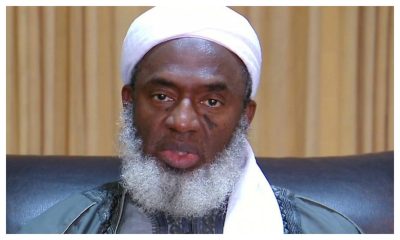
Islamic cleric Sheikh Ahmad Gumi recently defended his past interactions with armed groups, stating he “took the bull by the horns” in 2021 as a necessary step to address Nigeria’s insecurity.
In a post shared on Facebook on Thursday, Gumi said decades of neglect of disadvantaged populations had created deep socio-economic inequalities, leaving many youths vulnerable to manipulation by external forces seeking to destabilise the country.
According to him, the widening gap between the rich and the poor has turned many young people into “ready-made foot soldiers” in cycles of violence that enable the exploitation of Nigeria’s resources.
He also criticised the political class for being largely unresponsive, while noting that the intellectual community is preoccupied with survival struggles.
Reflecting on his past efforts, Gumi said he “took the bull by the horns” in 2021 by attempting to reintegrate violent elements into society rather than allowing them to be further radicalised.
He wrote: “Nigeria for decades has ignored the underprivileged section of its society. There is a significant socio-economic discrepancy, and the society is stratified. This makes our teaming youth ready-made foot soldiers for any foreign interest trying to divide us and rule. To plunder our resources while we are involved in a vicious circle of violence.
”Unfortunately, the political class is unattentive while the intelligentsia is held hostage in the struggle for existence.
“In 2021, I took the bull by the horns in an attempt to bring some of these uncouth elements back to our fold rather than letting them be exploited by the devil.
“I still believe this is the only way out of our predicament. However, it needs the political will and determination to achieve.
“May Allah bring peace back to our nation.”
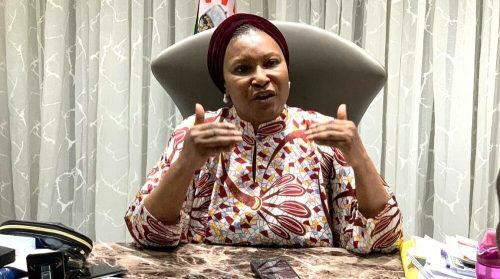
The Federal High Court in Abuja rejected an ex-parte application seeking to bar Senator Ireti Kingibe from participating in the activities of the African Democratic Congress (ADC).
Justice Peter Lifu declined the request from Wuse Ward leaders, ruling that such an order could not be granted without first hearing from the senator.
Instead, the judge ordered the ward leaders said to be loyal to the Minister of the FCT, Nyesom Wike, to put the senator on notice to appear in court to join issues with them on their grievances.
Justice Lifu in a ruling on Thursday held that discretion in such a request for prohibition from party activities and in political matters must be exercised judicially and judiciously.
The judge said justice would be met in the case of the plaintiffs only when the side of the defendant is heard on its merit, along with that of the plaintiffs.
Consequently, the judge ordered that Senator Ireti Kingibe should be served with all court processes by the plaintiffs to enable her become aware of the suit and to prepare her defense.
The judge fixed April 20, 2026, for the plaintiffs and the serving senator to appear before him for hearing of all applications in the matter.
Those who sued the senator in the suit marked FHC/ABJ/ CV/539/2026 are Okezuo Godfrey Anayo and Isaiah Ojonugwa Samuel, on behalf of themselves and ward members as plaintiffs. The senator is the sole defendant.
In their ex-parte application, Kingibe representing the FCT in the Senate was said to have been suspended on March 10, 2026 by her Wuse Ward executives following allegations of anti-party activities and disregard of your cnstitution of the ADC.
In the ex- parte application filed on their behalf by a Senior Advocate of Nigeria, SAN, Kolawole Olowookere, the aggrieved ADC members in Wuse Ward applied for an order of interim injunction restraining Kingibe from parading herself as a member of party, pending the hearing and determination of their motion on notice for interlocutory injunction.
They also asked the judge to restrain the senator from performing any function, attending meetings or performing activities reserved for ADC members or representing the party in any activities.
Besides, the Ward Executive Committee had asked that she be restrained from further interfering with the administration of the ward, ward register and other activities.
The suit was predicated on five grounds among which are that Mrs Kingibe was placed on suspension due to anti-party activities, gross misconduct and confiscation of the ward statutory records.
They argued that the suspension followed due process as enshrined in the ADC constitution and ratified by the two thirds majority of the EXCO members.
They averred that despite the communication of the suspension to Kingibe, she has continued to hold parallel meetings, issue press statements as an ADC member, and using her security details to intimidate the executive committee.
“Her actions constitute flagrant disregard to the internal mechanism of the party,” the plaintiffs stated.
Meanwhile, a lawyer, Abubakar Marshall who claimed to be representing the senator, announced that he had filed a preliminary objection against the suit. He added that it was served on M. S. Garba, who stood for the plaintiffs at Thursday’s proceedings.
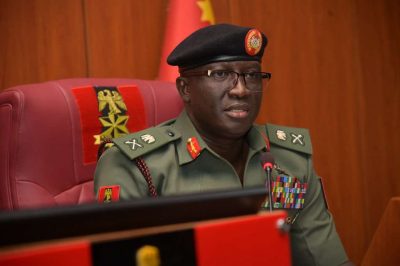
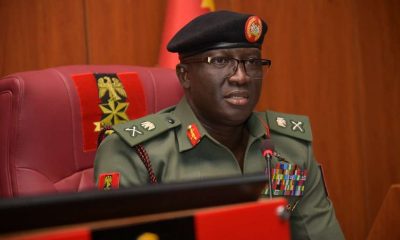
The Chief of Army Staff (COAS), Lieutenant General Waidi Shaibu, visited Jos, Plateau State, on Thursday, April 2, 2026, to lead a high-powered security assessment following recent security breaches.
The visit was aimed at strengthening public confidence and reinforcing ongoing efforts to stabilize affected communities.
Colonel Appolonia Anele, acting Director, Army Public Relations, said in a statement that the visit forms part of ongoing efforts to restore calm and entrench lasting peace across the state.
According to the statement, upon arrival, the COAS was received by the Executive Governor of Plateau State, Caleb Mutfwang, in a clear demonstration of strong civil-military cooperation and a shared commitment to addressing emerging security challenges.
The statement said the COAS received a comprehensive operational briefing from the General Officer Commanding 3 Division and Commander, Joint Task Force Operation ENDURING PEACE, Major General Folusho Oyinlola, who highlighted ongoing operations and proactive measures being implemented in synergy with other security agencies to contain threats, protect lives and property, and stabilise affected communities.
“As part of his engagements, Lieutenant General Shaibu also interacted with community leaders and residents, reassuring them of the unwavering commitment of the Nigerian Army to safeguarding all law-abiding citizens.
He urged residents to remain calm, vigilant and supportive of security agencies by complying with the curfew and cooperating fully with ongoing operations and investigations, while going about their lawful activities.
The chairman of Jos North Local Government Area, Hon. Dachung Bagos, commended the COAS for the timely visit, noting that the presence of the nation’s top military leadership would boost public confidence and reinforce trust in ongoing security efforts.

Gumi Defends Dialogue As Sole Solution To Nigeria’s Insecurity

Court Clears Senator Ireti Kingibe To Remain Active In ADC

COAS Shaibu Hits Jos To Restore Peace, Public Confidence

President Tinubu Appoints New PTDF Executive, Reappoints TCN Head

Simi Welcomes Second Child With Adekunle Gold

United Nigeria Airlines Staff Suspended After Viral Amputee Abuse Video

Pay Your Fare: AIG Cracks Down On Officers Boarding For Free

INEC Removes David Mark, Aregbesola From ADC Leadership Portal

JUST IN: FG Approves Friday 3, Monday 6, as Easter Public Holidays

When 8 million Customers Trust You, Safety Cannot Be an Afterthought
-
 News2 days ago
When 8 million Customers Trust You, Safety Cannot Be an Afterthought
-
 News2 days ago
El-Rufai Back In Detention After Temporary Compassionate Release
-
 News1 day ago
United Nigeria Airlines Staff Suspended After Viral Amputee Abuse Video
-
 News2 days ago
2027: Kwankwaso’s Exit Marks End Of NNPP – Kwankwasiyya Movement
-
 News1 day ago
JUST IN: FG Approves Friday 3, Monday 6, as Easter Public Holidays
-
 News1 day ago
Pay Your Fare: AIG Cracks Down On Officers Boarding For Free
-

 News2 days ago
Lagos CP Withdraws Taskforce From Traffic Duties
-
 News15 hours ago
COAS Shaibu Hits Jos To Restore Peace, Public Confidence