
News
IDPs Reject Borno Govt’s Plan To Reintegrate Over 1000 ‘Repentant’ Boko Haram Fighters


Borno State Government has begged people of the state to accept the ex-Boko Haram fighters as one of them.
The decision by the Borno State Government to reintegrate over 1,000 repentant Boko Haram fighters into society has generated annoyance by some Internally Displaced Persons in the North-East.
The IDPs’ anger is based on the fact that they are still languishing in pain and sorrow caused by the activities of the Boko Haram terrorists in the North-East, particularly in Borno State, the epicentre of the insurgency, CityNews Nigeria gathered.
Since its campaign to create an Islamic caliphate started around 2009, the Boko Haram sect has reportedly killed over 70,000 people and displaced about 2.5 million people, according to estimates by the International Crisis Group.
Of the displaced, at least 250,000 have reportedly left Nigeria and fled into the neighbouring countries of Cameroon, Chad and Niger, though Borno State has started receiving some repatriated refugees from the countries.
Military onslaught on the terrorists has reportedly led to the deaths of many of the insurgents, while some of them have reportedly surrendered to the army.
In the latest development on Tuesday, the Nigerian Army in a statement by its spokesperson, Onyema Nwachukwu, announced that no fewer than 1,000 Boko Haram and Islamic State West Africa Province (a Boko Haram offshoot) members had laid down their arms and surrendered to the troops.
“All surrendered terrorists will be received, processed and passed on to the relevant agencies of government for further assessment in line with extant provisions,” excerpts from the statement read.
In reaction, the Borno State Government has welcomed the over 1,000 repentant insurgents, saying it is ready to accept and reintegrate them into society.
The state Commissioner for Information, Culture and Home Affairs, Mr Babakura Jatau, in an interview with Saturday PUNCH, also urged the host communities to accept the ex-fighters as one of them.
Jatau said the “repentance” of the Boko Haram/ISWAP fighters might be the beginning of the end to the insurgency which the country and particularly the state had battled for over a decade.
He said, “At the end of every war, there is reconciliation. Every single war is not ended by the power of the bullet and bomb. They (insurgents) are part and parcel of us. They have surrendered; they are radicalised and they now realise their mistakes.
“Remember, we have been dealing with this problem for the past 13 years. For the past 13 years, the Federal Government has been battling with this insurgency without any peaceful resolution through firepower.
“They (ex-fighters) voluntarily surrendered their arms. There is nothing to do but to accept them and appeal to members of the public to accept them so that they (ex-terrorists) can reintegrate into society because there are many of them in the bush.”
Jatau argued that if the terrorists in the bush saw that those who surrendered were accepted by the people, they would also surrender.
“For us, it means this is the end to the insurgency,” the commissioner added.
IDPs angry over reintegration, lament Boko Haram-caused trauma
However, a number of IDPs in various camps who spoke to Saturday PUNCH said they had yet to come to terms with the decision to reintegrate ‘repentant’ terrorists into society.
Questioning the sincerity of the Boko Haram fighters’ repentance, the IDPs said they were not ready to accept the decision of the government to reintegrate the ex-terrorists.
An IDP who lives at the Teachers’ Village Camp in Borno State, Modu Abubakar, said he and his seven children narrowly escaped death when the insurgents attacked their village, Gudumbali in Guzamala Local Government Area of Borno State, about seven years ago.
He said he lost all his properties and source of livelihood as a result of the attack.
He said, “I am a farmer and I have been living in this camp for seven years. The government resettled us to our homes at a point but the insurgents kept attacking, killing and kidnapping us. They destroyed our houses and burned down our food bans.
“As I speak, unless a miracle happens, I may not be able to go to the farm again because the place is still not safe. And the government is saying it wants to reintegrate these ‘devils’ into our villages? No way! We cannot accept them in our society.
“What if they had succeeded in killing all of us? Where would they have been reintegrated into? The government should rethink its decision. These Boko Haram insurgents are never repentant. They only come to surrender when the tide is against them.
“Why didn’t they surrender until the military began bombing them? Their repentance is fake and as such we will never let them live among us. If the government wants, it can build houses for them, but we will not let them live with us after causing us so much pain.”
Also, Mustapha Musa, a 53-year-old indigene of Kukawa town in Kukawa Local Government Area of Borno State, said he could not forget the pain Boko Haram had caused him.
Musa, who has been living in an IDP camp for the past five years after fleeing his village, said bluntly that he did not support the Borno State government’s idea.
He said, “I used to have a car which I used for my fishing business. One night, Boko Haram came, destroyed my business and rendered me homeless.
“I have been surviving on government handouts for the past five years as I cannot afford to take care of myself anymore. I lost over N5m in my business because of the atrocities of Boko Haram. How then do you expect me to readily accept people who destroyed my business?”
Speaking with Saturday PUNCH in an IDP camp in Taraba State, a 47-year-old mother of five who fled from Gwoza in Borno State, simply identified as Mama Hajara, said she was confident that it would be impossible to change the repentant terrorists’ ideologies.
Should the reintegration plan go ahead, she advised the army to profile the ex-terrorists and devise strategies to track them down in the event that they displayed certain characteristics contrary to their oath of repentance.
She said, “I don’t believe that those Boko Haram fighters looking for reintegration have genuinely repented. So I will advise the army and other security agencies in the theatre of the war to use their intelligence in dealing with these people.
“How does the government want a woman whose husband was killed by Boko Haram to feel when she sees a so-called repentant Boko Haram? How would a woman whose child or children were killed by the terrorists feel?”
Another IDP, who craved anonymity, said Boko Haram fighters beheaded his father and elder brother in Madagali Local Government Area of Adamawa State in 2015.
He dismissed the notion that the insurgents had repented, saying he would not be fooled by Boko Haram’s strategy of trying to infiltrate into the society.
He said, “I don’t agree with the idea. Boko Haram members, whether repentant or not, don’t deserve mercy.
“He who kills by the sword must die by the sword, so Boko Haram members who confess to killing people should be made to face the law.”
Also, a pastor of the EYN Church from Chibok, Borno State, who fled to Jalingo, Taraba State, urged the government to be careful with the idea of reintegrating the repentant terrorists.
“The government must tread with caution the idea of reintegrating repentant terrorists before some sections of the country begin to compare the treatment given to terrorists and freedom fighters like Sunday Igboho and Nnamdi Kanu,” he said.
Meanwhile, some IDPs said they were happy to hear the news that some Boko Haram terrorists had started surrendering.
Isa Maina, an indigene of Dambo’a in Borno State and is the secretary for IDPs’ association in Gombe State, said he fled Dambo’a with his two wives, one of whom was pregnant, in 2014 when insurgents attacked the village.
“I have suffered but I’m happy to hear that they are surrendering, and I hope this will mark the beginning of the end to the insurgency,” he said.
Another IDP, Sambo Mohammed, 60, from Talala in Borno State, urged the government to compensate the victims of insurgency.
“Our plight today is as a result of the insurgents’ activities. It would be nice for the government to consider compensating us for our losses,” he said.
Meanwhile, this is not the first time the government would be reintegrating surrendered Boko Haram members into society.
In June 2020, the National Identity Management Commission said it had registered about 900 repentant Boko Haram members.
According to the commission, reliable and secured data of repentant and reintegrated members of Boko Haram were provided to the NIMC through the Operation Safe Corridor Advisory Committee.
Also, in July 2020, the Federal Government, through the Defence Headquarters, reintegrated 601 ex-Boko Haram terrorists including 14 foreign nationals from Cameroon, Chad and Niger into society through their respective national and state authorities.
Ex-generals caution govt, urge surveillance
However, some former military generals have cautioned the government on plans to reintegrate former Boko Haram terrorists into society.
The generals said while the surrendering of some Boko Haram terrorists was a positive sign that the military was making progress in its onslaught on terrorists, they said the government must put measures in place to monitor the former insurgents’ activities in society.
In an interview with one of our correspondents, a former General Officer Commanding, 1 Division, Major General Abiodun Role (retd), described the reintegration of former terrorists as a challenging one and said the fact that they repented did not mean they should not be tried for their crimes.
He said, “It’s actually a challenging situation because when you look at the Geneva Conventions on the prisoners of war who voluntary surrender, it requires that since they are surrendering out of their own will, they should be treated humanely.
“But the political and security authorities should not say the terrorists are ‘forgiven’ simply because they are carrying placards that they have surrendered. There are processes and procedures they have to go through to be sure that they have honestly and voluntarily surrendered.
“The authorities must also measure the level of destruction previously perpetrated by each repentant terrorist. You can relate this to the Second World War fugitives who escaped from Germany. Most of them ran to South America, and if you remember the case of Josef Mengele, also known as the Angel of Death, he was eventually caught in Argentina and then repatriated for trial. He eventually committed suicide.
“So it’s not enough for the government to just reintegrate the repentant terrorists. Their level of involvement in the insurgency should be determined. Those who were highly involved should be held responsible. They should be tried and given the appropriate punishment.”
But overall, Role said the surrendering of the Boko Haram fighters was positive because it showed the security agencies were doing well in reclaiming all lost communities “and that the adversaries are now realising they can no longer sustain the war they started.”
In addition, Role said the former terrorists should be surveilled.
“People who have caused serious destructions should not be left alone even after being de-radicalised and reintegrated into society. You have to keep an eye on them. Repentance doesn’t acquit them of having caused trauma to fellow citizens,” he said.
A former military governor of the Old Western State and former Minister of Police Affairs, Major General David Jemibewon (retd), backed the idea of reintegrating the former insurgents into the society but also said the authorities should continue to watch them after being reintegrated.
He said, “If a man who belonged to society went astray and did not live in conformity with societal norms, what I believe is that the society should have a way of correcting such people. We pray to God every day to forgive us our sins. So why should we deny some people who have voluntarily, as the case may be, renounced their bad manners and irregular behaviour?
“Why should we deny them the opportunity of repentance? So for me, based on this principle, I think people who regret their past, have repented and want to be reabsorbed into society and follow societal norms should be admitted.
“But we should continue to watch them because a man can claim he is no longer doing something when he is still doing it, even in a worse manner.”
“If the government is talking about rehabilitation, I would assume the government would set up a committee or committees to come up with government’s expectations for the repentant terrorists and ascertain whether they have truly repented,” Jemibewon added.
Also, a former Chairman of Training and Operations at the Military Headquarters in Abuja, Brig Gen John Sura (retd), on Friday advised the Federal Government to deploy the over 1,000 repentant Boko Haram terrorists in farms.
According to him, they should be used to cultivate agricultural products that they deprived the IDPs and other Nigerians of producing.
He stated this in a statement titled, ‘Treat Boko Haram repentant terrorists as prisoners of war.’
Sura, who described the repentant terrorists as prisoners of war, argued that there should be a modification to the Geneva Conventions which granted them some privileges such as protection against any acts of violence, intimidation, insult and public curiosity among others.
He stressed that they should rather be treated as persons serving prison terms and subjected to conditions below those in the IDP camps.
He said, “In the case of repentant Boko Haram terrorists, they should be treated as persons in prison with hard labour to serve as a deterrent.
“I will, therefore, suggest that the repentant Boko Haram terrorists should be treated lower than the IDPs. They should be used to cultivate agricultural products that they deprived the IDPs and other Nigerians of producing.”
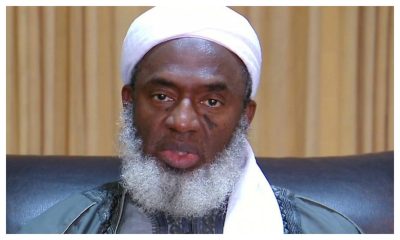
Islamic cleric Sheikh Ahmad Gumi recently defended his past interactions with armed groups, stating he “took the bull by the horns” in 2021 as a necessary step to address Nigeria’s insecurity.
In a post shared on Facebook on Thursday, Gumi said decades of neglect of disadvantaged populations had created deep socio-economic inequalities, leaving many youths vulnerable to manipulation by external forces seeking to destabilise the country.
According to him, the widening gap between the rich and the poor has turned many young people into “ready-made foot soldiers” in cycles of violence that enable the exploitation of Nigeria’s resources.
He also criticised the political class for being largely unresponsive, while noting that the intellectual community is preoccupied with survival struggles.
Reflecting on his past efforts, Gumi said he “took the bull by the horns” in 2021 by attempting to reintegrate violent elements into society rather than allowing them to be further radicalised.
He wrote: “Nigeria for decades has ignored the underprivileged section of its society. There is a significant socio-economic discrepancy, and the society is stratified. This makes our teaming youth ready-made foot soldiers for any foreign interest trying to divide us and rule. To plunder our resources while we are involved in a vicious circle of violence.
”Unfortunately, the political class is unattentive while the intelligentsia is held hostage in the struggle for existence.
“In 2021, I took the bull by the horns in an attempt to bring some of these uncouth elements back to our fold rather than letting them be exploited by the devil.
“I still believe this is the only way out of our predicament. However, it needs the political will and determination to achieve.
“May Allah bring peace back to our nation.”
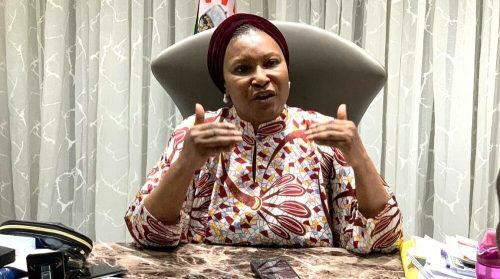
The Federal High Court in Abuja rejected an ex-parte application seeking to bar Senator Ireti Kingibe from participating in the activities of the African Democratic Congress (ADC).
Justice Peter Lifu declined the request from Wuse Ward leaders, ruling that such an order could not be granted without first hearing from the senator.
Instead, the judge ordered the ward leaders said to be loyal to the Minister of the FCT, Nyesom Wike, to put the senator on notice to appear in court to join issues with them on their grievances.
Justice Lifu in a ruling on Thursday held that discretion in such a request for prohibition from party activities and in political matters must be exercised judicially and judiciously.
The judge said justice would be met in the case of the plaintiffs only when the side of the defendant is heard on its merit, along with that of the plaintiffs.
Consequently, the judge ordered that Senator Ireti Kingibe should be served with all court processes by the plaintiffs to enable her become aware of the suit and to prepare her defense.
The judge fixed April 20, 2026, for the plaintiffs and the serving senator to appear before him for hearing of all applications in the matter.
Those who sued the senator in the suit marked FHC/ABJ/ CV/539/2026 are Okezuo Godfrey Anayo and Isaiah Ojonugwa Samuel, on behalf of themselves and ward members as plaintiffs. The senator is the sole defendant.
In their ex-parte application, Kingibe representing the FCT in the Senate was said to have been suspended on March 10, 2026 by her Wuse Ward executives following allegations of anti-party activities and disregard of your cnstitution of the ADC.
In the ex- parte application filed on their behalf by a Senior Advocate of Nigeria, SAN, Kolawole Olowookere, the aggrieved ADC members in Wuse Ward applied for an order of interim injunction restraining Kingibe from parading herself as a member of party, pending the hearing and determination of their motion on notice for interlocutory injunction.
They also asked the judge to restrain the senator from performing any function, attending meetings or performing activities reserved for ADC members or representing the party in any activities.
Besides, the Ward Executive Committee had asked that she be restrained from further interfering with the administration of the ward, ward register and other activities.
The suit was predicated on five grounds among which are that Mrs Kingibe was placed on suspension due to anti-party activities, gross misconduct and confiscation of the ward statutory records.
They argued that the suspension followed due process as enshrined in the ADC constitution and ratified by the two thirds majority of the EXCO members.
They averred that despite the communication of the suspension to Kingibe, she has continued to hold parallel meetings, issue press statements as an ADC member, and using her security details to intimidate the executive committee.
“Her actions constitute flagrant disregard to the internal mechanism of the party,” the plaintiffs stated.
Meanwhile, a lawyer, Abubakar Marshall who claimed to be representing the senator, announced that he had filed a preliminary objection against the suit. He added that it was served on M. S. Garba, who stood for the plaintiffs at Thursday’s proceedings.
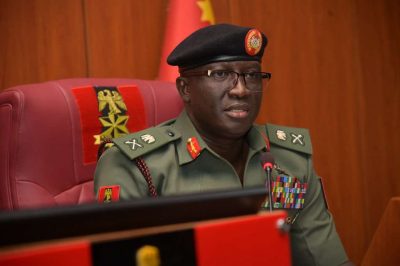
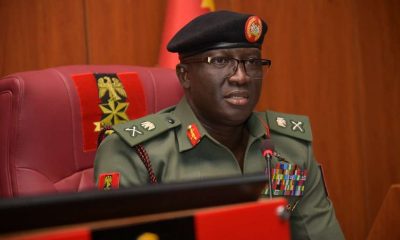
The Chief of Army Staff (COAS), Lieutenant General Waidi Shaibu, visited Jos, Plateau State, on Thursday, April 2, 2026, to lead a high-powered security assessment following recent security breaches.
The visit was aimed at strengthening public confidence and reinforcing ongoing efforts to stabilize affected communities.
Colonel Appolonia Anele, acting Director, Army Public Relations, said in a statement that the visit forms part of ongoing efforts to restore calm and entrench lasting peace across the state.
According to the statement, upon arrival, the COAS was received by the Executive Governor of Plateau State, Caleb Mutfwang, in a clear demonstration of strong civil-military cooperation and a shared commitment to addressing emerging security challenges.
The statement said the COAS received a comprehensive operational briefing from the General Officer Commanding 3 Division and Commander, Joint Task Force Operation ENDURING PEACE, Major General Folusho Oyinlola, who highlighted ongoing operations and proactive measures being implemented in synergy with other security agencies to contain threats, protect lives and property, and stabilise affected communities.
“As part of his engagements, Lieutenant General Shaibu also interacted with community leaders and residents, reassuring them of the unwavering commitment of the Nigerian Army to safeguarding all law-abiding citizens.
He urged residents to remain calm, vigilant and supportive of security agencies by complying with the curfew and cooperating fully with ongoing operations and investigations, while going about their lawful activities.
The chairman of Jos North Local Government Area, Hon. Dachung Bagos, commended the COAS for the timely visit, noting that the presence of the nation’s top military leadership would boost public confidence and reinforce trust in ongoing security efforts.

Gumi Defends Dialogue As Sole Solution To Nigeria’s Insecurity

Court Clears Senator Ireti Kingibe To Remain Active In ADC

COAS Shaibu Hits Jos To Restore Peace, Public Confidence

President Tinubu Appoints New PTDF Executive, Reappoints TCN Head

Simi Welcomes Second Child With Adekunle Gold

United Nigeria Airlines Staff Suspended After Viral Amputee Abuse Video

Pay Your Fare: AIG Cracks Down On Officers Boarding For Free

INEC Removes David Mark, Aregbesola From ADC Leadership Portal

JUST IN: FG Approves Friday 3, Monday 6, as Easter Public Holidays

When 8 million Customers Trust You, Safety Cannot Be an Afterthought
-
 News2 days ago
When 8 million Customers Trust You, Safety Cannot Be an Afterthought
-

 News2 days ago
El-Rufai Back In Detention After Temporary Compassionate Release
-
 News1 day ago
United Nigeria Airlines Staff Suspended After Viral Amputee Abuse Video
-

 News2 days ago
2027: Kwankwaso’s Exit Marks End Of NNPP – Kwankwasiyya Movement
-
 News1 day ago
JUST IN: FG Approves Friday 3, Monday 6, as Easter Public Holidays
-
 News1 day ago
Pay Your Fare: AIG Cracks Down On Officers Boarding For Free
-

 News2 days ago
Lagos CP Withdraws Taskforce From Traffic Duties
-
 News16 hours ago
COAS Shaibu Hits Jos To Restore Peace, Public Confidence