
Health
NCDC, NIMR Release Findings of COVID-19, As 1 in 5 People May Have Contracted Virus


A new report by Nigeria Centre for Disease Control and the Nigerian Institute of Medical Research published earlier this week showed that at least 1 in 5 residents of Lagos, Enugu and Nasarawa states might have been infected with COVID-19.
And for Gombe State, it was 1 in 10 persons.
“Survey findings released today revealed that the prevalence of SARS-CoV-2 antibodies was 23% in Lagos and Enugu States, 19% in Nasarawa State, and 9% in Gombe State,” NCDC and NIMR said in a statement.
“This means that as many as 1 in 5 individuals in Lagos, Enugu and Nasarawa State would have ever been infected with SARS-CoV-2. In Gombe, the proportion is about 1 in 10.”
Lagos State is the epicenter of the virus in Nigeria and has the highest burden of the virus in the country – official statistics show that the state has recorded 55, 122 confirmed cases and 403 deaths from the virus as of February 24.
But the NCDC and NIMR survey suggests that the official record is grossly understated. With state authorities putting the population of the state at least 24.6 million, about 4, 920, 000 million might have contracted the virus.
Statistics by Johns Hopkin University Coronavirus Centre showed that at least 112.5 million people have been infected with 2.49 million deaths recorded worldwide as of 10:30 am (Nigerian time) on Thursday.
JomogNews Nigeria gathered that between September and October 2020, the surveys were designed to improve the estimate of the burden of COVID-19 infection in the country and provide a more detailed estimate of the extent of infection with the severe acute respiratory syndrome coronavirus 2 (SARS-CoV-2) virus – the virus that causes COVID-19.
Blood samples were collected from over 10,000 individuals residing in a representative sample of households in the four states. The blood samples were then tested for the presence of SARS-CoV-2 antibodies applying locally validated laboratory tests.
Individuals who provided blood samples also answered a brief questionnaire that enabled the study team to characterise factors related to positivity and identify which population groups were most affected.
These rates of infection are higher than those reported through the national surveillance system and reveal that the spread of infection in the states surveyed is wider than is obvious from surveillance activities. This is not surprising for COVID-19, given that a majority of those infected do not have any symptoms.
Results of the survey further showed higher rates of infection among: 1) males than females (for example, 10% vs. 7% in Gombe and 21% vs. 17% in Nasarawa); 2) urban compared to rural and residents (for example, 28% vs. 18% in Enugu and 23% vs. 19% in Lagos); and persons aged 18-64 years.
There were also variations across the local government areas (LGA) within the four states. The survey team noted that these observations are in tandem with what had been reported by the NCDC based on the national surveillance system.
In interpreting the results, the survey team noted that “SARS-CoV-2 emerged only one year ago and antibody response according to severity of infection and the duration of antibody persistence are not yet completely understood”.
Given the high proportion of asymptomatic cases in Nigeria, the true seroprevalence of ever having infection may be underestimated in the survey if individuals infected early in the outbreak no longer had sufficient antibodies for detection when the survey was conducted.
The results from the survey show that a significant proportion of people in Nigeria are still at risk of SARS-CoV-2 infection and therefore, COVID-19. It is very important that Nigerians continue to adhere to public health and social measures including regular handwashing, proper use of face masks and physical distancing.
The United States Centers for Disease Control and Prevention (US-CDC), the University College London (supported by Bill and Melinda Gates Foundation), the University of Maryland, Baltimore (UMB), and the respective State Ministries of Health supported implementation of the survey.
The survey is being expanded to more states with a priority to capture information from states in the North-West and South-South geopolitical zones which were not included in the initial round of surveys.
The Federal Ministry of Health, its agencies NCDC and NIMR as well as the PTF-COVID-19 remain committed to strengthening Nigeria’s response to COVID-19 and controlling the outbreak.





The Federal Government is leading a nationwide push to cut excessive salt intake, blaming its high consumption for rising cardiovascular disease in the country.
Mr Victor Osuagwu, Scientific Officer at the Department of Food and Drug Services of the Federal Ministry of Health and Social Welfare, spoke during an outreach programme at Oke Arin Market in Lagos on Wednesday.
The programme, in partnership with the Centre for Communication and Social Impact (CCSI), combined grassroots market activations with social media engagement to address what he described as a silent public health crisis.
“We are trying to create awareness to public on what the Federal Ministry of Health is doing on the initiative that we are taking in trying to reduce salt.
“We are also making people aware of the dangers of excessive salt intake.”
He lamented that many Nigerians did not even read the labels of the things they bought, however, he was optimistic that with education and sensitisation, changing behaviour would be gradual.
“We are trying to do it step by step, until every Nigerian is aware.”
Also, Dr Olawale Ogulana, a medical doctor, health advocate and brand ambassador for CCSI, stressed the need to cut dependence on high-sodium seasoning cubes.
He also linked it to the rising hypertension rates in the country.
He urged households to return to traditional cooking methods and natural spices such as ginger, garlic and onions.
He warned that the growing preference for quick meals was eroding healthier culinary traditions.
“As a medical doctor, I will encourage using natural spices in your meals.
“We are not saying that your meals should not be tasty, but it shouldn’t be with high levels of sodium, because that in itself will put us at risk”.
He noted that excessive salt consumption was putting millions of Nigerians at risk of hypertension, stroke and kidney damage, urging citizens to monitor their daily intake and read food labels carefully.
“Elevated salt consumption is a risk factor for hypertension or high blood pressure,” he said, noting that many people were unaware of the World Health Organisation’s recommendation of no more than five grams of salt a day, about a teaspoon.
Ms Anna White-Agbo, Media and Programme Officer at CCSI, explained that tailored communication and social media outreach were part of the campaign strategies to drive the messages to the grassroots on different health programmes and shift public behaviour on health.
She noted that the campaign had been running for over a year, “driving it majorly on social media’’.
However, she said that there were new communication products from the event to be duplicated on diverse platforms.
“In Lagos, the goal is to record health advice for at least 500 people, with a stretch target of 1,000.
“If God willing, and I have enough time, I don’t mind hitting 1,000 records” she said.

Medical doctors employed by the Lagos State Government have announced a three-day warning strike scheduled to commence at 8:00 a.m. on Monday, July 28, 2025, in protest against what they described as the “unlawful and disrespectful” deduction of their salaries by the state.
Operating under the Medical Guild, the doctors said the strike action follows failed efforts to resolve the dispute through dialogue. The industrial action is expected to conclude by 8:00 a.m. on Thursday, July 31, 2025.
At a press briefing held at the Guild’s secretariat in Lagos, the chairman, Dr Japhet Olugbogi, explained that the impasse began in April 2025 when the state government unilaterally deducted salaries from medical and dental officers without prior consultation.
He noted that although many of their members initially demanded an immediate strike, the Guild’s leadership opted to pursue a more diplomatic route through negotiation and advocacy.
“Following persistent engagement, the deductions were reversed, and a six-member conciliation committee, comprising representatives from both the Guild and the government, was set up,” Olugbogi said. “It was agreed that all parties would maintain the status quo until a resolution was reached.”
However, the Guild accused the Lagos State Treasury Office of violating the agreement by implementing another round of deductions in July, which triggered the decision to embark on the warning strike.
The Guild is demanding:
An immediate reversal of the July salary deductions
Full payment of 12-month revised CONMESS arrears owed to honorary consultants at Lagos State University Teaching Hospital, LASUTH
The union also issued a 21-day ultimatum, warning that failure to meet its demands could lead to an indefinite strike.
Dr Olugbogi expressed deep concern over the growing instability within the state’s health sector, exacerbated by economic hardship and the ongoing exodus of medical professionals from Nigeria.
“It is disheartening that the most senior medical doctor in the Lagos State system earns less than $1,100. Instead of supporting our members, the government is cutting from their already inadequate income. This cannot be allowed to continue,” he said.
He appealed to Governor Babajide Sanwo-Olu to intervene urgently to prevent a collapse of healthcare delivery across the state.
According to the Guild, more than 385 doctors participated in the emergency congress where the strike was ratified unanimously.
The Guild’s Secretary, Dr Adekunle Akinade, confirmed that the union is prepared to escalate its measures if the government does not respond swiftly to their demands.
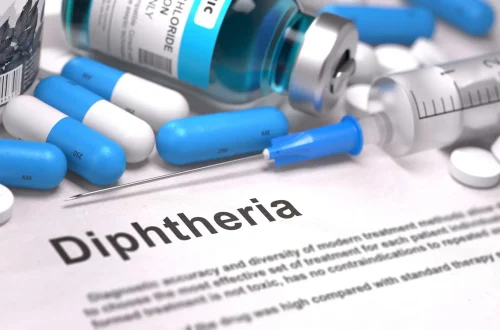
Lagos State Government has activated its Emergency Response Committee following a diphtheria outbreak in the boarding house of King’s College, Lagos, Victoria Island Annex.
The Commissioner for Health, Prof. Akin Abayomi, confirmed the outbreak and assured the public that the situation was under control.
He urged residents to avoid panic as the government intensified measures to contain the infection.
The outbreak was first detected on February 22, when a 12-year-old student presented symptoms and was admitted to the Lagos University Teaching Hospital (LUTH).
Despite receiving treatment, he succumbed to myocarditis, a severe complication of the infection, on March 6.
Health officials identified 34 close contacts, with 14 developing symptoms. Of these, 12 were admitted for treatment and are recovering.
The government has begun strengthening infection prevention measures at the school and plans a targeted vaccination campaign for students and healthcare workers.
Abayomi emphasized the importance of hygiene, early detection, and vaccination to prevent further infections.
The state has 500,000 doses of diphtheria vaccine ready for deployment in high-risk areas.
The Emergency Operations Centre will meet daily to assess and respond to the situation.
Health authorities, including WHO, NCDC, and NPHCDA, are collaborating with the Lagos State Government to curb the outbreak and protect residents.

Gumi Defends Dialogue As Sole Solution To Nigeria’s Insecurity

Court Clears Senator Ireti Kingibe To Remain Active In ADC

COAS Shaibu Hits Jos To Restore Peace, Public Confidence

President Tinubu Appoints New PTDF Executive, Reappoints TCN Head

Simi Welcomes Second Child With Adekunle Gold

United Nigeria Airlines Staff Suspended After Viral Amputee Abuse Video

Pay Your Fare: AIG Cracks Down On Officers Boarding For Free

INEC Removes David Mark, Aregbesola From ADC Leadership Portal

JUST IN: FG Approves Friday 3, Monday 6, as Easter Public Holidays

When 8 million Customers Trust You, Safety Cannot Be an Afterthought
-
 News2 days ago
When 8 million Customers Trust You, Safety Cannot Be an Afterthought
-
 News1 day ago
United Nigeria Airlines Staff Suspended After Viral Amputee Abuse Video
-

 News2 days ago
2027: Kwankwaso’s Exit Marks End Of NNPP – Kwankwasiyya Movement
-
 News1 day ago
Pay Your Fare: AIG Cracks Down On Officers Boarding For Free
-

 News2 days ago
Lagos CP Withdraws Taskforce From Traffic Duties
-
 News1 day ago
JUST IN: FG Approves Friday 3, Monday 6, as Easter Public Holidays
-
 News18 hours ago
COAS Shaibu Hits Jos To Restore Peace, Public Confidence
-
 News1 day ago
INEC Removes David Mark, Aregbesola From ADC Leadership Portal