
News
Lekki Massacre: Doctor Says Six Persons With Gunshot Wounds Treated At Reddington


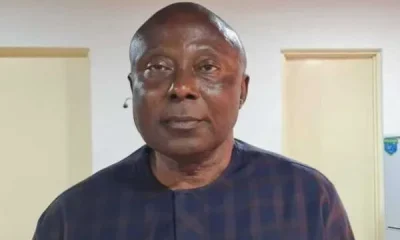
Babajide Lawson, a Consultant Trauma and Orthopaedic surgeon at Reddington Hospital says the hospital was overwhelmed with ”mass casualty” from the Lekki shooting of October 20, 2020.
The doctor confirmed that gunshot victims from Lekki tollgate were brought to the Lekki and Victoria Island branch of the hospital on October 20, 21, and 22.
Lawson, disclosed this while giving his testimony before the Lagos judicial panel on police brutality on Saturday.
Mr. Lawson, while testifying before the judicial panel, said due to the crowd, there is a likelihood that the hospital did not capture the records of all the patients.
Lawson testified he knew patients who were victims of the October 20 incident and were brought to Reddington hospital on the said date and days after. Being in charge of trauma, he testified that he saw a couple of victims.
The Reddington hospital doctor said he can’t remember the exact number of victims brought that night but he saw 6 patients that night and subsequently attended to other patients.
Lawson testified that the victims sustained varying degrees of injuries.
While being cross examined by Olumide Fusika and Adesina Ogunlana, the two lawyers representing victims of the shooting, Lawson said six persons with varying gunshot wounds were treated at the Victoria Island branch of the hospital.
Fusika had asked: ”Go through the medical reports and confirm if it’s from Reddington and whether they are people you know.”
In his response, Lawson said: “Yes, it’s our medical report. I don’t know them personally but I know them as patients that I treated.”
“Being in charge of trauma, it means that anybody that is involved in traumatic injuries such as accident and gunshots must go through me in both of our locations.
“On that 20th, a lot of the patients were treated at the Lekki office. Later on the night of 20th, I also went to the Lekki office to assess the level of assistance needed in my capacity and I also spoke with the MD of that branch. That night, I transferred a patient to the VI office which is our headquarters where I work from and where he stayed till the 23rd”.
“On the first night, there are about six patients that I saw at that night, but as the day goes by, other patients trickled in.”
Fusika asked why a medical report was not issued to one Samuel Oshola, who was also treated at the hospital alongside others who were victims of the Lekki shooting despite presenting evidence of being treated at Reddington.
Lawson responded by saying: “We witnessed what we can call ‘mass casualty’ that overwhelmed our facilities because a lot of people with varying degrees of gunshot wounds were being brought into the hospital for treatment on October 20 and days after it.
if the person is requesting for a report, we would check the treatment files and file a medical report.”
The names of victims whom Lawson confirmed that he treated personally for gunshot wounds as a result of the Lekki shooting are: Ajogwu Japheth, Philemon Lucky, Samuel Oshola, Nnaji Madem, Bright Osariemen, Damilola Adedayo and Joshua Samuel.
Lawson was quick to state that he did not treat Joshua Samuel personally, but that a cardiothoracic surgeon did because a bullet shell logged close to his vital organs. He said he only assessed him and made recommendations.
He also said the victims treated at the Lekki branch of the hospital will be confirmed by one Opakunle, a doctor who was in charge at the time of the incident, when she comes to testify before the panel on February 15,2021.


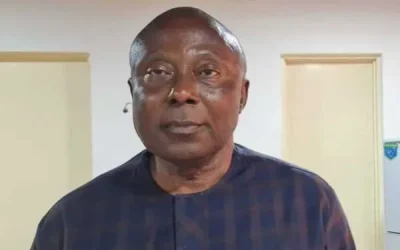
The Federal High Court in Abuja has sentenced Chukwunyere Anamekwe Nwabuoku, the former acting Accountant-General of the Federation (AGF), to 72 years in prison for his involvement in a ₦868.46 million fraud.
Justice James Omotosho convicted Nwabuoku on nine counts of money laundering, sentencing him to eight years per count, to run concurrently.
The sentence, which carries no option of a fine, relates to the diversion of ₦868.46 million from the Ministry of Defence between 2019 and 2021.
The case was filed by the Economic and Financial Crimes Commission (EFCC), which accused the former public officer of illegally moving public funds amounting to ₦868,465,000 through private channels.
The court heard that Nwabuoku, who once served as Director of Finance at the Ministry of Defence, admitted during proceedings that he authorised the transfer of funds from the ministry to four private companies. He told the court the transfers were made for “classified purposes”.
During the trial, it was revealed that the former Accountant-General made the admission in a statement to the Independent Corrupt Practices and Other Related Offences Commission (ICPC) dated February 2, 2025. In that statement, he acknowledged supervising the movement of funds to the companies for undisclosed security-related operations.
The companies linked to the transactions are Temeeo Synergy Concept Limited, Turge Global Investment Limited, Laptev Bridge, and Arafura Transnational Afro Limited. Investigators told the court that these firms were used to channel the funds under suspicious circumstances.
Nwabuoku’s admission in court marked a sharp turnaround from his earlier position. At the beginning of the trial, he had denied any relationship with the companies. He also claimed he only became aware of them during court proceedings.
However, during cross-examination, prosecution counsel, Ekele Iheanacho, SAN, confronted him with his previous statement to the ICPC. Faced with the document, Nwabuoku admitted that he indeed facilitated the transactions.
The prosecution maintained that there was no evidence to justify the claim that the funds were used for legitimate security purposes. It told the court that no official records or approvals were presented to back the payments. The EFCC insisted that the transfers were part of a deliberate scheme to divert public funds.
According to the anti-graft agency, the money was moved through private companies under the cover of security expenditure. Investigators argued that the process lacked transparency and did not follow due government procedure.
In a related issue raised during the trial, Nwabuoku told the court that he acquired his residence legally. But under further questioning, he admitted that a cheque of ₦64 million issued by a company, Mdavi Limited, was used to pay City Gate Homes for the property.
The disclosure raised further questions about the origin of the funds and his financial dealings with private firms. The prosecution argued that the transaction suggested a pattern of questionable financial relationships.
Nwabuoku was initially arraigned on an amended nine-count charge bordering on money laundering. The charges were filed under the provisions of the Money Laundering (Prohibition) Act.
However, with the conviction, the court affirmed the EFCC’s position that the funds were unlawfully diverted and laundered.
News
Fidelity Bank to Proffer Solutions to Public Sector Revenue Challenges at highlevel Stakeholders’ Webinar
Leading financial institution, Fidelity Bank Plc, is set to host a high-level virtual webinar focused on helping public institutions to strengthen revenue systems, improve fiscal transparency, and build smarter digital structures for collections, oversight, and accountability.
Scheduled for Tuesday, March 24, 2026, the session, themed Digital Fiscal Transparency: Unlocking Sub-national Opportunities for International Partners, will bring together a cross-section of public sector leaders, development institutions, heads of parastatals and agencies, as well as financial experts to explore practical solutions for stronger public finance management.
“As public institutions seek ways to improve internally generated revenue and strengthen public trust, there has been a renewed focus on fiscal transparency. This is particularly important in the face of recent macro and micro economic developments with many public sector agencies under pressure to do more with limited resources.
“It is against this background that we have conceptualised this session with a particular focus on how digital platforms can support structured invoicing, seamless collections, payment automation, contractor disbursement transparency, real-time revenue oversight amongst other pertinent areas of revenue mobilization and administration in Nigeria”, commented Richard Madiebo, Divisional Head, Public Sector, Fidelity Bank Plc.
The event is expected to offer timely insights into how modern revenue infrastructure can help institutions improve efficiency, drive accountability, and support better fiscal outcomes.
The webinar will address key issues facing many public institutions today, including revenue leakages, fragmented collection channels, weak visibility into revenue performance, poor reconciliation processes, and the growing need for more transparent and technology-driven systems.
According to Madiebo, “The webinar forms part of our commitment to provide practical solutions that support public sector transformation and stronger sub-national development. This is in line with Fidelity Bank’s mandate to help individuals to grow, businesses to thrive and economies to prosper.”
Interested participants may register at www.fidelitybank.ng/publicsectorwebinar
The National Agency for the Prohibition of Trafficking in Persons (NAPTIP) stated that it did not detect the alleged “rape festival” in Ozoro, Delta State, earlier because it does not currently have an operational command or office in the state.
In response to public criticism regarding its lack of awareness of the “age-long culture,” the agency explained that it “cannot be everywhere at all times” and relies on societal participation to report such incidents.
The agency stressed that combating human trafficking and gender-based violence requires the active participation of all sectors of society.
A Facebook user identified as Chukwunenye Nweke had asked why the agency was not aware of the age-long culture.
“Did the festival start this month that NAPTIP Nigeria did not know about it before now?
“Well, since the evil and criminal act is tagged as tradition, I believe it has passed many generations. What were you doing since then?” Nweke had asked NAPTIP.
Responding to the question from the Facebook user, NAPTIP said, “As you know, we cannot be everywhere at all times. Currently, we do not have a command yet in the Delta State. Fighting this menace needs an approach from all of society.
“If you see something, say something. Going forward, we implore you to use your page and try to spread the information on the ills and dangers of Human Trafficking and Sexual and Gender-based violence.”
The agency had earlier strongly condemned the alleged assaults, describing the acts as violations of human rights and dignity and a form of gender-based violence.
“We commend the Nigeria Police Force in Delta State for their swift response and arrests of suspects, including the organizer and the community head.
“NAPTIP shall continue to support all actions aimed at ensuring justice for the victims as well as preventing the recurrence of such crimes in the future,” it said.
PUNCH Online had reported that the incident occurred on Thursday, March 19, during an annual festival in Ozoro.
Viral videos circulating on social media showed groups of men attacking women in public, forcefully tearing their clothes, and subjecting them to various forms of molestation.
Some accounts further allege that certain victims may have been raped, though these claims have not been officially verified.
According to local sources, the festival reportedly includes an expectation that women remain indoors during the event, with those found outside allegedly becoming targets for harassment.
The disturbing footage has sparked widespread outrage, prompting debates about cultural practices that may perpetuate violence against women.

BREAKING: Ex-AGF Bags 72 Years Over ₦868m Fraud

Fidelity Bank to Proffer Solutions to Public Sector Revenue Challenges at highlevel Stakeholders’ Webinar

Delta ‘Rape Festival’: Why We Didn’t See It Coming – NAPTIP

31 APC Governors Convene In Lagos For Emergency Talks

Bauchi Forests Cleared Of Bandits, Governor Mohammed Declares

U.S. Deploys Troops, Drones To Strengthen Nigeria’s Counterterrorism Efforts

I’ll meet Tinubu For The Sake Of Nigeria – Sule Lamido

Juvenile Prosecution Commences For Suspects In Igbinedion School Assault

Ozoro: Women’s Federation Calls For Justice, Accountability

Tinubu’s Govt Signs Landmark Migration Pact With UK To Fast-Track Deportations
-
 News2 days ago
U.S. Deploys Troops, Drones To Strengthen Nigeria’s Counterterrorism Efforts
-
 News1 day ago
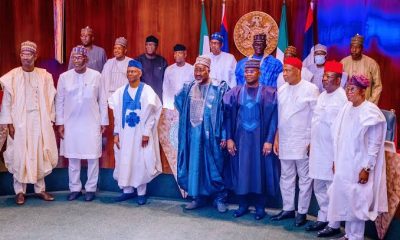
31 APC Governors Convene In Lagos For Emergency Talks
-
 News1 day ago
Delta ‘Rape Festival’: Why We Didn’t See It Coming – NAPTIP
-
 News1 day ago
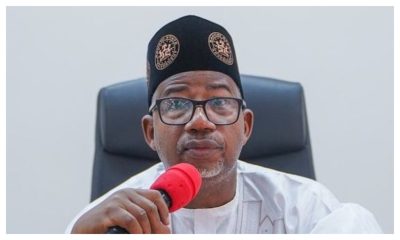
Bauchi Forests Cleared Of Bandits, Governor Mohammed Declares
-
 News17 hours ago
Fidelity Bank to Proffer Solutions to Public Sector Revenue Challenges at highlevel Stakeholders’ Webinar
-
 News3 hours ago
BREAKING: Ex-AGF Bags 72 Years Over ₦868m Fraud