
Business
Access Bank leads crusade against fraud, fraudsters…


Many years ago, most transactions were carried out with both parties meeting physically. Money and goods were exchanged directly and everyone went their way. It was hard to attempt to swindle anyone.
However, we are now in the digital age and the world has evolved. People can now order and pay for goods and services from the comfort of their homes. Both parties – buyer and seller – don’t even have to meet for transactions to be carried out.
Thanks to online banking, paying for goods and services is much easier than ever before. This technological evolution, however, has increased the number of fraudsters lurking in the shadows, eager to hoodwink unsuspecting people and rob them of their monies.
In recent times, the activities of fraudsters have increased and the banking sector is grappling with efforts to tackle this menace headlong.
CBN SPEAKS
Sam Okojere, the Director, Payment System Management at the Central Bank of Nigeria (CBN), about a year ago at the Access Bank Anti-Fraud Week forum in Lagos, said that the apex bank is coming out with clear guidelines for the operation of financial technology (FinTech) companies and payment service banks (PSBs) in order to prevent fraud and make the financial system safer for all.
Okojere said: “A new BVN guideline should be coming out any moment from now. When the exposure draft is released, I will encourage you to make a suggestion regarding your area of concern”.
He hinted of a stakeholders meeting that will hold where key stakeholders in the financial ecosystem would come together to brainstorm on ways to improve the payment system in Nigeria.
“The risk-based supervision framework that will actually take care of Fintechs and PSBs is in the offing, very soon there will be a very clear guideline on that,” Okojere said.
Herbert Wigwe, Group Managing Director/CEO, Access Bank Plc, while welcoming participants said the workshop was the Bank’s avenue of reaching out to members of the community on issues around fraud, risk and cybersecurity through close engagement.
Quoting from a report by Nigeria Inter-Bank Settlement System (NIBSS), Wigwe said in 2018, about 89 per cent of all financial services fraud in Nigeria happened through Digital channels while only 11 per cent were non-electronic.
He further quoted PwC’s Global Economic Crime and Fraud Survey 2020, stating that the total cost of cybercrimes is worth an eye-watering $42 billion. That’s cash taken straight off companies’ bottom line. 13% of those who’d experienced a fraud said they’d lost $50 million-plus.
In Nigeria, he said customers are culturally not attuned to security issues around digital transactions, even well-educated people run the risk of falling victim to social engineering and identity theft traps. “We must go beyond educating customers on the protection of crucial information to actual data protection and integrity amongst operators and stakeholders,” Wigwe said.
“I am a great believer in collaboration to solve problems. Our collaborative efforts in data protection and customer education are required in countering security threats in Digital payments,” he said further.
In April this year, the CBN also issued a fraud alert about the activities of cyber-criminals who are taking advantageof the current coronavirus pandemic to defraud citizens.
CBN’s Director of Corporate Communications, Isaac Okoroafor, said that cyber-criminals are taking advantage of COVID-19 pandemic to defraud citizens, steal sensitive information, or gain unauthorised access to computers or mobile devices using different techniques.
The apex bank admitted that the trend is not peculiar to Nigeria, as there has been a rise in COVID-19 related cyber-criminal activities all over the world. However, it is the priority of the apex bank to ensure that Nigerian bank customers are made aware of the current trend to prevent them from falling victims.
Access Bank Protecting its Customers
Nigeria’s largest retail bank, Access Bank PLC, has been proactive in ensuring that its customers are safe from fraudulent activities as it asked customers to be on the lookout for fraudsters who are using new scam methods to rip people off by preying on the distress that comes with the nation-wide lockdown.
The bank said fraudsters contact their potential victim either via mail, phone call or text to request for sensitive banking details with the promise of crediting their account, after which they proceed to withdraw the money in the victim’s bank account.
It added that they often come under the guise of government officials, social advocates and false NGOs allocated to share the relief fund that was promised by the government. This, unfortunately, is a fraudulent scheme and given the current state of affairs, an easy scam to fall for.
According to the Executive Director of Retail Banking, Access Bank PLC, Victor Etuokwu, “Access Bank is imploring its customers to be wary of any message, demanding their personal or bank details. Customers must remember that the Bank will never ask for their BVN, full card PAN, PIN, mobile app activation code, OTP or password as most of this information is readily available to the Bank via its database. Any call, email and text message, claiming to be from Access Bank and demanding for any of these details is certainly a scam.
“Also, customers are advised to refrain from sharing user-generated codes when migrating from the old mobile applications to the Access More app. With knowledge of this pin, these fraudsters can gain entry to your bank app, and from there have access to the money in your account,” he added.
Because of the peculiar nature of the lockdown situation, people are exposed to all sorts of threats including financial ones that may sometimes come in different and unusual formats. As a result of this, Etuokwu noted that everyone should remain vigilant at all times and report all suspicious activities to the appropriate authorities.
New Game
The Bank, a few weeks ago, also identified that the Nigerian banking industry is currently witnessing increased regulatory scrutiny due to the impact of COVID-19, and customers have not been spared from the whims of fraudsters.
To this end, the Bank urged customers to remain vigilant and beware of the common tricks used by fraudsters to rob them of their monies.
Etuokwu expressed concern about the growing number of fraud cases being reported. He implored customers to take more responsibility in safeguarding their funds and offered reassurance of the bank’s commitment to providing information relevant to identifying and fending off fraudsters.
“Over the last few months, the number of reported fraud cases has spiked considerably. This is not unexpected as the current economic hardships experienced due to COVID-19 have caused many to be vulnerable. However, this trend has become very disturbing, while we urge customers to become more aware of the tactics employed by fraudsters. Access Bank will continue to educate customers on how to avoid falling victims as well as deploy resources to ensure the security of customers’ funds.” Etuokwu said
“The bank has identified smishing, phishing, social engineering, and identity theft as the most common methods used by fraudsters. To aid the fight against this common enemy, we have put more power in the hands of our customers, through the 901911# USSD code. We have provided a platform through which customers can immediately deactivate their USSD profile by dialling 901911# from any phone in the event their mobile devices get lost or stolen,” he continued.
Through the years, Access Bank has remained committed to educating its customers, informing and protecting them from fraudsters. The Bank has created dedicated pages on its official website that constantly educate customers on the schemes and tricks employed by fraudsters.
Responding to queries made by customers saying the fraudsters approached them disguising as the Bank’s staff, Etuokwu added that, “Customers should be on alert as the bank will never ask for personal information such PIN, BVN, 16-digit card number, CVV, Password, OTP or Authentication Code for the mobile banking app. We urge our customers to ignore such calls, text messages or emails”.
Summarily, however talented a fraudster is, their real power is the access that customers give them. It is unknown to many that no fraudster can withdraw money from an individual’s account using only the BVN or account number. Hence, the recent panic by many on social media highlights the need for continuous customer education.
Access Bank has advised that customers should not enter their card details in an unsecured Website, never reply an email or text requesting for their card details, protect their PIN, check their bank statements often, amongst others.
REACTIONS
Financial analysts and security experts believe that banks and security agencies like the anti-fraud department of the Nigerian Police, the Economic and Financial Crime Commission (EFCC) work together to tame fraud monsters.
Stephen Iloba, a Lagos based financial expert, is of the opinion that all hands must be on deck before fraud and fraudulent activities in banks are tamed.
He said, “Banks alone cannot fight this battle. The battle can only be won if all stakeholders like the CBN, the Police and EFCC work together with banks. The FinTech space should also be involved.”
Jimmy Ojalaka, a security expert with over twelve years’ experience, said banks should also ensure that the right personnel are put in charge of their sensitive online departments to ensure that no foreign body has access to it.
“Security against fraud in banks is a holistic battle. Banks should not only ensure that competent people are employed to man their IT department but they should continue to ensure that those employed are dutiful and sincere”.






Business
IWD: Fidelity Bank Signs MoU with Partners, Launch ‘Give Her Power’ Initiative to Empower Nigerian Women

Fidelity Bank Plc has reaffirmed its commitment to advancing women’s economic empowerment with the signing of strategic Memoranda of Understanding (MoU) with partner organisations at the launch of the bank’s “Give Her Power” initiative, a programme designed to equip Nigerian women with practical skills, tools, mentorship, and financial knowledge.
The partnerships, formalised as part of activities commemorating the 2026 International Women’s Day, bring together a diverse network of stakeholders: LUSH Hair, Barbergirl Academy School of Barbering, Dee ‘n’ Ell the Shoe Architect, Inter-Bau Foundation, IVM Innoson, National Credit Guarantee Company (NCGC) and One Universe.
The collaboration is anchored on the Bank’s HerFidelity Apprenticeship Programme, a structured platform created to provide vocational training, business support, and sustainable enterprise opportunities for women across multiple sectors.
Speaking during the event, Managing Director and Chief Executive Officer, Fidelity Bank Plc, Dr. Nneka Onyeali-Ikpe, highlighted that the bank’s ‘HerFidelity’ initiative reflects Fidelity Bank’s continued commitment to creating opportunities that empower women to achieve financial independence and build sustainable businesses.

L-R: Chief Executive Officer, Innoson Kiara Academy, Endi Ezengwa; Commissioner for Women Affairs and Poverty Alleviation, Lagos State, Bolaji Cecilia Dada; Managing Director/Chief Executive Officer, Fidelity Bank Plc, Dr. Nneka Onyeali-Ikpe; and Commissioner for Commerce, Cooperatives, Trade and Investment, Lagos State, Folashade Ambrose-Medebem; during the signing of Memorandum of Understanding (MoU) at the launch of “Give Her Power” initiative as part of the 2026 International Women’s Day (IWD) activities at the Fidelity Bank Head Office in Lagos, recently.
“At Fidelity Bank, we strongly believe that empowering women is not only a social responsibility but also a powerful economic strategy. Through the ‘Give Her Power’ initiative and the HerFidelity Apprenticeship Programme, we are providing women with practical tools, vocational skills and financial knowledge that will enable them to move from effort to earnings and from hustle to sustainable enterprise.”
She explained that the programme will deliver a range of interventions throughout the month of March, including the distribution of 1,000 sewing and grinding machines to support women-led microbusinesses, as well as vocational training in automobile mechanics, interior decoration, barbing, hair making, and shoe making.
Other components of the initiative include professional headshot sessions to strengthen women’s personal and professional brands, mentorship engagements with leading female entrepreneurs, and hands-on skill acquisition training in areas such as makeup artistry, nail care, and traditional headgear tying.
Dr. Onyeali-Ikpe also noted that empowering women economically has ripple effects that extend beyond individual beneficiaries.
“When women are empowered economically, the impact extends far beyond individuals. It strengthens families, grows businesses, and uplifts entire communities. Research suggests that advancing women could add up to $12 trillion to global GDP. This reinforces the need to deliberately create platforms that support women to build sustainable businesses and strengthen their economic independence,” she added.
Applauding the bank’s initiative, the Lagos State Commissioner for Commerce, Cooperatives, Trade and Investment, Mrs. Folashade Ambrose-Medebem, commended Fidelity Bank for its leadership in promoting entrepreneurship and supporting women across the nation.
“This initiative strongly aligns with the Lagos State Government’s commitment to building an inclusive economy where women have access to skills, mentorship and financial opportunities they need to thrive”, Ambrose-Medebem stated.
Her words, “Women remain key drivers of commerce and enterprise across Lagos, from traditional markets to emerging digital sectors. This initiative by Fidelity Bank has ensured that we stayed true to the promoting and supporting women”.
Also speaking at the event, the Lagos State Commissioner for Women Affairs and Poverty Alleviation, Mrs. Bolaji Cecilia Dada, praised Fidelity Bank for championing financial inclusion and economic independence for women.
“Empowering women economically is one of the most effective ways to reduce poverty and strengthen communities. We commend Fidelity Bank for this forward-thinking initiative and for demonstrating how collaboration between the private sector and government can create meaningful opportunities for women across the state,” she said.
Representatives of the partner organisations also expressed appreciation to Fidelity Bank for the collaboration, noting that the partnership will play a significant role in expanding vocational training opportunities and strengthening entrepreneurship among women.
The Give Her Power initiative is expected to empower hundreds of women through skill development, mentorship, and startup support, while reinforcing the role of women as key contributors to Nigeria’s economic growth.
Ranked among the best banks in Nigeria, Fidelity Bank Plc is a full-fledged Commercial Deposit Money Bank serving over 10 million customers through digital banking channels, its 255 business offices in Nigeria and United Kingdom subsidiary, FidBank UK Limited.
The Bank is a recipient of multiple local and international Awards, including the 2024 Excellence in Digital Transformation & MSME Banking Award by BusinessDay Banks and Financial Institutions (BAFI) Awards; the 2024 Most Innovative Mobile Banking Application award for its Fidelity Mobile App by Global Business Outlook, and the 2024 Most Innovative Investment Banking Service Provider award by Global Brands Magazine. Additionally, the Bank was recognized as the Best Bank for SMEs in Nigeria by the Euromoney Awards for Excellence and as the Export Financing Bank of the Year by the BusinessDay Banks and Financial Institutions (BAFI) Awards.
Business
Union Bank’s Union Cares Initiative Celebrates Academic Excellence at Pacelli School for the Visually Impaired Graduation
Union Bank of Nigeria proudly participated in the graduation ceremony of the Pacelli School for the Visually and Partially Sighted on 23 July 2025, honouring the resilience and academic achievements of visually impaired students.
The event, held on the school premises, highlighted the importance of inclusivity and determination in education.
As a 108-year-old institution committed to social responsibility, Union Bank’s involvement reflects its enduring support for Persons With Disabilities (PWD) and its dedication to fostering equitable access to education.
The Bank’s Chief Brand and Marketing Officer, Olufunmilola Aluko, expressed her admiration for the graduating students:
“Union Bank proudly stands as a champion of inclusiveness and equitable representation. Through our UnionCares corporate social responsibility initiative, we are committed to supporting vulnerable and underrepresented communities.
We celebrate the incredible achievements of these students and reaffirm our dedication to empowering them to reach their full potential.”
UnionCares is Union Bank’s CSR Arm focused on creating sustainable social impact in key areas, including:
• Support for Vulnerable Groups: Empowering persons with disabilities and other marginalised communities through inclusive initiatives.
• Education and Skill Development: Facilitating access to education and practical skills that promote self-reliance and opportunity.
• Community Well-Being: Enhancing the overall quality of life of communities through health, education, and social welfare projects.
Union Bank remains honoured to collaborate with institutions dedicated to uplifting less-recognised members of society. The Bank remains dedicated to championing initiatives that inspire positive change, and foster a more inclusive, enlightened community across Nigeria.
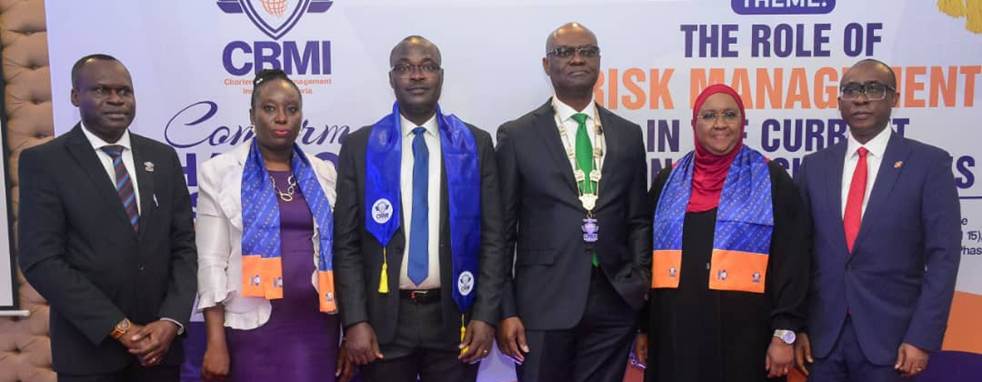
Kevin Ugwuoke, Executive Director and Chief Risk Officer of Fidelity Bank Plc, has formally assumed office as President of the Chartered Risk Management Institute of Nigeria (CRMI).
His leadership promises a reform-focused era anchored on policy advocacy, ethical standards, and digital innovation to deepen risk governance across sectors in the country.
Speaking during the presidential handover ceremony in Lagos over the weekend, Ugwuoke — who also doubles as acting President of the Federation of African Risk Management Associations (FARMA) — described his election as “a call to action.”
He pledged to reposition CRMI as a thought leader and institutional partner in shaping the future of risk management in Nigeria’s national development.
“Our mission is more than just certification; it’s about strengthening the culture of risk governance across sectors. We will collaborate with regulators, raise awareness, and provide practical tools to help organizations embed risk discipline at all levels.”
Ugwuoke outlined a five-pronged strategy to guide his administration: strengthening professional education and certification; deepening policy and regulatory engagement; accelerating digital transformation; integrating ESG and climate risk into corporate strategies; and mentoring the next generation of risk practitioners.
He explained that CRMI will align its initiatives with key policy institutions — including the Nigerian Economic Summit Group, the National Assembly, and sub-national governments — to help embed robust risk frameworks into economic development plans.
“We must integrate risk thinking into how we plan, govern, and invest. We will advocate for more inclusive regulations to empower small and medium enterprises, improve macroeconomic stability, and foster institutional resilience.”
Ugwuoke also announced plans to revise the Institute’s curriculum, introduce specialized certifications to reflect emerging risks, and implement a new National Risk Observatory to provide real-time risk data to both the public and private sectors.
“Digital innovation will be central to how CRMI operates going forward. We are automating our backend, delivering more virtual training, and employing technology to scale our impact across the country and beyond.”
In his remarks, the outgoing President of CRMI, Ezekiel Oseni, challenged the new leadership to consolidate on the achievements made under his tenure — from securing chartered status and strengthening partnerships to gaining greater international recognition — and take the Institute to the next level.
Also speaking on the occasion, Chukwuma Nweke, deputy managing director of United Bank for Africa (UBA), delivering a goodwill message on behalf of Group Managing Director, Oliver Alawuba, described Ugwuoke as a worthy successor. “As Professor Oseni hands over the baton to Kevin Ugwuoke — a well-respected leader in the risk management ecosystem — we are assured CRMI is poised for greater achievements under his watch.”
Nweke stressed that growing economic uncertainties — from inflation and exchange rate volatility to growing debt — underscore the need for a more strategic view of risk. “Risk must be recognized not as a compliance obligation or a cost center but as a key enabler of resiliency and growth. Institutions that embed risk into their strategies will absorb shocks more effectively, unlock value, and inspire investor confidence.”
As part of the day’s ceremonies, 11 distinguished practitioners were conferred with the Fellow of Chartered Risk Manager (FCRMI) award, while 21 new members were formally inducted as Chartered Risk Managers (CRM).
Furthermore, a new Governing Council was inaugurated to oversee the affairs of the Institute for the 2025–2027 term, marking a decisive step forward in institutional renewal and policy direction.

L-R: Registrar/Chief Executive, Chartered Risk Management Institute of Nigeria (CRMI), Victor Olannye; Divisional Head, Risk Management Securities and Exchange Commission (SEC), Grace Abioye; Immediate Past President, CRMI, Ezekiel Oseni; President, CRMI and Executive Director/Chief Risk Officer, Fidelity Bank Plc, Kevin Ugwuoke; Director, Enterprise Risk Management, Nigeria Deposit Insurance Corporation (NDIC), Amal Haruna; and Rep. Keynote speaker, Deputy Group Management Director, United Bank of Africa (UBA), Chukwuma Nweke; at the CRMI Conferment Handover/Sent-Forth ceremony, held in Lagos recently.

U.S. Deploys Troops, Drones To Strengthen Nigeria’s Counterterrorism Efforts

I’ll meet Tinubu For The Sake Of Nigeria – Sule Lamido

Juvenile Prosecution Commences For Suspects In Igbinedion School Assault

Ozoro: Women’s Federation Calls For Justice, Accountability

Tinubu’s Govt Signs Landmark Migration Pact With UK To Fast-Track Deportations

US Govt Seeks Revocation Of Naturalized Status Following $11M Fraud Conviction

Tinubu Secures £746m UK Support To Modernize Nigeria’s Gateway Ports

Nigeria Surpasses Afghanistan, Iraq As World’s 4th Most Terrorised Nation

Fidelity Bank Powers Women’s Growth ith “Give Her Power” Skills And Support Series

2027: Peter Obi Admits Uncertainty Over ADC Presidential Ticket
-
 Education22 hours ago
Juvenile Prosecution Commences For Suspects In Igbinedion School Assault
-
 News20 hours ago
I’ll meet Tinubu For The Sake Of Nigeria – Sule Lamido
-
 News15 hours ago
U.S. Deploys Troops, Drones To Strengthen Nigeria’s Counterterrorism Efforts
-
 News22 hours ago
Ozoro: Women’s Federation Calls For Justice, Accountability