
News
Nigeria @60: Not Yet Uhuru For Our ‘Diamond’ – By Sola Adeyemo


Nigeria @ 60 : Not Yet Uhuru For Our ‘Diamond’ – By Sola Adeyemo.
On October 1st every year, Nigerians gather in celebration of her independence.
It was in 1960 the curtain of freedom was raised in the theater of liberty and the road that leads to democracy and self-determination was laid bare for the people of the new nation.
The early leadership at the helm of governance built on the successes of the 1960 groundbreaking and marshaled the country into a republic in 1963.
The emblematic feat to take Nigeria into a federal republic three years after taking sole responsibility of her people and future was clear evidence of the roadmap the early leaders had designed.
That roadmap from available testaments gave rise to a lot of hope and faith that the largest black nation on earth, a symbol of the black race was positioned for grace and grandeur in no distant time.

But in subsequent years, the administration resorted to low-key events.Starting with the Jonathan administration, rather than the usual public showpiece, the government resolved to hold a strictly military event tagged Presidential Change of Guards at the forecourt of the Presidential Villa. Interestingly, when President Muhammadu Buhari came on board in 2015, he sustained the new culture.
On Thursday, the 1st of October 2020, the change of guards is expected to hold inside the Presidential Villa in the morning while an anniversary dinner will hold later in the day.
Both events are expected to hold within the Presidential Villa. The programmes outlined for this year’s anniversary will continue on Friday with a Jumat service and lecture as well as an interdenominational church service on Sunday.

Regardless of whether the mode of celebration the government intends to adopt, the most pertinent question remains whether Nigeria has fared well in 60 years of her existence as an independent nation.
SECURITY
Nigerians cannot boast of a secured country in the 60 years of being an independent nation.
The national security architecture has been confronted by global security challenges, like terrorism, militancy and kidnapping and it has fallen under the weight.
The country is compounded with a plethora of security challenges. One of the vital problems with the security sector in Nigeria has been funding and lack of personnel.
For example, the United Nations’ ratio is 1 policeman to 400 persons, but in Nigeria, there is less than 300,000 policemen for almost 200 million people and almost half of that number of policemen are attached to VIPs.

And in this day and age when security is technologically-driven, the country, to a large extent, still relies on crude methods to detect and maintain law and order.
And while lack of funding is a major issue, corruption within the national security apparatus has compromised whatever standard is expected to be upheld.
The primary responsibility of the government as enshrined in the constitution is to ensure the protection of the lives and property of the people.
When security becomes a scarce commodity, development whether economic or political becomes a nut to crack.
In tackling the country’s security challenges, it’s necessary for the security chiefs to desist from the politicization of security issues. “Our security chiefs should also stop politicizing the security sector to impress the political leaders.
The war against Book Haram especially has suffered many setbacks in over a decade of efforts to decimate the group.
HEALTH
The health sector has been in a comatose state for a very long time and it has worsened over the years that even the turn of democracy could barely save it especially from brain drain.
The government, to say the least, has not channeled the required effort into personnel welfare and health infrastructure. The a need for more concerted efforts both on the parts of the government and medical practitioners in order to improve the sector’s fortune has always been the unanswered question.
Evidently, the health sector hasn’t fared so well because all veritable indices have not shown any improvement, hence, the need to reposition the health sector by the government.
Nigeria used to attract many visitors seeking health treatment in the early fifties and sixties during the closing stage of colonial rule. However, since self-government took control, the quality of health delivery has snowballed into a terrible state so much so that Nigerian elites now troops into foreign lands on medical tourism.
EDUCATION
The state of the quality of education has been described as sickening in many quarters. And that would be putting it mildly. Most Nigerian graduates who are the products of the failing system are evidence of how horrendous the academic standard has fallen compared to the colonial and post-colonial era.
After the mid-90s, the educational standard of many national institutions began to buckle under the weight of neglect and corruption. Nigeria has one of the highest numbers of out-of-school children and the government failed in fixing the situation.
Strike action by academic staff of Nigerian institutions has marred whatever is left of the Nation’s and many has come to still distorted academic calendar due to industrial action vu both academic and non-academic staff as normal.
ECONOMY
Beating recession and bouncing back, Nigeria’s economy situation is a tale of unending trials plenty errors.Per capital income has reduced compared to decades ago, the naira fallen lower than it has ever been as much as the cost of living and prices of goods and commodities.Recently Nigeria overtook India to become the poverty center of the world, having the highest concentration of poor people living below $2 a day.

In 2020 alone in the midst of a pandemic, the government increased Value Added Tax, placed a tax on cash transaction, increase electricity cost, devalued the naira and hiked the price of Premium Motor Spirit.
These developments have drawn cries from the populace but still fell on deaf ears as the government seems resolute on its plan to sap more levies from the people without providing the corresponding infrastructure to show for the increase in taxation.
THE REPORT CARD
In our sixty odd years as a sovereign nation, our country has been raped and pillaged by selfish politicians. The country has been divided along ethnic and religious lines by callous leaders of thought; the country has been given a bad name by ruthless home-grown terrorists groups and different militia. The millennials (the ‘yahoozees’) also did their own by trying to change us,our narrative and our behavioural patterns.

However, as bad as the journey after nationhood appears to have been for us,there’s one consolation for me as a person – and that’s our various human exports to the world; the ones that have done us proud as a nation. We must a big thank you to the Soyinkas of this world,late Chinua Achebe, Phillip Emegwali, Fela, King Sunny Ade, Bruce Onobrakpeya, Akinwumi Adesina and Chimamanda Ngozi-Adichie just to mention a few.
Also, another source of joy and pride for motherland are the 100% home-grown brands that have made it to the world stage; one cannot but be happy for Nigeria when one remembers how brands like Zenith Bank, GT Bank, and Access Bank are doing in the continent – a big kudos to them.
In conclusion, as Nigeria marks her 60th anniversary, the nation is still held down by underdevelopment and on many grounds better off under the colonial masters than in self-government.
But it’s understandable that nation-building doesn’t come easy and with an ever-changing government coming in with divergent policies, the rate of development is expected to progress on a snail pace.
However, the faith and belief of a better nation must be maintained as we all have nowhere else to call their own except Nigeria.
Viva Nigeria!!!
Sola Adeyemo is a media entrepreneur and public affairs analyst.
Hes’ the President of Lagos Online Media Publishers(LASOMP) and the Coalition of Online Publishers in West Africa(COPUWA).E-mail: solaadeyemo10@gmail.com


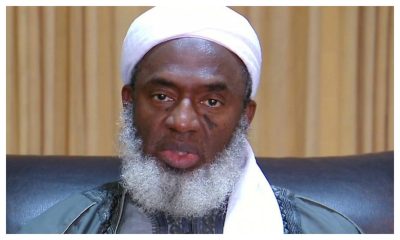
Islamic cleric Sheikh Ahmad Gumi recently defended his past interactions with armed groups, stating he “took the bull by the horns” in 2021 as a necessary step to address Nigeria’s insecurity.
In a post shared on Facebook on Thursday, Gumi said decades of neglect of disadvantaged populations had created deep socio-economic inequalities, leaving many youths vulnerable to manipulation by external forces seeking to destabilise the country.
According to him, the widening gap between the rich and the poor has turned many young people into “ready-made foot soldiers” in cycles of violence that enable the exploitation of Nigeria’s resources.
He also criticised the political class for being largely unresponsive, while noting that the intellectual community is preoccupied with survival struggles.
Reflecting on his past efforts, Gumi said he “took the bull by the horns” in 2021 by attempting to reintegrate violent elements into society rather than allowing them to be further radicalised.
He wrote: “Nigeria for decades has ignored the underprivileged section of its society. There is a significant socio-economic discrepancy, and the society is stratified. This makes our teaming youth ready-made foot soldiers for any foreign interest trying to divide us and rule. To plunder our resources while we are involved in a vicious circle of violence.
”Unfortunately, the political class is unattentive while the intelligentsia is held hostage in the struggle for existence.
“In 2021, I took the bull by the horns in an attempt to bring some of these uncouth elements back to our fold rather than letting them be exploited by the devil.
“I still believe this is the only way out of our predicament. However, it needs the political will and determination to achieve.
“May Allah bring peace back to our nation.”
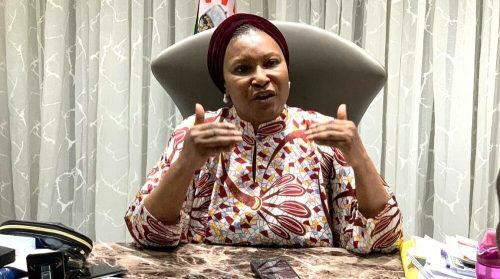
The Federal High Court in Abuja rejected an ex-parte application seeking to bar Senator Ireti Kingibe from participating in the activities of the African Democratic Congress (ADC).
Justice Peter Lifu declined the request from Wuse Ward leaders, ruling that such an order could not be granted without first hearing from the senator.
Instead, the judge ordered the ward leaders said to be loyal to the Minister of the FCT, Nyesom Wike, to put the senator on notice to appear in court to join issues with them on their grievances.
Justice Lifu in a ruling on Thursday held that discretion in such a request for prohibition from party activities and in political matters must be exercised judicially and judiciously.
The judge said justice would be met in the case of the plaintiffs only when the side of the defendant is heard on its merit, along with that of the plaintiffs.
Consequently, the judge ordered that Senator Ireti Kingibe should be served with all court processes by the plaintiffs to enable her become aware of the suit and to prepare her defense.
The judge fixed April 20, 2026, for the plaintiffs and the serving senator to appear before him for hearing of all applications in the matter.
Those who sued the senator in the suit marked FHC/ABJ/ CV/539/2026 are Okezuo Godfrey Anayo and Isaiah Ojonugwa Samuel, on behalf of themselves and ward members as plaintiffs. The senator is the sole defendant.
In their ex-parte application, Kingibe representing the FCT in the Senate was said to have been suspended on March 10, 2026 by her Wuse Ward executives following allegations of anti-party activities and disregard of your cnstitution of the ADC.
In the ex- parte application filed on their behalf by a Senior Advocate of Nigeria, SAN, Kolawole Olowookere, the aggrieved ADC members in Wuse Ward applied for an order of interim injunction restraining Kingibe from parading herself as a member of party, pending the hearing and determination of their motion on notice for interlocutory injunction.
They also asked the judge to restrain the senator from performing any function, attending meetings or performing activities reserved for ADC members or representing the party in any activities.
Besides, the Ward Executive Committee had asked that she be restrained from further interfering with the administration of the ward, ward register and other activities.
The suit was predicated on five grounds among which are that Mrs Kingibe was placed on suspension due to anti-party activities, gross misconduct and confiscation of the ward statutory records.
They argued that the suspension followed due process as enshrined in the ADC constitution and ratified by the two thirds majority of the EXCO members.
They averred that despite the communication of the suspension to Kingibe, she has continued to hold parallel meetings, issue press statements as an ADC member, and using her security details to intimidate the executive committee.
“Her actions constitute flagrant disregard to the internal mechanism of the party,” the plaintiffs stated.
Meanwhile, a lawyer, Abubakar Marshall who claimed to be representing the senator, announced that he had filed a preliminary objection against the suit. He added that it was served on M. S. Garba, who stood for the plaintiffs at Thursday’s proceedings.
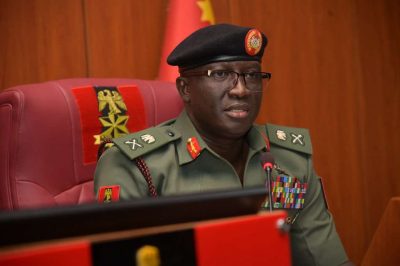
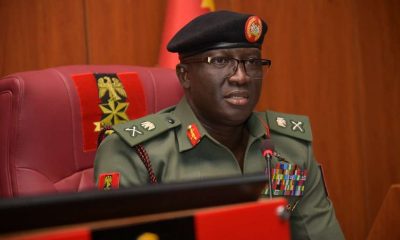
The Chief of Army Staff (COAS), Lieutenant General Waidi Shaibu, visited Jos, Plateau State, on Thursday, April 2, 2026, to lead a high-powered security assessment following recent security breaches.
The visit was aimed at strengthening public confidence and reinforcing ongoing efforts to stabilize affected communities.
Colonel Appolonia Anele, acting Director, Army Public Relations, said in a statement that the visit forms part of ongoing efforts to restore calm and entrench lasting peace across the state.
According to the statement, upon arrival, the COAS was received by the Executive Governor of Plateau State, Caleb Mutfwang, in a clear demonstration of strong civil-military cooperation and a shared commitment to addressing emerging security challenges.
The statement said the COAS received a comprehensive operational briefing from the General Officer Commanding 3 Division and Commander, Joint Task Force Operation ENDURING PEACE, Major General Folusho Oyinlola, who highlighted ongoing operations and proactive measures being implemented in synergy with other security agencies to contain threats, protect lives and property, and stabilise affected communities.
“As part of his engagements, Lieutenant General Shaibu also interacted with community leaders and residents, reassuring them of the unwavering commitment of the Nigerian Army to safeguarding all law-abiding citizens.
He urged residents to remain calm, vigilant and supportive of security agencies by complying with the curfew and cooperating fully with ongoing operations and investigations, while going about their lawful activities.
The chairman of Jos North Local Government Area, Hon. Dachung Bagos, commended the COAS for the timely visit, noting that the presence of the nation’s top military leadership would boost public confidence and reinforce trust in ongoing security efforts.

Gumi Defends Dialogue As Sole Solution To Nigeria’s Insecurity

Court Clears Senator Ireti Kingibe To Remain Active In ADC

COAS Shaibu Hits Jos To Restore Peace, Public Confidence

President Tinubu Appoints New PTDF Executive, Reappoints TCN Head

Simi Welcomes Second Child With Adekunle Gold

United Nigeria Airlines Staff Suspended After Viral Amputee Abuse Video

Pay Your Fare: AIG Cracks Down On Officers Boarding For Free

INEC Removes David Mark, Aregbesola From ADC Leadership Portal

JUST IN: FG Approves Friday 3, Monday 6, as Easter Public Holidays

When 8 million Customers Trust You, Safety Cannot Be an Afterthought
-
 News2 days ago
JUST IN: FG Approves Friday 3, Monday 6, as Easter Public Holidays
-
 News2 days ago
United Nigeria Airlines Staff Suspended After Viral Amputee Abuse Video
-
 News2 days ago
Pay Your Fare: AIG Cracks Down On Officers Boarding For Free
-
 News2 days ago
INEC Removes David Mark, Aregbesola From ADC Leadership Portal
-
 News1 day ago
COAS Shaibu Hits Jos To Restore Peace, Public Confidence
-
 News1 day ago
President Tinubu Appoints New PTDF Executive, Reappoints TCN Head
-
 Entertainment1 day ago
Simi Welcomes Second Child With Adekunle Gold
-
 News24 hours ago
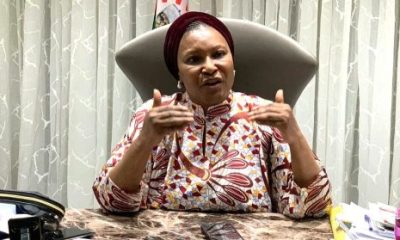
Court Clears Senator Ireti Kingibe To Remain Active In ADC