
News
Nigerian Mum Cries Out For Justice After Son Was Allegedly Assaulted, Wrongly Imprisoned By America Police


A Nigerian mother, Helen Adesuwa Uzamere, has gone on Facebook to demand justice for her son with the hashtag #JusticeForSho.
She’s asking that the officers who allegedly assaulted her son, Shioma, and ”imprisoned him wrongly,” be fired for wrongful imprisonment.
According to Uzamere, her son was walking home when he saw police shoving a group of young people, including a woman. He intervened by offering to help the officers remove the woman without force but the officers turned on him, tased him three times till he became unconscious, then made false claims that he attacked an officer.
Fortunately, a video taken by eyewitnesses showed what really happened.
Sharing the video of the incident, the mum begged Nigerians to sign a petition to ask that the officers who assaulted her son be fired.

Narrating what happened, she wrote: “He was at St. Patrick’s Day event; there was a disturbance around 6:30 PM, which did not involve him or his friends, and police were called for reinforcement. He was walking home with his friends when he saw an officer shoving a group of people, which included a young woman whom he did not know. He yelled out, offering to help the officer remove the woman. She wasn’t being arrested.
“He was immediately tased, his 6ft, 5inch, 230lb frame hit the concrete pavement. As he writhed in pain, he was tased twice more, bleeding from the taser gun. He fell, unconscious, and you could hear people in the video wailing, thinking he was dead. One of the officers lodged a knee on his neck and accused him of resisting arrest as they handcuffed his immobilized body. He did not utter a word or complaint, was fully compliant, did not even demand his phone, which had now fallen. They yanked him up like a rag doll and took him into custody.
“They accused him of jumping on a police officer in a bear hug and charged him with the battery of a law enforcement officer. The officer stated that he would have used his gun but couldn’t reach it! He was also charged with resisting arrest. He faced criminal felony charges for something he DIDN’T do. My son, the upstanding, much loved, no record citizen. He was strip-searched, called him ”Nigeria” as they mocked his name, given a jumpsuit, shackled to other prisoners, and sent to prison! He would eventually walk home, feeling alone, without his support system. It took us months and thousands of dollars to fight the charges. I ran out of money, and people encouraged him to take a plea deal to save costs. We were told that over 99% of cases in Indianapolis involving poor black men end up in plea deals. They simply cannot afford to fight the system.

“My son lived to tell his story, but he, his sister, and I are no longer okay. The trauma is excruciating. Last fall, my daughter had a breakdown. She was so traumatized by the possibility of losing her role model and big brother that she was unable to cope with her studies or sit her finals. She considered withdrawing from her engineering program at Johns Hopkins University. Even though the criminal charges were dropped due to the overwhelming evidence vindicating him, we have not been the same. My son remains in his apartment, using social media as his outlet, his human interaction outside work limited to flag football, the gym, Kroger supermarket, and work-related activities. Some say he should come home, but is that the solution?”
Below is the mum’s full post.
I am not sleeping much these days, I worry about my son. I am a Christian with deep faith but cannot help wondering where he is when hours pass, and I haven’t heard from him. To avoid being a worrywart, I often ask his sister to check his Instagram account. The test is if he has posted something that day.
This was not my story until March 17, 2019. It was 10:50 AM when I settled into my seat in church. It was my mother’s 80th birthday, and I had been running around organizing a surprise event. I looked at my phone, perhaps to make sure it was off, and saw six missed calls from an Indianapolis number. My son lives in Indiana, but it was not his number. Mindful of fellow congregants, I curiously played back one of the message recordings. Heart pounding, I heard the message start with the words “an inmate at the Marion County Jail…” Was this a hoax? I had not heard from Shioma in at least 24 hours. Although this was not unusual, it occurred to me that I hadn’t received the video tribute for his grandma. He is very dependable. I ran out of the church, trying to maintain my dignity as I wobbled in my six-inch heels. It felt as though my body was drained of blood. I was in a panic. Was my son dead? Jail? Collect Call? Indianapolis?
He had been arrested the previous day. He was in custody and was not allowed a phone call until the following morning. His phone had been taken from him, and he had only memorized two numbers – mine and that of his grandmother. Grandma hardly knows when her phone rings, and Mommy was running around, trying to prep for a party. He had called me SIX times! His voice was progressively sadder on each recording. He could not reach anyone; he had never committed his sister’s number to memory.
Shioma’s dad and I split when he was three. Many told me to let his dad raise him as women are “not role models” for male children. I refused and began bagging degrees and certifications to afford him the best schools in affluent white English neighborhoods. His grades were inconsistent and frustrated me, but he had a natural ability in sports. From the age of six, Shioma won medals, often gold, in 100m, 200m, high jump, and long jump. He was a striker and broke school records in soccer. He even played cricket and rugby, but I could not get him to do his homework with the same dedication. When I decided to relocate to the US, I enticed him with the possibility of playing basketball professionally. That did not work out, but he got full tuition to jump for the University of Maryland, Baltimore County. When he announced that he wanted to pursue his Masters in Sports Management, I nearly fell off my chair. I assumed he would be content with his undergrad, but on the contrary, he is motivated by his grandma and me, both with doctoral degrees.
With another opportunity of fully sponsored tuition, he coached younger athletes. He set up a charity to help kids gain athletic scholarships by offering free coaching – a way to pay it forward. He won accolades, and just before completing his program announced that he had an all-expense-paid interview with his target organization, USA Track, and Field, headquartered in Indiana. I didn’t know where Indiana was. I had hoped he would return home to New York – weren’t Maryland and Massachusetts far enough? I couldn’t fathom daily life without my rock within easy reach. I hoped he would not get the job, but of course, he did. So I let him go, shipped his car, went with him, found him an exclusive apartment right in the city, met with his colleagues and workmates, prayed over him, and returned home.
When he told me his version of the events that led him to prison, I did not believe him. After all, I hear these stories all the time on television. I immediately thought there was something he was not telling me. Was this the same son who had never gotten into trouble, not even during his teenage years? Parents, teachers, strangers would write to me about his upstanding character and charm – the social butterfly who turned any room into a bubbling event, the kid with a natural ability to charm everyone – young and old. What changed in the year since he had relocated? It would take video evidence for me to believe my son – a video that was accidentally recorded.
He was at St. Patrick’s Day event; there was a disturbance around 6:30 PM, which did not involve him or his friends, and police were called for reinforcement. He was walking home with his friends when he saw an officer shoving a group of people, which included a young woman whom he did not know. He yelled out, offering to help the officer remove the woman. She wasn’t being arrested. He was immediately tased, his 6ft, 5inch, 230lb frame hit the concrete pavement. As he writhed in pain, he was tased twice more, bleeding from the taser gun. He fell, unconscious, and you could hear people in the video wailing, thinking he was dead. One of the officers lodged a knee on his neck and accused him of resisting arrest as they handcuffed his immobilized body. He did not utter a word or complaint, was fully compliant, did not even demand his phone, which had now fallen. They yanked him up like a rag doll and took him into custody. They accused him of jumping on a police officer in a bear hug and charged him with the battery of a law enforcement officer. The officer stated that he would have used his gun but couldn’t reach it! He was also charged with resisting arrest. He faced criminal felony charges for something he DIDN’T do. My son, the upstanding, much loved, no record citizen. He was strip-searched, called him ”Nigeria” as they mocked his name, given a jumpsuit, shackled to other prisoners, and sent to prison! He would eventually walk home, feeling alone, without his support system. It took us months and thousands of dollars to fight the charges. I ran out of money, and people encouraged him to take a plea deal to save costs. We were told that over 99% of cases in Indianapolis involving poor black men end up in plea deals. They simply cannot afford to fight the system.
My son lived to tell his story, but he, his sister, and I are no longer okay. The trauma is excruciating. Last fall, my daughter had a breakdown. She was so traumatized by the possibility of losing her role model and big brother that she was unable to cope with her studies or sit her finals. She considered withdrawing from her engineering program at Johns Hopkins University. Even though the criminal charges were dropped due to the overwhelming evidence vindicating him, we have not been the same. My son remains in his apartment, using social media as his outlet, his human interaction outside work limited to flag football, the gym, Kroger supermarket, and work-related activities. Some say he should come home, but is that the solution?
Please help us get closure. While we are thankful he did not suffer a worse fate, we feel our experience is important. Help give our story voice and sign the petition to rid the police force of corrupt cops. His ordeal should count for something. We do not need to wait for our sons to die. Shioma does not need to feel guilty for living to tell his story. Attorneys only want cases involving death or severe injury. The criminal justice system is broken. Please help us with the campaign. The goal is 500,000 signatures. Help buy me some more sleep at night.

Islamic cleric Sheikh Ahmad Gumi recently defended his past interactions with armed groups, stating he “took the bull by the horns” in 2021 as a necessary step to address Nigeria’s insecurity.
In a post shared on Facebook on Thursday, Gumi said decades of neglect of disadvantaged populations had created deep socio-economic inequalities, leaving many youths vulnerable to manipulation by external forces seeking to destabilise the country.
According to him, the widening gap between the rich and the poor has turned many young people into “ready-made foot soldiers” in cycles of violence that enable the exploitation of Nigeria’s resources.
He also criticised the political class for being largely unresponsive, while noting that the intellectual community is preoccupied with survival struggles.
Reflecting on his past efforts, Gumi said he “took the bull by the horns” in 2021 by attempting to reintegrate violent elements into society rather than allowing them to be further radicalised.
He wrote: “Nigeria for decades has ignored the underprivileged section of its society. There is a significant socio-economic discrepancy, and the society is stratified. This makes our teaming youth ready-made foot soldiers for any foreign interest trying to divide us and rule. To plunder our resources while we are involved in a vicious circle of violence.
”Unfortunately, the political class is unattentive while the intelligentsia is held hostage in the struggle for existence.
“In 2021, I took the bull by the horns in an attempt to bring some of these uncouth elements back to our fold rather than letting them be exploited by the devil.
“I still believe this is the only way out of our predicament. However, it needs the political will and determination to achieve.
“May Allah bring peace back to our nation.”
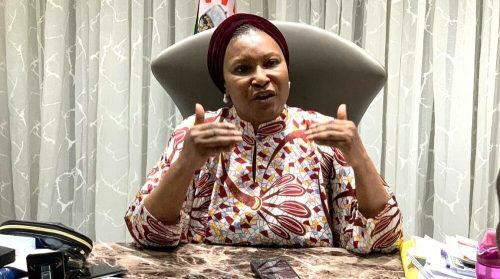
The Federal High Court in Abuja rejected an ex-parte application seeking to bar Senator Ireti Kingibe from participating in the activities of the African Democratic Congress (ADC).
Justice Peter Lifu declined the request from Wuse Ward leaders, ruling that such an order could not be granted without first hearing from the senator.
Instead, the judge ordered the ward leaders said to be loyal to the Minister of the FCT, Nyesom Wike, to put the senator on notice to appear in court to join issues with them on their grievances.
Justice Lifu in a ruling on Thursday held that discretion in such a request for prohibition from party activities and in political matters must be exercised judicially and judiciously.
The judge said justice would be met in the case of the plaintiffs only when the side of the defendant is heard on its merit, along with that of the plaintiffs.
Consequently, the judge ordered that Senator Ireti Kingibe should be served with all court processes by the plaintiffs to enable her become aware of the suit and to prepare her defense.
The judge fixed April 20, 2026, for the plaintiffs and the serving senator to appear before him for hearing of all applications in the matter.
Those who sued the senator in the suit marked FHC/ABJ/ CV/539/2026 are Okezuo Godfrey Anayo and Isaiah Ojonugwa Samuel, on behalf of themselves and ward members as plaintiffs. The senator is the sole defendant.
In their ex-parte application, Kingibe representing the FCT in the Senate was said to have been suspended on March 10, 2026 by her Wuse Ward executives following allegations of anti-party activities and disregard of your cnstitution of the ADC.
In the ex- parte application filed on their behalf by a Senior Advocate of Nigeria, SAN, Kolawole Olowookere, the aggrieved ADC members in Wuse Ward applied for an order of interim injunction restraining Kingibe from parading herself as a member of party, pending the hearing and determination of their motion on notice for interlocutory injunction.
They also asked the judge to restrain the senator from performing any function, attending meetings or performing activities reserved for ADC members or representing the party in any activities.
Besides, the Ward Executive Committee had asked that she be restrained from further interfering with the administration of the ward, ward register and other activities.
The suit was predicated on five grounds among which are that Mrs Kingibe was placed on suspension due to anti-party activities, gross misconduct and confiscation of the ward statutory records.
They argued that the suspension followed due process as enshrined in the ADC constitution and ratified by the two thirds majority of the EXCO members.
They averred that despite the communication of the suspension to Kingibe, she has continued to hold parallel meetings, issue press statements as an ADC member, and using her security details to intimidate the executive committee.
“Her actions constitute flagrant disregard to the internal mechanism of the party,” the plaintiffs stated.
Meanwhile, a lawyer, Abubakar Marshall who claimed to be representing the senator, announced that he had filed a preliminary objection against the suit. He added that it was served on M. S. Garba, who stood for the plaintiffs at Thursday’s proceedings.

The Chief of Army Staff (COAS), Lieutenant General Waidi Shaibu, visited Jos, Plateau State, on Thursday, April 2, 2026, to lead a high-powered security assessment following recent security breaches.
The visit was aimed at strengthening public confidence and reinforcing ongoing efforts to stabilize affected communities.
Colonel Appolonia Anele, acting Director, Army Public Relations, said in a statement that the visit forms part of ongoing efforts to restore calm and entrench lasting peace across the state.
According to the statement, upon arrival, the COAS was received by the Executive Governor of Plateau State, Caleb Mutfwang, in a clear demonstration of strong civil-military cooperation and a shared commitment to addressing emerging security challenges.
The statement said the COAS received a comprehensive operational briefing from the General Officer Commanding 3 Division and Commander, Joint Task Force Operation ENDURING PEACE, Major General Folusho Oyinlola, who highlighted ongoing operations and proactive measures being implemented in synergy with other security agencies to contain threats, protect lives and property, and stabilise affected communities.
“As part of his engagements, Lieutenant General Shaibu also interacted with community leaders and residents, reassuring them of the unwavering commitment of the Nigerian Army to safeguarding all law-abiding citizens.
He urged residents to remain calm, vigilant and supportive of security agencies by complying with the curfew and cooperating fully with ongoing operations and investigations, while going about their lawful activities.
The chairman of Jos North Local Government Area, Hon. Dachung Bagos, commended the COAS for the timely visit, noting that the presence of the nation’s top military leadership would boost public confidence and reinforce trust in ongoing security efforts.

Gumi Defends Dialogue As Sole Solution To Nigeria’s Insecurity

Court Clears Senator Ireti Kingibe To Remain Active In ADC

COAS Shaibu Hits Jos To Restore Peace, Public Confidence

President Tinubu Appoints New PTDF Executive, Reappoints TCN Head

Simi Welcomes Second Child With Adekunle Gold

United Nigeria Airlines Staff Suspended After Viral Amputee Abuse Video

Pay Your Fare: AIG Cracks Down On Officers Boarding For Free

INEC Removes David Mark, Aregbesola From ADC Leadership Portal

JUST IN: FG Approves Friday 3, Monday 6, as Easter Public Holidays

When 8 million Customers Trust You, Safety Cannot Be an Afterthought
-
 News2 days ago
When 8 million Customers Trust You, Safety Cannot Be an Afterthought
-
 News2 days ago
United Nigeria Airlines Staff Suspended After Viral Amputee Abuse Video
-
 News2 days ago
JUST IN: FG Approves Friday 3, Monday 6, as Easter Public Holidays
-
 News2 days ago
Pay Your Fare: AIG Cracks Down On Officers Boarding For Free
-
 News1 day ago
COAS Shaibu Hits Jos To Restore Peace, Public Confidence
-
 News2 days ago
INEC Removes David Mark, Aregbesola From ADC Leadership Portal
-
 News1 day ago
President Tinubu Appoints New PTDF Executive, Reappoints TCN Head
-
 Entertainment1 day ago
Simi Welcomes Second Child With Adekunle Gold