
News
Video: Nigerians Protest At US Embassy Demanding Investigation Over Atiku Abubakar’s Association With Hushpuppi


Some Nigerians, on Monday, protested to the US Embassy, Abuja, demanding a forensic investigation over ex-Vice President, Atiku Abubakar, associate, Timi Frank and some Peoples Democratic Party (PDP) chieftains link to alleged fraudster, Raymond Abbas Igbalode, popularly known as Hushpuppi.
The group, under the aegis of Concerned Citizens Forum (CCF), numbering over 500 persons submitted a letter to the US Ambassador and the Federal Bureau of Investigation, urging a thorough probe of Hushpuppi’s political allies who are all in the PDP.
Recall that the All Progressives Congress (APC) had alleged “criminal conspiracy linking the top echelon of the opposition” to Hushpuppi.
According to the APC, ” the PDP leadership turned Dubai into their ‘Strategic’ meeting place ahead of the 2019 general elections.
In its petition signed by Comrade Adamu Kabir Matazu, the peaceful protesters called on the US, through relevant agencies, to investigate the connection between these high profile Nigerians and Hushpuppi so as to recover fully the proceeds of crime or make it difficult for such monies to be laundered in Nigeria.
The group reasoned that Atiku’s frequent reliance on cyber experts and reference to internet server and frequent trips to Dubai prior to last year’s elections may not be unconnected to Hushpuppi.
It, therefore, urged the US to go after Atiku, Timi Frank and other PDP stalwarts who through their actions and associations with the fraudster may have helped to launder the proceeds of crime.
Read full statement below:
Permit us to congratulate you on your appointment as the United States ambassador to Nigeria by US President, Donald Trump, and for the successful presentation of your credentials to Nigeria’s President, Muhammadu Buhari in December, 2019.
We are a group of eminent Nigerians with keen interest in building a positive image for our country through the promotion of credible best practices and exposure of acts capable of soiling the image of Nigeria.
In the light of the fact that we share common ideals of accountability and good citizenship, we wish to bring to your attention, certain facts that will further build citizens’ capacity for best practices.
Dear Ambassador, we are sure you are aware that within the period you arrived Nigeria and shortly before that, some of our citizens have been arrested for alleged criminal activities like cyber crime, internet fraud and money laundering in many countries in Europe, Asia and America including your country, the United States.
The biggest and most recent of such, is the arrest of Mr. Raymond Abbas Igbalode, the Instagram celebrity, also known as Hushpuppi and 12 others who are alleged to have scammed over 1.9 million people across the globe of over $35 million.
We commend the international community for the vigilance which has led to the arrest of these persons whose activities have deprived many of their legitimate sources of livelihood and brought shame to Nigeria.
Dear Ambassador, following the extradition of Hushpuppi and his associates to the US to undergo trial for alleged cyber fraud, we wish to offer our suggestions on how the investigations would be thorough to achieve the goal of exposing all those suspected to have either aided the fraud or those who have through their actions and associations with the fraudsters, helped to launder the proceeds of crime
This, we believe would ensure that all those involved in the crime are brought to book so as to serve as a deterrent to others.
You will agree with us, dear Ambassador, that all the global instruments on financial crime including FATF, clearly identity several ways in which proceeds from financial crimes can be whitewashed and presented as legit.
Some of these processes include association with politically exposed persons, channeling the resources through existing organisations and partnering with already established businesses.
We wish to inform you that since 2016 when Mr. Igbalode pulled his first heist and leaped into living a luxurious life of opulence, his major channel for laundering the proceeds of his crime have been through open association with notable Nigerian politicians as well as former and serving public officials.
Such meetings are usually presented to the public through videos and other photos of the event which are usually held in posh hotels or other expensive venues around the world on Instagram and other online media.
The aim of such videos and photos, Dear Ambassador, as you are aware, is to further scam the public by presenting such fraudsters and their ill gotten wealth as clean business men with legit income that anybody can do business with.
The photo and video shoots from such events serve as open endorsements of such characters, making it easy for the proceeds of these cyber fraud to be brought into Nigeria and to be accepted by unsuspecting members of the public as normal which further makes it difficult for investigating agencies to track.
We wish to report you, dear Ambassador, that some of the persons who have lent their high profile personalities to cover up for such shady transactions include a former vice president of Nigeria, Alhaji Atiku Abubakar, a former senator, Dino Melaye, and a top member of the opposition Peoples Democratic Party, PDP, Mr. Timi Frank and others.
Videos clips of their association with Mr.Igbalode have been posted and reposted on major internet outlets like Facebook, Internet and YouTube for all to see.
We have every reason to suspect that their open association with Mr. Igbalode (Hushpuppi), was not a coincidence as they are trying to make people believe, but was well planned to sell the fraudster to Nigerians as a legitimate businessman who associates with respected and eminent members of the society.
It is in the light of this, dear Ambassador, that we urge you, to use your good office as the representative of the United States Government in Nigeria, to call the attention of the US government of the possibility that the major accomplices of Mr. Igbalode are still roaming about freely in Nigeria.
We call on the US Government to in the bid to help fight cyber crime, money laundering and possible terrorists financing, to draw the attention of the Director of the Federal Bureau of Investigation, FBI, Mr. Christopher A. Wray and the Secretary General of Interpol, Mr. Jürgen Stock to these facts.
We are aware that both the
FBI and Interpol have range of legal authorities that enables them investigate federal crimes and threats to national security, as well as to gather intelligence and assist other law enforcement agencies in countries outside the US.
Hushpuppi is known to have defrauded millions of people across the world and is wanted for fraud crimes in Europe, the United States and Nigeria.
We are aware that Title 28, U.S. Code, Section 533, authorizes the Attorney General of the US, to appoint officials to detect and prosecute crimes against the United States.
The investigation we are asking these agencies to carry out are clearly crimes against the United States as well as other countries and we are aware that the FBI, unlike many domestic intelligence agencies around the world, can investigate crime in other countries, more so as the investigative jurisdiction of the FBI extends to most federal criminal laws in more than 200 areas, including computer crime (cybercrime), embezzlement, money laundering, organized crime (including extortion and racketeering), piracy and hijacking, sabotage, sedition, terrorism (including ecoterrorism).
We are also aware that these agencies have helped in tracking down crimes in other countries.
We also know that the FBI has in the past worked with The Economic and Financial Crimes Commission in Nigeria, to identify and prosecute local partners of international fraudsters and had arrested 281 individuals, including 167 in Nigeria, for their involvement in fraudulent business email compromise (BEC) schemes.
Dear Ambassador you may wish to know that the EFCC in Nigeria, has said that details of Mr. Igbalode’s money laundering transactions involves many high-profile cyber criminals facing trial in Nigeria.
We are happy that EFCC is also eager to engage with the EFCC in tracking victims of Mr. Igbalode’s fraudulent transactions and other fraudsters having direct involvement with him.
We are interested in having these persons investigated because we believe they may have aided in laundering the proceeds of crime by Mr.Igbalode either directly or indirectly, which if established, makes them accomplices in the crime.
Our suspicion is heightened by the frequent visits of these persons to Dubai in the United Arab Emirate, UAE, where Mr. Igbalode was arrested, at the slightest instance, one of which was the celebrated meeting of the associates of the former vice president shortly before the 2019 Nigeria general elections.
Again, we have every reason to suspect that the frequent reliance on cyber experts and reference to internet server by the former vice president and his associates, may not be unconnected with their relationship with these cyber criminals.
We therefore call on the US Government to assist through the relevant agencies to investigate the connection between these high profile Nigerians and the internet fraudster so as to recover fully the proceeds of crime or make it difficult for such monies to be laundered in Nigeria.

Nigeria’s digital banking revolution is raising the stakes for consumer trust.
The question is whether the industry is rising to meet them.
Nigeria’s relationship with digital banking has changed almost beyond recognition in a decade. Where cash once dominated every transaction, from the roadside market to the corporate boardroom, mobile apps, instant transfers and USSD codes have reshaped how tens of millions of Nigerians interact with their money every single day. The figures speak for themselves: point-of-sale transactions surged to a record N18 trillion in 2024, a 69 per cent increase from the year before, and the number of POS terminals in operation more than doubled to 5.5 million. Mobile banking is now the most widely used digital financial service in the country, with four in five users having accessed it within any given 90-day window.
This is, by any honest measure, an extraordinary story of financial inclusion and technological adoption. But it is an incomplete story if told without its other half.
Behind the growth curves and transaction volumes, a quieter and more troubling story has been unfolding. According to the 2024 Nigeria Consumer Protection Survey published by Innovations for Poverty Action, nearly one in four digital financial services users reported experiencing unexpected fees, charges or fraud attempts in the past year. Of those who encountered a problem, only half sought any form of formal redress. That silence is not apathy. It is the sound of eroded confidence: customers who have concluded that raising a complaint is unlikely to produce results.
The fraud data from the Nigeria Inter-Bank Settlement System tells the same story from a different angle. Actual losses to digital payment fraud rose to N52.26 billion in 2024, a figure inflated significantly by a single N31.1 billion incident involving one institution but still representing a 196 per cent increase in fraud losses over five years, even as the number of individual cases declined.
The decline in case counts is not reassurance enough. It suggests that while fraudsters are making fewer attempts, they are making each one count considerably more.
By channel, e-commerce and internet banking remain the most exposed, followed by point-of-sale, mobile and web platforms. The most common technique is social engineering, which requires no sophisticated technology at all. It requires only a convincing conversation and a customer who does not know what to guard against. Insider abuse, where bank staff are complicit in fraud, is identified by NIBSS as the single greatest structural threat to the sector.
That is a sobering finding, and one that no institution should read past quickly.
What this data collectively points to is a gap that the industry must confront honestly. Nigeria’s digital banking infrastructure has expanded at speed.
The consumer protection architecture that should travel alongside it has not always kept pace. Convenience and safety are not natural enemies, but they require deliberate and sustained design to coexist. Left to grow at different speeds, they create precisely the conditions that fraudsters, rogue actors and complacent institutions exploit.
The encouraging news is that the gap is closing. Nigeria exited the Financial Action Task Force’s grey list in 2025, a signal that the country’s financial system has materially strengthened its safeguards. The CBN’s 2024 rollout of risk-based cybersecurity frameworks for deposit money banks formalised the standard of care that institutions are required to demonstrate. Regulatory enforcement actions in 2024, including reported industry penalties totalling over N15 billion, have underscored that consumer protection is a compliance obligation with real and immediate consequence. The industry is being held to a higher standard, and that is the right direction.
Within institutions themselves, the most effective safeguards are often the ones customers never see. The strongest security infrastructure operates silently in the background: monitoring account behaviour in real time, identifying anomalies before they become losses and intervening before a suspicious transaction completes rather than after.
This is not glamorous work, but it is the work that matters most. A customer who never has to report a fraud incident has been protected more effectively than one who was offered a sympathetic apology after the damage was done.
Union Bank’s experience illustrates what this balance looks like in practice. Across its digital channels, including UnionMobile, the USSD platform (*826#) and the Union360 business banking suite, the bank’s full-year 2025 customer experience data reflects consistently strong satisfaction and loyalty scores.
These are not outcomes that emerge from convenience alone. They reflect what customers value above all else when they transact digitally: the confidence that the experience will be safe, seamless and complete. That quality of outcome does not happen by accident.
It is the product of sustained investment in backend security infrastructure that operates largely out of sight, proactive monitoring systems that identify and intercept anomalies before they become losses, and an institutional culture that treats customer protection as a core organisational value rather than a compliance line item. It is a culture Union Bank articulates through its ICARE values, where the commitment to being customer and community-focused is not a policy position but a founding principle, reinforced consistently from the moment any member of staff joins the bank.
In March, as institutions across Nigeria marked World Consumer Rights Day, Union Bank reaffirmed to its staff the responsibility that every individual within the organisation carries to uphold the rights and dignity of the customers it serves. It is the kind of internal commitment that rarely makes headlines, but it ultimately determines the quality of every customer interaction that does.
Trust is the only currency in banking that cannot be manufactured on demand. It is built over time, through consistent behaviour, through systems that protect customers before they know they need protecting, and through institutions willing to be accountable when they fall short. Nigeria’s digital banking revolution has done extraordinary things for financial access and economic participation. Its next chapter must be defined by what it does for financial safety. The two are not in competition. In the long run, they are, in every meaningful sense, the same thing.
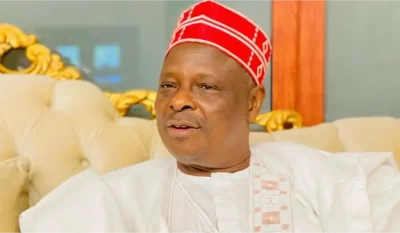
The Kwankwasiyya Movement has declared that the New Nigeria Peoples Party (NNPP) is effectively dead following the resignation of its national leader, Senator Rabiu Musa Kwankwaso, on March 29, 2026.
Spokesman for the Movement, Habibu Mohammed, made this statement on Tuesday during an interview on Arise Television.
Mohammad, stated that the NNPP was synonymous with Kwankwaso, and his departure leaves the party without a platform in Kano and across Nigeria ahead of the 2027 general elections.
He was reacting to the recent defection of Kwankwaso from the NNPP into the African Democratic Congress, ADC.
“Everybody knows that the NNPP is synonymous with Kwankwaso and him leaving the NNPP automatically means that the NNPP is actually dead in Kano, and maybe beyond Kano, which might be seen to be dead across the nation.
“Just like what Kwankwaso meant for the NNPP in Kano, he will now be seen to be the ADC in Kano State, and it will be an interesting scenario.
“So many people believe in Kwankwaso and his principles. There will be a lot of influx into the ADC.
“And I believe from the recent happening, it is going to be a very interesting scenario in Kano, because there are several others that are actually going to come along, and this is the result of the fact that so many people believe that Kwankwaso is a man with principle, and he’s the man that doesn’t actually meander. He goes straight to the point.
“He’s somebody who is ready to actually say it as it is, and for both parties to understand.
“So there are so many politicians that knew very well that they can align with him, even if they have different opinions, but the fact that he can lead, he can provide direction, he can protect his own and he will be able to actually turn things around, so many other people are coming,” Mohammed said.
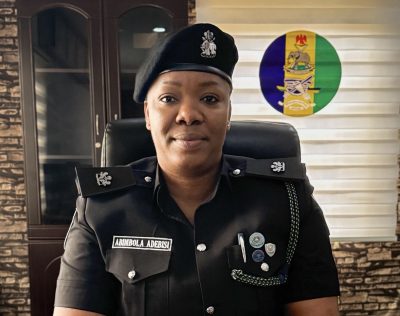
The Lagos State Commissioner of Police (CP), Tijani Fatai, has ordered the immediate and complete withdrawal of the Lagos State Environmental Sanitation and Special Offences Unit (Taskforce) from all traffic control and enforcement duties across the state.
The state Police Public Relations Officer, Abimbola Adebisi, who disclosed this in a statement on Tuesday, stated that the directive was part of efforts to streamline traffic management operations and ensure professionalism and accountability.
Adebisi noted that the withdrawal only affects traffic-related responsibilities, adding that all other duties and operational mandates of the task force remain in force.
The statement read, “The Lagos State Police Command wishes to inform the general public that the Commissioner of Police, CP Tijani Fatai, psc, mnips, has directed the immediate and complete withdrawal of the Lagos State Environmental Sanitation and Special Offences Unit (Taskforce) from traffic control and traffic contravention enforcement across the state.
“This directive is part of ongoing efforts to streamline traffic management operations and ensure professionalism, accountability, and clarity in the discharge of duties. It is important to note that while the unit has been withdrawn from traffic-related responsibilities, all other assigned duties and operational mandates of the unit remain fully in force.”
The police also clarified that the Lagos State Environmental Sanitation and Special Offences Unit is not the only task force operating in the state.
Residents and motorists were therefore advised to verify the identity of personnel and agencies before making allegations, particularly on issues relating to traffic enforcement.
The command reiterated its commitment to safeguarding lives and property while ensuring that all operations in the state are carried out in line with the law.
It also urged members of the public to remain law-abiding and cooperate with legitimate security agencies.
The directive comes amid recent backlash against the task force operatives following allegations of extortion.
The controversy followed a viral video posted by ObjectvMedia, in which officials of the task force were accused of unlawful arrest and extorting money from motorists.
According to the video, a taskforce operative allegedly seized control of a driver’s vehicle, repositioned it on a one-way street to create false evidence of a traffic offence, and subsequently demanded payment.
The driver, in the footage seen by PUNCH Online, denied driving on the one-way route where the vehicle was captured.
A male voice in the video further alleged that the man was detained and later sent to prison despite contacting the task force chairman, Adetayo Akerele, who had reportedly promised to intervene.
The police authorities had since commenced an investigation into the incident.

When 8 million Customers Trust You, Safety Cannot Be an Afterthought

2027: Kwankwaso’s Exit Marks End Of NNPP – Kwankwasiyya Movement

Lagos CP Withdraws Taskforce From Traffic Duties

El-Rufai Back In Detention After Temporary Compassionate Release

Plateau Crisis: Tinubu Summons Gov Mutfwang, Orders Security Crackdown

Tinubu’s $6bn External Borrowing Request Gets Senate Nod
When 8 million Customers Trust You, Safety Cannot Be an Afterthought

COURT UPDATE: Nasir El-Rufai Resumes Trial After Mother’s Passing

South African Locals Clash With Nigerians Over Disputed Igbo King Coronation

LIRS EXTENDS DEADLINE FOR FILING OF INDIVIDUAL ANNUAL INCOME TAX RETURNS TO APRIL 14, 2026
-
 News1 day ago
LIRS EXTENDS DEADLINE FOR FILING OF INDIVIDUAL ANNUAL INCOME TAX RETURNS TO APRIL 14, 2026
-
 News1 day ago
COURT UPDATE: Nasir El-Rufai Resumes Trial After Mother’s Passing
-
 News22 hours ago
Tinubu’s $6bn External Borrowing Request Gets Senate Nod
-
 News1 day ago
South African Locals Clash With Nigerians Over Disputed Igbo King Coronation
-
 News1 day ago
When 8 million Customers Trust You, Safety Cannot Be an Afterthought
-
 News18 hours ago
Plateau Crisis: Tinubu Summons Gov Mutfwang, Orders Security Crackdown
-
 News8 hours ago
Lagos CP Withdraws Taskforce From Traffic Duties
-
 News7 hours ago
2027: Kwankwaso’s Exit Marks End Of NNPP – Kwankwasiyya Movement