
News
Report card of Buhari Administration’s Fifth Anniversary (May 2020)


BUHARI ADMINISTRATION FIFTH ANNIVERSARY FACTSHEET (MAY 2020) — DIPLOMACY
ANTI-CORRUPTION & TRANSPARENCY
FISCAL REFORMS; PLUGGING LEAKAGES
New Whistleblowing Policy:
.The new Whistleblowing Policy introduced by the Federal Ministry of Finance in December 2016 has since then yielded several billions of Naira in recoveries from tax evaders and public officials. (In the first two years alone it yielded N7.8 billion, US$378million, and £27,800 in recoveries from public officials targeted by whistleblowers).
.Development of draft Whistleblowing and Witness Protection Bill 2019
· EFCC recovered 794 billion Naira between 2015 and 2019, in addition to hundreds of properties and other assets.
.ICPC scrutiny of practices, systems and procedures of MDAs’ personnel cost from 2017 to 2019, yielded more than 41 billion Naira in recoveries from inflated personnel budgets
.In 2019 alone, ICPC recovered 32 billion Naira worth of Land, Buildings and Vehicles
.ICPC’s audit of Constituency Projects covering 2015 to 2018 helped recover 2 billion Naira of diverted funds and assets.
Increased Oversight of MDAs
.The Buhari Administration is addressing the issue of poor levels of remittance of operating surpluses by MDAs. From remitting only N51 million between 2010 and 2016, JAMB has gone on to remit more than 20 billion Naira to the Federal Government since 2017.
The Presidential Initiative on Continuous Audit (PICA):
· PICA was set up by the Buhari Administration to strengthen controls over Government finances through a continuous internal audit process across all Ministries, Departments and Agencies (MDAs), particularly in respect of payroll. Through the activities of PICA, more than 54,000 fraudulent payroll entries have been identified and removed, with payroll savings of N200 billion per annum
Expansion of TSA Coverage
On August 7, 2015, President Buhari issued a directive to all Ministries, Departments and Agencies (MDAs) to close their accounts with Deposit Money Banks (DMBs) and transfer their balances to the Central Bank of Nigeria on or before 15th September 2015.
· The TSA system was launched in 2012, but failed to gain traction until President Buhari’s executive order in August 2015. As of May 2018, the TSA system has been implemented in 92 percent of all MDAs.
.The TSA allows managers of Government’s finances, including but not limited to the Ministry of Finance and the Office of the Accountant-General of the Federation, to have, at any point in time, a comprehensive overview of cash flows across the entire Government
· This decision to fully operationalize the Treasury Single Account (TSA) system — a public accounting system that enables the Government to manage its finances (revenues and payments) using a single/unified account, or series of linked accounts domiciled at the Central Bank of Nigeria — has resulted in the consolidation of more than 17,000 bank accounts previously spread across DMBs in the country, and in savings of an average of N4 billion monthly in banking charges.
The TSA has brought the following benefits:
o Improves transparency and accountability in the management of all FGN receipts by providing a consolidated view of Government’s cash flow.
o Blocks the leakages and abuses which hitherto characterized Public Finance Management in Nigeria.
o Ensures availability of funds for the execution of government policies, programmes and projects
o Controls aggregate cash flows within fiscal and monetary limits
o Improves management of domestic borrowing programme
o Enables investments of idle funds
.The Ministry of Finance continues to fine-tune the system to improve its efficiency, and has also commenced an audit to ensure that all funds due to the TSA are remitted into it.
Expansion of IPPIS Coverage
In spite of great opposition, the Buhari Administration has expanded IPPIS coverage to the Armed Forces, as well as Federal Universities and other academic institutions
Deployment of BVN for Payroll and Social Investment Programmes:
.Considering that personnel costs are the Federal Government’s largest expenditure line, the Federal Government has given priority to the deployment of the BVN for payroll and pension audits. The use of BVN to verify payroll entries on the Integrated Personnel Payroll Information System (IPPIS) platform has so far led to the detection of 54,000 fraudulent payroll entries.
· The Federal Government has also ensured the deployment of BVN system to serve as the verification basis for payments to beneficiaries and vendors in the Anchor Borrowers Programme (ABP), the N-Power Scheme and the Homegrown School Feeding Programme (HGSFP)
Creation of Asset Tracking and Management Project
· The Federal Ministry of Finance launched the Asset Tracking and Management Project (ATM Project) in 2016. By the ATM Project, the Federal Government is, for the first time, able to locate, identify, assess and evaluate all its moveable and immoveable assets on a real time basis.
· Also, a Central Asset Register was created and domiciled in the Ministry for recording the actual quantity, value, condition and location of all the capital assets belonging to the Federal Government. These initiatives are in line with the requirements of the International Public-Sector Reporting Standard (IPSAS), which has been implemented by the Ministry of Finance.
Replacement of old Cash-Based Accounting System with an Accruals-Based System
· Accruals-based accounting, in addition to providing greater transparency in public financial management, provides comprehensive information on Government’s current and projected cash flows, leading to better cash management. For example, the conversion from cash accounting to accrual accounting led to the discovery of unrecorded debts owed contractors, oil marketers, exporters, electricity distribution companies and others.
Enlistment into Open Government Partnership (OGP)
.In May 2016, President Buhari attended and participated in the International Anti-Corruption Summit organised by the UK Government. At that Summit he pledged that Nigeria would join the OGP, an international transparency, accountability and citizen engagement initiative.
. In July 2016, Nigeria became the 70th country to join the OGP. Following this, Nigeria constituted an OGP National Steering Committee (NSC), which went on to develop a National Action Plan (2017–2019) that aims to deepen and mainstream transparency mechanisms and citizens’ engagement in the management of public resources across all sectors.
.In 2018, Nigeria was elected to lead the OGP, alongside Argentina, France, and Romania. All four new members of the OGP Steering Committee will serve for three years starting on October 1, 2018.
Creation of Efficiency Unit (EU) to spearhead the efficient use of government resources, and ensure reduction in Recurrent Expenditure:
.The Efficiency Unit was set up in November 2015, to reduce wastages, promote efficiency, ensure prudence and add value for money in all government expenditures.
.The Unit monitors Ministries, Departments and Agencies (MDAs) of government, identifying and eliminating wasteful spending, duplication and other inefficiencies, and identifying best practices in procurement and financial management.
JUSTICE REFORMS
Establishment of Presidential Advisory Committee Against Corruption.
.PACAC was established by President Buhari in August 2015 to, among other things; promote the reform agenda of the government on the anti-corruption effort, and advise the present administration in the prosecution of the war against corruption and the implementation of required reforms in Nigeria’s criminal justice system. It was the very first committee the President set up after he was sworn into office.
.PACAC has empowered Judges and Prosecutors to operate effectively in carrying out their responsibilities through Workshops on the new Administration of Criminal Justice Act, 2015.
PACAC has:
o Trained both Federal and States Prosecutors on proper drafting of charges.
o Helped anti-corruption agencies devise clearer strategies for obtaining forfeiture of assets suspected to have been acquired fraudulently, mainly from State Coffers, before prosecuting suspected culprits. Part of this work has involved painstakingly reviewing existing Laws (like the Money Laundering Act, 2004, the EFCC Act, 2004 and the ICPC Act, 2000), to identify and highlight sections directly conferring powers of forfeiture on Nigeria’s anticorruption agencies. This advocacy has led to a significant increase in the use of Non-Conviction Based Asset Forfeiture Mechanisms by anti-corruption agencies.
o Organized workshops for the Management and Protection of Assets, and recommended the establishment of a Central Asset Management Committee — the Presidential Committee on Asset Recovery (PCAR), headed by Vice President Yemi Osinbajo, which superintends a dedicated Central Bank Account that receives all recovered funds, for coordination and transparency of management and oversight.
o Produced manuals, protocols and Standard Operating Procedures to assist ACAs in their work. These include the Corruption Case Management Manual; the Plea Bargaining Manual; Sentencing Guidelines in High Profile Cases; the Framework for the Management of Recovered Stolen Assets, Asset Recovery Strategy Document, Corruption Case Management Manual; Framework for the Management of Recovered Stolen Assets; etc.
o Drafted a Bill for the establishment of Special Crimes Court
o Initiated the whistle blower policy of the Federal Government (see Whistleblower Policy for details)
Domestic Legislation & International Agreements
President Muhammadu Buhari signed the Mutual Assistance in Criminal Matters Bill, an Executive Bill, into law in 2019, following passage by the National Assembly. The Bill facilitates the identification, tracing, freezing, restraining, recovery, forfeiture and confiscation of proceeds, property and other instrumentalities of crime, as well as the prosecution of offenders in criminal cases regardless of where in the world they might be
.Nigeria has signed Agreements and MOUs with various countries to boost international cooperation for the investigation, tracking, freezing and return of stolen assets.
Prisons Reform:
.The completion, in 2019, of the first fundamental reform of the Nigeria Prisons Act in almost 50 years, resulting in the establishment of the Nigerian Correctional Service to replace the Nigerian Prisons Service
.Launch of New Prison Information Management System: The Pilot Project was completed at Kuje Prison, and launched in July 2017 with the installation of a new data management system (the first of its kind in any prison in Nigeria), as well as Hardware equipment (computers, server, LAN connectivity, webcams, etc). National rollout being worked on. Deployment will be in 86 Nigeria Correctional Service locations across 16 States.
.Also as part of Criminal Justice Reforms, President Buhari in 2020 granted amnesty to 2,600 prisoners nationwide, representing about 3.5 percent of all inmates, in a bid to decongest Nigeria’s prison population. The beneficiaries were those 60 years and above; those suffering from ill-health that might likely lead to death; convicts serving three years and above and have less than six months to serve; inmates with mental health defect; and inmates with a pending fine not exceeding N50,000 and with no pending cases.

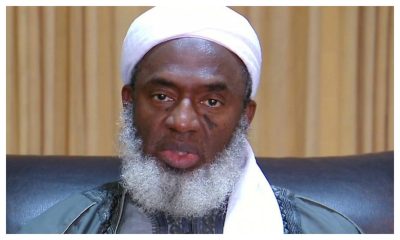
Islamic cleric Sheikh Ahmad Gumi recently defended his past interactions with armed groups, stating he “took the bull by the horns” in 2021 as a necessary step to address Nigeria’s insecurity.
In a post shared on Facebook on Thursday, Gumi said decades of neglect of disadvantaged populations had created deep socio-economic inequalities, leaving many youths vulnerable to manipulation by external forces seeking to destabilise the country.
According to him, the widening gap between the rich and the poor has turned many young people into “ready-made foot soldiers” in cycles of violence that enable the exploitation of Nigeria’s resources.
He also criticised the political class for being largely unresponsive, while noting that the intellectual community is preoccupied with survival struggles.
Reflecting on his past efforts, Gumi said he “took the bull by the horns” in 2021 by attempting to reintegrate violent elements into society rather than allowing them to be further radicalised.
He wrote: “Nigeria for decades has ignored the underprivileged section of its society. There is a significant socio-economic discrepancy, and the society is stratified. This makes our teaming youth ready-made foot soldiers for any foreign interest trying to divide us and rule. To plunder our resources while we are involved in a vicious circle of violence.
”Unfortunately, the political class is unattentive while the intelligentsia is held hostage in the struggle for existence.
“In 2021, I took the bull by the horns in an attempt to bring some of these uncouth elements back to our fold rather than letting them be exploited by the devil.
“I still believe this is the only way out of our predicament. However, it needs the political will and determination to achieve.
“May Allah bring peace back to our nation.”
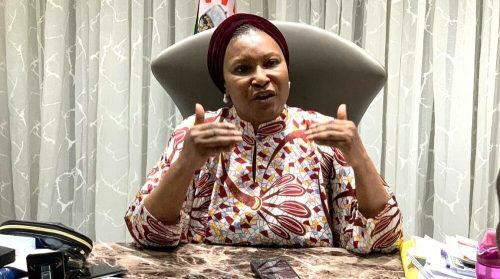
The Federal High Court in Abuja rejected an ex-parte application seeking to bar Senator Ireti Kingibe from participating in the activities of the African Democratic Congress (ADC).
Justice Peter Lifu declined the request from Wuse Ward leaders, ruling that such an order could not be granted without first hearing from the senator.
Instead, the judge ordered the ward leaders said to be loyal to the Minister of the FCT, Nyesom Wike, to put the senator on notice to appear in court to join issues with them on their grievances.
Justice Lifu in a ruling on Thursday held that discretion in such a request for prohibition from party activities and in political matters must be exercised judicially and judiciously.
The judge said justice would be met in the case of the plaintiffs only when the side of the defendant is heard on its merit, along with that of the plaintiffs.
Consequently, the judge ordered that Senator Ireti Kingibe should be served with all court processes by the plaintiffs to enable her become aware of the suit and to prepare her defense.
The judge fixed April 20, 2026, for the plaintiffs and the serving senator to appear before him for hearing of all applications in the matter.
Those who sued the senator in the suit marked FHC/ABJ/ CV/539/2026 are Okezuo Godfrey Anayo and Isaiah Ojonugwa Samuel, on behalf of themselves and ward members as plaintiffs. The senator is the sole defendant.
In their ex-parte application, Kingibe representing the FCT in the Senate was said to have been suspended on March 10, 2026 by her Wuse Ward executives following allegations of anti-party activities and disregard of your cnstitution of the ADC.
In the ex- parte application filed on their behalf by a Senior Advocate of Nigeria, SAN, Kolawole Olowookere, the aggrieved ADC members in Wuse Ward applied for an order of interim injunction restraining Kingibe from parading herself as a member of party, pending the hearing and determination of their motion on notice for interlocutory injunction.
They also asked the judge to restrain the senator from performing any function, attending meetings or performing activities reserved for ADC members or representing the party in any activities.
Besides, the Ward Executive Committee had asked that she be restrained from further interfering with the administration of the ward, ward register and other activities.
The suit was predicated on five grounds among which are that Mrs Kingibe was placed on suspension due to anti-party activities, gross misconduct and confiscation of the ward statutory records.
They argued that the suspension followed due process as enshrined in the ADC constitution and ratified by the two thirds majority of the EXCO members.
They averred that despite the communication of the suspension to Kingibe, she has continued to hold parallel meetings, issue press statements as an ADC member, and using her security details to intimidate the executive committee.
“Her actions constitute flagrant disregard to the internal mechanism of the party,” the plaintiffs stated.
Meanwhile, a lawyer, Abubakar Marshall who claimed to be representing the senator, announced that he had filed a preliminary objection against the suit. He added that it was served on M. S. Garba, who stood for the plaintiffs at Thursday’s proceedings.

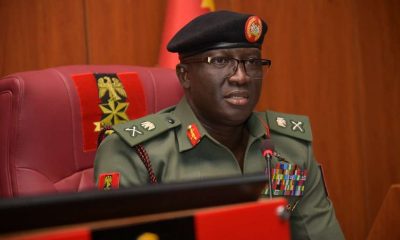
The Chief of Army Staff (COAS), Lieutenant General Waidi Shaibu, visited Jos, Plateau State, on Thursday, April 2, 2026, to lead a high-powered security assessment following recent security breaches.
The visit was aimed at strengthening public confidence and reinforcing ongoing efforts to stabilize affected communities.
Colonel Appolonia Anele, acting Director, Army Public Relations, said in a statement that the visit forms part of ongoing efforts to restore calm and entrench lasting peace across the state.
According to the statement, upon arrival, the COAS was received by the Executive Governor of Plateau State, Caleb Mutfwang, in a clear demonstration of strong civil-military cooperation and a shared commitment to addressing emerging security challenges.
The statement said the COAS received a comprehensive operational briefing from the General Officer Commanding 3 Division and Commander, Joint Task Force Operation ENDURING PEACE, Major General Folusho Oyinlola, who highlighted ongoing operations and proactive measures being implemented in synergy with other security agencies to contain threats, protect lives and property, and stabilise affected communities.
“As part of his engagements, Lieutenant General Shaibu also interacted with community leaders and residents, reassuring them of the unwavering commitment of the Nigerian Army to safeguarding all law-abiding citizens.
He urged residents to remain calm, vigilant and supportive of security agencies by complying with the curfew and cooperating fully with ongoing operations and investigations, while going about their lawful activities.
The chairman of Jos North Local Government Area, Hon. Dachung Bagos, commended the COAS for the timely visit, noting that the presence of the nation’s top military leadership would boost public confidence and reinforce trust in ongoing security efforts.

Gumi Defends Dialogue As Sole Solution To Nigeria’s Insecurity

Court Clears Senator Ireti Kingibe To Remain Active In ADC

COAS Shaibu Hits Jos To Restore Peace, Public Confidence

President Tinubu Appoints New PTDF Executive, Reappoints TCN Head

Simi Welcomes Second Child With Adekunle Gold

United Nigeria Airlines Staff Suspended After Viral Amputee Abuse Video

Pay Your Fare: AIG Cracks Down On Officers Boarding For Free

INEC Removes David Mark, Aregbesola From ADC Leadership Portal

JUST IN: FG Approves Friday 3, Monday 6, as Easter Public Holidays

When 8 million Customers Trust You, Safety Cannot Be an Afterthought
-
 News2 days ago
When 8 million Customers Trust You, Safety Cannot Be an Afterthought
-
 News1 day ago
United Nigeria Airlines Staff Suspended After Viral Amputee Abuse Video
-
 News2 days ago
JUST IN: FG Approves Friday 3, Monday 6, as Easter Public Holidays
-
 News1 day ago
Pay Your Fare: AIG Cracks Down On Officers Boarding For Free
-
 News2 days ago
INEC Removes David Mark, Aregbesola From ADC Leadership Portal
-
 News21 hours ago
COAS Shaibu Hits Jos To Restore Peace, Public Confidence
-
 News22 hours ago
President Tinubu Appoints New PTDF Executive, Reappoints TCN Head
-
 Entertainment1 day ago
Simi Welcomes Second Child With Adekunle Gold