
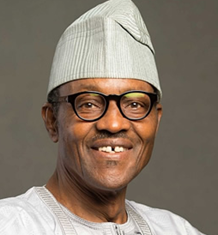
President Muhammadu Buhari may have pulled a fast one on state governors with Friday’s signing of Executive Order No. 10 of 2020 which grants financial autonomy to State legislature and the judiciary.
Many governors were left shocked by the president’s action coming so soon after the financial autonomy granted local governments by this same administration.
The aggrieved governors see the signing of the Executive Order as a breach of ongoing talks between them and the Presidency on how to go about the autonomy.
Some of them are not ruling out litigation on the matter.
But senior lawyers hailed the president for signing the Executive Order, while Presidential Adviser, Ita Enang, explained that the order was to give effect to the provisions of the Constitution.
The Presidency had, through the late Chief of Staff, Mallam Abba Kyari, engaged the governors on the autonomy models for the next constitution review.
The negotiation had not been concluded before Kyari died.
The governors also claimed that the alleged “hasty” issuance of the order will derail the collaboration between the Nigeria Governors’ Forum (NGF) and the Conference of Speakers of the State Houses of Assembly.
The two groups had established a committee to work out modalities for autonomy just before the Covid-19 crisis
It was learnt that some of the governors may go to court to contest the constitutionality and legality of the Executive Order.
Others may use pressure groups to sue Buhari for a proxy legal battle.
Sources said some of the governors, especially those in the opposition, felt Buhari is using Executive Order to subvert the constitution with a view to caging them.
Their views on the new Executive Order are:
*It constitutes a breach of the understanding with the Presidency;
*It is illegal because only amendment to the 1999 Constitution can guarantee such autonomy;
*Executive Order does not have legislation force; and
*It is an encroachment of the laws on the disbursement of the funds in the Federation Account
A PDP governor told The Nation last night that they were ” shocked by the decision of the President to issue this Executive Order, which is more of a decree of the military era than a constitutional process.’
“The order cannot stand, we will go to court to challenge it,” he said
“Our party is not opposed to autonomy for the legislature and the judiciary but it must be a constitution review Process.
“But we have a growing pattern of sliding into dictatorship with Executive Orders. We won’t allow the subversion of the 1999 Constitution.”
Another governor said: “The order was least expected, it is an abuse and a violation of the ongoing talks between the Presidency and the governors. We have been working out the type of autonomy models to adopt. And the late Chief of Staff, Mallam Abba Kyari, represented the President at our sessions.
“We are also collaborating with the Conference of Speakers on how to go about the autonomy. I think the Presidency should have waited for all these consultations to end.”
A governor from the North-East said: “A true autonomy for the legislature and the judiciary cannot be by fiat. The National Assembly has constituted a Constitution Review Committee; the Presidency ought not to be preemptive.
“It appears dialogue is now too late; we will surely go to court because the President has no power to personally legislate on autonomy for these two arms of government.”
Another source said: “the governors, who are still battling with the effect of the financial autonomy granted local governments by this same administration had hoped to stop the financial autonomy of the legislature in particular.
“This is to ensure their continued control on the lawmakers.”
The governors had been opposed to the autonomy bill which was passed by the 8th National Assembly and signed by the president.
The law had remained unimplemented but the Conference of Speakers of State Legislatures in Nigeria, worked hard with the support of the leadership of the National Assembly and the Justice Ministry, to pull the latest surprise.
The Attorney-General of the Federation and Minister of Justice, Mallam Abubakar Malami (SAN), said in a statement that: “A Presidential Implementation Committee was constituted to fashion out strategies and modalities for the implementation of financial autonomy for the State Legislature and State Judiciary in compliance with section 121(3) of the Constitution of the Federal Republic of Nigeria, 1999 (as Amended); taking into consideration all other applicable laws, instruments, conventions and regulations, which provides for financial autonomy at the state tier of government.
“The implementation of financial autonomy of the State Legislature and State Judiciary will strengthen the institutions at the state tier of government and make them more independent and accountable in line with the tenets of democracy as enshrined by the Constitution of the Federal Republic of Nigeria 1999 (as Amended).
“The President signed the Executive Order number 10 into law based on the power vested in him as the President of the Federal Republic of Nigeria under Section 5 of the Constitution of the Federal Republic of Nigeria 1999 (as Amended), which extends to the execution and maintenance of the Constitution, laws made by the National Assembly (including but not limited to Section 121(3) of the 1999 Constitution (as Amended), which guarantee financial autonomy of the State Legislature and State Judiciary.
“The Order Provides that the Accountant-General of the Federation shall by this Order and such any other Orders, Regulations or Guidelines as may be issued by the Attorney-General of the Federation and Minister of Justice, authorize the deduction from source in the course of Federation Accounts Allocation from the money allocated to any State of the Federation that fails to release allocation meant for the State Legislature and State Judiciary in line with the financial autonomy guaranteed by Section 121(3) of the Constitution of the Federal Republic of Nigeria 1999 (as Amended)”.
“Based on the Executive Order at the commencement of this Order for implementation of financial autonomy for State Legislature and State Judiciary in line with section 121(3) of the 1999 Constitution of the Federal Republic of Nigeria (as Amended), all States of the Federation shall include the allocations of the two Arms of Government in their Appropriation Laws.
“Article 6 (1) provides that “notwithstanding the provisions of this Executive Order, in the first three years of its implementation, there shall be special extraordinary capital allocations for the Judiciary to undertake capital development of State Judiciary Complexes, High Court Complexes, Sharia Court of Appeal, Customary Court of Appeal and Court Complexes of other Courts befitting the status of a Court.”
Why Buhari signed executive order for autonomy of state legislature, judiciary
President Buhari’s Senior Special Assistant on Niger Delta Affairs, Senator Ita Enang, said on Saturday that the executive order is to give effect to the provisions of the Constitution.
Enang, who was Senior Special Assistant to the President on National Assembly Matters (Senate), told The Nation by phone that Executive Order 10 outlines the procedure and process for the implementation of the Constitutional provisions for the autonomy of state legislature and judiciary which was passed by the 8th National Assembly and signed into law by Buhari.
Enang said the signing of the Executive Order was even more necessary now in managing the independence of each arm of Government at this time of Coronavirus pandemic.
He said: “what will happen is that the money of the Judiciary in the state budget and the money of the legislature in the state budget will now, each month, as it returns from the Federation Accounts Allocation Committee meeting, in addition to the internally generated revenue pro rata will be released by the Accountant General of the State to the legislature through the Clerk of the House who is the accounting officer of the State House of Assembly and the Chief Registrar of each State Legislature who is the accounting officer of the Judiciary.
“The essence of this (Executive Order) is to make sure that the problem we used to have in the past, despite the amendment of the Constitution, is resolved such that the Executive does not starve the Judiciary or the Legislature of funds because the legislature is an arm of government, the Judiciary is an arm of government, the executive is an arm of government and it is these three arms of government that make the government.
“The executive is the executive arm of government. The Governor heads the executive arm of government at the state level and he is the chief security officer of the state.
“He has an overbearing influence. But in terms of each of them being accountable and managing its own affairs, the Constitution provides that each of them should have its own independence in terms of funding.
“In summary, it is the same position that we have at the Federal level now where when there is Federation Accounts Allocation and the money of the Federal Government is given, the Accountant General of the Federation will release the money that is meant for the Judiciary to the Judiciary through the National Judicial Council.
“The National Judicial Council through its Secretary will now make the money available to the Head of the Supreme Court, the money of the Court of Appeal to the Chief Registrar of the Court of Appeal, the one for the National Industrial Court goes to the Chief Registrar of the National Industrial Court to be administered at the instance and direction of the President of the National Industrial Court.
“The money meant for the Federal High Court goes to the Chief Registrar of the Federal High Court for the administration of all the Federal High Courts in the entire country.
“The one of the Customary Court of Appeal and the Sharia Court of Appeal goes to the respective courts.
“Therefore, it is the same model which the Committee recommended and the President has signed it as an executive order.
“It is important to emphasize that the President is not making a new law. He is simply laying out the modality for the implementing the Constitution which the State Houses of Assembly and their Governors has agreed and it was passed.
“He is laying out the procedure, the process and the ground norms for the implementation. So it is not a new law.
“The Executive Order is laying out the procedure for the implementation. It also allows each state to make their own budgets to comply with it.”
He added: “By Monday or Tuesday, the Committee will come up with the details. It was a Committee that was set up by Mr. President with the Attorney-General as the Chairman and with myself as the Secretary and the Chief Judge of Kogi State and the Chief Judge of Bayelsa State as members representing the state Judiciary. “
Buhari in December 2018 set up a Presidential implementation committee on autonomy of state legislature and state judiciary.
The committee was charged with the responsibility of driving the actualisation of the autonomy granted to the legislature and judiciary at the state level in the Constitution.
The Committee was chaired by Attorney-General of the Federation and Minister of Justice, Abubakar Malami, with Senator Ita Enang as Secretary.
Other members of the Committee included the Chief Judge of Kogi State, Nasir Ajanah and his Bayelsa State counterpart, Kate Abiri as representatives of state judiciary, the Grand Khadi of Gombe State Sharia Court of Appeal, Khadi Abdullahi Maikano and the Acting President of the Federal Capital Territory (FCT) Customary Court of Appeal, Abbazih Musa Sadeeq.
Also represented on the committee were Speakers of State Houses of Assembly, the President of the Nigeria Bar Association, Judiciary Staff Union of Nigeria (JUSUN) and the Parliamentary Staff Association of Nigeria (PASAN).
Buhari, while inaugurating the Presidential Implementation Committee on Autonomy of the State Legislature and State Judiciary at the State House, Abuja, said the panel was expected to ensure that the independence of the judiciary and legislature is maintained.
Buhari had, in his speech, during the inauguration said: “We are committed to strengthening our democracy by ensuring separation of powers among the three arms of Nigerian Government, even at the State levels.
“Furthermore, we have identified the need to sustain our constitutionally guaranteed Federal system of government by building capabilities not only at the Federal level but at all the Federating Units.
“This Committee has therefore been set-up, as a major reform of this administration, to ensure that the autonomy granted to the legislature and judiciary at the State levels is maintained, pursuant to Section 161 of the 4th Alteration to the 1999 Constitution (As Amended).
– Nation