
News
Finally, Tinubu speaks on Amotekun, berates AGF Malami, To meet with S/West Govs.


There is urgent need for private discussion between the Governors of the South-West and the Attorney-General and Minister of Justice, Mallam Abubakar Malami, over Amotekun, All Progressives Congress National Leader, Bola Ahmed Tinubu has said.
According to him, the foundation of the country had not been put at risk with the South-West regional security outfit launched by the governors of the zone in a bit to confront the insecurity in their states.
The former Lagos governor, however, warned that, that fabric could be torn by what he called the “dangerous rhetoric of those who should know better.”
In his first intervention in the controversy surrounding Amotekun, Asiwaju Tinubu said: “Those claiming that this limited, inoffensive addition to security threatens the Republic have taken themselves upon a madcap excursion.
“Those claiming that the Federal Government seeks to terribly suppress the Southwest have also lost their compass. Those who occupy these two extremes have sunken into the dark recesses of fear and political paranoia that can undo a nation if such sentiments are allowed to gestate”.
Titled “The Public Discourse Over Amotekun,” the statement personally signed by him reads: “Amotekun. This issue has dominated recent discourse and media headlines. Distilled to its basics, it concerns how best state governments can assist with the safety and security of their residents. This is a matter of serious concern entitled to sober thought. However, it has been turned into a political tug-of-war. Fierce, often unthinking rhetoric, for and against, has crossed the lips of too many Nigerians. More subjective talking than objective thinking has been the fuel of this outburst.
“Question those in favour of Amotekun. Most have but the vaguest notion about it. They know few details yet vigorously attribute to its opponents the most negative intentions. Ask those who oppose Amotekun. They are equally ignorant of its provisions. They oppose the initiative not on its merits but merely because it was proposed by their political opponents or because they don’t see an avenue for personal gain from it.
“While colourful, the rhetoric has been disconcerting. How people have mishandled this matter demonstrates that we still have far to go in perfecting this democracy. Too much energy has been spent distorting this issue instead of seeking a resolution that supports local enhancement of security while keeping the constitution intact. If this becomes the standard for how we handle disagreements then we will obscure Nigeria’s path forward with our own rubbish.
“In this matter, I do not see malign intent in the differences of opinion between the SW Governors as authors of Amotekun and the Attorney-General as the primary law enforcement officer of the Federal Government. Shorn of the overly dramatic language, what lies before us is but a step in the evolution of our federalism. This is an opportunity to more clearly define that federalism; but one cannot attain this better, more functional definition through overblown, emotional language. Objectivity and calmness are required. To a significant degree, the enduring quality of our republic will be established by the sagacity with which we handle disagreements regarding the division of power between federal and state governments. Such disagreements are inevitable. This is not the first. Nor will it be the last. We must devote our energies more toward solving problems rather than amplifying them.
“Seeking to fulfil their mandates by helping protect their people, the governors of the Southwest collectively established a program to buttress existing security mechanisms. Seeking to protect the constitution as best he could, the Attorney-General offered his opinion on what he believed the governors have sought to do. No one can blame either party for seeking to fulfil what they genuinely see as their public duty.
“Until now, I have deliberately maintained a studied silence regarding Amotekun. Many have tried to goad my swift public reaction. Those who have taken this road did so not because they care about Amotekun or even the people it intends to help protect. They did so knowing this had become a delicate and emotional issue for many. These cynics did so with the adversarial hope that, in haste, I might misspeak or misstep in a manner they could twist to their political advantage.
“Such people are possessed of a mercenary aspect that permits them to sacrifice almost anything, even jeopardize the very foundations of our political unity, if they might exact personal gain from the upheaval. In that they know no nobler purpose than their own appetites, we should feel sorry for them. However, we must not allow our sympathies for their barren condition to persuade us that there is worth in their destructive misconduct. They must be left to the consequences of their own devices.
“If truly I am a political leader as I am often described, then I have not the luxury of hasty, ill-conceived utterances. There are those who will use inflamed words to spark the passions of others. This may bring transient applause. But when the cheers fade, we shall only have further descended because their words were never inclined toward resolution and long-term improvement but toward short-term popularity and perpetual confrontation.
“I believe in this nation and its benign prospects. I dearly love its people, all of them. Over the years of our existence, they have suffered much. Yet they still hold forth with heroic patience and an extraordinary optimism born of strong faith. To these people I owe my best. I shall not treat them cheaply or bandy their emotions like some errant football. The welfare of this good and decent people is my overriding concern.
“Equally, I do not cow to the demands of those who press for me to make a premature statement on an important issue. Again, that is a game devised by those who care more about political cleverness than the quality of governance. I chose to talk when my position has been made ripe by a collection of the facts and a reasonable assessment of those facts.
“As I view it, this matter can be divided in three major parts: 1) Substantive merits of Amotekun, 2) Decision-making and consultative process and 3) Recommendations on the way forward.”
AMOTEKUN, GOVERNORS AND SECURITY
“As the highest elected official in his state and thus the individual embodiment of the will of the people, a governor must view safety and security as a foremost priority, integral to his mandate. To turn a blind eye to these concerns would be a grave dereliction. That the SW Governors seek to work together to complement the extant security architecture is, in principle, a commendable undertaking. In embracing this concept, they have acted in consonance with spirit of their offices for the better interests of their people.
“As Governor of Lagos State, I confronted a burgeoning criminal menace. I could not sit idly in the face of the violence and property destruction that struck genuine fear in the hearts of the people. The police tried as best they could; but their coverage was thin. They simply did not have the personnel or material wherewithal to be everywhere at once. We formed Neighbourhood Watch to help fill the gap.
“Our aim was not to replace existing structures but to complement and augment them. The mission of Neighbourhood Watch was to monitor the wards and neighbourhoods of the state. The group would gather information and intelligence to pass to the police and security authorities. The Neighbourhood Watch also provided an early warning system to keep citizens from harm’s way. The idea worked. Crime and violence reduced significantly. Even the overreaching Obasanjo government did not contend against Neighbourhood Watch.
“Judging from the public statements of the governors, Amotekun is meant to be structured along similar lines. As I understand it, Amotekun is to be another set of eyes and ears to assist the police. As such, it is but the second generation of Neighbourhood Watch expanded to a regional scale. Conceptually, there is nothing wrong with this. It does not appear to insult the constitution. However, my position regarding Amotekun is not blind or uncritical; there are several organisational and functional aspects of the proposal that could cause some problems if left unresolved.
“First, the stated mission is information gathering by civilians. Such tasks are always and everywhere best done in low-key fashion. Some aspects of Amotekun seem to undermine rather than enhance this function.
Second, equipping Amotekun with showy paraphernalia may cause the public to misconstrue the role of Amotekun, incorrectly believing its mandate is more expansive than it is. This possible disconnect could impede the good aims of the program.
“We also should consider that the Buhari administration has approved implementation of a policy of community policing wherein additional recruits from all 774 local government areas will be added to the force to help protect their own communities. As the Federal Government emphasizes grassroots policing it is uncertain how well Amotekun can complement the police force as the force moves toward greater decentralisation when Amotekun is organisationally leaning in the opposite way.
“We have been fighting for local and decentralised policing for a long time because we know that too much centralisation impedes performance. In regard to actual performance of its appointed tasks, Amotekun should have focused on grassroots local organisation at the state level without a regional command hierarchy. The regional approach may undermine efficiency. There is no compelling logic why the same personnel providing security & informational assistance in Ado-Ekiti should be under the same functional and operational leadership as those providing assistance in Lekki or Akure. This will not lead to optimal performance.
“The regional approach has only limited benefit with regard to the procurement and maintenance of vehicles and communications equipment because this wider approach allows for economies of scale. The regional approach also helps tackle the growing incidences of interstate criminal activity. Some things need to be corrected before Amotekun becomes operational. If not, it will not live up to expectations. Thus, the current formulation of Amotekun is in need of repair before it takes to the road only to quickly slip into a ditch.”
CONSULTATIVE PROCESS BREAKS DOWN
“The governors state that they consulted regularly with the police and security agencies. This was the right thing to do. However, their failure to include the office of the Attorney-General in these discussions is the fount of the current public uproar. This was an unfortunate omission the governors should regret and seek to remedy. However, the conceptual merits and positive functional aspects of Amotekun should not be tainted by this procedural defect.
“While the Attorney-General is a conscientious public servant, he is also human. Not having been consulted, he was suddenly faced with an unexpected public announcement regarding a matter within his official ambit. He likely feared the failure to consult him meant that federal prerogatives were being encroached. To blame him for this conclusion would be to blame human nature itself. Though his negative reaction was understandable it was also unhelpful.
“The Attorney-General acted hastily in rendering a public statement that was more inaccurate than it should have been. Amotekun was never proposed as a “defence” agency; the Attorney-General erred in using this description. The use of uniforms and brightly coloured vehicles may not be the best ideas but they do not render Amotekun a defence agency or paramilitary group any more than a designated school van carrying uniformed students constitutes a paramilitary deployment.
“Believing the governors had crossed the line, the Attorney-General should have reached out to them. Before going public, he should have sought a private meeting so that he could have a better factual understanding of Amotekun. This would have enabled him to give the governors any specific constitutional or other objectives he might have. In this way, the two sides would have engaged in private consultations to reach agreement on the way forward. This cooperative process might have helped to correct some of the organisational lapses above identified. Such a diplomatic and wise step also would have prevented the current public acrimony now surrounding the issue.”
RECOMMENDATIONS FOR RESOLUTION
“This matter cannot be resolved on the pages of newspapers or by attributing negative motives to either side. The best way to resolve this is still for the two sides to enter private discussions. Either the governors should seek an official but private meeting with the Attorney-General, or the Attorney-General can initiate the contact. Since Amotekun is their initiative, the governors bear the greater onus in seeking the meeting.
“The meeting will initiate further discussion on how to resolve what appears to be a misunderstanding caused by an unfortunate lack of communication. Remedy the gap in communication and the misunderstanding will begin to disappear.
Last, I again stress to well-intentioned Nigerians to shun those who employ heated language to inflame emotions. It does us no good to rush toward exaggerated statements that suggest calamity of the highest order. Don’t allow yourselves to be fodder for those who seek to divide us.
“The fabric of the Republic has not been put at stake by Amotekun. However, that fabric could be torn by the dangerous rhetoric of those who should know better. Those claiming that this limited, inoffensive addition to security threatens the Republic have taken themselves upon a madcap excursion. Those claiming that the Federal Government seeks to terribly suppress the Southwest have also lost their compass. Those who occupy these two extremes have sunken into the dark recesses of fear and political paranoia that can undo a nation if such sentiments are allowed to gestate.
“We are one nation, 200 million strong with 36 states and a great complex of federal authority residing in dozens of federal ministries and agencies. If everyone is allowed their democratic expression, there are bound to be disagreements. This is inherent in the federal structure. Nations that have practiced federalism much longer than us still frequently debate over where the line between state and federal power is to be drawn. They have hundreds of court cases each year on this very issue. Yet they do not attack each other as we do. We must all learn to be more restrained and judicious in our reactions when such disagreements arise.
“Before leaping from our seats to lift our voice to the high rafters in profound indignation, we first would be wise to properly discern the situation. We must ascertain whether it merely is a tempest in a teapot or whether our house and all its teapots are swirling in a real tempest. Despite the ominous headlines and heated talk, an objective analysis points more clearly to the former than the latter. The resolution of this matter is not beyond us if only we allow ourselves to be the democrats that our better conscience and the very documents of our national existence call us to be.
“In trying to help resolve this matter, I have initiated communication with the Chairman of the South West Governors’ Forum, Arakunrin Rotimi Akeredolu, with a view to meeting the South West governors to explore amicable solutions to the avoidable controversy. I am sure that, at the end of it all, peace, security, and progress shall reign in our nation. Thank you.”

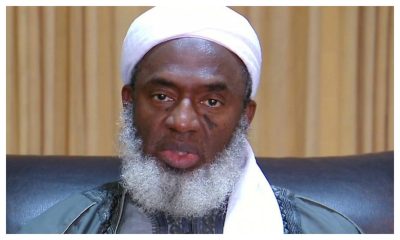
Islamic cleric Sheikh Ahmad Gumi recently defended his past interactions with armed groups, stating he “took the bull by the horns” in 2021 as a necessary step to address Nigeria’s insecurity.
In a post shared on Facebook on Thursday, Gumi said decades of neglect of disadvantaged populations had created deep socio-economic inequalities, leaving many youths vulnerable to manipulation by external forces seeking to destabilise the country.
According to him, the widening gap between the rich and the poor has turned many young people into “ready-made foot soldiers” in cycles of violence that enable the exploitation of Nigeria’s resources.
He also criticised the political class for being largely unresponsive, while noting that the intellectual community is preoccupied with survival struggles.
Reflecting on his past efforts, Gumi said he “took the bull by the horns” in 2021 by attempting to reintegrate violent elements into society rather than allowing them to be further radicalised.
He wrote: “Nigeria for decades has ignored the underprivileged section of its society. There is a significant socio-economic discrepancy, and the society is stratified. This makes our teaming youth ready-made foot soldiers for any foreign interest trying to divide us and rule. To plunder our resources while we are involved in a vicious circle of violence.
”Unfortunately, the political class is unattentive while the intelligentsia is held hostage in the struggle for existence.
“In 2021, I took the bull by the horns in an attempt to bring some of these uncouth elements back to our fold rather than letting them be exploited by the devil.
“I still believe this is the only way out of our predicament. However, it needs the political will and determination to achieve.
“May Allah bring peace back to our nation.”

The Federal High Court in Abuja rejected an ex-parte application seeking to bar Senator Ireti Kingibe from participating in the activities of the African Democratic Congress (ADC).
Justice Peter Lifu declined the request from Wuse Ward leaders, ruling that such an order could not be granted without first hearing from the senator.
Instead, the judge ordered the ward leaders said to be loyal to the Minister of the FCT, Nyesom Wike, to put the senator on notice to appear in court to join issues with them on their grievances.
Justice Lifu in a ruling on Thursday held that discretion in such a request for prohibition from party activities and in political matters must be exercised judicially and judiciously.
The judge said justice would be met in the case of the plaintiffs only when the side of the defendant is heard on its merit, along with that of the plaintiffs.
Consequently, the judge ordered that Senator Ireti Kingibe should be served with all court processes by the plaintiffs to enable her become aware of the suit and to prepare her defense.
The judge fixed April 20, 2026, for the plaintiffs and the serving senator to appear before him for hearing of all applications in the matter.
Those who sued the senator in the suit marked FHC/ABJ/ CV/539/2026 are Okezuo Godfrey Anayo and Isaiah Ojonugwa Samuel, on behalf of themselves and ward members as plaintiffs. The senator is the sole defendant.
In their ex-parte application, Kingibe representing the FCT in the Senate was said to have been suspended on March 10, 2026 by her Wuse Ward executives following allegations of anti-party activities and disregard of your cnstitution of the ADC.
In the ex- parte application filed on their behalf by a Senior Advocate of Nigeria, SAN, Kolawole Olowookere, the aggrieved ADC members in Wuse Ward applied for an order of interim injunction restraining Kingibe from parading herself as a member of party, pending the hearing and determination of their motion on notice for interlocutory injunction.
They also asked the judge to restrain the senator from performing any function, attending meetings or performing activities reserved for ADC members or representing the party in any activities.
Besides, the Ward Executive Committee had asked that she be restrained from further interfering with the administration of the ward, ward register and other activities.
The suit was predicated on five grounds among which are that Mrs Kingibe was placed on suspension due to anti-party activities, gross misconduct and confiscation of the ward statutory records.
They argued that the suspension followed due process as enshrined in the ADC constitution and ratified by the two thirds majority of the EXCO members.
They averred that despite the communication of the suspension to Kingibe, she has continued to hold parallel meetings, issue press statements as an ADC member, and using her security details to intimidate the executive committee.
“Her actions constitute flagrant disregard to the internal mechanism of the party,” the plaintiffs stated.
Meanwhile, a lawyer, Abubakar Marshall who claimed to be representing the senator, announced that he had filed a preliminary objection against the suit. He added that it was served on M. S. Garba, who stood for the plaintiffs at Thursday’s proceedings.
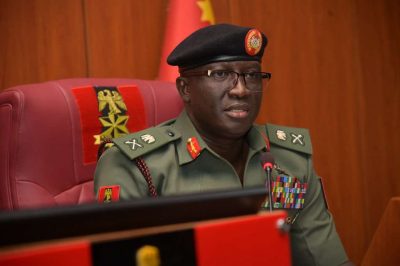
The Chief of Army Staff (COAS), Lieutenant General Waidi Shaibu, visited Jos, Plateau State, on Thursday, April 2, 2026, to lead a high-powered security assessment following recent security breaches.
The visit was aimed at strengthening public confidence and reinforcing ongoing efforts to stabilize affected communities.
Colonel Appolonia Anele, acting Director, Army Public Relations, said in a statement that the visit forms part of ongoing efforts to restore calm and entrench lasting peace across the state.
According to the statement, upon arrival, the COAS was received by the Executive Governor of Plateau State, Caleb Mutfwang, in a clear demonstration of strong civil-military cooperation and a shared commitment to addressing emerging security challenges.
The statement said the COAS received a comprehensive operational briefing from the General Officer Commanding 3 Division and Commander, Joint Task Force Operation ENDURING PEACE, Major General Folusho Oyinlola, who highlighted ongoing operations and proactive measures being implemented in synergy with other security agencies to contain threats, protect lives and property, and stabilise affected communities.
“As part of his engagements, Lieutenant General Shaibu also interacted with community leaders and residents, reassuring them of the unwavering commitment of the Nigerian Army to safeguarding all law-abiding citizens.
He urged residents to remain calm, vigilant and supportive of security agencies by complying with the curfew and cooperating fully with ongoing operations and investigations, while going about their lawful activities.
The chairman of Jos North Local Government Area, Hon. Dachung Bagos, commended the COAS for the timely visit, noting that the presence of the nation’s top military leadership would boost public confidence and reinforce trust in ongoing security efforts.

Gumi Defends Dialogue As Sole Solution To Nigeria’s Insecurity

Court Clears Senator Ireti Kingibe To Remain Active In ADC

COAS Shaibu Hits Jos To Restore Peace, Public Confidence

President Tinubu Appoints New PTDF Executive, Reappoints TCN Head

Simi Welcomes Second Child With Adekunle Gold

United Nigeria Airlines Staff Suspended After Viral Amputee Abuse Video

Pay Your Fare: AIG Cracks Down On Officers Boarding For Free

INEC Removes David Mark, Aregbesola From ADC Leadership Portal

JUST IN: FG Approves Friday 3, Monday 6, as Easter Public Holidays

When 8 million Customers Trust You, Safety Cannot Be an Afterthought
-
 News2 days ago
When 8 million Customers Trust You, Safety Cannot Be an Afterthought
-
 News1 day ago
United Nigeria Airlines Staff Suspended After Viral Amputee Abuse Video
-
 News2 days ago
JUST IN: FG Approves Friday 3, Monday 6, as Easter Public Holidays
-
 News1 day ago
Pay Your Fare: AIG Cracks Down On Officers Boarding For Free
-
 News22 hours ago
COAS Shaibu Hits Jos To Restore Peace, Public Confidence
-
 News2 days ago
INEC Removes David Mark, Aregbesola From ADC Leadership Portal
-
 News23 hours ago
President Tinubu Appoints New PTDF Executive, Reappoints TCN Head
-
 Entertainment1 day ago
Simi Welcomes Second Child With Adekunle Gold