
News
PRUDENTIAL ZENITH LIFE INSURANCE, JUNIOR ACHIEVEMENT PARTNER ON FINANCIAL LITERACY

PRUDENTIAL ZENITH LIFE INSURANCE, JUNIOR ACHIEVEMENT PARTNER ON FINANCIAL LITERACY
Prudential Zenith Life Insurance Limited has partnered with Junior Achievement Nigeria to promote financial literacy skills and a savings culture.
The insurance firm, in a statement said: “The partnership which was facilitated by Junior Achievement Africa will deliver ChaChing, an educational program designed to provide primary school students between ages 9 to 11 with access to information and activities to develop financial literacy skills.”
“The program will boost the low levels of financial literacy among young people, including those who have had fewer opportunities than others to learn about the financial world outside of school.”
“Prudential Zenith Life Insurance and Junior Achievement Nigeria believe that good financial literacy is key to empowering people to make good financial decisions. ChaChing aims to provide young children with a good understanding of money management, ensuring they make ‘money-smart’ choices throughout their lives which will benefit the development of Nigeria.”
Consequently, colleagues at Prudential Zenith Life Insurance have volunteered to facilitate the delivery of the program. They will teach the lessons, coordinate group activities with children, and act as mentors for pupils. The goal is to reach 500 primary school students in Nigeria by July 2020.
Jim Ovia CON, Chairman of Prudential Zenith Life Insurance Limited, whose foundations, the ‘Jim Ovia Foundation’ and the ‘Youth Empowerment & ICT Foundation’, foster social and educational inclusion through support of educational scholarships and ICT empowerment programs in Nigeria, said: “The Cha-Ching program aligns with our corporate social responsibility objective and will go a long way to improving the financial literacy and educational development of Nigerian children.”
Speaking on the partnership, Sena Quarm Goka, Grants and Programs Manager, JA Africa said “the Cha Ching financial literacy program was first piloted in Ghana back in 2016; and on the heels of that success, expanded to Kenya, Uganda and Zambia in 2017. To date, over 4000 primary school students across the four countries have been trained on the essential financial concepts of “Earn, Save, Spend and Donate”, to educate them on how to make smart money management decisions”.


As conversations around money become more complex in a fast-evolving digital world, the need to Building Financially Smart Future and equip young people with the right financial knowledge, has never been more urgent.
From spending habits to saving culture, digital transactions, and entrepreneurial thinking, financial literacy is increasingly becoming a life skill, not just a nice-to-have.
It is against this backdrop that Polaris Bank is participating in this year’s Global Money Week (GMW), a global financial awareness campaign which kicked off from Tuesday, April 7 through Thursday, April 30, 2026.
Global Money Week is an annual initiative led by Child and Youth Finance International in collaboration with key stakeholders, including financial service providers and government institutions, to inspire children and young people to learn about money management, livelihoods, and entrepreneurship.
During the 2025 edition Polaris Bank reached and impacted directly 3,372 students, across 35 secondary schools in 36 states across Nigeria.
With the 2026 theme, “Smart Money Talks,” this year’s campaign shines a spotlight on the importance of making informed financial decisions in an increasingly digital environment. It also reinforces the value of critical thinking, emotional intelligence, and sound financial judgement in helping young people navigate today’s financial realities.
For Polaris Bank, participation in Global Money Week goes beyond fulfilling a statutory obligation. It reflects the Bank’s broader commitment to advancing financial literacy, promoting inclusion, and empowering the next generation with practical knowledge that can shape better financial behaviour and long-term economic wellbeing.
In line with the directive of the Central Bank of Nigeria (CBN) through the Financial Literacy Secretariat, Polaris Bank will conduct Financial Literacy Sessions in schools across states where it maintains branch presence. These sessions will provide students and young adults with useful insights into key areas such as; saving, budgeting, responsible use of financial products, digital financial services, and entrepreneurship.
The initiative also presents an important opportunity for the Bank to engage directly with young people at a formative stage in their lives, helping them build confidence in money matters and make more informed choices as they grow into financially active adults.
At a time when financial decisions are increasingly shaped by technology, peer influence, and instant access to digital tools, Polaris Bank believes that early education is critical to helping young people distinguish between impulse and intention, trend and truth, convenience and responsibility.
By taking financial literacy conversations into schools, the Bank is not only supporting a national mandate but also contributing to the development of a generation that is better informed, more financially aware, and more capable of making smart choices for the future.
Polaris Bank remains committed to initiatives that create meaningful impact, strengthen communities, and empower individuals through knowledge-driven engagement.
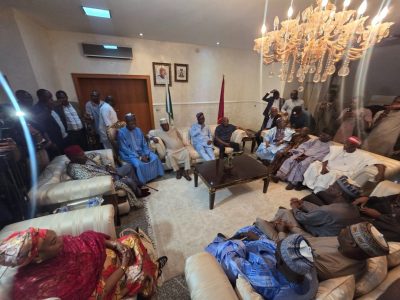
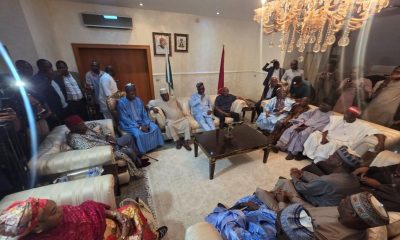
Following an anti-INEC protest in Abuja, leaders of the African Democratic Congress (ADC) held a closed-door meeting with top figures from the Peoples Democratic Party (PDP) to discuss the electoral body’s recent refusal to recognize the ADC’s new leadership.
Among those present at the meeting are Senator David Mark, National Chairman of the ADC, former Vice President Atiku Abubakar, former Kano Governor Rabiu Musa Kwankwaso, Presidential candidate of Labour Party, (LP) in the last election, Peter Obi.
Others are former Attorney-General of the Federation, Abubakar Malami, former Secretary to the Government of the Federation, Babachir Lawal, Former Rivers State Governor Rotimi Amaechi and Senator Aminu Tambuwal among others.
On the side of the PDP, are Oyo State Governor Seyi Makinde, factional National Chairman Turaki, Professor Jerry Gana, former Senate President Adolphus Wabara, former Niger State Governor, Babangida Aliyu, and other members of the National Working Committee, of the PDP.

Senate President Godswill Akpabio has inaugurated the new Opebi-Mende-Ojota Link Bridge Project and the Multi-agency complex, Alausa, now known as Bola Ahmed Administrative Complex in Lagos State.
Akbabio represented President Bola Tinubu, who has been in Lagos for the past few days and is scheduled to embark on a two-day working visit to inaugurate about six key projects executed by Governor Babajide Sanwo-Olu.
In a video shared on X by Sanwo-Olu’s aide, Jubril Gawat, on Wednesday, the Senate President unveiled the project alongside Imo State Governor, Hope Uzodimma; the senator representing Lagos East District, Tokunbo Abiru; Sanwo-Olu, and some other dignitaries.
While cutting the ribbon, he said, “On behalf of President Bola Ahmed Tinubu, I commission these projects.”
Recall that the Special Adviser to Sanwo-Olu on Media and Publicity, Gboyega Akosile, in a post on X recently had said that the President would commission “iconic, transformative and legacy projects” delivered by his principal.
According to him, the projects include the Ojota-Opebi Link Bridge, the Lagos State Geographic Information Service building in Alausa, the Lagos State Multi-Agency Complex, the Tolu Schools Complex in Ajegunle, the Maracana Stadium, and the Lagos Food Logistics Hub in Abijo.
“Please join the Lagos State Governor, Mr Babajide Sanwo-Olu, to welcome President Bola Ahmed Tinubu to a two-day working visit to our dear State. While here, the President will commission some of our iconic, transformative, and legacy projects,” Akosile stated.
This development led the state government to announce partial road closures across key parts of the state for the commissioning of critical infrastructure projects scheduled for Wednesday and Thursday.
In a statement issued on Tuesday, the State Commissioner for Transportation, Mr. Oluwaseun Osiyemi, said the temporary closures were necessary to ensure safety and the smooth conduct of the events.
The government advised motorists to plan their movements and avoid affected corridors during the specified periods to minimise traffic disruptions and delays.
According to the statement, the Opebi-Mende Link Bridge will be commissioned on Wednesday, April 8, between 9:00 a.m. and 1:00 p.m., affecting traffic in the Opebi-Allen, Ikeja, and Ojota areas.
“All motorists transiting this corridor during the specified hours should seek alternative routes to avoid congestion and ensure timely arrival at their destinations,” the statement said.
On Thursday, April 9, two commissioning events are scheduled between 9:00 a.m. and 1:00 p.m. The first is the commissioning of the Tolu Schools Complex, which will affect traffic in the Olodi Apapa and Ajegunle areas.

Polaris Bank Drives Youth Financial Literacy Through Global Money Week 2026

Opposition Coalition Hardens Stance Against INEC Following Massive Abuja Demonstration

Akpabio Represents Tinubu At Commissioning Of Landmark Lagos Projects

Dangote Refinery Denies Fuel Price Hike, Maintains Current Rates

Sterling Bank Deepens Commitment to Women Entrepreneurs with OneWoman Financing Dialogue

#OccupyINEC: Nigeria’s Opposition Giants Join Forces In Massive Abuja Rally

Delta NMA Declares Blessing CEO’s Cancer Report Fraudulent

Abuja Court Jails Boko Haram Food Supplier, Hamatu Modu For 40 Years

Just In: Kebbi Assembly Speaker Muhammad Ankwai Passes Away

Gbenga Daniel Slams Successor As ‘Enfant Terrible’ Who Showed Him Hell
-
 News2 days ago
Delta NMA Declares Blessing CEO’s Cancer Report Fraudulent
-
 News24 hours ago
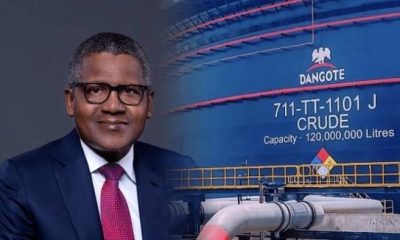
Dangote Refinery Denies Fuel Price Hike, Maintains Current Rates
-
 News21 hours ago
Akpabio Represents Tinubu At Commissioning Of Landmark Lagos Projects
-
 News1 day ago
#OccupyINEC: Nigeria’s Opposition Giants Join Forces In Massive Abuja Rally
-
 News1 day ago
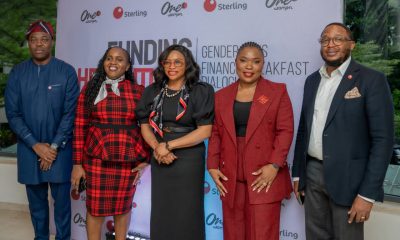
Sterling Bank Deepens Commitment to Women Entrepreneurs with OneWoman Financing Dialogue
-
 News19 hours ago
Opposition Coalition Hardens Stance Against INEC Following Massive Abuja Demonstration
-
News3 hours ago
Polaris Bank Drives Youth Financial Literacy Through Global Money Week 2026