
News
IT’S A PRIVILEGE SERVING NIGERIA: FOWLER

Immediate past Executive Chairman of the Federal Inland Revenue Service, FIRS, Tunde Fowler, yesterday thanked President Muhammadu Buhari for the privilege he had to serve the nation and for what he was able to do with the support of all staff.
Waxing biblical, Fowler noted that the taxman job is one of service to one’s fatherland as it gives one the opportunity to serve fellow humans and the nation.
Change, he noted is constant. It is normal that people will always resist change, he noted. He spoke at about 6: 35 pm as he handed over to the Coordinating
Director Domestic Taxes Group, Abiodun Aina, who promised to stir the ship of the FIRS before a new Chairman will officially resume..
Said Tunde Fowler in a handover over ceremony at the Boardroom of the FIRS: “Let me thank all of you who are here for what we have been able to do for our country. From the driver to the senior staff, everybody played a role. But with change, sometimes there is resistance. People will not understand the vision, will not understand the reason for the change. But hope in leaving FIRS, I’ve left behind something positive that each and every one of you can build on.
“We have got a mandate. That mandate is not just to collect revenue. It’s a mandate to collect the maximum amount of revenue for all concerned for the benefit of all Nigerians.
“There is nothing automatic about having a second term. Some of you might say it’s a big surprise. It a privileged to serve one’s country, and if you have the privilege of serving your country for one term and you believe you have done your best, you have to thank God for that.
For those of you we are leaving behind, Ï do not want to get too scriptural. But I believe that anything that you do, that helps your fellow human being, your neighbours is a blessing. And I believe that this job that we have been given is a job that will continue to help all Nigerians and all people residing in Nigeria.
“We have the opportunity to show the world that Nigeria has a lot to offer. It was during this period that we had a top Director, representing Nigeria and the world at the OECD. It was within this period that Nigeria, for the first time chaired ATAF (African Tax Administration Forum), for two years running. It was within this period that Nigeria through your support, was appointed as the 1st Vice Chairman of the United Nations Committee of Tax Experts. So we have a lot going for us.
“I like you to keep the flag flying, But I hope that sometime, when I visit, my picture will be somewhere on the wall..
“One thing, for people who have known me for a while, is that some of them refer to me as a shark. I like to keep people on their toes. Some of you might have thought that I don’t appreciate your contribution.
But some of you… might have been able to do things better. And part of my role is to bring out those potentials in you. And I hope I have been able to do that. I am contented with this.
“I like to thank the President for giving me this opportunity of service. It’s a privilege of service to your country. But at the same time, I believe I leave behind a good crop of directors that can move this organisation forward.
I will say that for the incoming Chairman, for the incoming Board of Directors, give them the support. The vision, I believe, is the same vision that we have. But how to go about it may differ. Open yourselves up to change. At this point, it gives me extreme privilege, to hand over the running of this organisation until the Senate approves the new Board, to someone who has been here, to someone who understands the working of the FIRS, to someone who has been part of the change. And I believe that you will give him the support, not even the support you have given me. But more support. So that when he hands over the organisation to the new board, they will see that this organisation is one that shares the same vision, and of course believes in his mandate. With these few words, I like to say it’s a pleasure working with all of you.
“Some of you might have thought that I don’t like you. But I assure you it worked. But I believe in this room, we have got a lot of talent, but regardless of what happens, keep the flag flying.
“On this note, Mr. Aina, I have the privilege of handing over FIRS to you. God bless FIRS. Long live the Republic of Nigeria.
Acting Executive Chairman, FIRS, Abiodun Aina spoke in glowing terms about Fowler. Said Aina: “Thank you very much Mr, Chairman, my boss, my brother, and my good friend Sir. As you hand over to me I say you have fought a good fight. You laid a very solid foundation.
“Within the intervening period that I will be holding forth, I promise to steady the ship, by the grace of God. You have done a lot within the space of four years. You have transformed FIRS. You have modernised it. There has been a lot of innovations. And under you we have achieved great heights. When we look back in 2015, collection was about N3, 3 trillion. At the end of 2018, with your leadership, we were able to move to N5. 32 Trillion. That was the highest collection ever, in the annals FIRS. You brought dynamism to FIRS.
“You introduced so many programmes that repositioned FIRS: Tax Amnesty Programme, implemented VAIDS, increased the no of taxpayers nationwide to over 20 million in a spate of four years, began placing lien on the account of taxpayers to ensure that each capable corporatetax payers pay his/her dues, fostered collaboration amongst the states through the Joint Tax Board, began robust information sharing amongst states, launched the JTB TIN so that states might have access to data for tax purposes, deepened FIRS’ embrace of technology for tax purposes and many more.
“But like you also mentioned in your speech, change is usually resisted. And so you stepped on toes. That is normal. Leadership is not a popularity contest. And I’m sure you know that very well. And that was why you were focused on carrying out the mandate that was given to you. I can tell you on behalf of my colleagues here that we will miss you. You have left a very big shoe behind. We will do all we can to ensure that we will keep the flag flying.
“Thank you very much for what you have done for us.”
PM News

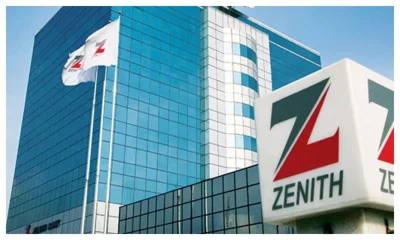
Zenith Bank Plc has announced the opening of a new branch in Manchester, United Kingdom, marking another significant milestone in the bank’s international growth and its commitment to strengthening financial connections between Africa and global markets.
The official opening ceremony, scheduled to hold on Tuesday, March 17, 2026, is expected to attract government officials from Nigeria and the United Kingdom, regulators, investors, customers, and business leaders from both countries, underscoring the growing economic ties and investment opportunities between the two markets.
The new Manchester branch will complement Zenith Bank’s existing operations in the United Kingdom and serve as a strategic hub for supporting businesses engaged in international trade and investment. Through the branch, the bank will provide corporate banking, trade finance, treasury and related financial services to clients operating across the United Kingdom, Europe and Africa.
Speaking ahead of the launch, the Group Managing Director/Chief Executive Officer of Zenith Bank Plc, Dame Dr. Adaora Umeoji, OON, said: “The opening of our Manchester branch represents another important step in Zenith Bank’s growth as a leading African financial institution connecting businesses and markets across continents. Manchester is one of the United Kingdom’s most dynamic commercial centres, and our presence here will further strengthen financial connections between businesses in the UK and opportunities across Africa’s rapidly expanding markets.”
Founded in 1990 by its Founder and Chairman, Jim Ovia, CFR, Zenith Bank has grown into one of Africa’s most respected banking institutions, boasting a robust capital base and a remarkable history of year-on-year profitability. Built on a strong foundation of people, technology and service, the Bank has consistently delivered innovative financial solutions while maintaining a disciplined approach to growth and risk management. The impressive performance of the Bank has consistently earned it excellent ratings, recognition and endorsement from local and international agencies and institutions.
Headquartered in Lagos, Nigeria, Zenith Bank operates over 500 branches and business offices across the 36 States of the Federation and the Federal Capital Territory (FCT). The Bank currently operates subsidiaries in several African countries including Ghana, Sierra Leone, Gambia, and Cote d’Ivoire, while maintaining a presence in major international financial centres including the United Kingdom, France, UAE and China. In recent years, Zenith Bank has continued to expand its international network as part of its strategy to support global trade and investment flows involving Africa.
Manchester, widely regarded as one of the United Kingdom’s most vibrant economic centres, hosts a diverse base of businesses across sectors such as manufacturing, engineering, logistics, technology and consumer goods. The city’s strong commercial ecosystem and international outlook align closely with Zenith Bank’s expertise in corporate banking, structured finance and trade finance.
The Manchester branch will work closely with the Bank’s London operations and its broader international network to support clients seeking to expand across markets and unlock new opportunities in both the United Kingdom and Africa.
With the opening of the Manchester branch, Zenith Bank continues to advance its vision of building a truly global African banking institution that connects businesses, facilitates trade and investment, and creates stronger economic bridges between Africa and the world.
News
Polaris Bank Chairman, Dr. Gidado Urges Integrity And Professional Excellence At 2026 CIBN Chartered Banker Induction
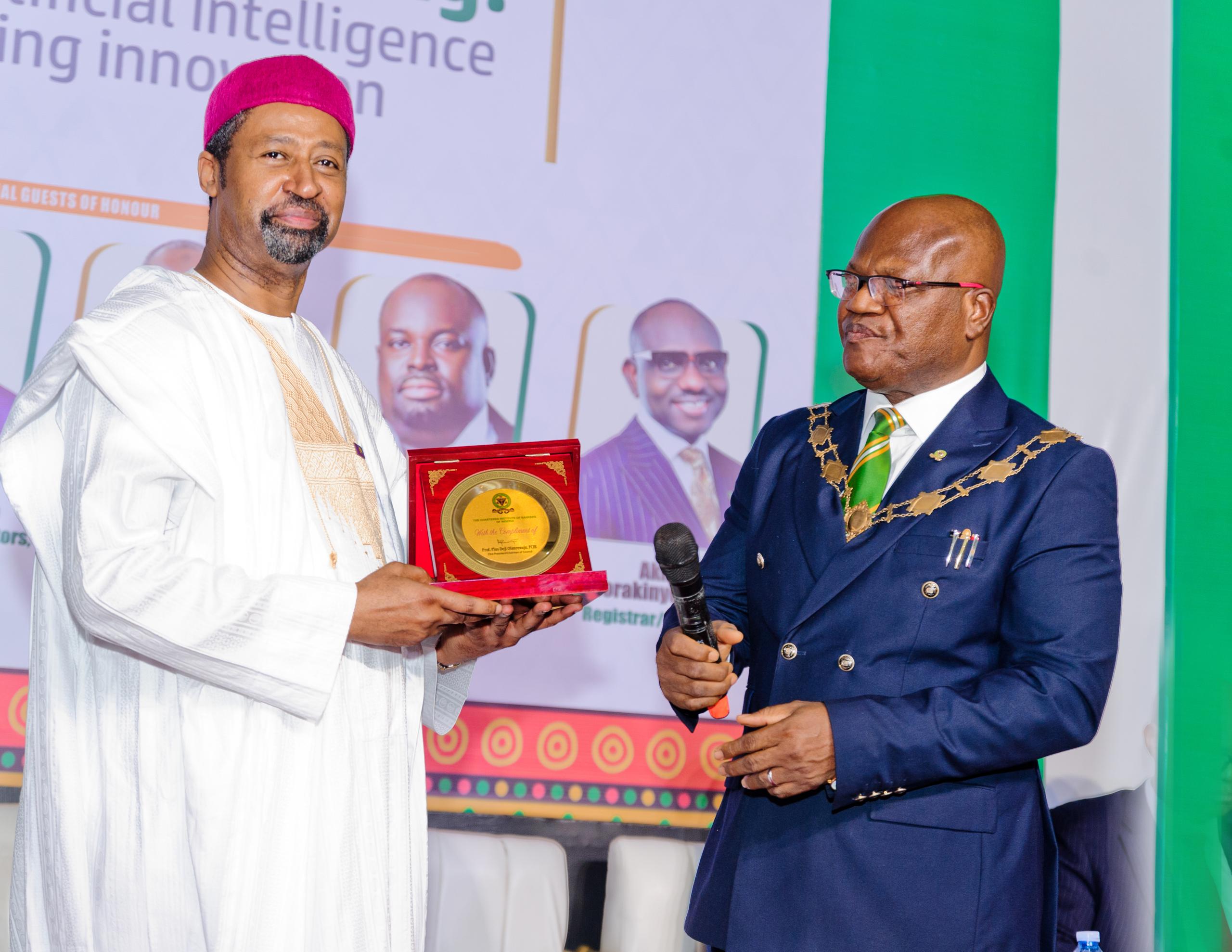
The Chairman of Polaris Bank, Dr. Kassim Gidado, has called on newly inducted banking professionals to uphold integrity, embrace continuous learning, and demonstrate ethical leadership as they navigate the rapidly evolving financial services landscape.
Dr. Gidado, made the call while delivering his remarks as the Special Guest of Honour at the 2026 Stream 1 Chartered Banker Induction Ceremony organised by the Chartered Institute of Bankers of Nigeria (CIBN).
The ceremony which held in Lagos at the weekend, celebrated the induction of 2,037 professionals into the prestigious Chartered Banker and Microfinance Certified Banker cadre of the Institute, marking a significant milestone in their professional journeys.
According to the Institute, the inductees emerged through various certification routes including 9 candidates through the Chartered Banker/MBA route, 816 through the Chartered Banker Regular Route, 25 through the MSc/Chartered Banker pathway, 262 through the SMP/AMP/Chartered Banker pathway, and 435 Microfinance Certified Professionals.
The candidates comprise executives, senior and middle management staff of Deposit Money Banks, Microfinance Banks and other financial institutions, as well as professionals from the public and private sectors, self-employed members of the Institute, and graduates from linked tertiary institutions.
In his address, Dr. Gidado described the induction ceremony as more than a formal event, noting that it represents a celebration of excellence, perseverance, and professional discipline within the banking industry.
“Banking today is evolving at an unprecedented pace. Digital transformation, financial inclusion, regulatory reforms and emerging technologies are redefining how financial institutions operate and deliver value to society,” he said.
He emphasized that while technology continues to transform the banking sector, trust remains the most valuable currency in banking, stressing that the credibility of the financial system ultimately depends on the integrity and professionalism of banking professionals.
Dr. Gidado commended the Chartered Institute of Bankers of Nigeria for its continued commitment to strengthening professional standards, developing industry capacity, and nurturing the next generation of banking leaders in Nigeria.
He also reiterated the importance of investing in human capital within the financial services industry.
“At Polaris Bank, we firmly believe that human capital is the most strategic asset within financial institutions. The future of banking will not be defined only by technology or capital, but by the quality of professionals who steward these resources responsibly,” he stated. 
Dr. Gidado, an accomplished academic further encouraged the newly inducted Chartered Bankers to be guided by three key principles throughout their careers: upholding integrity, committing to lifelong learning, and leading with purpose.
The 2026 Stream 1 Chartered Banker Induction Ceremony brought together industry leaders, regulators, banking professionals, and stakeholders to celebrate professional excellence and reinforce the role of certification in strengthening Nigeria’s financial system.

The Federal Government has uncovered a plot by a foreign mining firm, Jupiter Ltd, to orchestrate a “campaign of calumny” and blackmail during President Bola Ahmed Tinubu’s state visit to the United Kingdom, scheduled for March 18–19, 2026.
According to the Ministry of Solid Minerals Development, Jupiter Ltd allegedly intends to sponsor protests and media campaigns to discredit Nigeria’s mining reforms, driven by a dispute over the revocation of mineral titles formerly held by Basin Mining Ltd due to ₦2.49 billion in unpaid fees.
The ministry alleged that the company was orchestrating the “campaign of calumny” to embarrass the President during the historic two day state visit in the company of his wife, First Lady Oluremi.
King Charles III and Queen Camilla will host the president and the First Lady at Windsor Castle On Wednesday and Thursday.
The visit is Nigeria’s first state visit in 37 years to Windsor Castle.
But in a statement by the Special Assistant on Media to the Minister of Solid Minerals Development, Mr. Segun Tomori, the ministry alleged that the company planed to sponsor a protest and media campaign targeted at discrediting the government over the enforcement of mining regulations.
Tomori described the firm’s claims as a “tissue of falsehoods” designed to distract from the government’s efforts to sanitize the mining sector.
According to the statement, the controversy stems from the revocation of mineral titles previously held by Basin Mining Ltd, a Nigerian company reportedly fronted by Australian national Steve Davis.
The ministry said the licenses were revoked after the company failed to pay statutory annual service fees totaling N2,494,000,000 for mineral titles 45454ML, 45117ML, 45118ML, 40532ML, and 40533ML for the 2024 and 2025 fiscal years.
The statement noted that the government has no direct legal relationship with “Jupiter Lithium,” as Nigerian law prohibits granting mining licenses directly to foreign entities.
The statement said: “The Federal Government, through the Ministry and the Nigeria Mining Cadastral Office (NMCO), has no legal or contractual relationship with any company known as Jupiter Lithium. The Nigerian Minerals and Mining Act (NMMA 2007) expressly prohibits the granting of mining licenses to foreign companies.”
The ministry further accused Mr. Davis of being a “mining speculator who manages a web of six different companies to acquire titles without conducting actual operations.
“This practice, the government argues, prevents genuine investors from entering the market and contributes to the rise of illegal mining.
On the rumor that the titles were seized to favor a Chinese firm, the ministry dismissed the claim as a “complete fabrication.”
Tomori further said: “Instead of adhering to Nigerian mining laws, Davis would rather operate surreptitiously as a mining speculator who sets up companies to acquire mineral titles and shortchange the nation.
“Unfortunately for him, the government’s strict application of the regulations caught up with him.”
Insisting that the ongoing reforms are intended to transform the mining sector into a major contributor to Nigeria’s Gross Domestic Product (GDP), the ministry maintained that federal government would not be intimidated by international pressure or “shows of shame” organised abroad.
“The Federal Government of Nigeria cannot and will not be intimidated or blackmailed into abandoning reforms by the antics of any individual or company.
“The nefarious activities of the past that stunted the growth of the mining sector will no longer be tolerated,” the statement warned.
Despite the crackdown, the ministry reiterated that Nigeria remains open for business, highlighting incentives such as tax waivers on imported equipment and the full repatriation of profits for those who follow the law.
The government urged the international community to disregard the planned protests in the UK, characterising the move as a desperate attempt by discredited individuals to circumvent transparency.
At the weekend, Special Adviser to the Minister of Solid Minerals Development, Kehinde Bamigbetan, reacted to the falsehoods sponsored by Jupiter Ltd in a publication titled “Nigeria seizes British Lithium project under armed guard.”
In his response titled: “In Nigeria’s mining sector, the law is no respecter of persons”, Bamgbetan exposed the antics of one Steve Davis and Hamish MacDonald, whose deceitful enterprise in the mining sector eventually met the full weight of the law.

Zenith Bank Deepens UK Presence With Strategic Manchester Branch Opening

Polaris Bank Chairman, Dr. Gidado Urges Integrity And Professional Excellence At 2026 CIBN Chartered Banker Induction

FG Reveals Alleged Blackmail Attempt By Foreign Companies Amid Tinubu’s UK Trip

Family Of Student In Viral Edo Bullying Video Issues Public Apology

LASG Announces Resumption Of Monthly Environmental Sanitation For April 25

Just In: Nigerian Football Legend Henry Nwosu Passes Away At 62

States, LGA Now Have More Allocations — Tinubu Urges Media To Demand Accountability

Nigerian Gospel Icon Evangelist Toun Soetan Dies At 73

I Delivered $15m Agency Cash To Ex-NIMASA DG Akpobolokemi, EFCC Witness Tells Court

CBN Bars Chronic Loan Defaulters from Accessing New Banking Services
-
 News14 hours ago
FG Reveals Alleged Blackmail Attempt By Foreign Companies Amid Tinubu’s UK Trip
-
 News11 hours ago
Polaris Bank Chairman, Dr. Gidado Urges Integrity And Professional Excellence At 2026 CIBN Chartered Banker Induction
-
 News17 hours ago
Family Of Student In Viral Edo Bullying Video Issues Public Apology
-
 News7 hours ago
Zenith Bank Deepens UK Presence With Strategic Manchester Branch Opening